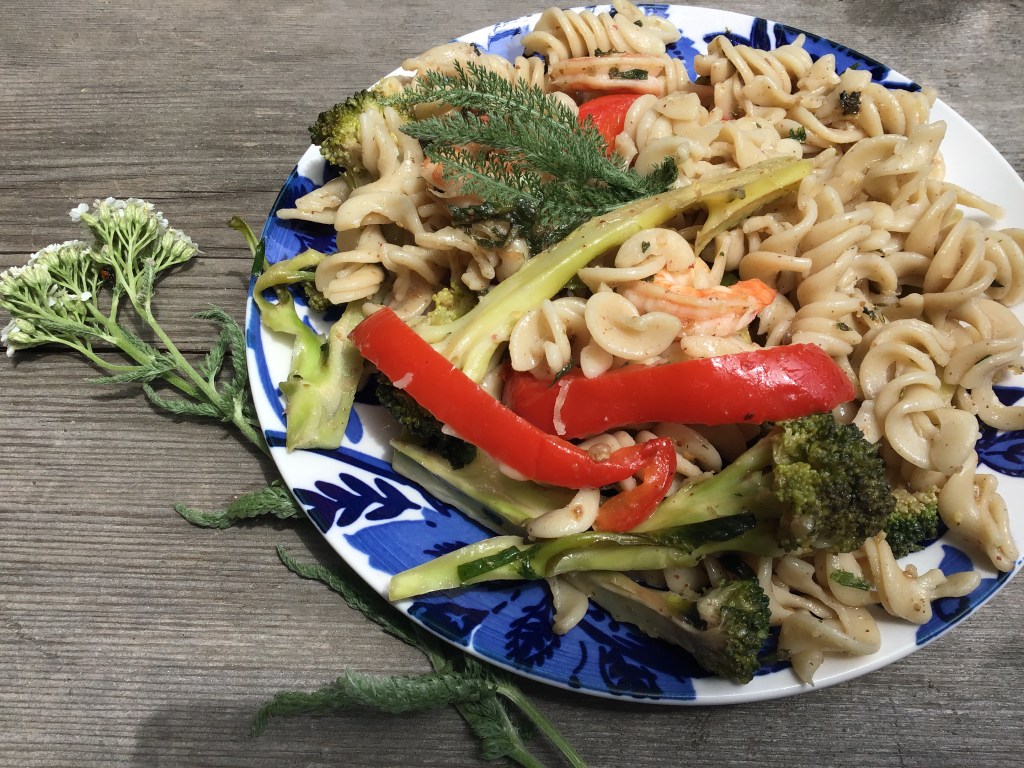
Internally yarrow is well known for treating a fever. Externally I like to use it in a styptic powder and in my favorite cold cream. It is probably not an herb that comes to mind when an herbalist goes to cook a meal. Yarrow is bitter, pungent and sweet. It is balanced by the sour lemon peel, pepper, and mint in this recipe. This pasta dish is perfect for a summer picnic. I just love it when I find a creative culinary use for a medicinal herb.
Pasta with Shrimp and Yarrow
In a large bowl add……
25 count/8 oz. of medium shrimp (cooked, deveined, peeled, and tail removed)
12 oz. of dried pasta (shells, bows, or spirals/fusilli), cooked and then cooled to room temperature.
1 medium head of broccoli and one medium red bell pepper coarsely chopped and sauteed in butter until soft.
In a medium bowl measure out…
1 tsp of lemon zest
1/2 TBSP each of finely chopped mint, chives, and thyme
2 TBSP of white wine
3 TBSP Olive oil
1 TBSP of finely chopped yarrow leaves
Red peppercorns-coarsely ground to measure 1/2 tsp.
Coriander seed-coarsely ground to measure 1/2 tsp.
1 TBSP capers
Mix both bowls together. Serve at room temperature
Yarrow/Milfoil is best known for lowering a fever. When I was a midwife I had it as a tincture in my birth kit for minor hemorrhaging The tannins in the plant also make it an excellent wound healer which serves to tighten the tissues and arrest bleeding. It has a history of being used for nosebleeds. bleeding hemorrhoids, and abscesses, Other constituents in the plant help with pain, infection, bringing on a fever/sweat, lowering blood pressure, relaxing muscle spasms, strengthening blood vessels, calming the nervous system, opening pores, “cleaning” the blood, toning/stimulating organs or tissues, building blood and reducing inflammation. Historically this herb has been used to treat colds, flu, allergies, headaches, blood clots, menstrual issues, digestive problems, diarrhea, poor appetite, cramps, gas, bloating, rheumatism, childhood illnesses, toothache, earache and ulcers. A wash of the infusion, a poultice, or compress has been used for wounds, varicose veins, bleeding hemorrhoids, vaginal discharge, acne, blood blisters, bruising, eczema, hair loss, chapped skin, and sore nipples in nursing mothers. Dye can be made from the flowers and the essential oils are used to reduce inflammation when used in skin care products.
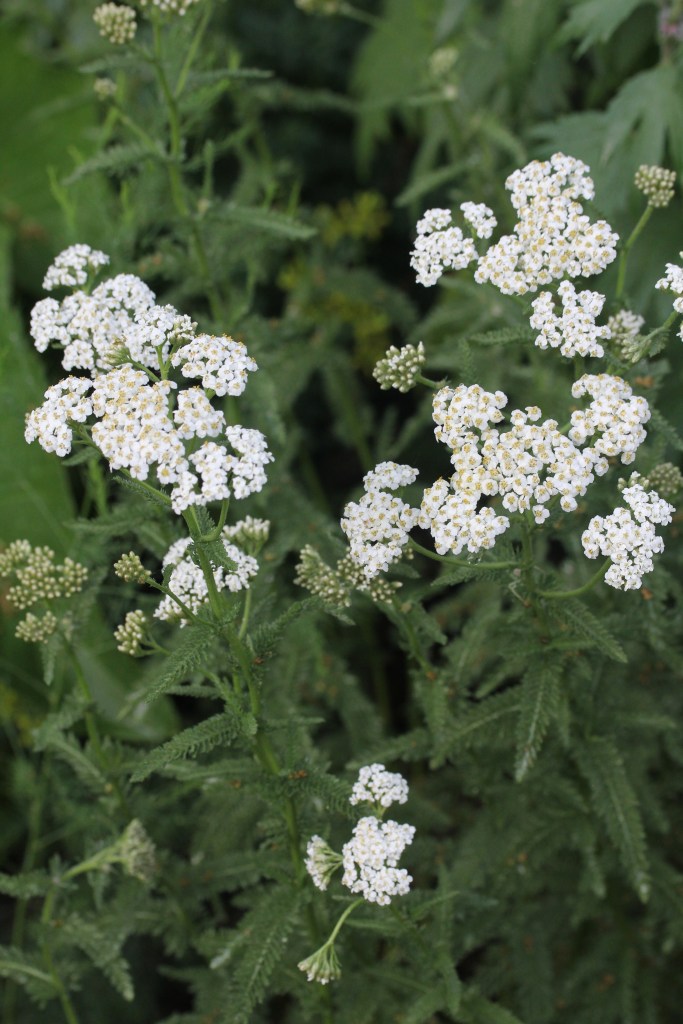
Yarrow is found all over the world. It grows easily in gardens, meadows, along the road, in the wild/mountains and wastelands. It prefers full or moderate sun, dry soil and very little water. There are cultivars with very attractively colored flowers and textured leaves. Yarrow, as a companion plant, helps its neighbors to resist disease. The shallow growing rootstock allows this plant to spread quickly and become invasive. The majority of the finely pinnately leaflets (sharply cleft) give the dark green leaves (lance shaped and alternately arranged) the appearance of feathers. These are 3-4 inches long and form dense growth near the ground. The tiny ray flowers (5 petals) are typically white (can be pink or pale purple) with the discs being yellow, fading to brown as they mature. These are arranged in a flat or raised compound corymb at the top of a tall stem (1-3 ft. tall). Often the stalk is fuzzy with small leaves arranged alternately with wide spacing up the stalk.
Latin name: Achillea millefolium
Parts used: Leaves and flowers
Energetics: bitter, sweet, pungent, cool, dry
Element: water
Contraindications: allergy to aster/ragweed family. Sensitive individuals may experience dermatitis or sensitivity to sun.
 Blackbird's Backyard Pharmacy