In my thirties I was diagnosed with a hiatal hernia. A congenital weakness in my diaphragm that allows the stomach to bulge through the muscle, creating acid reflux when I east certain foods. I can go years without problems if I am careful with my diet. But lately it has gotten worse due to menopause and aging. When I have “an attack” all my symptoms are worse and I have the added issue of epigastric spasms adding to the pain and duration. Even an antacid, ginger, or aloe vera juice no longer helps with it in the acute phase or as a preventative. Carminatives, digestive enzymes, avoiding certain food are not really helpful either. I know there is a trigger and I have yet to figure out what it is. After some research I created this tea. It has made a big difference in my symptoms. I can take it during an attack without making it worse and it immediately calms the spasms. My attacks usually happen before bed so the addition of some herbs to my tea formula allows me to also fall asleep quicker and rest instead of being up for hours.
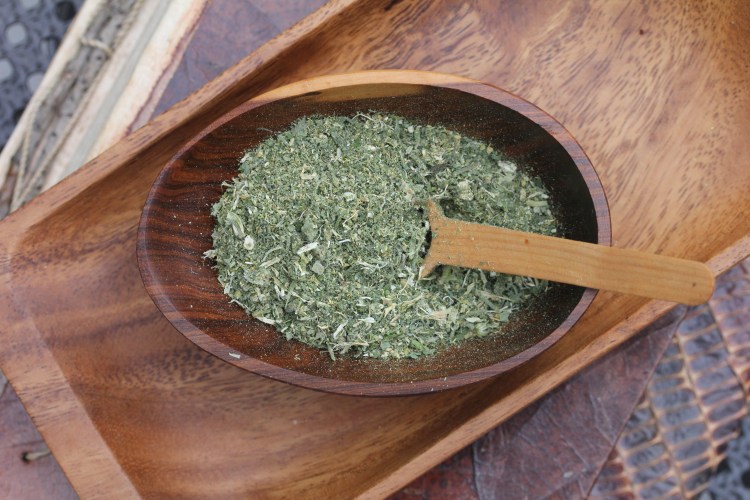
My formula has equal parts of catnip, chamomile, skullcap, valerian, and vervain, marshmallow root, hops, and mint. Plus 1 tsp-1 TBSP of lavender flowers depending on how much you are making. Lavender can be pretty strong and overpowering in a mixture so use caution. I use 1 TBSP of the mixture to a cup of hot water, let steep for 5 minutes, and then strain.
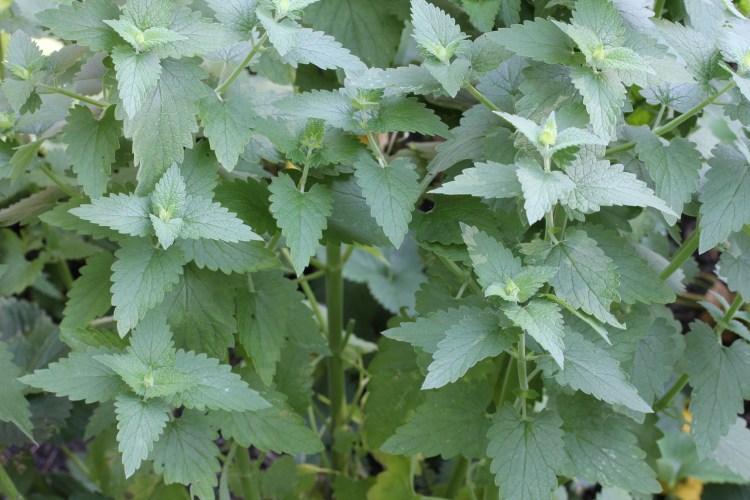
Nepeta cataria has small white/pink flowers clustered down a stalk. The heart oval shaped leaves are arranged alternately on a square stem. . This plant has its own distinctive strong scent which cats obviously love. It can be confused with other members in the mint family like lemon balm or spearmint. Catnip has more “silver” green leaves which are fuzzy in texture, with a toothed margin and a lighter underside. The stem is also hairy. It can grow 3-4 feet high, especially as it shoots up to flower. This plant has become an invasive species in many ecosystems. You will find it in backyards, wastelands, in grazing areas, along a stream as you hike in urban corridors, or in cracks in the sidewalk. It is a self seeding perennial that likes a lot of sun and does well in poor soil. There is a similar plant in the Nepeta family called “catmint” This herb has purple flowers and much smaller leaves. It is more likely to be a cultivar that found in the wild. All Nepetas have similar properties and uses.
Catnip has been used for food and medicine since ancient times. It contains powerful chemical constituents that are powerful sedatives, pain relievers, euphorics, and aphrodisiacs. No wonder kitties love it. Nepeta moves energy, relaxes the nerves and clears heat. This herb contains many volatile oils. It has such an affinity for the energy of kids, supporting them when they feel feverish, anxious, restless or sick. It is great for babies as a weak tea or bath for colic, teething, insomnia, or crankiness. A hot tea promotes sweating. It is thought to be an excellent remedy for colds, flu, bronchitis, pneumonia, childhood illnesses, menstrual problems, headaches, and motion sickness . This plant is has been used for all manner of stomach complaints like , gas, and diarrhea, parasites and indigestion. Externally people have used catnip for pain, injuries, hemorrhoids, acne, dandruff, arthritis, eye inflammation and allergies.
Family: Laminaceae/mint
Parts used:Leaves and flowers
Energetics: pungent, bitter, cool, dry
Element:water
Contraindications:Do not use in pregnancy. Very large doses can cause nausea and vomiting.
 Blackbird's Backyard Pharmacy