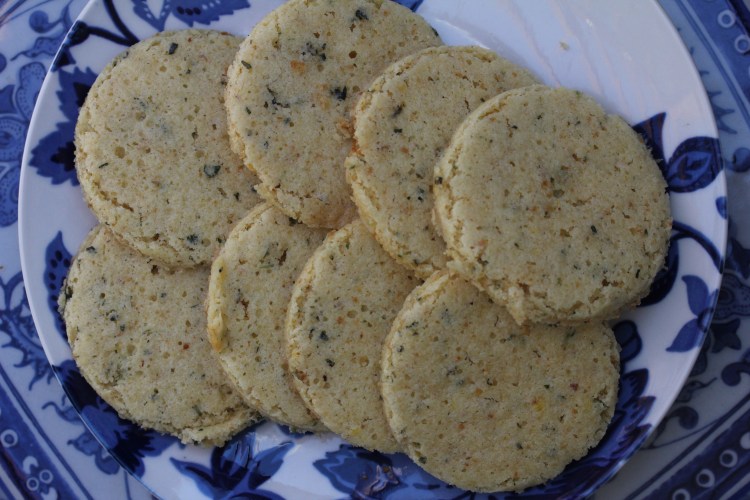
These bee balm cookies have an aromatic scent that is pleasing to the nose and exciting to the taste buds. They are perfect for a book club tea or summer brunch.
Ingredients
1/2 cup salted butter (room temperature). Do not use a coconut oil ingredient substitute.
1/2 cup powdered sugar
1 egg
1/2 cup of almond flour and 1/2 cup of tapioca flour
4 to 5 tbsp chopped fresh or dried bee balm flowers and leaves
4 tsp fresh orange zest or 1 TBSP of powdered orange peel
Pinch of clove, cardamon, and nutmeg
1/2 tsp of almond extract
Instructions
In a medium bowl, beat together the butter, crushed flowers and leaves, fresh orange zest, and sugar until well mixed. Add the flour and mix well.. If the dough is too “wet” try chilling it a bit first before removing it from the bowl. Wrap tightly in parchment paper, roll into a cylinder shape, and chill for about 2 hours.
Once chilled, slice about 1/4″ thick. Place on a baking sheet lined with parchment paper, about 1″ apart. These cookies have a tendency to spread due to the high content of butter and gluten free flours. The chilling may not be enough, especially if it is summer. If you do get spreading, use a biscuit cutter after the cookies are done and cooled. I thought about trying to change the recipe but these cookies are so amazing with their taste and texture. So just eat any bits once they are cut out and serve the rest.
Bake in a preheated 350 degree F oven for 6-8 minutes on a rack placed in the middle of your oven. If your oven is on the hot side, be sure to check the cookies after 5 to make sure they are not burning. You want the cookies to be done but not quite yet turning “golden brown”.
Serve with Fig Jam
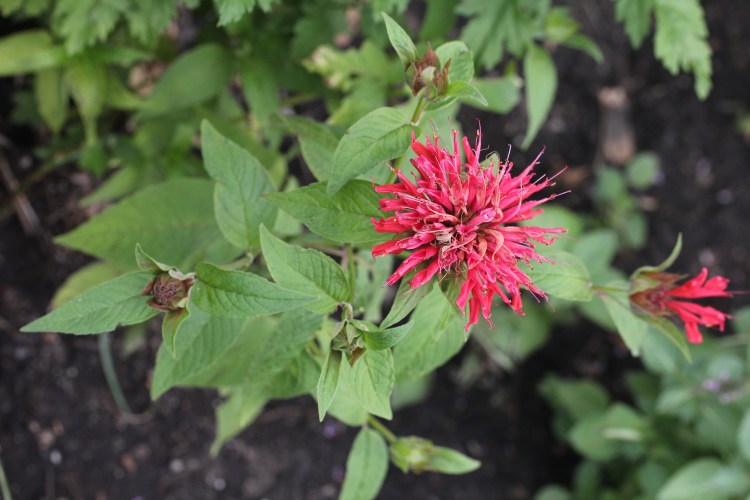
Monarda is a perennial herb that is native to the United States. This herb grows 2-3 feet high. It has opposite, ovate/lanceolate, serrate, deep green leaves. Like all members in the mint family it has square stems. These are hairy, slender and branching. This plant has numerous, tubed shaped, two lipped and irregular flowers with united sepals and petals. These grow in solitary terminal heads/clusters. M. fistulosa has hairier leaves and flower parts and a stronger volatile oil/scent.
Historically monarda has been used to treat, gas, colic, nausea, vomiting, fever, colds, flu, headache, parasites, menstrual cramps, candida, inflammation, sepsis, and stress. Externally it has been used for rashes, burns, wounds, bleeding and rheumatism. As a gargle for sore throats, gum disease, and bad breath. As a steam it loosens phlegm when there is congestion or respiratory infection.
Latin name: Monarda didyma (rose or light purple flowers). Monarda fistulosa (scarlet flowers)
Common names: Oswego tea, bee balm, mountain mint, wild bergamot
Parts used: leaves and flowers
Energetics: cool, astringent
Contraindications: due to the volatile oils do not use in pregnancy.
 Blackbird's Backyard Pharmacy