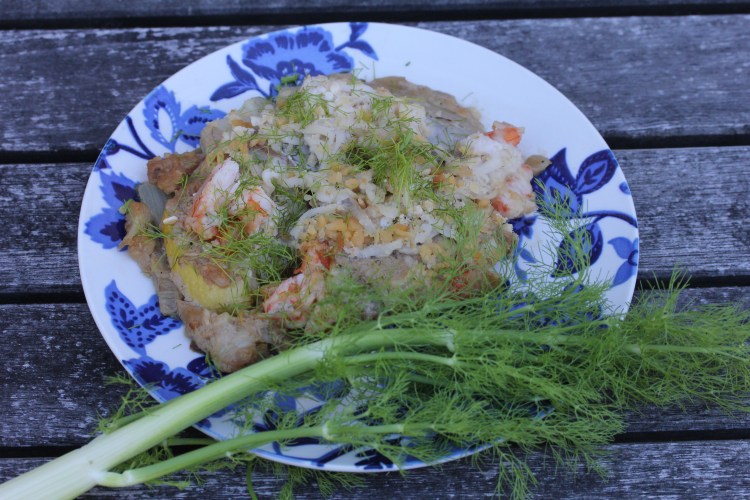
This recipe is perfect for an all in one dish that travels well for a potluck, picnic or lunch of leftovers. It is quick to assemble and put in the oven. Allowing you time to do other busy chores or relax before dinner. I love any creative way to use up some of the summer squash growing like crazy in my garden.
Shrimp and Fennel Gratin with Vegetables
Preheat your oven to 350
In a large rectangular pyrex baking pan layer your ingredients in the following order….
1/4 cup of cream (or vegan substitute). Spread to create an even coat on the bottom of the pan. You can also just use milk.
1/2 a medium onion coarsely chopped and sauteed in 1 TBSP of olive oil.
1 medium fennel bulb sliced in thin cross sections (from stalks to bulb), seared in 1 TBSP of olive oil.
1 large peeled potato cut in thin cross sections. You could also use sun chokes or other root vegetables.
1 medium scallop summer squash cut in cross sections.
1/4 cup of cream (again)
1/2 cup of cauliflower cut in small pieces.
salt and pepper to taste
1 cup of mild white cheese ( I used vegan moz)
3/4 cup of yogurt spread in a even coat.
20 medium cooked shrimp coarsely chopped
bread crumbs
Bake for 1 hour
Let cool for 5-10 minutes and serve.
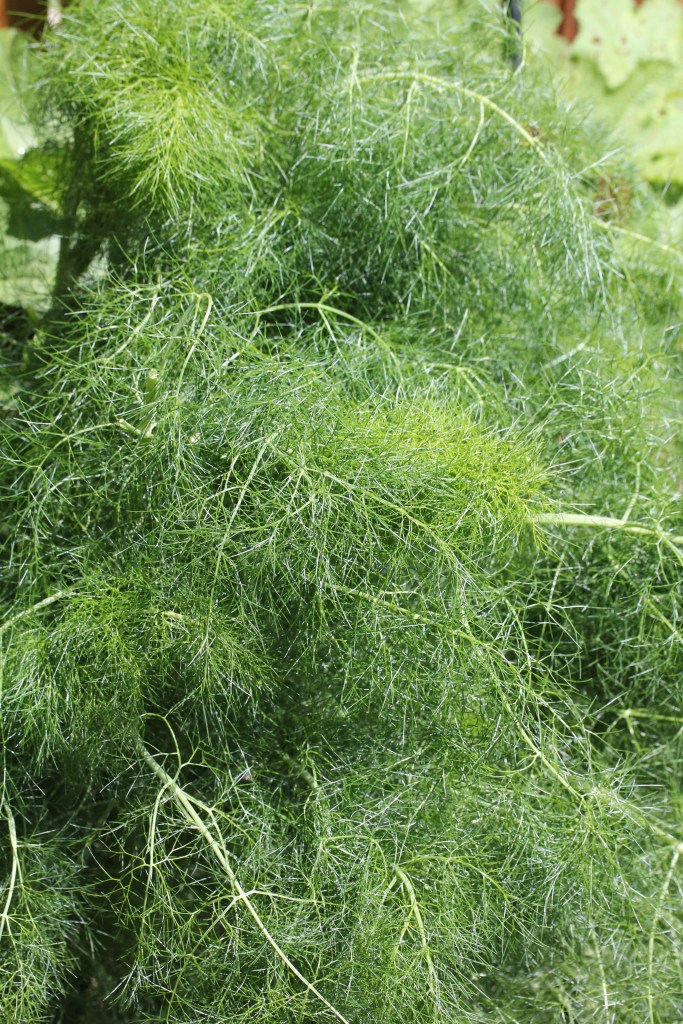
Foeniculum (fennel) is a member of the parsley/carrot family that is often found in colonies. It is important to identify this herb accurately, even if growing in an urban yard or garden. Warmer climates produce a perennial almost 5 feet tall. A carrot shaped root is below the ground. When very mature the stem can form a large white “bulb” (like celery) at its base. There are 2-5 hollow, pithy, finely grooved bright/jade green stalks with bluish stripes. Some plants appear to have a waxy/white “bloom”. The leaves grow from the center/basal (immature) or branch off upper stalks as wide alternate sheaths (mature) that wrap around the outside. Leaf shape is pinnate, very compound, and constructed of numerous threadlike filiform segments (like some ferns or asparagus). Compound umbels produce yellow flowers in late summer or early fall. When cut, torn, or rubbed the plant parts produce a strong licorice scent. Fennel seeds are light green (becoming a bit yellow as they dry/mature) oblong, dense and a good size.
Caution: Poison hemlock and fennel are easy to confuse. Hemlock will have purple blotches/spots on the stalks, leaves that lacy/broader/more triangular, white flowers, and an unpleasant scent. Poison hemlock and young dying fennel in the fall can be especially hard to tell apart. When in doubt crush plant material or seeds with the foot and smell without touching the plant.
Foeniculum is well know as a remedy for stomach and intestinal complaints. It has been used to treat abdominal cramps, bloating, indigestion, nausea, constipation, heartburn, bad breath, gas, and colic. It expels mucus, relaxes bronchi and clears congestion in the lungs. It relieves a horse throat, moves stagnation in the liver, and increases the flow of breast milk. This herb may help stabilize blood sugar levels, Chewing dried fennel seeds stimulates the digestive juices, helps digest fats, assists in the assimilation of food and treats bad breath. As an infusion it serves as a diuretic for kidney stones and gout. As a weak tea it can lower fever, reduce teething pain, and stop hiccups in children.
Parts Used: Leaves and seeds
Energetics: sweet, warm, moist
Element: fire
Spiritual and Emotional Uses: To move stagnant energy and bring sweetness and freshness back into life. To restore trust, security and purity to a relationship. To repel negative energies.
Contraindications: Avoid therapeutic doses in pregnancy. Excess consumption can stimulate the nervous system.
 Blackbird's Backyard Pharmacy