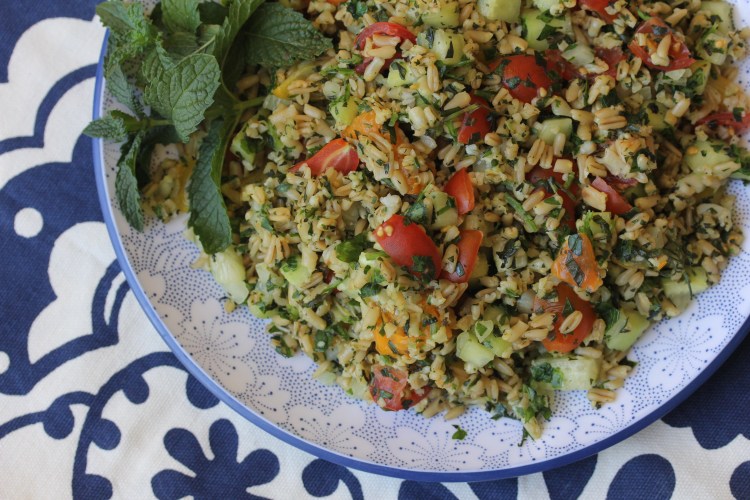
We had a lot of rain this summer, delaying the growing season and leading to a bumper crop of all things green and leafy. Lots of unexpected mint means lots of salads that are grain or legume based to used it up. If you are on a gluten free diet and miss tabouleh, oat groats make a pretty good substitute. They provide a firm texture and nutty taste to this traditional Mediterranean dish. My mother is fond of using quinoa instead of bulgar wheat or semolina. The key to a great tabouleh is a generous amount of lemon juice and finely chopped mint. I prefer to have more grains than parsley. You could also add roasted nuts or seeds. Tabouleh can be used to stuff vegetables like tomatoes or winter squash. It can be used as a filling in wraps or folded pita bread. Garnish these with hummus, tzatziki, baba ganoush, or a thinned tahini sauce.
2 cups of cooked oat groats (still chewy)
2 TBSP of olive oil
Juice of 1 lemon
Salt and Pepper to taste
1 buch of mint finely chopped
1 bunch of Italian parsley finely chopped
2 TBSP of finely chopped onion or garlic
1 medium cucumber peeled and chopped
1-2 medium tomatoes chopped
Directions Finely chop your oats groats until they are the consistency of traditional tabouleh. Add them to a large bowl along with the other ingredients. Mix well and chill for 2 hours before serving.

Mentha is in the mint/Lamiaceae family and includes both peppermint (Mentha piperita) and spearmint( Mentha spicata). Peppermint is a hybrid perennial plant that is most often found cultivated in gardens. This herb is highly aromatic( menthol). It has erect, square, branching, purple stems. It’s opposite leaves are opposite, oval/lance shaped and often serrated. The sepals and petals are united to form tiny purple flower that have 5 two lipped lobes (2 up, 3 down). These are arranged at the ends of axillary and terminal spikes. Spearmint lacks the purple hues in it’s foliage and is a more vibrant green. The leaves are often greater in number, larger and more serrated and “wrinkled”. They are sessile and have a very short petiole where they join the stem. This plant is usually taller than peppermint. The flowers are more numerous/dense on a larger , interrupted spike. Mints can be invasive and spread quickly through their rhizomes. They will tolerate any kind of soil and thrive in both sun and shade. Grow mints near your vegetables to keep them free of insects and other pests. These plants are a favorite of native bees.
Mints are known for their ability to clean damp/phlegm, increase circulation to the tissues and relax blood vessels. Their volatile oils warm the body, open the pores, and encourage sweating. Historically they been used to treat cramps, spasms, colds, coughs, flu, fever, sinus infections, sore throat, headaches, high blood pressure, menstrual problems, painful urination, nausea/vomiting, heartburn, stomach ache/colic, gas, digestive issues, liver stagnation, ulcers, parasites, bad breath, gum disease, nervous disorders and fainting. Externally mint has been used to treat pain, inflammation, rheumatism, bruises, rashes, hives, bug bites, and skin issues. A steam inhalation may help with asthma, bronchitis, chest congestion and laryngitis. Mints improve the flavor of other teas, are used in many culinary traditions, and can be burned as incense. Spearmint tends to have a sweeter, less spicy/hot/medicinal flavor than peppermint.
Parts used:aerial above ground parts
Energetics: sweet, pungent, cool, warm, dry
Element: fire and water depending on variety
Emotional and Spiritual Uses:Prosperity. protection. Brings movement, openness, and warmth to life. Allows the mind to think quickly and clearly so that we can envision and future and manifest our dreams.
Contraindications: Avoid large doses in pregnancy and nursing. Long term therapeutic use can stress the heart.
 Blackbird's Backyard Pharmacy