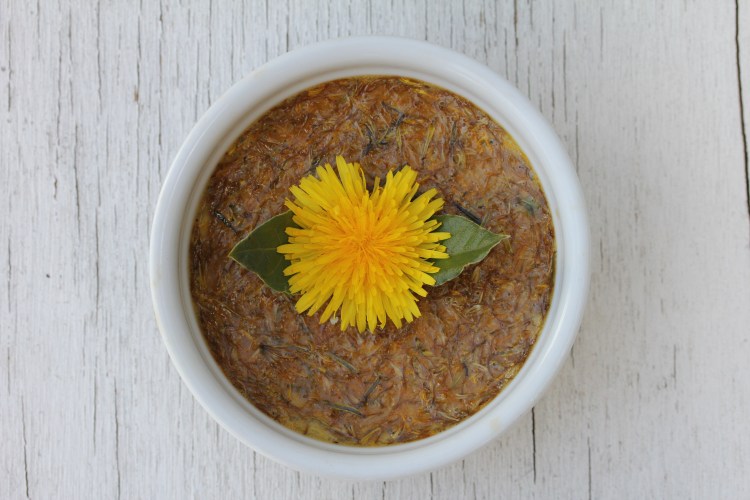
We are having a warmer than usual October. I have a run of late bloomers in my lawn. I came up with this recipe for a fall brunch outside with friends. It pairs well with local bacon, butternut squash soup, french bread, homemade applesauce and greens from the garden.
Dandelion Flower Flan
Preheat your oven to 325
Butter six ramekins
Pour 1/2 cup of granulated sugar into a a warm saucepan over medium heat. Stir the sugar until it browns and turns into caramel. Do not allow to burn. You can use a candy thermometer if that helps.
Remove from heat and quickly pour 2 TBSPS of caramel into each dish. Tap on the counter to level and create a thin even layer. Set aside
In a large bowl add
8 ounces of full fat coconut cream
4 eggs
12 ounces of “barsita style” creamer of your choice. I like to use oatmilk.
1/4 cup of sugar
Beat until silky smooth using an electric hand mixer. Then add..
1/8 tsp of ground nutmeg
1/2 tsp of pure vanilla extract
2 TBSP of dandelion petals (these are actually the ray flowers)
Stir gently with a wooden spoon until evenly mixed
Pour batter into ramekins and bake in a Ban Marie (place all of your dishes in a glass or metal pan with tall sides. Fill only the pan with hot water so that it comes halfway up the outsides of your ramekins, about 2 inches). This allows steam to bake the flan slowly and prevents the tops from cracking. Cover the pan with foil and place in oven.
Bake for one hour, then check to see if it is done by inserting a wooden toothpick and seeing if it comes out clean.
If done, remove from oven and let cool to room temperature. Then refrigerate for one hour before serving.
The flower petals will float to the top giving an attractive appearance. Garnish with a single dandelion bloom. Or you can skip the garnish and invert on a plate, after running a butter knife around the edge of the flan between it and the ramekin.
Enjoy!
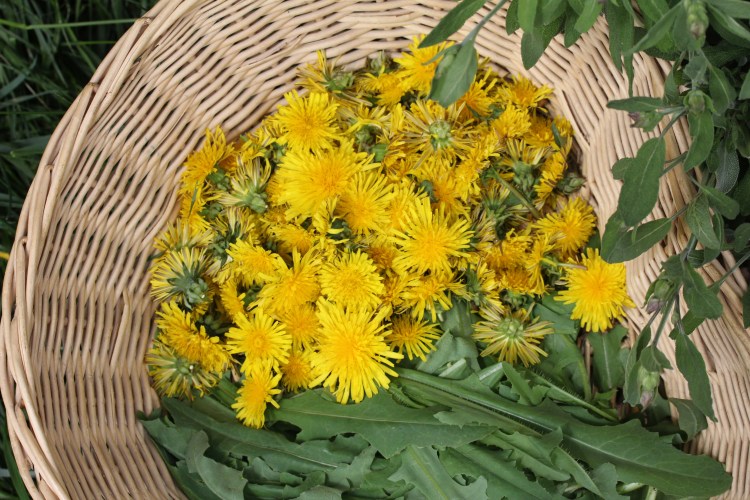
Latin Name: Taraxacum officinaleFamily: AsterSubfamily: Cichoriodeae/Chickory
Taraxacum has yellow ray flowers that overlap all the way to the center. There is no round disk in the center like other plants in the aster family. The “petals” are straight and do not taper. It has bracts/modified leaves where the stem joins the flower instead of sepals. It has a hollow, round stem full of a white, latex like, sticky sap.There are related plants that look like dandelion (sap, yellow flowers etc.) BUT Dandelion has a reddish green , non branching stem that is 2-6 inches long (sometimes 18). The leaves do not grow off the stem, instead they grow around the base in a ring. There is one flower per stem .The leaves are very serrated like teeth , they get broader towards the top before ending in a point. Nothing about a dandelion is prickly or hairy. Single seeds look like a tiny parachute but together form a white fluffy ball.Habitat-lawns, parks, fields, waste land. Dandelion likes poor soil. Blooms and makes seeds all year round. One of the first flowering plants to appear in spring.Growing:will grown anywhere. Self seeds. No need to cultivate, it is an invasive but useful weed.Edible parts:Root, leaves, flower heads.Harvesting:Dandelion roots and leaves are most bitter in the spring, this is also when they have most medicinal qualities. Plants growing in the shade may be less bitter. Pick flowers mid morning when they are dry and have reached their biggest size. Wash well, the root may need to be scrubbed with a brush. When picking be aware of contamination from pets and pesticides/herbicides. Watch for bees, it is their favorite source of food right in the early spring.
Historically Dandelion has been used as a diuretic (water retention) and laxative (constipation). As a tonic it cleanses the blood/tissues/organs of wastes/toxins and clears heat. Dandelion is useful for skin disorders (acne, cysts, fibroids, poison ivy, rashes, eczema, abscesses etc.), hay fever, candida, allergies, varicose veins, gout, rheumatism, and weight loss. It cools heat (fever) , stimulates the immune system, and removes infection ( sinusitis, bronchitis, mastitis, hepatitis, herpes, and mono just to name a few) Internally Dandelion is best known for its action (astringent, tonic, stimulant) ) on the digestive system (gas, indigestion, appetite loss, heartburn, ulcers) the bladder ( urinary tract infection) liver (jaundice, cirrhosis) and gallbladder (gallstones) pancreas, spleen, and kidneys (kidney stones). Internally the flowers can be used for pain/anti-inflammatory (arthritis, cramps, headaches, and backache). Externally the flowers can be used for wounds and fungal infections. The sap from the stem is thought to remove warts.
Culinary uses- coffee substitute, wine, beer, syrup, jelly, baked goods, stir fry, juiced, pickles, and salad green just to name a few. Herbal products products-tea/infusion, tincture, oil/salve. The fresh leaves can be added to salads and soups or the dried to condiments to add a mineral source to the diet.
Contraindications: safe during pregnancy and nursing in small amounts. Because it is in the aster family, it may cause allergic reaction in people sensitive to those kinds of plants. The sap may cause contact dermatitis.
 Blackbird's Backyard Pharmacy