Pear Pie (lemon balm)

Pear Pie

2 pre made chilled pie shells. One blind baked at 350 for 10 minutes. Keep the other one chilling in the fridge.

4 cups of peeled, coarsely chopped barely ripe pears

1/8 tsp each of powdered cinnamon, ginger, and cardamon

1 generous TBSP of lemon balm infused honey*

1 TBSSP of agar agar flakes

1/2 cup of granola

1/2 cup of grated Vegan Moz or other soft, white, bland cheese

1/2 cup of grated almond paste

*making an infused honey– Fill a washed and dried jar halfway with any of the following fresh flower petals-elder, lavender, rose, clary sage, hyssop, chamomile, basil, or violet. Fill the rest with high quality organic honey and screw on the top. Let sit for 4 weeks and then strain and bottle. Store in a cool dry place.

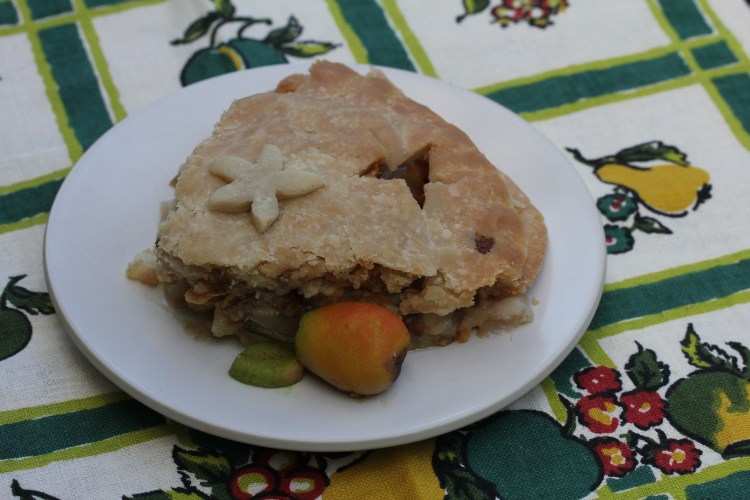
While the pie shell is blind baking- add your pears, spices, agar agar and infused honey to a large bowl and mix gently with your hands. Remove and cool your baked pie shell for 5 minutes. To the baked shell base-add the pears and sprinkle them with the granola. Mix the grated “cheese” and almond paste, sprinkle it on top. Prepare the chilled crust that you intend for your top ( cut fancy vent holes or strips for a lattice top). Gently remove it from its storage container and place onto the top of the pie. Use a fork or crimping tool to adhere it to the baked shell. It is best to avoid re rolling the crust. Bake for 45 minutes and check to see if it is done. The crust should be golden and the filling bubbling. Remove and let cool for 15 minutes

Serve warm with vanilla ice cream on top. Refrigerate unused portions.
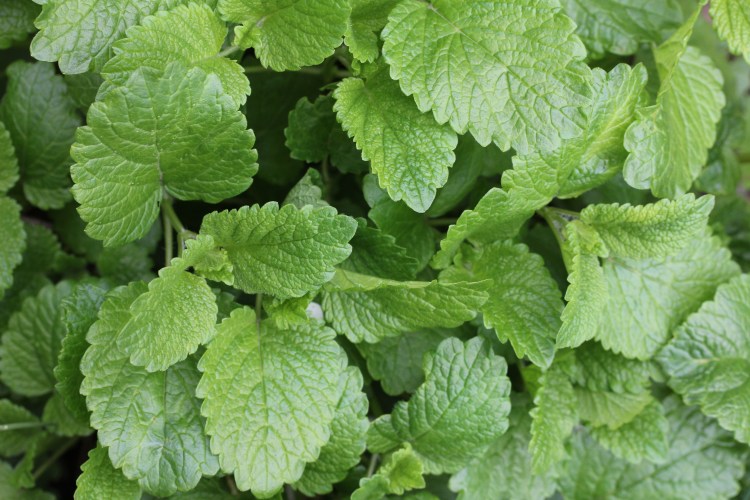
Lemon balm is a perennial found in the Mint family. Its many tall, auxiliary, four sided stems have very small two lipped flowers at their tips. A favorite of bumblebees these can be white, lavender or pink. The leaves are brilliant green, heart shaped/oval with a point. These are oppositely arranged with slightly serrated margins. Most members of the Mint family possess highly aromatic essential oils which repel pests. Mellissa has a unique smell of artificial lemon. This herb can grow as high as two feet tall. Easy to grow- it prefers moist, rich, well drained soil in shade or partial sun. Lemon balm grows well in pots and in most climates but can self seed and become an invasive plant. Remove volunteers/babies as they appear to prevent this.

Melissa is versatile and has a long history of use. It is cooling, calming, and cleansing. Its antispasmodic action makes it useful for treating menstrual cramps, general pain, headaches and infant colic. As a digestive it reduces indigestion and gas. High levels of the volatile oil cintronellal are helpful for depression, insomnia, restlessness, nightmares, teething, and anxiety. Lemon balm is a favorite tea with children due to its mild taste. Powerful antiviral and antibacterial properties make it popular to treat childhood illnesses, the flu, colds, and viruses in the herpes family. As an antihistamine it is useful for allergies and eczema.

Lemon balm can be applied externally on sunburn, wounds, burns, insect bites, and boils.

Medicinal Parts:leave and immature tops. Due to loss of volatile oils it is better to use it fresh or frozen rather than dried.

Energetics:sour, cool, dry

Element:water

Contraindications:Hypothyroidism. If you have a bee venom allergy do not use the essential oil in homemade bug repellant as bees love the smell.

Lemon balm appears in recipes to wrap fish. It can be a substitute for basil or parsley in pesto, salsa and tabouleh. Replace it for green in salad, soups, and sauces. Try it in a jelly, curd, or butter. Slip it into muffins and other baked goods.
Sleep salve (lavender)

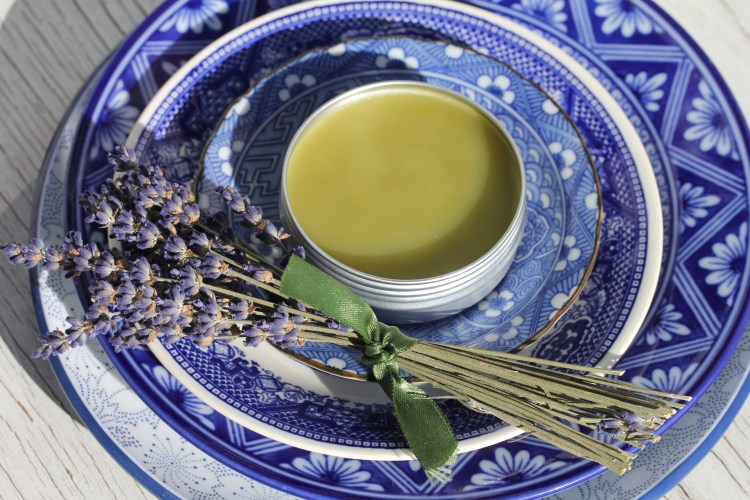
I have a crazy busy teen. Football games, council meetings, music lessons, and AP classes. There is a lot of overstimulation at school and she is up past midnight doing homework. She struggles to implement good sleep hygiene/habits and settle her mind before bedtime. I created this salve to support her. She can take it anywhere when she travels and use it easily on her own. It has the benefits of aromatherapy and medicinal constituents. She associates the smell with relaxation and happy memories. It can be rubbed on the temples, shoulders, neck and soles of the feet.

Make an infused oil with fresh lavender and chamomile flowers. I use the folk method- packing a clean jar with fresh herbs and then filling with high quality olive oil. Set aside for 2 weeks and then strain.

Here is a basic salve recipe.

I start with one cup of infused oil. I use organic US grown olive oil as it produces a more reliable result. Next pack a 16 0z. jar with clean, dry leaves if using fresh. Do not crush or macerate the leaves during processing to avoid releasing water into your infusion. Fill the jar to the rim with oil, making sure no plant material has risen above the oil. If so it can be poked down gently using a knife or chopstick. Screw the lid on tightly and set the jar on a saucer in case there is expansion. Let set exactly 2 weeks before straining. 

Next you will need

2-3 ounces of beeswax pellets

1 oz of shea butter

Add your strained oil infusion to a double boiler. Heat on medium for 5 minutes. Add in the 2 ounces of beeswax and all of the shea butter. As soon as it is all melted and you see no floating pellets-test consistency by dipping a metal spoon into the mixture and placing it in the freezer for 1 minute. If you are happy with the result remove from the heart. If not, add beeswax and test until you are satisfied. Let cool 2 minutes . Pour into small tubes, tins or jars. Let sit 2 hours before capping and storing. If you add about a TBSSP of castor oil as you are melting it gives your salve a more silky texture.

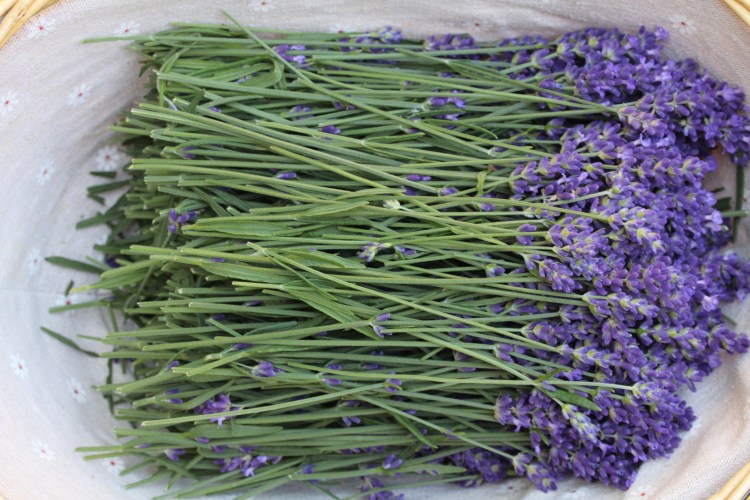
Latin name: Lavandula (there are lots of species). Family: Laminacea (mint family). Lavender is an evergreen perennial shrub that can grow 1-4 ft high. Typically it appears as a smaller singular plant but in the right conditions it will spread and expand to fill a larger space. The entire herb is covered in a grayish down. At this time of year the plant shoots up a flowers in the form of a terminal spikes. The highly scented purple flowers form a group on the tip of their personal stalk. The narrow leaves are sparsely arranged oppositely on the square stem, often clustered at the base of the plant when not in bloom. Lavender can be very easy to grow in many climates especially when given well drained, poor, sandy soil and full sun. Lavender is not native to the United States. It is very popular with bees and butterflies. The smell is the best way to remember this herb. Rub any part of it between your hands and smell your palms.

Lavender’s pure essential oil is a great remedy for burns, cuts, tight muscles, rheumatism, edema, eczema, hair loss, acne, fungal infections, earache, cold sores, and insect bites/stings. This plant contains numerous volatile oils, many of which are powerful anti-microbials. It was used in WW 2 for wounds and parasites. It was burned for bubonic plague to prevent the spread of the disease. Steam inhalations, baths, and infusions have been used to treat chest infections, asthma, dizziness, insomnia, digestive issues, colic, fever, colds, flu, strep, yeast, vaginal infections, bad breath, muscle spasms, headaches, fear, earaches, eczema, acne, burns, cold sores, edema, rheumatism, hair lossatigue, stress and anxiety. Lavender has a history of being present at birth and death because of its calming nature. The flowers are edible and can be used in baked goods, and other sweets. You will find this herb in many gifts and beauty products. 

Energetics:bitter, pungent, sweet, cooling, dry

Element:air

Parts used:flowers. Leaves and stalks can be used for incense

 Contraindications: During pregnancyDo not use the essential oil internally. Do your research on using the pure EO on a frequent basis externally (including in creams and shampoos).

Dandelion Flower Flan

We are having a warmer than usual October. I have a run of late bloomers in my lawn. I came up with this recipe for a fall brunch outside with friends. It pairs well with local bacon, butternut squash soup, french bread, homemade applesauce and greens from the garden.

Dandelion Flower Flan

Preheat your oven to 325

Butter six ramekins

Pour 1/2 cup of granulated sugar into a a warm saucepan over medium heat. Stir the sugar until it browns and turns into caramel. Do not allow to burn. You can use a candy thermometer if that helps.

Remove from heat and quickly pour 2 TBSPS of caramel into each dish. Tap on the counter to level and create a thin even layer. Set aside

In a large bowl add

8 ounces of full fat coconut cream

4 eggs

12 ounces of “barsita style” creamer of your choice. I like to use oatmilk.

1/4 cup of sugar

Beat until silky smooth using an electric hand mixer. Then add..

1/8 tsp of ground nutmeg

1/2 tsp of pure vanilla extract

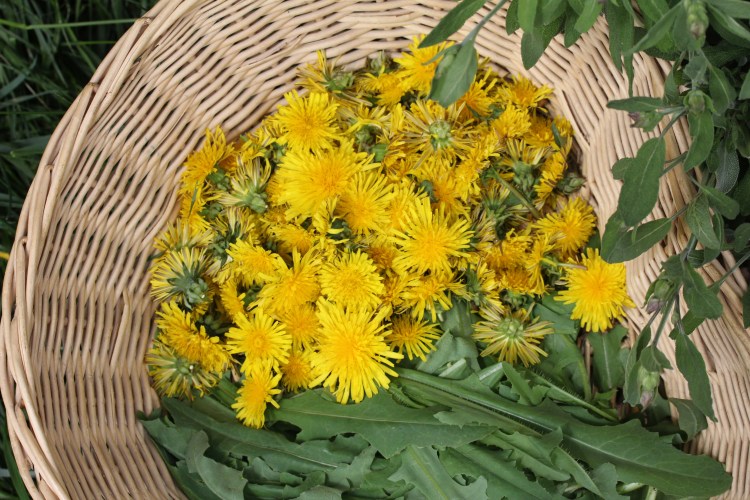
2 TBSP of dandelion petals (these are actually the ray flowers)

Stir gently with a wooden spoon until evenly mixed

Pour batter into ramekins and bake in a Ban Marie (place all of your dishes in a glass or metal pan with tall sides. Fill only the pan with hot water so that it comes halfway up the outsides of your ramekins, about 2 inches). This allows steam to bake the flan slowly and prevents the tops from cracking. Cover the pan with foil and place in oven.

Bake for one hour, then check to see if it is done by inserting a wooden toothpick and seeing if it comes out clean.

If done, remove from oven and let cool to room temperature. Then refrigerate for one hour before serving.

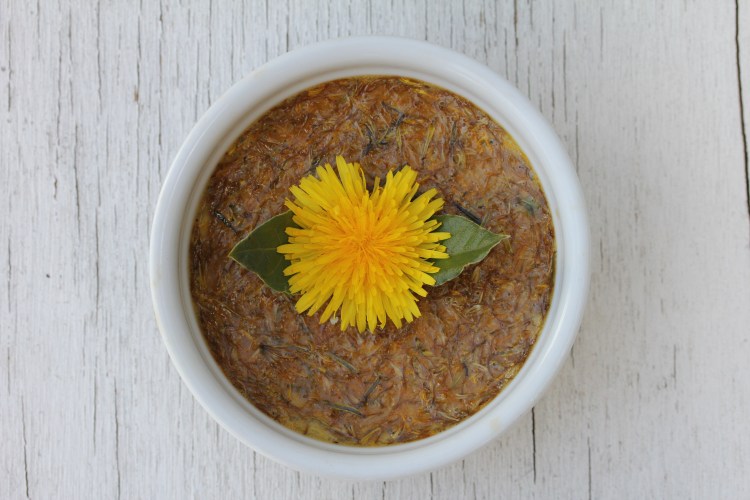
The flower petals will float to the top giving an attractive appearance. Garnish with a single dandelion bloom. Or you can skip the garnish and invert on a plate, after running a butter knife around the edge of the flan between it and the ramekin.

Enjoy!

Latin Name: Taraxacum officinaleFamily: AsterSubfamily: Cichoriodeae/Chickory

Taraxacum has yellow ray flowers that overlap all the way to the center. There is no round disk in the center like other plants in the aster family. The “petals” are straight and do not taper. It has bracts/modified leaves where the stem joins the flower instead of sepals. It has a hollow, round stem full of a white, latex like, sticky sap.There are related plants that look like dandelion (sap, yellow flowers etc.) BUT Dandelion has a reddish green , non branching stem that is 2-6 inches long (sometimes 18). The leaves do not grow off the stem, instead they grow around the base in a ring. There is one flower per stem .The leaves are very serrated like teeth , they get broader towards the top before ending in a point. Nothing about a dandelion is prickly or hairy. Single seeds look like a tiny parachute but together form a white fluffy ball.Habitat-lawns, parks, fields, waste land. Dandelion likes poor soil. Blooms and makes seeds all year round. One of the first flowering plants to appear in spring.Growing:will grown anywhere. Self seeds. No need to cultivate, it is an invasive but useful weed.Edible parts:Root, leaves, flower heads.Harvesting:Dandelion roots and leaves are most bitter in the spring, this is also when they have most medicinal qualities. Plants growing in the shade may be less bitter. Pick flowers mid morning when they are dry and have reached their biggest size. Wash well, the root may need to be scrubbed with a brush. When picking be aware of contamination from pets and pesticides/herbicides. Watch for bees, it is their favorite source of food right in the early spring.

Historically Dandelion has been used as a diuretic (water retention) and laxative (constipation). As a tonic it cleanses the blood/tissues/organs of wastes/toxins and clears heat. Dandelion is useful for skin disorders (acne, cysts, fibroids, poison ivy, rashes, eczema, abscesses etc.), hay fever, candida, allergies, varicose veins, gout, rheumatism, and weight loss. It cools heat (fever) , stimulates the immune system, and removes infection ( sinusitis, bronchitis, mastitis, hepatitis, herpes, and mono just to name a few) Internally Dandelion is best known for its action (astringent, tonic, stimulant) ) on the digestive system (gas, indigestion, appetite loss, heartburn, ulcers) the bladder ( urinary tract infection) liver (jaundice, cirrhosis) and gallbladder (gallstones) pancreas, spleen, and kidneys (kidney stones). Internally the flowers can be used for pain/anti-inflammatory (arthritis, cramps, headaches, and backache). Externally the flowers can be used for wounds and fungal infections. The sap from the stem is thought to remove warts.

Culinary uses- coffee substitute, wine, beer, syrup, jelly, baked goods, stir fry, juiced, pickles, and salad green just to name a few. Herbal products products-tea/infusion, tincture, oil/salve. The fresh leaves can be added to salads and soups or the dried to condiments to add a mineral source to the diet.

Contraindications: safe during pregnancy and nursing in small amounts. Because it is in the aster family, it may cause allergic reaction in people sensitive to those kinds of plants. The sap may cause contact dermatitis.

Gluten Free Tabouleh with Mint

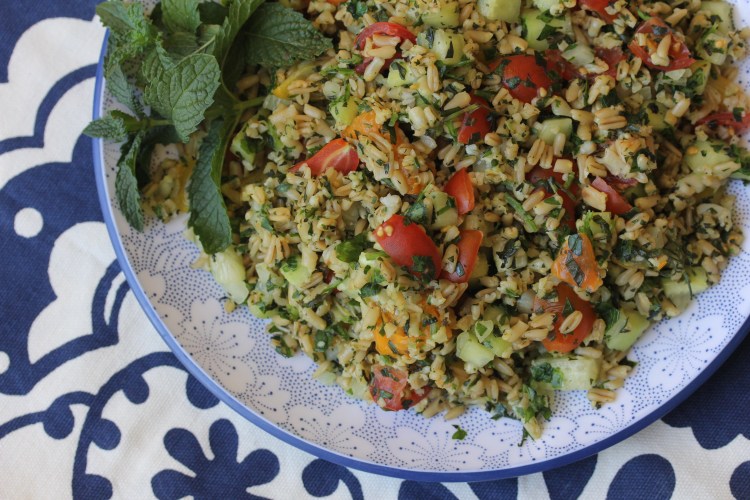
We had a lot of rain this summer, delaying the growing season and leading to a bumper crop of all things green and leafy. Lots of unexpected mint means lots of salads that are grain or legume based to used it up. If you are on a gluten free diet and miss tabouleh, oat groats make a pretty good substitute. They provide a firm texture and nutty taste to this traditional Mediterranean dish. My mother is fond of using quinoa instead of bulgar wheat or semolina. The key to a great tabouleh is a generous amount of lemon juice and finely chopped mint. I prefer to have more grains than parsley. You could also add roasted nuts or seeds. Tabouleh can be used to stuff vegetables like tomatoes or winter squash. It can be used as a filling in wraps or folded pita bread. Garnish these with hummus, tzatziki, baba ganoush, or a thinned tahini sauce.

2 cups of cooked oat groats (still chewy)

2 TBSP of olive oil

Juice of 1 lemon

Salt and Pepper to taste

1 buch of mint finely chopped

1 bunch of Italian parsley finely chopped

2 TBSP of finely chopped onion or garlic

1 medium cucumber peeled and chopped

1-2 medium tomatoes chopped

Directions Finely chop your oats groats until they are the consistency of traditional tabouleh. Add them to a large bowl along with the other ingredients. Mix well and chill for 2 hours before serving.

Mentha is in the mint/Lamiaceae family and includes both peppermint (Mentha piperita) and spearmint( Mentha spicata). Peppermint is a hybrid perennial plant that is most often found cultivated in gardens. This herb is highly aromatic( menthol). It has erect, square, branching, purple stems. It’s opposite leaves are opposite, oval/lance shaped and often serrated. The sepals and petals are united to form tiny purple flower that have 5 two lipped lobes (2 up, 3 down). These are arranged at the ends of axillary and terminal spikes. Spearmint lacks the purple hues in it’s foliage and is a more vibrant green. The leaves are often greater in number, larger and more serrated and “wrinkled”. They are sessile and have a very short petiole where they join the stem. This plant is usually taller than peppermint. The flowers are more numerous/dense on a larger , interrupted spike. Mints can be invasive and spread quickly through their rhizomes. They will tolerate any kind of soil and thrive in both sun and shade. Grow mints near your vegetables to keep them free of insects and other pests. These plants are a favorite of native bees.

Mints are known for their ability to clean damp/phlegm, increase circulation to the tissues and relax blood vessels. Their volatile oils warm the body, open the pores, and encourage sweating. Historically they been used to treat cramps, spasms, colds, coughs, flu, fever, sinus infections, sore throat, headaches, high blood pressure, menstrual problems, painful urination, nausea/vomiting, heartburn, stomach ache/colic, gas, digestive issues, liver stagnation, ulcers, parasites, bad breath, gum disease, nervous disorders and fainting. Externally mint has been used to treat pain, inflammation, rheumatism, bruises, rashes, hives, bug bites, and skin issues. A steam inhalation may help with asthma, bronchitis, chest congestion and laryngitis. Mints improve the flavor of other teas, are used in many culinary traditions, and can be burned as incense. Spearmint tends to have a sweeter, less spicy/hot/medicinal flavor than peppermint.

Parts used:aerial above ground parts

Energetics: sweet, pungent, cool, warm, dry

Element: fire and water depending on variety

Emotional and Spiritual Uses:Prosperity. protection. Brings movement, openness, and warmth to life. Allows the mind to think quickly and clearly so that we can envision and future and manifest our dreams.

Contraindications: Avoid large doses in pregnancy and nursing. Long term therapeutic use can stress the heart.

Fava Bean Pasta Salad (basil)

My herb and vegetable gardens are winding down for the year. Basil always takes awhile to get going. At its peak right now, just waiting for that first frost to ruin the leaves. I started the fava beans in April under the hoop house. They are producing their second run of pods. If you have never had fresh ones, you are in for a treat. Unlike dried, they do not need soaking or their skins peeled (what a process that is). Their texture is firmer. The taste is not as “rich” (tomatoes and red wine). But more tangy (white wine and lemon). Fava beans are more like a protein than the vegetable green string beans. Favas work well as a meat substitute. Fresh beans really add unusual character, flavor, elegance and color(celadon) to simple grain or pasta based dishes This recipe also makes use of the uncooked leaves which have a lovely taste.

Fava Bean Pasta Salad

2 cups of cooked pasta

1 TBSP of lemon zest

Salt and pepper to taste

2 TBSP of pesto

2 TBSP of roasted sunflower seeds

2 TBSP of grated goat cheese

1 TBSP of capers

1 -2 TBSP of finely chopped fresh basil

1 -2 TBSP of finely chopped fresh fava bean leaves

1/2-1 cup of cooked fresh green fava beans. Peel off the pods first.

Combine all of the above ingredients in a large bowl and stir well. This salad is best served soon after preparation, at room temperature.

Basil is in the mint family. Typically it is an annual but will overwinter indoors. It is a very common garden herb used as a companion plant and insect repellant. A thin branching root produces several lush square stems growing 1-2 feet high. The leaves can vary from bright to dark green depending on the variety. Some types like Thai basil have purple in their oppositely arranged leaves. Leaves can be oval to spade shaped, toothed or smooth in their margins. Like others in the family, it has lots of small two lipped flowers that grow on racemes/spikes of 2-4 inches. These are a favorite of bumble bees and come in shades of white, red or purple. A distinguishing feature of Ocimum is the smell, similar in all varieties but with slightly different “notes”.

This plant warms, calms, and clears phlegm/damp. Historically basil has been used to treat all manner of digestive complaints such as cramps, vomiting, constipation, gas, low appetite, diarrhea, bacterial infections and inflammation. It stimulates the flow of breast milk, cures a headache, and calms a bad cough. Ocimum has been used for depression, the flu, fever, asthma, retained placenta, fever, anxiety, bronchitis, and fatigue. It works well to support the lungs.

Externally it has helped with acne, bug bites, fungal infections, sore muscles, and arthritis. The essential oils/scent make it useful in aromatherapy, ritual bathing/cleansing, beauty products and as incense.

Latin name: Ocimum basilicum

Parts Used: Leaves and flowers

Energetics:bitter, warm, dry, pungent

Element:Fire

Spiritual/Emotional Uses: Integration, especially when two things seem contrary in nature. May be used to bring luck protection, or blessings to body, home or new relationships. Use it when there is conflict or negative energies in a situation. It is commonly used in ritual baths , especially for the dead.

Contraindications: Avoid large/therapeutic doses in pregnancy