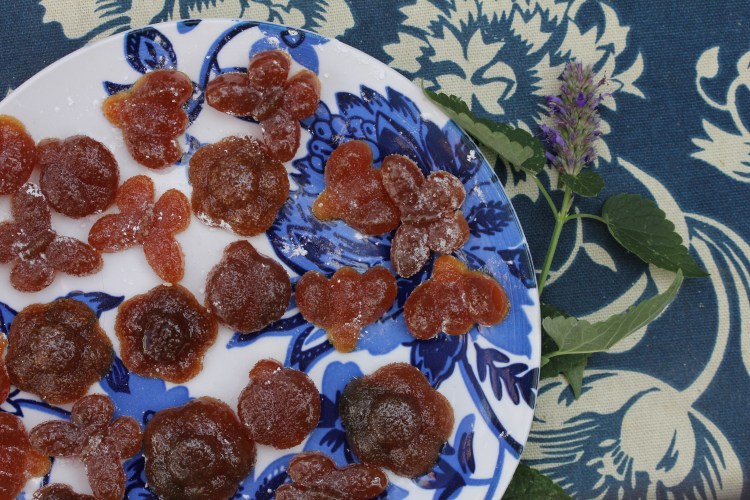
Herbal Cough Drops (horehound)

I have made cough syrup with horehound in years past. This is the first year I attempted cough drops. This is a pretty standard recipe for making the traditional horehound candies that have been sold in American candy stores for decades. Horehound grows all around me as an invasive weed on land that has been stressed by use as pasture. This herb may be bitter but it is one that we all should know how to use and identify in case of emergency. The use of sugar in the form of syrup or “drops” makes it more palatable. My kids are not of fan of these candies but I find the taste a fun experiment. But I also still remember sodas made of birch, sarsaparilla, and sassafras. I like European candies flavored like rose, violet, and orange blossom. It must be an acquired taste. The addition of anise hyssop and mint covers the bitterness of the horehound and provides a bit more sweetness to the flavor.

Herbal Cough Drops/Candies

Make 1 cup of strong infusion using dried or fresh herbs. Start with 2 cups of water, 1/4 cup of horehound, 3/4 cup of anise hyssop, 1/4 cup of mint. Bring water to a boil, add the herbs, reduce heat, and simmer for 30 minutes. Strain and measure out 1 cup of liquid.

Measure 1 cup of honey. Add it and your infusion to a medium size pan.

Cook over low heat, stirring continuously.

Cook until temperature reaches 300 degrees or the hard crack stage on a candy thermometer. If you do not have a candy thermometer, you can test the mixture by placing a drop into ice water. If your drop stays firm/hard then you are probably at 300 degrees. Be patient. I may take a long time to get to 250 but after that it may rise very quickly. Your liquid may foam at the very end. It may change to a lighter color. It should not start to smell burnt.

Once at 300 degrees, remove pot from heat.

Pour mixture into greased molds. Allow cough drops to cool and harden. If you could not get your temperature up high enough to reach a true “hard crack stage” your drops may be a bit soft and melt at room temperature. No problem just keep them frozen until needed. Candy making can be a bit of a science experiment. Sometimes you have no idea why the “chemistry” did not go according to plan. This happens a lot since I live at such a high altitude. Substituting some of the honey with cane sugar may also help with hardening. If your liquid is foamy you can tap the mold lightly to reduce air bubbles. Waiting and pouring more as it settles is an option as long as things don’t start to harden.

Cooled candies can be rolled in powered sugar or fine slippery elm bark powder. Store in the refrigerator until needed. These drops are probably not a good choice for kids under 3 years old or for individuals with braces or certain dental appliances. They are quits sticky or could possibly be a choking hazard.
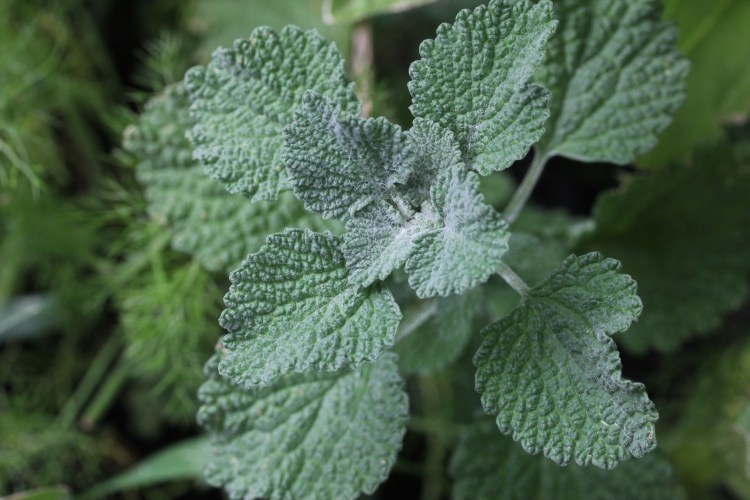
White horehound is a perennial plant in the mint family that grows easily on several continents. You will find it in gardens, dessert pastures, the wild, and wastelands. The entire plant is downy and has a silver “bloom”. The fibrous twisted root sends up several square shaped stems. Numerous leaves are opposite, petioled, round/ovate, wrinkled and soft underneath. Tiny with a pink/white two lipped flowers with a spiny calyx grow in axillary whorls in late summer. Prefers sun and well drained soil.

Marrubium vulgare has been used for healing since ancient times. It is a common ingredient in cough syrups and lozenges because it clears phlegm and prevents infection from moving into the lungs. It is thought to helps with bronchitis, laryngitis, hoarseness, sore throat, asthma, pneumonia, and a hacking cough. Historically this plant has bee used to treat fever, anemia, hepatitis, retained placenta, stomach issues, heart conditions. It balances bodily secretions and makes a bitter digestive tonic. It increases circulation (vasodilator) and sweating. Stimulates the production of bile and supports the liver.

Externally a serum can treat blackheads and rough/dry skin. Adds a healthy glow and moisture to the skin. As a poultice/compress it can be used on deep wounds, a rash or for shingles.

Taste: highly aromatic/pungent (volatile oils) and bitter. Requires a lot of sweetner to make it palatable.

Energetics:Moves energy, clears heat/cooling and toxins. Drying.

Element: Air

Contraindications: pregnancy. Excessive use may lead to hypertension. Fresh juice applied to the skin may cause a reaction. Large doses may act as a laxative.
Whipped Body Butter (calendula)

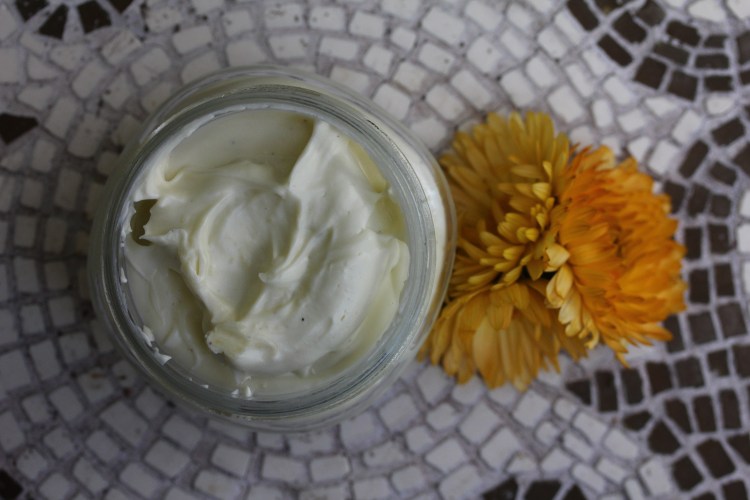
It is mid November. Shortly before Halloween autumn arrived suddenly and left. Winter is officially here, bringing snow, ice, and cold temperatures. My perennial chrysanthemums never managed to fully bloom. Many herbs did hang on through our brief fall. I still had small harvests of motherwort, oregano, mint, comfrey and plantain. The herbal year lengthened unexpectedly as I came up with more creative formulas for electuaries, balms, and tinctures. Members of the aster family like mums, zinnias, cosmos and calendulas continued to produce an abundance of colorful blossoms. This week I finally breathed a sigh of relief. I am truly done as the garden slips into hibernation until next spring. I infused dried calendula flowers for two weeks in olive oil. That I used this past weekend to make a whipped body butter. Silky smooth and nourishing for skincare during the long winter months ahead.

Whipped Body Butter

In a double boiler heat/melt on medium setting

2 TBSP castor oil

1 cup of herb infused oil

8 oz of shea butter

Once fully melted-stir, remove from the heat, and chill for one hour in the refrigerator.

Remove from the pan, place in a food processor and add…

1/4 tsp vanilla extract

8 drops lemon essential oil

pinch of cardamon powder

Use the pulse setting to whip the “butter” until you have the desired consistency. Let your machine rest if it shows signs of the blade not moving properly. You may have to warm the “bowl” of the processor if your product has gotten too cold and solid. If the oil is not set enough you will get ointment rather than a light, airy creamy butter.

Pour into small jars, let fully cool and then seal with lids. Makes 3-4 quarter pint products.

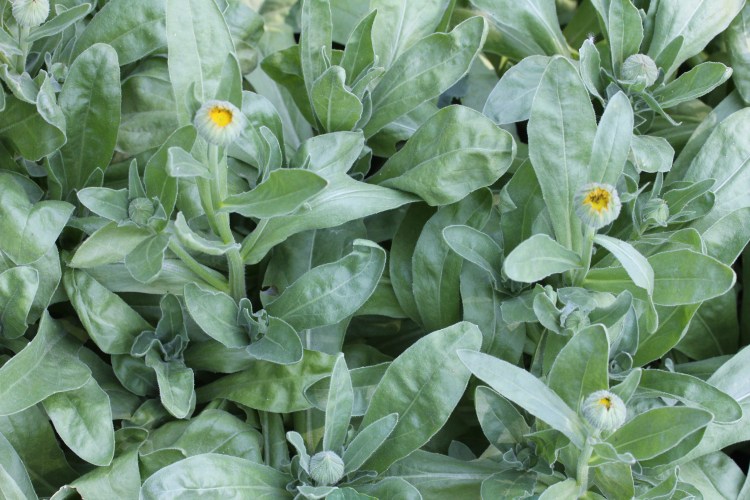
Calendula (pot marigold). Latin name: Calendula officinalis. Family: Aster. This extremely attractive herb has bright yellow/orange medium sized flowers. It has many petaled daisy like ray petals. (single or double) surrounding the darker disk. The entire plant is slightly fuzzy and a lovely shade of jade green. Calendula grows 1-2 feet tall stem that forms many angular branches terminating in a single bud. The leaves are alternate, oval/sword shaped and about 3 inches long. The seeds are very distinctive forming a good sized brown spiney spiral. The blossoms are slightly resinous/sticky and have a certain smell. This easy to grow plant is native to Asia but grows all over the world. It is often a self seeding annual or when the winters are mild, a perennial. It prefers a garden location or area that is open and very sunny. Because it produces so many seeds it can spread and take over very quickly if you do not thin in the spring. Deadheading will give you an overabundance of blooms most of the summer. Calendula will bring a lot of native pollinators into your yard. The flowers are harvested just as they open and work best when they are dried thoroughly soon afterward.

 Calendula is such a versatile and useful plant. One of the few that can be used externally, internally and in food. The plant part harvested for medicine is the bright orange flower. When used internally this herb is thought to clear phlegm, toxins, chronic infection and inflammation. It stimulates white blood cell production and inhibits the growth of several micro organisms. Herbalists have used calendula to treat candida, ulcers, gingivitis, stomach/digestive issues, gastritis, swollen lymph nodes, herpes, painful periods, childhood illnesses, and stimulate the immune system. I use the dried flowers a lot in electuaries and glycerites to support health during the winter. Calendula is thought to have many antiseptic and antibacterial properties. When used externally as a wash, compress, poultice, foot soak, salve, lotion or oil-it can be used to treat many skin conditions. Burns, bug bites, impetigo, ring worm, chilblains, varicose veins, hemorrhoids, ear infections, thrush, diaper rash, eczema, sunburn, warts, callouses, bunions, boils, bruises, chapped skin, athletes foot, dandruff, hair loss, and cradle cap. Historically a cold infusion of calendula has helped those suffering from conjunctivitis/eye infections. The flowers have amazing wound healing properties serving to nourish fragile skin, prevent scars, and form granulation tissue. This plant has been used as a dye for both grains and textiles, similar to saffron. When used as a hair rinse it might bring out highlights in blonde hair. Calendula has some sticky resins and it releases a lot of water when infused. I prefer to use the dried flowers in any preparations that involves an oil, honey, or glycerin base. This insures that there will be no mold. It is one of the few plants that I do not use fresh when making a salve or lotion.

ENERGETICS: bitter, pungent, cool, dry.

ELEMENT: fire

CONTRAINDICATIONS: none except aster allergy.

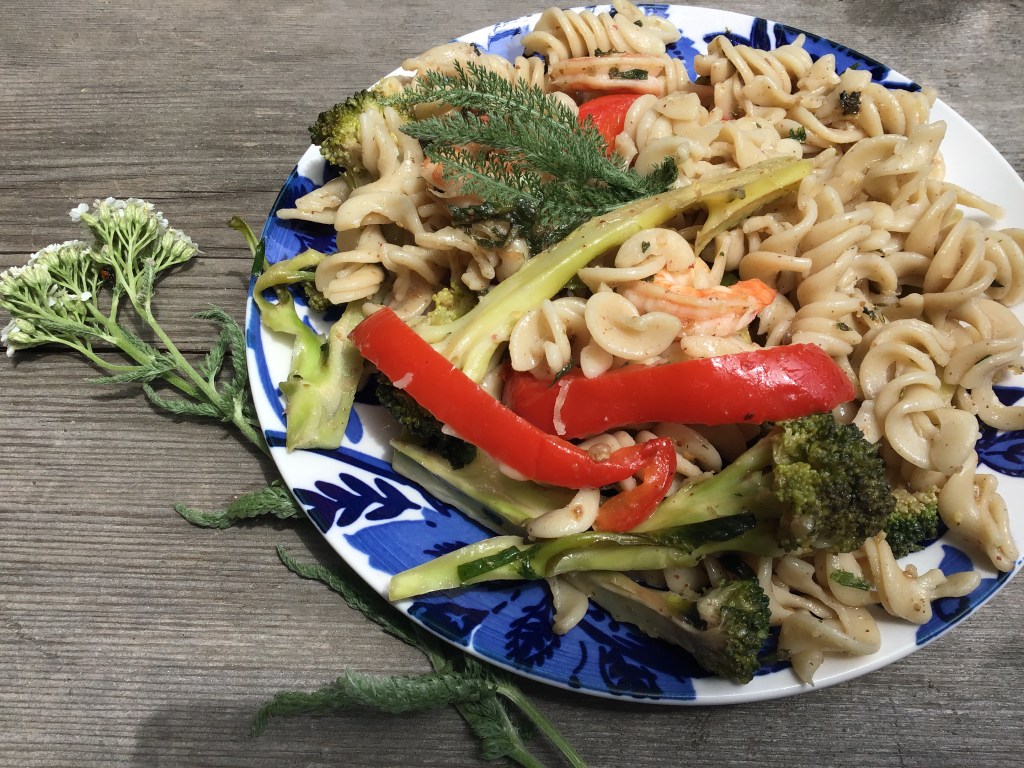
Pasta with Shrimp and Yarrow

Internally yarrow is well known for treating a fever. Externally I like to use it in a styptic powder and in my favorite cold cream. It is probably not an herb that comes to mind when an herbalist goes to cook a meal. Yarrow is bitter, pungent and sweet. It is balanced by the sour lemon peel, pepper, and mint in this recipe. This pasta dish is perfect for a summer picnic. I just love it when I find a creative culinary use for a medicinal herb.

Pasta with Shrimp and Yarrow

In a large bowl add……

25 count/8 oz. of medium shrimp (cooked, deveined, peeled, and tail removed)

12 oz. of dried pasta (shells, bows, or spirals/fusilli), cooked and then cooled to room temperature.

1 medium head of broccoli and one medium red bell pepper coarsely chopped and sauteed in butter until soft.

In a medium bowl measure out…

1 tsp of lemon zest

1/2 TBSP each of finely chopped mint, chives, and thyme

2 TBSP of white wine

3 TBSP Olive oil

1 TBSP of finely chopped yarrow leaves

Red peppercorns-coarsely ground to measure 1/2 tsp.

Coriander seed-coarsely ground to measure 1/2 tsp.

1 TBSP capers

Mix both bowls together. Serve at room temperature

Yarrow/Milfoil is best known for lowering a fever. When I was a midwife I had it as a tincture in my birth kit for minor hemorrhaging The tannins in the plant also make it an excellent wound healer which serves to tighten the tissues and arrest bleeding. It has a history of being used for nosebleeds. bleeding hemorrhoids, and abscesses, Other constituents in the plant help with pain, infection, bringing on a fever/sweat, lowering blood pressure, relaxing muscle spasms, strengthening blood vessels, calming the nervous system, opening pores, “cleaning” the blood, toning/stimulating organs or tissues, building blood and reducing inflammation. Historically this herb has been used to treat colds, flu, allergies, headaches, blood clots, menstrual issues, digestive problems, diarrhea, poor appetite, cramps, gas, bloating, rheumatism, childhood illnesses, toothache, earache and ulcers. A wash of the infusion, a poultice, or compress has been used for wounds, varicose veins, bleeding hemorrhoids, vaginal discharge, acne, blood blisters, bruising, eczema, hair loss, chapped skin, and sore nipples in nursing mothers. Dye can be made from the flowers and the essential oils are used to reduce inflammation when used in skin care products.

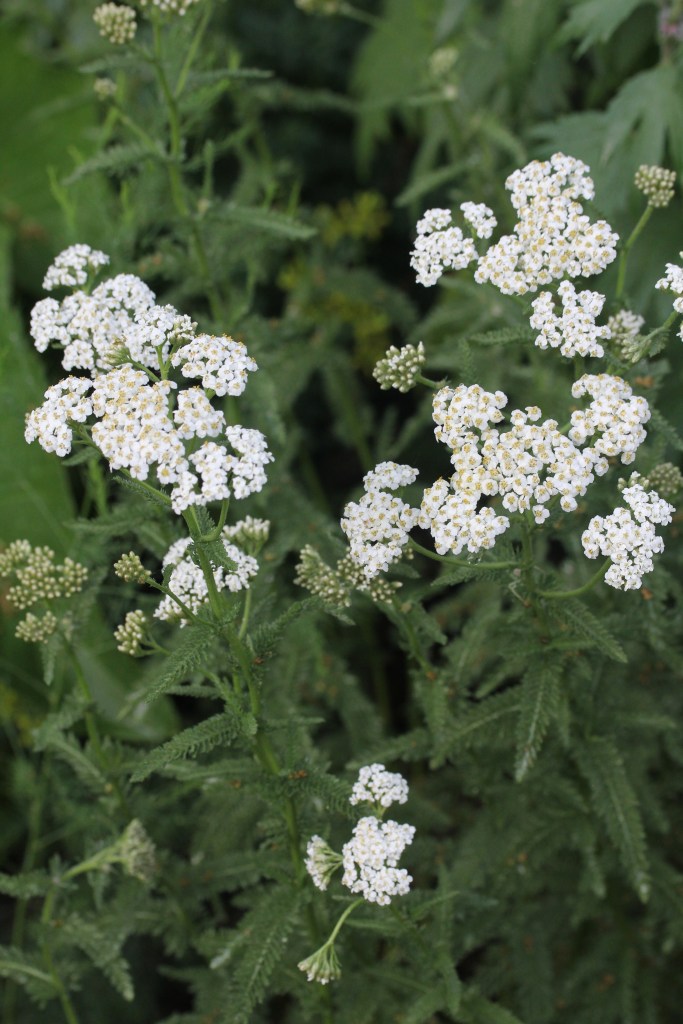
Yarrow is found all over the world. It grows easily in gardens, meadows, along the road, in the wild/mountains and wastelands. It prefers full or moderate sun, dry soil and very little water. There are cultivars with very attractively colored flowers and textured leaves. Yarrow, as a companion plant, helps its neighbors to resist disease. The shallow growing rootstock allows this plant to spread quickly and become invasive. The majority of the finely pinnately leaflets (sharply cleft) give the dark green leaves (lance shaped and alternately arranged) the appearance of feathers. These are 3-4 inches long and form dense growth near the ground. The tiny ray flowers (5 petals) are typically white (can be pink or pale purple) with the discs being yellow, fading to brown as they mature. These are arranged in a flat or raised compound corymb at the top of a tall stem (1-3 ft. tall). Often the stalk is fuzzy with small leaves arranged alternately with wide spacing up the stalk.

Latin name: Achillea millefolium

Parts used: Leaves and flowers

Energetics: bitter, sweet, pungent, cool, dry

Element: water

Contraindications: allergy to aster/ragweed family. Sensitive individuals may experience dermatitis or sensitivity to sun.

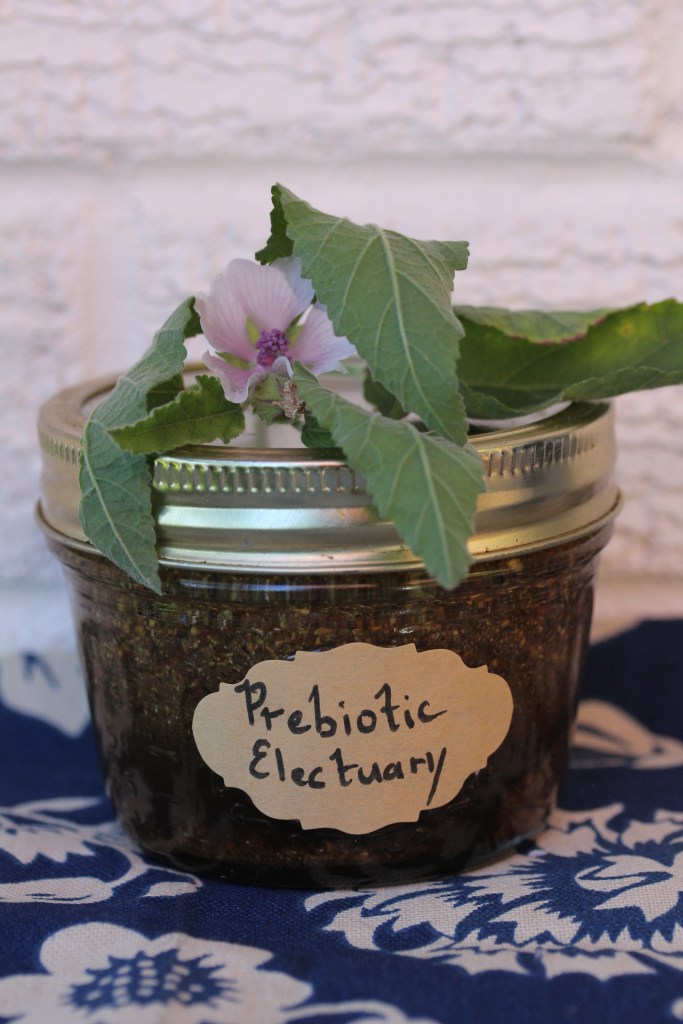
Prebiotic Electuary (MARSHMALLOW)*

Prebiotics are special plant fibers that support healthy bacteria to grow in your gut by providing them with food. They are carbohydrates that your body can’t digest, so they make it all the way to the colon where they are needed most. Your body’s microorganisms metabolize and ferment the prebiotics. Upon metabolism, byproducts such as short-chain fatty acid are created. These acids are beneficial to your gut’s health because they provide energy to your colon cells, help with mucus production, reduce inflammation and boost immunity. Your digestive system is able to work much better

What are some other benefits of prebiotics? They-help your gut absorb calcium and phosphorus from what you eat (improving bone density), affect the glycemic index of foods, ferment food faster so that it spend less time in your digestive system, reduce constipation, keep the cells that line your gut healthy, control obesity, decrease the number of bad bacteria in the gut that cause disease/cancer, stimulate the production of hormones that regulate appetite, and may reduce symptoms associated with IBS.

Although there are many kinds of prebiotics, three of the most common are found in resistant starches, inulin and pectin.

By including digestive herbs like fennel, orang peel and ginger in a prebiotic product you can reduce some of the gas and bloating that may occur from use. The use of prebiotics is contraindicated when it comes to some health conditions. Please consult with your care provider.

What is an electuary? It is a powdered herb mixed with raw honey. The texture can vary from more like a syrup when less powder has been added and the honey used is warmed and runny. Or it can be thick paste that can be rolled into pills or lozenges. Infused honey is usually made with fresh flowers or aromatic herbs that are later strained out. With an electuary you can leave the herb mixed in and consume it together. Electuaries are a great way to consume dried roots, barks, seeds or berries that can be quite coarse and starchy. I like them as daily “tonics” for things like digestion, thyroid issues, or menopause.

Prebiotic Electuary

2 TBSP each finely powdered and mixed well together

Fennel Seed

Star anise

Orange peel

Ginger

Dandelion root

Dandelion leaves

Chicory Root

Burdock Root

Dried Hyssop

Marshmallow Root

Fill a very clean and dry 4 oz jar with the herb mixture. Use fresh (warm and runny) honey and fill your jar to 3/4 full. Stir with a chop stick until the powder is wet and evenly distributed. Top with more honey and seal. Store in a cool, dry and dark place.

Plants in this family are often hearty perennials, distinguished by their colorful 5 petaled, funnel shaped flowers in all shades. Crushed these have a slimy quality. The stamens unite to form a distinct central column. Marshmallow will be pale purple almost white while malva is purple with darker streaks. Marshmallow stalks can grow up to 5 feet high. Its large leaves are alternate, velvety, heart shaped/palmate and lobed. The fruits mature into button like achenes. Commonly called “cheeses” in the case of malva. The pale slender root has central tap with a few branches.

Both marshmallow and malva have become rare in the wild but grow easily in the garden. Malva is more common in Europe as a medicinal plant but grow it too. It has similar uses to marshmallow as does hollyhock. These plants prefer moist, cool soil and full sun.

Some leaves, flowers, and “cheeses” in this family can be eaten

Others medicinal plants in the family-hollyhock, malva, cotton, roselle (African hibiscus), scarlet globe mallow (yerba negrita). As well as okra, rose of Sharon, decorative tropical hibiscus, low mallow (common weed) which are not considered medicinal.

Plants in the family are high in starchy mucilage (a demulcent that is very gelatinous) which makes them anti-inflammatory and cooling when there is irritation. Their leaves help to clear phlegm, break down/remove damaged tissue, and increase white blood cell activity. The gum and pectins allow it to be whipped into a froth similar to egg whites.

Whether you choose root or leaf, marshmallow/malva will moisten and sooth the respiratory, urinary or digestive systems. Historically it has been used in syrups, decoctions, and infusions. Herbalists have used it for allergies, neuralgia, prostatitis, rheumatism, dry cough, bronchitis, laryngitis, sore throat, asthma, emphysema, tonsillitis, pleurisy, pneumonia, gastritis, ulcers, acid reflux, IBS, leaky gut, diarrhea, constipation, hemorrhoids, edema, urinary tract infections, irritable bladder, and kidney/gall stones. It can be used to heal inflamed eyes and vaginal tissues. As a tonic it is thought to nourish the bones, skin, and immune system. Externally it can be used as a drawing poultice on burns, bites, eczema, boils, abscesses, bruises, septic wounds, fractures, mastitis, varicose veins, , sunburn, swellings, and sores that will not heal. It promotes tissue healing and hydrates all tissues. It contains several B vitamins and Vitamin C.

Leaves are at their best harvested after flowering and fresh. Roots are gathered in the fall or spring, peel before using. Use a cold extract process for infusion or decoction. The fresh root can be grated, mixed with honey and used as a poultice. It is often used in desserts around the world. Flowers can be used as edible garnishes, in soothing teas or dried decoratively in bath mixtures.

Family-Althaea/Malvaceae

Energetics-cool, moist, sweet, bitter

Element-Water

Emotional/Spiritual uses-to support luck, abundance, prosperity, connection, receptivity and openness.

Malva and marshmallow are nutritive/tonic herbs that are gentle enough for just about everyone to use. Contraindications-may interfere with the absorption of some prescription medications.

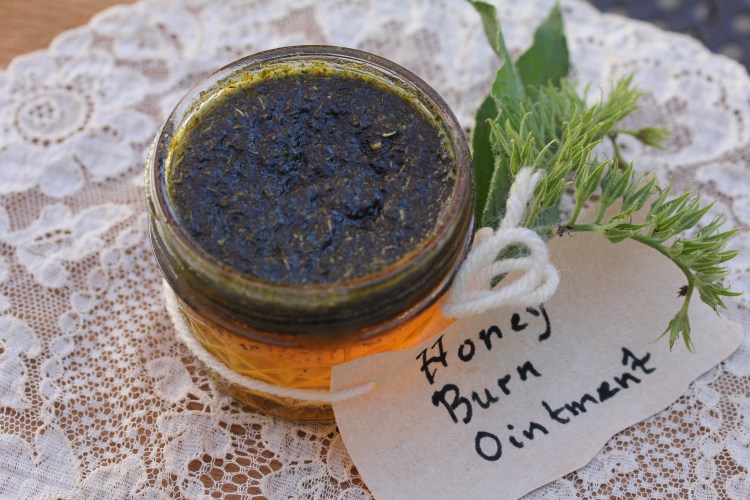
Honey and Herb Based Burn Ointment (Comfrey)

Every year I have theme that organizes what I am going to harvest and make from the backyard pharmacy. In 2020 I made a lot of tinctures. In 2021 I focused on infused oils and salves. For 2023 it was all about seeing how much I could truly harvest and use for large amounts of dried/bulk products such as teas, baths, and steams. Next year I will experiment with hydrosols and flower essences. Organizing the herbal year like this allows for me to learn and produce a lot while balancing a very busy life.

Once upon a time I was a bee keeper until severe allergic reactions in my family forced me to let that hobby go. Releasing that dream brought unexpected gifts. I now have more native bees in the yard and I “raise” orchard mason and bumble bees instead. I appreciate wasps as crucial pollinators instead of pests. Honey has many medicinal properties all on its own. It is a powerful anti-inflammatory, antioxidant and antibacterial substance. Honey can be consumed orally to treat a cough or used topically to treat a burn or support wound healing. It also has qualities that make it a natural preservative if you can keep it very clean and from crystalizing.

I have infused flowers such as elder, rose, hyssop and clary sage in honey. Honey can be combined with fresh fruit and herbs in an oxymel. Juiced herbs blend with honey in a succus. I whip finely powdered elder berries, lavender flowers, calendula, or rose hips into honey to support the immune system in winter. I coarsely grind herbs such as licorice and marshmallow root or fennel seed to make electuaries. Since one is using dried materials, experimenting with honey as a medicine allows the herbal year to extend into fall and winter. The following recipes combines honey with ground herbs to make an ointment to treat burns. My burn salve is one of the most popular things that I make a give to friends. I hope this product yields equally effective results.

Burn Ointment

1 BSP of coconut oil

1 tBSP of castor oil

2 TBSP of apple cider vinegar

Melt the above ingredients in a double boiler, pour into two small ( 4oz. caning) jars. These should be very clean and dry before use. Mix well.

Next use a coffee grinder to finely powder dried calendula flowers, comfrey leaf, plantain leaf, lavender leaves, hyssop leaves. You will need about a teaspoon of each. Mix well , divide in half and then add the powder to your jars. Let settle/infuse through the liquid for a few minutes.

Then add warm/runny honey until you have about 1 cm of empty space from the top of each jar. Stir rapidly with a chop stick. Top with more honey. Clean jars externally if need be and seal.

Let infuse for 4-6 weeks. You can warm the honey and strain out the herbs or not. Store in a clean, dark, and dry place until needed.

Comfrey hybrid, possibly Russian or “rough” comfrey. Note the long ruffled leaves.

Comfrey is a common perennial found in meadows, woodlands, along streams, gardens and moist places. Long, lanceolate, alternate leaves have numerous coarse/rough hairs with smooth or ruffled margins depending on the variety. Leaves MAY BE sessile or petioled, often presenting as a close to the ground, basal rosette in the spring. Shoots of tall, flowering, hairy, 1-4 ft long stalks occur as the season progresses. Stems and leaves MAY be winged/angular/ribbed. Clusters of medium sized, white to purple, tube/bell shaped, flowers grow on the tips as droopy racemes. Roots are numerous, small to medium, and spread widely throughout the soil. When cut even a small piece can easily produce another plant. The rootstock is white on the inside, fleshy and dark on the outside. It produces a slimy, glutinous juice. Comfrey is worth having in the garden to attract bumble bees and build soil.

This is plant is well known for its ability to heal due to its ability to encourage rapid cell, connective tissue, bone, and cartilage growth growth. It breaks down red blood cells, and soothing or protecting damaged tissues. Its astringent properties can stop bleeding quickly. When fresh it has the highest mucilage content of any medicinal plant. It is a great expectorant to remove mucus and other discharges from the body.

This plant is commonly used externally for sores, wounds, hemorrhoids, varicose veins, insect bites, burns, tendon/ligament/ joint (pain, inflammation, injury,) sprains, pulled muscles, dislocations, arthritis, back pain, rheumatism , bursitis, phlebitis, mastitis, acne, eczema, carpal tunnel, surgical scars, sunburn, swelling, wrinkles, dry/rough skin, swelling, dandruff, nosebleeds, fractures and bruising.

Historically this plant has been used internally for hemorrhage/internal bleeding, ulcers/inflamed stomach lining, pleurisy, bronchitis , pneumonia, to help regulate blood sugar levels, diarrhea, poor digestion, colitis, asthma, gallstones, heartburn, and broken bones

As a mouthwash is has been used to treat hoarseness, laryngitis, tonsillitis, and bleeding gums.

Latin name: Symphytum (there are several varieties, this plant easily hybridizes so exact ID can be challenging)

Botanic family:Boraginaceae

Parts used: Leaves and roots

Energetics:bitter, sweet, cool, moist

Element:water/air

Spiritual/Emotional uses: to support clarity, connection, unity, inspiration, balance, expansion, manifestation, and pulling ideas together.

Contraindications: the roots contains alkaloids that are toxic/carcinogenic to the liver. The leaves have a lesser amount of this chemical, especially during late summer and fall. Internal use should only be undertaken under the supervision of an experienced care provider and only with the true Symphytum officinale variety. Internal use of the plant by individuals who are pregnant, elderly, or young and prolonged use is not recommended. Do not use on deep or dirty wounds and on bones that have not been set due to how fast it connects cells. Hairs on the fresh plant may irritate the skin or cause dermatitis in sensitive people when initially harvested. Be careful not to confuse it with foxglove which has similar leaves and bell shaped flowers.