Gluten Free Blackberry Sage Breakfast Bars

I am very proud of myself this year. Very little in the garden went to waste or ended up in the compost. I managed to find a use for just about everything. Snow is around the corner. Not much is left thriving but calendula, horehound and sage. I have such an overabundance of Sage. I am stumped with how to use it all up. When I did an internet search “using sage medicinally” all that came up was tea. I have used sage in mouthwash and incense. Occasionally it ends up in a bath or wash. I found many culinary recipes. This one I adapted and made gluten free. The grains and nuts give it a nice texture. I was able to use up the last of blackberries. It was not too sweet. If you get tired of the savory use of sage it can be an adventure to experiment with it in desserts.

Blackberry and Sage Breakfast Bars


For the crumble base and topping add to a large bowl…..

1/4 cup of granulated sugar

2 TBSP of honey

1/2 cup of brown or coconut palm sugar

1 egg

1/4 cup of ground oats

1/4 cup of cooked quinoa

1 TBSP each of ground hemp seeds, chia seeds, flax seeds

1 cup of brown rice flour

1 cup of buckwheat flour

3/4 cup of whole hazelnuts, then coarsely ground

Mix well and then set aside

Line a 20cm x 20cm tin with parchment paper, leaving enough overhang that will allow you to lift the bars out later.

Take 8oz./1 cup of cold unsalted butter. Chop it into coarse pieces. Add it to your larger bowl of dry ingredients then

Use your fingertips to rub the butter into the dry ingredients until it all looks like coarse breadcrumbs. Tip three-quarters of the mixture into the lined tin and press it down evenly.

Add 8-10 medium size sage leaves, finely chopped, to the remaining crumble mixture in the bowl and use your fingers to mix it together until it starts to clump. Set aside in a small bowl. Chill both the base and the topping for 20 minutes.

For the filling place in a bowl and mix enough to just coat
2 cups of fresh blackberries with….
1/4 cup of granulated sugar
1 tsp arrowroot powder
Juice of ½ lemon

Heat the oven to 190C (170C fan)/375F/gas 5, then bake the chilled base for 20 minutes, until it looks just set and the edges are starting to brown. Remove and let cool for 10 minutes. Then….

Drop your filling onto the base in small piles. Fill in any “holes” with your crumble mixture.

Bake for a further 40-45 minutes, until the top is golden and the fruit has softened and turned jammy. Remove and let cool.  Then cut into generous rectangles. Can be stored in the refrigerator or freezer until consumed.
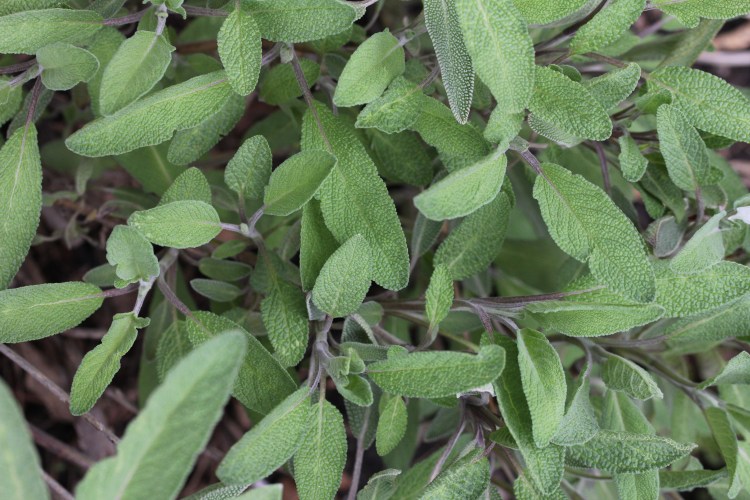
Sage is a shrubby perennial that is native to Europe. It grows well and overwinters even in my climate. In any garden that I have had it establishes itself as a “mother plant”. The stems are square, woody, long, finely haired and often leggy. With time and age my plants become less attractive but more productive in leaves. This herb can be sensitive. If you offend it, neglect it, damage it when harvesting-you may not see it the following year. The downy, oval shaped, crenated, opposite arranged leaves have a “sage” green color. The flowers are purple (sometimes white) tube shaped, two lipped, and grow widely spaced on terminal racemes. High in aromatic essential oils and botanical features clearly place it in the mint family.

Salvia is thought to be good for stress, depression, vertigo, hot flashes, digestive issues, gas, diarrhea, headaches, flu, congestion, menstrual problems, arthritis pain, blood clots, fever, and staph infections. She is a wonderful gargle for laryngitis, gum disease, bad breath, and sore throats. If you need to clear phlegm in any organ this plant is a good choice. As a bath Sage has been used externally to address eczema, insect bites, wounds, acne, rashes, and poison ivy/oak, dandruff, and vaginal discharge. There is a long history of using this plant as a symbol of wisdom, clarity, longevity, purification and protection. I like hanging bundles of the fresh herb in my house, washing the floors with the tea, or burning dried leaves to clean out energy from a space.

Parts used: Leaves

Energetics:bitter, dry, pungent, warming

Element:air

Spiritual/Emotional Uses-to remove negative energy, disturbances and bad luck. Helpful when one is struggling with the natural process of aging.

Contraindications:Large does in pregnancy. Do not use while nursing as it may dry up your milk supply. Do not use in therapeutic doses long term.
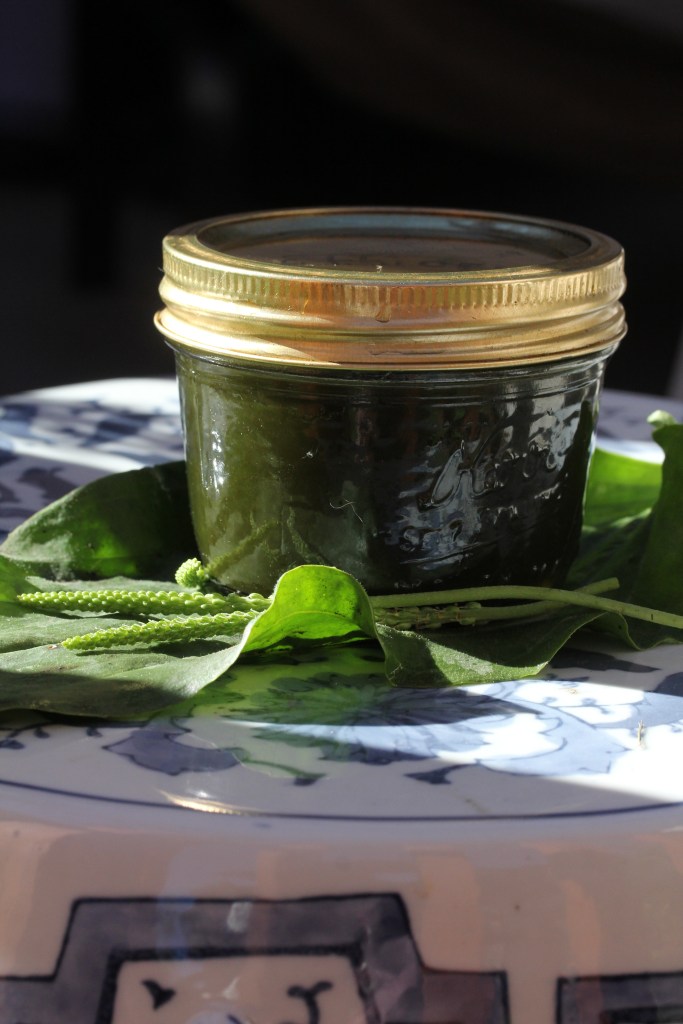
Plantain Succus

A succus is a concentrated, nutrient dense tonic full of vitamins, minerals, and medicinal properties. It cleanses/flushes the blood, liver, and lymphatic system. Once very popular with folk herbalists of the past this preparation is making a comeback on-line and in the home. Succi are very easy to make. If you have a juicer you only have to run hand fulls of green goodness through your machine. If you only have a blender just add extra water, blending well to break up the plant material as if making a thin smoothy. Then strain out the pulp with cheesecloth and squeeze out the liquid if desired.

Late spring is the perfect time to make a succus so look for nettles, chickweed, dandelion , violet leaves, purslane, calendula, cleavers, lemon balm, plantain, fennel parsley, or cilantro leaves. I had a bunch of new growth plantain in September, making a succus seemed the perfect idea to use it up.

Some people will also add in lemon , fresh ginger or turneric root.

Once you have your choose there are several choices for preservation and storage.

1)Do not strain but freeze in ice cube trays. This can later be consumed internally or used externally in a pinch for skin issues such as burns, bug bites, wounds, rashes.

2)Add equal parts “juice” to honey. Mix well , bottle and store in the refrigerator for several months.

3)Preserve with alcohol (3 parts juice to 1 part alcohol in case you are not using a higher proof vodka or Everclear to make a succus that is close to 25% alcohol. Let settle for three days and filter. Store in amber glass bottles.

Dose-take a “shot” for acute conditions. OR 1-2 tsp 3X daily added to infusions, smoothies, or fruit juices.

This simple preparation is so easy to have on hand for winter or for the unexpected.

Directions: Juice/blend a generous handful of fresh plantain leaves. Run the mixture through a fine sieve to remove the pulp. Measure and mix with equal parts honey. Freeze in a container or ice cube trays. Defrost and use when needed for coughs and stomach ulcers.

Plantago is a perennial characterized by a basal rosette of several leaves with ribbed/parallel venation. Each terminates in a thick channeled stalk where they attach to a round stem. Leaves can be broad/ovate or narrow/lance shaped. Sometimes margins are toothed. A single, dense ,cylinder shaped, cluster/spike, of greenish white tiny flowers grows on a tall (6-18 inch) erect stem . These have brown sepals and bracts. Plantain is found along paths and roadsides, in meadows and lawns or in wastelands. If cultivating this plant, it likes sun or partial shade but really prefers a moist soil.

Plantago should be your top choice for a first aid remedy. Externally plantain is thought to be helpful for broken bones, wounds, burns, bruises, injuries, boils, acne, shingles, sunburn, eczema fungal infections, sore feet, and plantar fasciitis, . It can draw venom, poison, dirt, splinters, pus, and infection out of insect stings, animal bites, or wounds. It relieves irritation and pain when one has been exposed to irritating plants like nettles or poison ivy. Like nettle is supports the body to release antihistamine for relief when suffering from allergies, hayfever, and asthma. Historically this herb has been used to treat ulcers, bronchitis, coughs, sore throats, lung damage, inflammation in the digestive tract, irritated tissues/organs, hemorrhoids, varicose veins, toothache, fever, mastitis, earache, sore throat, urinary tract infections and internal bleeding. It is known to clear heat and inflammation. The seeds are edible and have been used to make flour or as a thickener. They are also a good source of fiber and may prevent constipation.

Family: Plantaginacea

Parts Used-leaves, seeds, root

Energetics-sweet, salty, bitter, cool, dry

Element-earth

Spiritual and Emotional Uses: Settling a mind that is restless, overactive, irritable or “addicted” to something stimulating.

Contraindications: soak or cook seeds before use.

Restful Sleep Sachet (catnip)

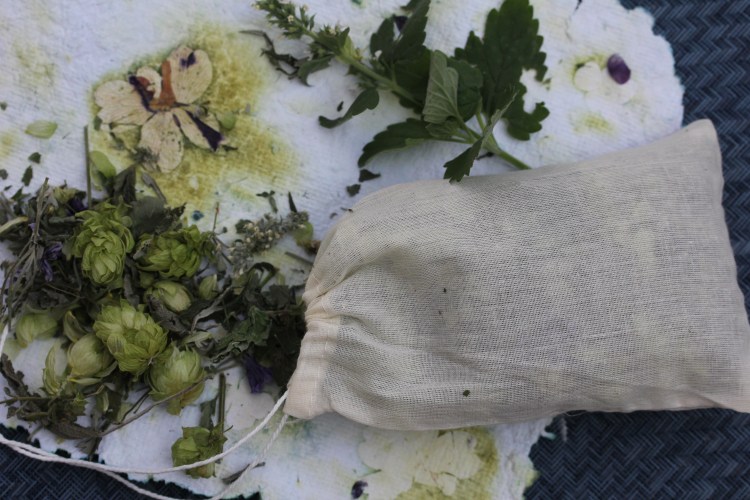
There are many young people and a few adults in our social circle who are not sleeping well. In some cases these are chronic situations or the internal consumption of herbs is contraindicated. An herbal sachet is a way to support the body with medicinal plants through “micro dosing” and using their aromatic properties. This may be a better choice when plants have a strong taste or action. Sometimes treatment is needed for an extended time period of even the long term. I think many herbalist are quickly tempted to hand out tinctures or teas, forgetting that there may be a simpler and more appropriate solution. I had an overabundance of beautiful hops that dried a lovely shade of green. I formulated this recipe around using that up. I fill a muslin bag with a hand full and they make lovely gifts that can be given easily year round.

The contents are large amounts of hops, catnip, and lemon balm.

Followed by much smaller amounts of skullcap, lavender, mugwort, and sage. The goal is to encourage a good night’s rest and not sedation or lots of dreams. I specifically designed these pillows to be used by children, the elderly and dying. The sachets can be slipped under a pillow, into clothes, under a blanket or a inserted in a heated hand warmer/pouch/muff.

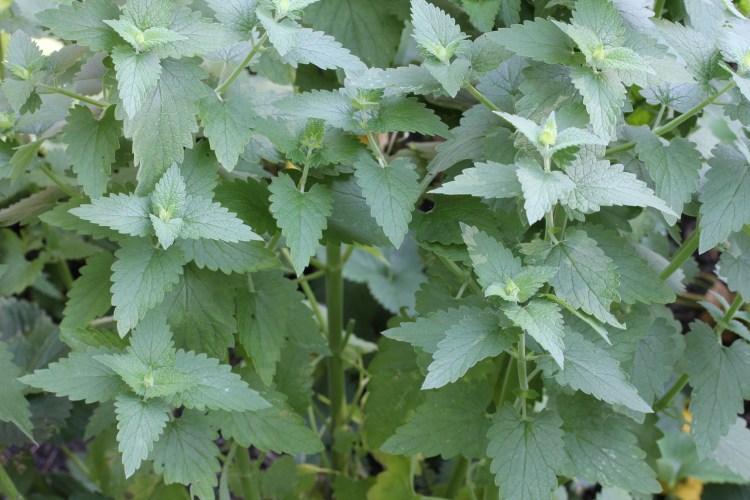
Nepeta cataria has small white/pink flowers clustered down a stalk. The heart oval shaped leaves are arranged alternately on a square stem. . This plant has its own distinctive strong scent which cats obviously love. It can be confused with other members in the mint family like lemon balm or spearmint. Catnip has more “silver” green leaves which are fuzzy in texture, with a toothed margin and a lighter underside. The stem is also hairy. It can grow 3-4 feet high, especially as it shoots up to flower. This plant has become an invasive species in many ecosystems. You will find it in backyards, wastelands, in grazing areas, along a stream as you hike in urban corridors, or in cracks in the sidewalk. It is a self seeding perennial that likes a lot of sun and does well in poor soil. There is a similar plant in the Nepeta family called “catmint” This herb has purple flowers and much smaller leaves. It is more likely to be a cultivar that found in the wild. All Nepetas have similar properties and uses.

Catnip has been used for food and medicine since ancient times. It contains powerful chemical constituents that are powerful sedatives, pain relievers, euphorics, and aphrodisiacs. No wonder kitties love it. Nepeta moves energy, relaxes the nerves and clears heat. This herb contains many volatile oils. It has such an affinity for the energy of kids, supporting them when they feel feverish, anxious, restless or sick. It is great for babies as a weak tea or bath for colic, teething, insomnia, or crankiness. A hot tea promotes sweating. It is thought to be an excellent remedy for colds, flu, bronchitis, pneumonia, childhood illnesses, menstrual problems, headaches, and motion sickness . This plant is has been used for all manner of stomach complaints like , gas, and diarrhea, parasites and indigestion. Externally people have used catnip for pain, injuries, hemorrhoids, acne, dandruff, arthritis, eye inflammation and allergies.

Family: Laminaceae/mint

Parts used:Leaves and flowers

Energetics: pungent, bitter, cool, dry

Element:water

Contraindications:Do not use in pregnancy. Very large doses can cause nausea and vomiting.

Ritual Herbal Wash (Horehound)

Early fall before a first frost is a perfect time of year for moving stagnant energy and purifying living spaces or objects. All cultures use water for cleaning, discharging, rejuvenating, sanctifying, restoring, connecting , stimulating, cooling, heating, celebrating, replacing, nullifying, resolving, clarifying, repairing, blessing, balancing, transforming, regulating and proving communion with various forces. This ritual wash can be used to wash floors, items, or people. It can also be used as part of something more elaborate like a ceremony.

I like to have a container of dried herbs like mugwort, sage, horehound, oregano, rue, lavender, bee balm on hand to make an infusion for ritual use.If it is the growing season I will add in the fresh leaves of basil, or clary sage and the fresh flowers-of marigolds, roses, malva, hops, feverfew, or calendula. These plants have a history of being used for healing, aromatherapy, or “magic”.

When creating your ceremony think of the aesthetics of color, smell, chosen objects, and arrangement. Add in prayers, poems, words or song to create connection or move energy. Gestures or actions create sacred space, altered states, and serve as offerings.

If doing a house blessing one can imagine bringing abundance, health, fertility, wealth, good luck and other positive qualities into a home. When doing an energy clearing one can imagine illness, bad memories, misfortune, conflict, obstacles, traumatic events, stress and negative aspects being expelled. This is an opportunity to do some “house cleaning, start over, repair ruptures with people and nature, or begin a new habit or project.

To prepare the solution pour 1 gallon of boiling water over 1-2 cups of fresh or dried herbs. Let cool to room temperature and strain out the herbs. Some people like the sensual and ritual practice of squeezing and straining out the plants by hand. Compost and discard them with respect when you are done.

Water prepared with herbs can be used as a/an

Ablution-to wash, purify or sanctify as part of a ceremonial act.

Libation-to pour a liquid out as an offering

Lustration-to brighten or clean with water as part of ritual or to prepare a sacred space

Ritual casting-into another body of water or the environment into order to “throw away” something no longer wanted so that it can be recycled.

Spray to asperse-blessed water

Splash onto hot rocks to discharge negative ions and release essential oils that can be absorbed through the skin, smelled or breathed in.

Horehound may seem to be an odd choice in a ritual wash. It really does not have a “magical” history for this use in any culture that I know of. I chose it for my mixture because 1) I have an overabundance of and few uses for it. 2) I happen to love the smell of it-fresh, clear, sweet. Maybe I have strange tastes but I think it’s aromatic notes are under appreciated.

Marrubium vulgare

White horehound is a perennial plant in the mint family that grows easily on several continents. You will find it in gardens, dessert pastures, the wild, and wastelands. The entire plant is downy and has a silver “bloom”. The fibrous twisted root sends up several square shaped stems. Numerous leaves are opposite, petioled, round/ovate, wrinkled and soft underneath. Tiny with a pink/white two lipped flowers with a spiny calyx grow in axillary whorls in late summer. Prefers sun and well drained soil.

Marrubium has been used for healing since ancient times. It is a common ingredient in cough syrups and lozenges because it clears phlegm and prevents infection from moving into the lungs. It is thought to helps with bronchitis, laryngitis, hoarseness, sore throat, asthma, pneumonia, and a hacking cough. Historically this plant has bee used to treat fever, anemia, hepatitis, retained placenta, stomach issues, heart conditions. It balances bodily secretions and makes a bitter digestive tonic. It increases circulation (vasodilator) and sweating. Stimulates the production of bile and supports the liver.

Externally a serum can treat blackheads and rough/dry skin. Adds a healthy glow and moisture to the skin. As a poultice/compress it can be used on deep wounds, a rash or for shingles.

Taste: highly aromatic/pungent (volatile oils) and bitter. Requires a lot of sweetner to make it palatable.

Energetics:Moves energy, clears heat/cooling and toxins. Drying.

Element: Air

Contraindications: pregnancy. Excessive use may lead to hypertension. Fresh juice applied to the skin may cause a reaction. Large doses may act as a laxative.

Chicken Soup Medicine for the Soul (Lycium/GOJI berries)

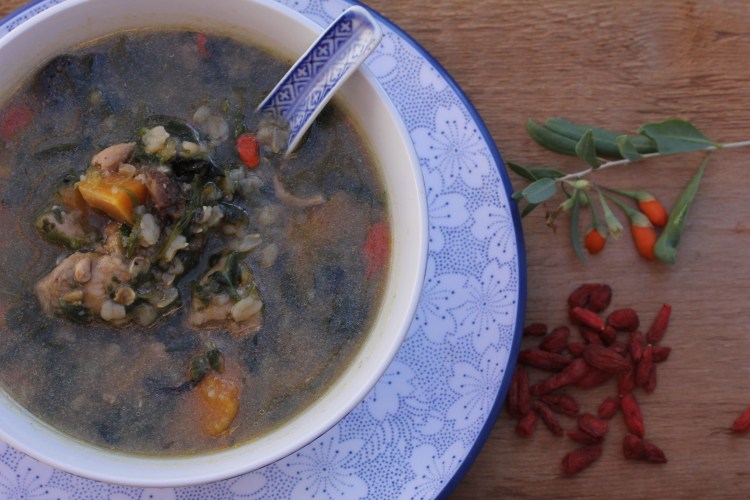
In Eastern medicine it is common to add a paper bag of ingredients to something like a soup. Things like dried fruit, bark, twigs, roots or deer antler/gelatin. This becomes medicine instead of something a Western herbalist might prescribe like a tincture. These soups typically have chicken, rice, and vegetables. If you have traveled much in Asia you might be familiar with congee. A porridge like meal that is served to infants, the elderly, and sick because it is nourishing, easy to eat and digest. Congee may not look or sound appealing but actually once you have had it you start to crave it. This chicken soup with goji berries has a terrific balance of textures and flavors. Perfect for winter or recovery. You can play with the amount of water to create anything from broth, to stew, to congee.

Last summer I noticed a strange stalk growing from the neighbors yard under my fence. Since he is a doctor of oriental medicine I suspected it might be something interesting. Sure enough I discovered it was Goji. It managed to over winter in our climate, send out many more stalks and produce some lovely berries this year. I have been purchasing the dried berries recently. I like to use them in my rejuvenation pastes. I also eat them by the small hand full when I crave something sweet after dinner. I love the slightly astringent/bitter taste at the end. I find the fresh berries pleasing as well. I look forward to larger harvests through the years and experimenting with another powerful “heal all”.

Medicinal Chicken Soup

In a large cast iron stock pot saute on medium heat until just soft-

4TBSP of olive oil

4 TBSP of finely chopped fresh, peeled, ginger root

1/2  large onion coarsely chopped

Then add

3 pounds of chicken defrosted and coarsely chopped This does not include the weight of bones etc, if you used a whole chicken. I used boneless breasts and thighs.

You can add more vegetables or mushrooms later if you want to skip the meat). Increase heat and cook until starting to brown.

While this is cooking you can chop your vegetables to save time.

Then add……

1 cup of fresh gourmet mushrooms ( I used large trumpet) chopped into bite sized pieces.

To the pot add……

8 cups of water , bone broth or stock.

Bring to a boil then reduce heat to low. Then add…….

1 cup of dried medicinal or “Asian” mushrooms/fungi of your choice (shitake is easy to get) Break these into pieces if you can.

2 TBSP of soy sauce or substitute

2 TBSP of umami spice powder

1/2 tsp of Chinese 5 Spice powder

2 TBSP of salt (maybe less if your stock was salted)

1 -2 cups of peeled carrots coarsely chopped or other root vegetables such as parsnips or fresh burdock root.

2 cups of peeled and diced butternut squash

Simmer on low for one hour with a lid then add………

1/2 cup dried goji berries. One could also add some Chinese red dates.

2 cups white rice, cooked. Brown rice will hold its texture better if you want more of a stew.

 1 TBSP of unflavored gelatin powder(optional if you did not use both broth or chicken with bones)

Cook for 30 minutes Then add…..

2 cups of loosely packed spinach, nettles, dandelion, or other greens. Part of my mix included chrysanthemum.

Salt to taste

Cook 15 minutes then serve. You can add more water if you want a thinner broth like soup or continue to cook until you get a congee like consistency. If you are going for congee I would chop the meat and vegetables into much finer pieces, use white rice and really let it break down during the cooking process.

Lycium chinesis

This evergreen/perennial is considered native to Asia but is commonly cultivated in Europe. It is in the nightshade family (ground cherry, tomato, chiles/peppers) The “bush” typically grows from the ground in 6ft long stalk/stems which may have short occasional short branches. These fall over like tomatoes and benefit from being on a trellis. Stems may have spines and have a whitish film, Leaves are medium green, alternate, narrow, spade shaped, with smooth margins. Orange/red berries are drop shaped. Pale purple (greenish) flowers are tube shaped with 5 partially joined petals. Prefers full sun and poor , well drained soil. There is a native variety that grows in the American Southwest (L. pallidum).

Do not confuse with other members of the solanaceae family that have red berries like Solanum dulcamara or americarum which are poisonous.

Lycium is used in both Eastern and Western medicine. You may not find this plant discussed in some of your Western herb books because it is not cultivated much in the US. Goji berries are a great adaptogenic herb for when the body is ill or under stress. As a nutritive herb, the provide support/strength for the liver, kidneys, endocrine system and the “blood”. Lycium helps remove toxins and is considered a Yin tonic. This herb has been used to treat weak muscles/back/ligaments/veins, night sweats, fevers, colds, pneumonia, dizziness, bleeding, inflammation of the bronchial tubes, asthma, hair loss, low blood sugar, infertility, symptoms of hormone imbalance or menopause, tinnitus, vertigo, aging, diabetes, anemia, high blood pressure, varicose veins, poor circulation, fatigue, dry skin/tissues, poor immune system, tumors, impotence and to reverse weight loss associated with cancer or AIDS. They may improve eye health (macular degeneration, cataracts, glaucoma) and sight as they are high in carotenoids, lutein, and flavonoids. When used regularly in the diet, berries can help support the growth of healthy bowel flora and decrease cholesterol levels.

Latin Name: Lycium barbarum/chinensis (most commonly cultivated)

Botanical family: Nightshade/Solanaceae

Parts used: fully ripe or dried berries. The bark and root only by experienced doctors of Oriental Medicine. The immature leaves sometimes in soup.

Energetics: sweet, warm, bitter or neutral, cooling and sour

Element: water

Emotional/spiritual uses:grounding, nourishing, calming, strengthening

Contraindications: acute fever, diarrhea, bloating, “damp” constitution