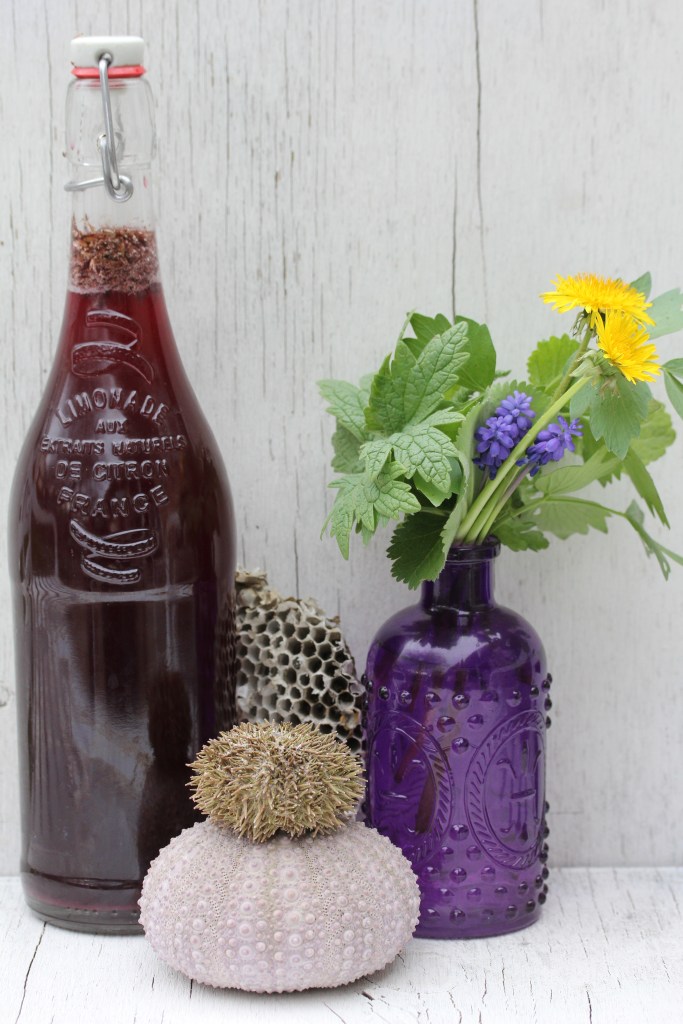
The girls are really into making “sodas” this year. We have made several syrups together (violet, lilac, rose, and elder flower). They are fun to add to soda water, enjoying them on a hot day. Not all flavors are well liked, some like elder are an acquired taste.
Lavender and Blueberry syrup recipe
1 TBP of fresh lavender flowers
1/2 lemon sliced
8 ounces of fresh or frozen blueberries
1/2 cup of honey
2 cups of water.
Bring water to a boil. Add ingredients. Reduce to low and simmer for 30 minutes. Turn off heat and let cool for 30 minutes. Pour liquid through a fine mesh strainer. Press out juice from blueberries with a metal spoon. Bottle and store in refrigerator when fully cool. TO USE: 1 part syrup to 2 parts carbonated water. Serve over ice.
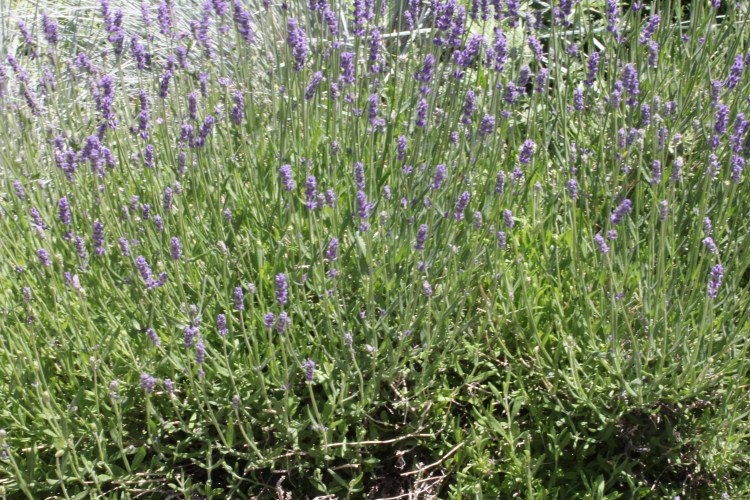
We picked a lot of lavender this year.
Latin name: Lavandula (there are lots of species). Family: Laminacea (mint family). Lavender is an evergreen perennial shrub that can grow 1-4 ft high. Typically it appears as a smaller singular plant but in the right conditions it will spread and expand to fill a larger space. The entire herb is covered in a grayish down. At this time of year the plant shoots up a flowers in the form of a terminal spikes. The highly scented purple flowers form a group on the tip of their personal stalk. The narrow leaves are sparsely arranged oppositely on the square stem, often clustered at the base of the plant when not in bloom. Lavender can be very easy to grow in many climates especially when given well drained, poor, sandy soil and full sun. Lavender is not native to the United States. It is very popular with bees and butterflies. The smell is the best way to remember this herb. Rub any part of it between your hands and smell your palms.
Lavender’s pure essential oil is a great remedy for burns, cuts, tight muscles, rheumatism, edema, eczema, hair loss, acne, fungal infections, earache, cold sores, and insect bites/stings. This plant contains numerous volatile oils, many of which are powerful anti-microbials. It was used in WW 2 for wounds and parasites. It was burned for bubonic plague to prevent the spread of the disease. Steam inhalations, baths, and infusions have been used to treat chest infections, asthma, dizziness, insomnia, digestive issues, colic, fever, colds, flu, strep, yeast, vaginal infections, bad breath, muscle spasms, headaches, fear, earaches, eczema, acne, burns, cold sores, edema, rheumatism, hair lossatigue, stress and anxiety. Lavender has a history of being present at birth and death because of its calming nature. The flowers are edible and can be used in baked goods, and other sweets. You will find this herb in many gifts and beauty products.
Energetics:bitter, pungent, sweet, cooling, dry
Element:air
Parts used:flowers. Leaves and stalks can be used for incense
Contraindications: During pregnancy. Do not use the essential oil internally. Do your research on using the pure EO on a frequent basis externally (including in creams and shampoos).
I think plantain needs to be included in my “herb of the month subscription”. This June I have needed it in some form for 1)a burn 2) a bug bite that looked a bit red 3)and a broken toe. I have it as an ingredient in many of my salves and liniments. I ordered three of the large leaf variety to plant in the garden last fall. They made it through the winter and look gorgeous this summer. I hope that if I cut off the spikes before they flower, I can prevent them from becoming invasive and spreading. Three plants seem to be plenty for what I need at the moment. We think of plantain as being useful externally but it has historical use in tinctures for many internal conditions as well.
Plantago is a perennial characterized by a basal rosette of several leaves with ribbed/parallel venation. Each terminates in a thick channeled stalk where they attach to a round stem. Leaves can be broad/ovate or narrow/lance shaped. Sometimes margins are toothed. A single, dense ,cylinder shaped, cluster/spike, of greenish white tiny flowers grows on a tall (6-18 inch) erect stem . These have brown sepals and bracts. Plantain is found along paths and roadsides, in meadows and lawns or in wastelands. If cultivating this plant, it likes sun or partial shade but really prefers a moist soil.
Plantago should be your top choice for a first aid remedy. Externally plantain is thought to be helpful for broken bones, wounds, burns, bruises, injuries, boils, acne, shingles, sunburn, eczema fungal infections, sore feet, and plantar fasciitis, . It can draw venom, poison, dirt, splinters, pus, and infection out of insect stings, animal bites, or wounds. It relieves irritation and pain when one has been exposed to irritating plants like nettles or poison ivy. Like nettle is supports the body to release antihistamine for relief when suffering from allergies, hayfever, and asthma. Historically this herb has been used to treat ulcers, bronchitis, coughs, sore throats, lung damage, inflammation in the digestive tract, irritated tissues/organs, hemorrhoids, varicose veins, toothache, fever, mastitis, earache, sore throat, urinary tract infections and internal bleeding. It is known to clear heat and inflammation. The seeds are edible and have been used to make flour or as a thickener. They are also a good source of fiber and may prevent constipation.
Family: Plantaginacea
Parts Used-leaves, seeds, root
Energetics-sweet, salty, bitter, cool, dry
Element-earth
Spiritual and Emotional Uses: Settling a mind that is restless, overactive, irritable or “addicted” to something stimulating.
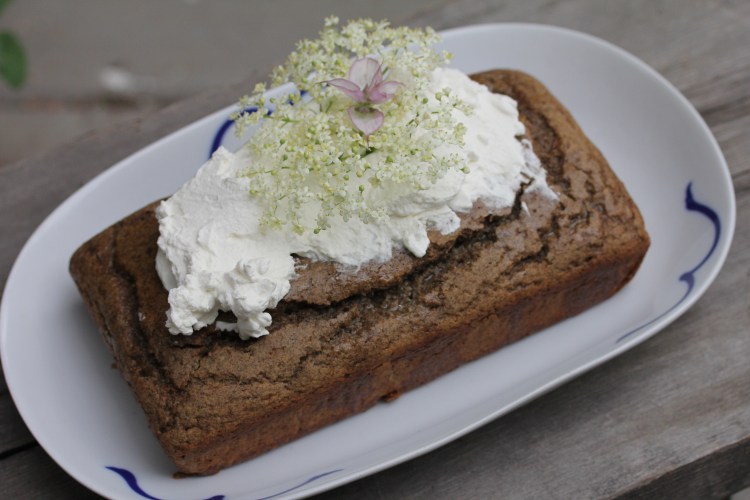
A fresh and tart cake to celebrate the solstice. Soaked in elder flower syrup and topped with fresh whipped cream.
Elder Flower Cake
In a large bowl add together…..
3/4 cup of white rice flour
1/4 cup of tapioca flour
1 cup of almond flour
1/2 cup of buckwheat flour
1 tsp of baking powder
3/4 cup of sugar
Mix well and set aside
In a small bowl add together
2 eggs
3/4cup of milk
1/4 cup of oil or melted butter
3 TBSP of elder flour syrup (link here). Use recipe # 2.
Mix well until the eggs are well combined with the other liquids.
Add the two bowls together and mix until there are no lumps.
Line the bottom of a buttered loaf pan with a small rectangle of parchment paper.
Bake at 350 for 45-60 minutes. Check at 45 minutes for cake doneness with a toothpick. Remove from oven and let cool for 15 minutes.
Remove from pan and peel off the parchment paper. Place on a plate with a large lip. Using a wooden skewer, poke the top of the cake with several holes. Slowly pour 2 TBSP of syrup onto the top of the cake. Let it soak in. Repeat. Carefully remove from the plate and place the cake onto a decorative dish. Cool for 1 hour. Top with homemade freshly whipped cream (do not add sweetener). Serve immediately.
Sambucus nigra
Elder Latin Name: Sambucus. Family: Adoxa/Adoxaceae. Common names- there are “blue”, “black” and “red” elderberry subspecies. To avoid confusion and ensure safe/accurate ID and harvesting, it is best to use Latin names. Elder is a tall bush that drops its leaves in the fall. The leaf shape and color can vary between subspecies (long, lance shaped, and pointed or pinnately compound, and toothed) but in general are arranged oppositely on the 10-30 branches/canes. The small “white” flowers form a crowded cyme/cluster. They have a strong unpleasant smell and bloom sometime in the late spring. The small, ripe, smooth berries can be blue, black or red. They form dense clusters.
ALL elders contain two alkaloids that convert to cyanide ( a poison) when exposed to the acids in the human stomach. These toxic chemicals are found in the seed, root, branches, green stems, and leaves. BUT not the flowers or the RIPE fruit that surrounds the seed. There are several wild elder subspecies that Not everyone is in agreement about whether some are more toxic than others. To be safe I cultivate and only harvest from S. nigra and S. canadensis. Both are easy to find in nurseries.. You can also propagate elder from cuttings. I failed to get my new bushes to overwinter twice. But now that they are established they are almost invasive and have to be pruned every year. The Flowers are at their peak sometime in June. The berries will be ripe in late fall. The flowers are always edible especially if you remove their green stems. The berries may need special preparation such as cooking well and straining out their seeds. Elderberries must always been eaten when fully ripe!
There have been reports of people getting sick from eating the ripe dried berries (not cooked). Yet several of my teachers and the Botanical Safety Handbook mention no concern with using dried berries without cooking them first. I powder them and add them to honey. Many herbalists tincture the ripe berries (both fresh and dried) without cooking them first but do strain out the seeds. Very few people feel comfortable using other parts of the plant. Do your research and use your best judgement.
Elder berry and flowers encourage the body to release toxins through sweating, moving stagnant blood and urination. Elderberries contain constituents that prevent viruses from penetrating cells. Elder has been used since ancient times to treat fluid retention, colds, flu, hay fever, asthma, hot flashes and childhood infections. This plant is very useful for relieving a cough, opening the lungs, increasing oxygen saturation and breathing capacity. It has a long history of being used as a laxative, purgative, and organ tonic. It supports the nerves and digestive system. The berries are high in Vitamin C, and contain small amounts of iron and potassium. You will find them in syrups, jams, pies, and cobblers. Externally the flowers are used in skin and hair products such as salves, lotions, toners, and rinses. They have been used in eyewashes, gargles and compresses for headache, skin conditions, bruising, sunburn, and pain. They will lower a fever, relieve a sore throat, help with congestion. and clear heat as a tea or tincture. In recipes you can find them in salads, drinks, jelly, and baked goods.
Parts Used:Berries and flowers internally. Leaves externally.
Energetics:cool, bitter, sweet, dry
Element:water
Spiritual/Emotional uses:for protection, prosperity, blessing and good luck. Often present at transitions like birth and death.
Contraindications:-dehydration. Only consume the flowers or cooked berries. Research Elder’s role in cytokine storms.
Incense is composed of aromatic plant materials that are high in essential oils. It can contain resin, bark, branches, leaves, or flowers. Herbs in the conifer or mint families are popular choices. Humans have used incense for medicine, fumigation/ an anti-septic, worship, ceremony, deodorizing, to kill or repel insects/vermin, aromatherapy, keeping time and to support meditation. It is used in many cultures, going back in history to the most ancient ones and possibly the earliest uses of fire.
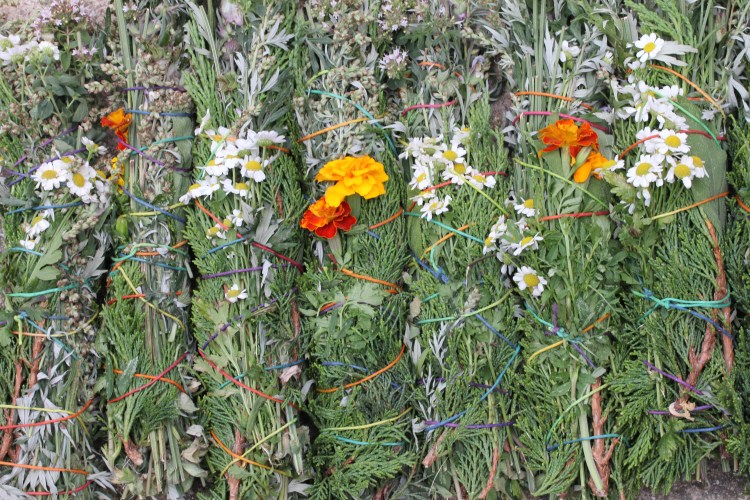
Indirect burning incense is usually a resin placed on a burning substance like a lit charcoal tablet. Direct burning incense is lit by a flame source, blown/fanned out and left to smolder ,releasing smoke over a period of time. Forms can be a paste, made from powder, that is smeared on a stick or compressed into a cone. Loose, dried plant material that is coarse or a powder. Bundled dried material that is that is made from the tops of plants. Any manner of coils, infused paper, or ropes. Smoke is commonly used to bless, harmonize and “let go” . I burn of incense to force movement when the energy in my environment feels stagnant, dense or negative.
The Chinese use Moxa/Artemisia vulgaris as the dried and “powdered” herb in moxibustion. When burned close to the skin, its healing properties are inhaled or absorbed. Very slow burning, moxa can be placed on the end of a needle or put loosely in a large box. As a “cigar” it can smolder less than an inch away from the skin over points. The “heat” is used to move stagnant blood and energy. Once flowing smoothly health is restored. I prefer to make my own incense without the added binders, perfumes or chemicals. I burn bundles or cigars. I like loose dried herbs/powders in a chiminea. My favorite herbs to burn are dried juniper, mugwort, sage or lavender leaves. If I will be burning something for more than a few minutes, I do it outside. There have been many studies showing that the inhalation of too much incense smoke may lead to cancer.
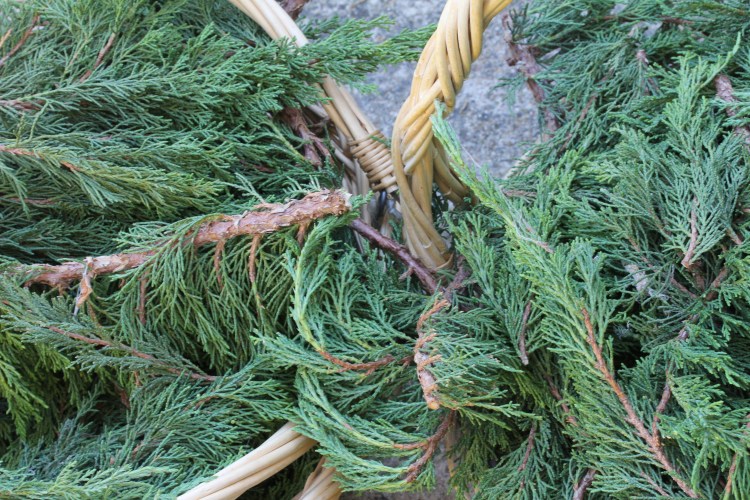
Juniperis
Did you know that juniper tea was used to disinfect surgical equipment in the past? During epidemics the smoke was used to purify homes and buildings. Juniper is burned all over the world to protect and create sacred space . Growing up in New Mexico I associate the smell of burning cedar, juniper or pinon with winter. It brings to mind walks during cold, crisp nights. I can’t help but think of Christmas shopping in Sante Fe, and many other childhood memories. I do not burn candles or processed incense but lately I have been using a lot of juniper and other dried herbs. I feel comforted knowing the healing properties in the smoke may be killing germs and purifying my environment. I believe that its energy is protecting my family and I feel less stressed due to the associations the smell brings to mind.
Juniper grows all over the world. You can find it in the wild and as a common (often unwanted) bush for landscaping. There were two large ones at the end of my driveway during my childhood in the 1970’s. They made excellent forts, a good choice for hide n seek, left an uncomfortable rash, and required “grooming” with hedge clippers on a regular basis. For years my husband and I talked about removing the ones on either side of the back porch. They are not very attractive and provide the ideal place for leaves, spider webs and rodents, and bumble bee nests to collect. Little did I know until I started researching the traditional medicine of Mexico and the Southwest that I had a treasure in my yard.
Juniper is an evergreen, perennial shrub that grows 2-10 feet tall. It is densely branched. Wild varieties can be quite low to the ground. There are many cultivars and varieties, a few look a likes. I prefer to harvest it from the wild as it make better medicine and prevents misidentification. This plant can have sharp/prickly needle like leaves, especially as a juvenile. Some older plants have leaves made of tiny overlapping scales. Some plants have both types of leaves at the same time. Depending on variety, leaves can be jointed or merge smoothly with branches and “stems”. Some cultivated varieties are variegated in color, the native types more thorn like. It has chocolate brown bark. When cut the branches can “bleed red” and have a heart shaped core. Juniper is a gymnosperm, so it produces no true flowers or fruit. The berry like fruit is actually a cone. This is green the first year, transitioning to purple/blue the next.
Historically the berries are used in cooking for flavor. In healing they are considered a digestive to help with gas, cramping, and stimulating the appetite. Under the care of an expert the berries can be use internally as a diuretic for gout, urinary/water retention. Historically this herb has also been used to treat stomach infections, the flu, kidney stones, lumbar pain, arthritis, and rheumatism. Externally is has been used as a wash for hair loss, eczema, acne, yeast infections and skin problems.
It can be used in steams for bronchitis and lung infections.
In a liniment it may help with rheumatism, cellulite, or problems with the bones and joints.
The oil from the berries can cause blisters and irritation.
One of my favorite uses of juniper is as an incense. It burns fast, hot, and produces lots of fragrant smoke.
I hope this post inspires you to look at that “ugly” juniper bush in a new way. One never knows what beauty and use lied hidden beneath the surface.
Plant Family: Cupressaceae/Cypress
Parts used: Berries (for medicine) tops (for incense or liniments)
Energetics: Spicy, sweet, warm, dry
Element: Fire
Spiritual/Emotional uses: To encourage self love and confidence. Reduces the tendency towards arrogance and judgement. To develop self awareness, purpose and strenght so that we can let go of fantasy and addictions. Seeing ourselves with clarity and in real relationship to others and our environment. Burn to purify and protect.
Contraindications: Use in pregnancy. Prolonged therapeutic use can irritate the urinary system. Avoid use with “weak kidneys”
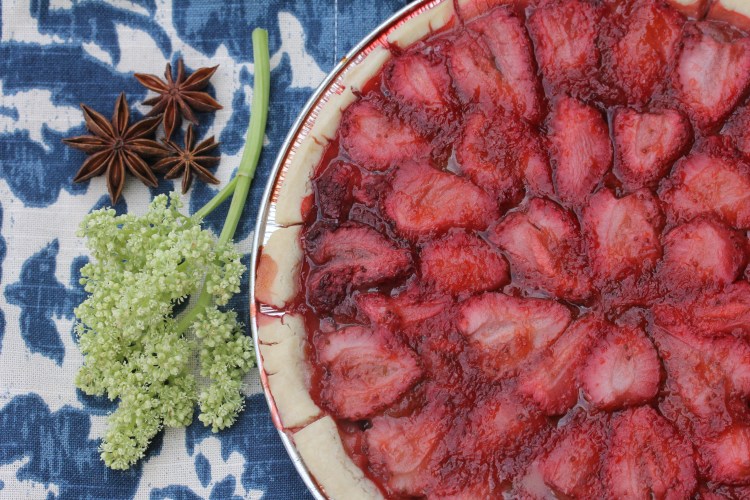
It is the last week of May and my rhubarb is finally ready to harvest. Strawberry rhubarb pie is a classic recipe. Here is a variation with a bit of a twist. The addition of strawberry jam really intensifies the fruity flavor. Star anise will leave your family or guests trying to guess what has added that subtle exotic flavor. The rich “cheese” mixture means that you won’t need to serve this dessert warm with ice cream.
2 cups of rhubarb cut into medium chunks
1/4-1/2 cup of sugar
1 tsp of orange zest
1 TBSP of star anise powder
1.5 cups of frozen strawberries
1/4 cup of strawberry juice
2-4 TBSP of strawberry jam
1 TBSP of agar agar or other thickener, thinned with a TBSP of warm water, with no lumps
8oz of soft tofu, ricotta cheese, or Vegan Moz (soft cheese)
1 tsp of almond extract
1/2 tsp of cinnamon powder
1 cup of sliced fresh strawberries
Pie shell of your choice
2 TBSP of ground hazelnut or almond flour
2 TBSP of turbinado or similar texture sugar
1/2 cup of coarsely ground hazelnuts
Preheat the oven to 350.
Prepare your pie shell (home make it or purchase a pre-made one, set in the pan of your choice). Let chill for 15 minutes. You will need to “blind bake” it by placing a small sheet of parchment on top of the shell and then pouring in a cup of dried beans or pie weights. Bake for 10 minutes. Remove parchment and weights. Prick bottom of shell with a fork. Remove from oven and set aside.
In a large bowl, mix the first eight ingredients. Set aside
In a medium bowl use clean hands to mix the “cheese”, cinnamon, and almond paste together. Spread into the bottom of your pie shell.
Mix the sugar, flour, and hazelnuts together in a small bowl. Sprinkle contents on top of “cheese” mixture.
Spoon out the rhubarb mixture into the shell. Level flat.
Use the fresh strawberries to create a nice pattern on the top of your pie.
Bake for 30-45 minutes, until soft and set.
Cool for 15 minutes before cutting and serving
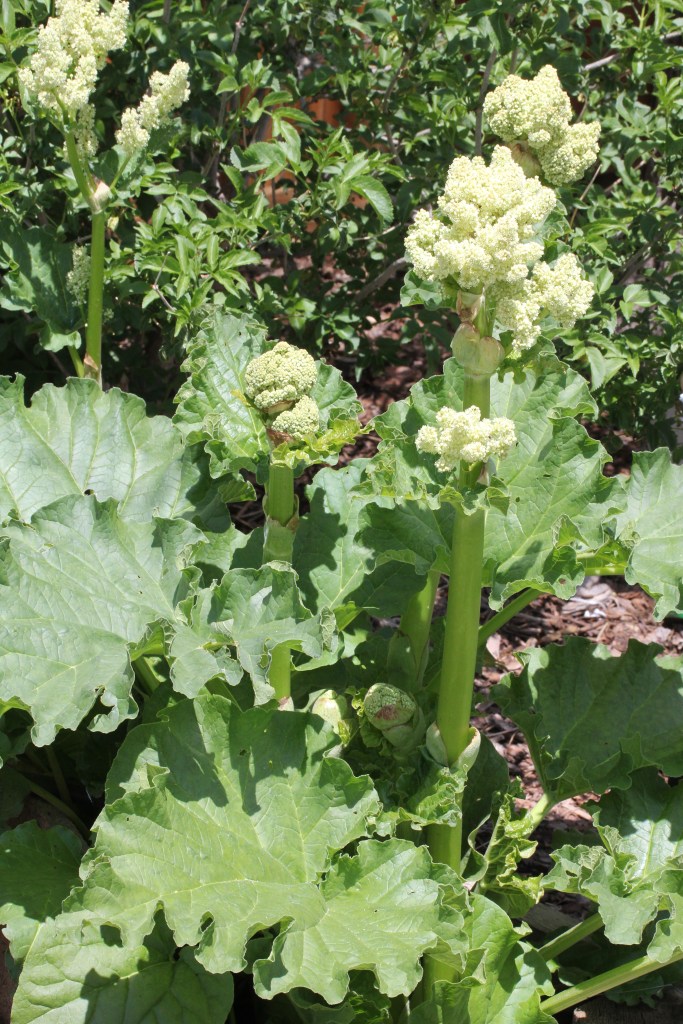
Garden Rhubarb-Rheum palmatum
Rhubarb
Rhubarb has an ancient history of being used as medicine. Rhubarb is good at clearing heat, infection, and inflammation from the body. It has more vitamins and minerals that kale. The stalks are used all over the world as a perennial vegetable. The root has laxative and purgative qualities. It is thought to help the digestive tract to metabolize fats and flush out wastes. Each species contain different chemical constituents. Some are more powerful that others. Rheum officinale (Chinese Rhubarb) is the one most commonly used for healing. Its root is has been used to treat blood clots, constipation, diarrhea, fever, hemorrhoids, lack of menstruation, very heavy periods, worms, high cholesterol, jaundice and worms. Externally it can be as a poultice to boils, burns, sores, and wounds. Adding in fennel, ginger, or peppermint prevents stomach cramping.
PART USED: Root for medicine, stalks for food
PLANT FAMILY: Polygonaceae/Buckwheat
ENERGETICS: bitter, cold, dry
ELEMENT: earth
SPIRITUAL USES: Grounding, establishing boundaries, connecting with others on a level that is present and real.
CONTRAINDICATIONS: The stalk of garden rhubarb is fine to use as food for those without kidney issues. Because this plant varies with species and has so many contraindications it should not be used for healing unless it is being given under the supervision of a trained professional.


 Blackbird's Backyard Pharmacy