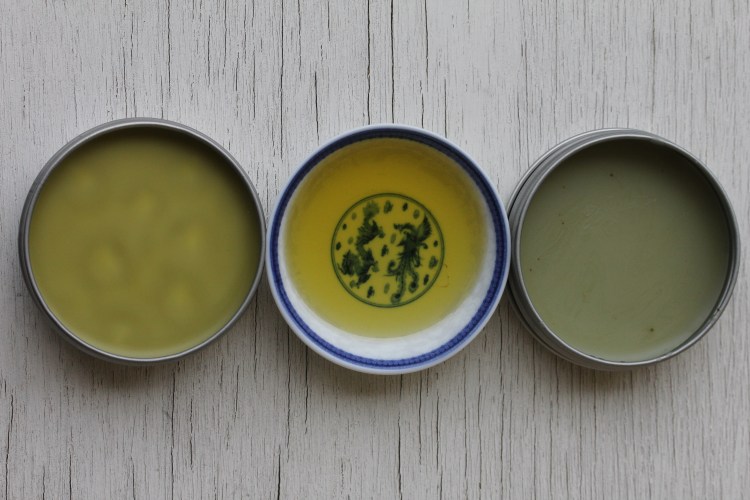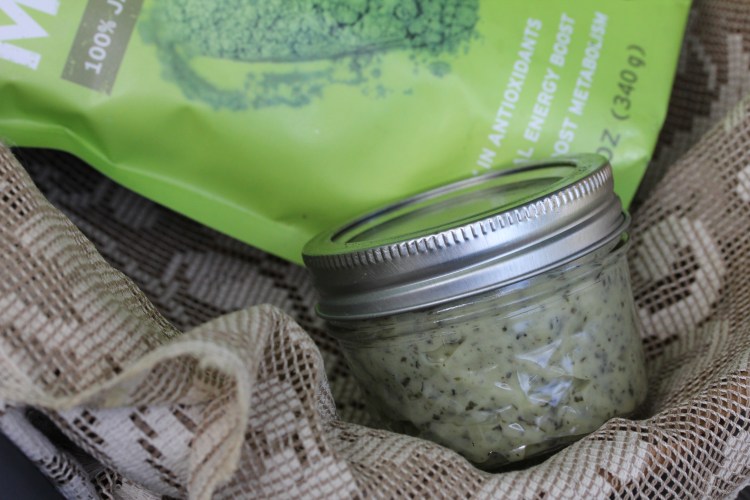
Plantain and Matcha Anti-aging Body Butter

I have some beautiful large leaf plantain coming up in the garden this year. I can’t wait to make an infused oil with it. This body butter has the nicest qualities. Very smooth and silky. It soothes, heals and hydrates the skin by increasing circulation to the tissues. You will notice a dramatic change in skin texture after using it due to the antioxidants in the matcha. I was inspired to add the tangerine oil because of the green tea cupcakes I make. They have this fantastic fruity flavor. You must think I do nothing but make salves. But I am finishing up my winter projects. I typically don’t harvest from the garden or start the new herbal year until June. Last year I focused a lot on infused oils. The year before tinctures. This summer I will be drying a lot of plants for tea and bath formulas.

Plantain and Matcha Anti-aging Body Butter

3 oz. of shea butter

4 bags of matcha green tea

10 drops of tangerine EO

1/3 cup of plantain and marshmallow infused oil

To a double boiler add your infused oil and tea bags. Heat/simmer on low for 30 minutes. Remove the tea bags and place between two large spoons. Use these to press out any remaining oil into the pan without breaking them. Add in the shea butter. Remove from heat as soon as it is melted. Stir in essential oil. Let cool 5 minutes. Whip your mixture in a food processor until it is thick and creamy. Pour into small tins or jars. Let fully cool before closing with lids.

Plantago is a perennial characterized by a basal rosette of several leaves with ribbed/parallel venation. Each terminates in a thick channeled stalk where they attach to a round stem. Leaves can be broad/ovate or narrow/lance shaped. Sometimes margins are toothed. A single, dense ,cylinder shaped, cluster/spike, of greenish white tiny flowers grows on a tall (6-18 inch) erect stem . These have brown sepals and bracts. Plantain is found along paths and roadsides, in meadows and lawns or in wastelands. If cultivating this plant, it likes sun or partial shade but really prefers a moist soil.

Plantago should be your top choice for a first aid remedy. Externally plantain is thought to be helpful for broken bones, wounds, burns, bruises, injuries, boils, acne, shingles, sunburn, eczema fungal infections, sore feet, and plantar fasciitis, . It can draw venom, poison, dirt, splinters, pus, and infection out of insect stings, animal bites, or wounds. It relieves irritation and pain when one has been exposed to irritating plants like nettles or poison ivy. Like nettle is supports the body to release antihistamine for relief when suffering from allergies, hayfever, and asthma. Historically this herb has been used to treat ulcers, bronchitis, coughs, sore throats, lung damage, inflammation in the digestive tract, irritated tissues/organs, hemorrhoids, varicose veins, toothache, fever, mastitis, earache, sore throat, urinary tract infections and internal bleeding. It is known to clear heat and inflammation. The seeds are edible and have been used to make flour or as a thickener. They are also a good source of fiber and may prevent constipation.

Family: Plantaginacea

Parts Used-leaves, seeds, root

Energetics-sweet, salty, bitter, cool, dry

Element-earth

Spiritual and Emotional Uses: Settling a mind that is restless, overactive, irritable or “addicted” to something stimulating.

Contraindications: soak or cook seeds before use.
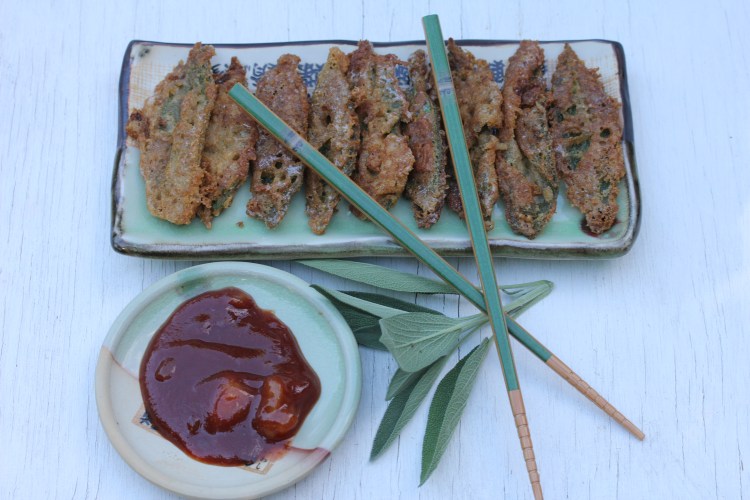
Fried Sage Leaves

Usually by late October there has been a snowstorm to wipe out all of the herbs in my garden. As our climate changes, even in early fall, I now not only have tender flowers surviving but I am still harvesting an overabundance of things like sage, fennel, horehound, oregano and calendula. Sage has a powerful flavor that works well in some savory dishes. A few desserts like that pear sweat bread that I made last year. In other words it is easy to run out of things to do with it. This a a great recipe for using up this herb late in the herbal year. You will need to have some very large fat leaves to start with.

Fried Sage Leaves

Harvest a couple dozen very large sage leaves. Leave the long stems attached. Make sure that they are clean and dry.

In a medium measuring bowl measure out 1 cup of flour. A gluten free four mixture will also work well. Maybe a combo of brown rice with garbanzo or urad dal finely ground.

1 tsp of baking soda

1/2 tsp of baking powder

1 tsp of salt

Mix well and set aside

In a small bowl whisk together two egg yolks with 1 TBSP of olive oil.

Mix this liquid in with your flour mixture. Add in 1/2 cup of warm beer and continue to mix until it resembles pancake batter.

In another bowl whip the two egg whites into soft peaks.

Fold the whites into the batter. Thin to the consistency of crepe batter with a very small amount of cold water.

In a large cast iron skillet or wok, heat up 6 TBSP of coconut oil on medium heat.

Use tongs to grab a sage leaf by the stem. Quickly dip it into the batter, lightly coating it on both sides. Drop it into the hot oil and fry until golden brown on both sides, using the tongs to turn when done. Remove with tongs, shake off excess oil and drain on paper towels. You can probably fry 2-4 leaves at one time. You can add more oil as needed and remove any bits with a slotted spoon so that they do not burn.

Serve immediately while still warm with a bit of ketchup mixed with store bought mango chutney. Mayonnaise is also an optional condiment.

Salvia officinalis

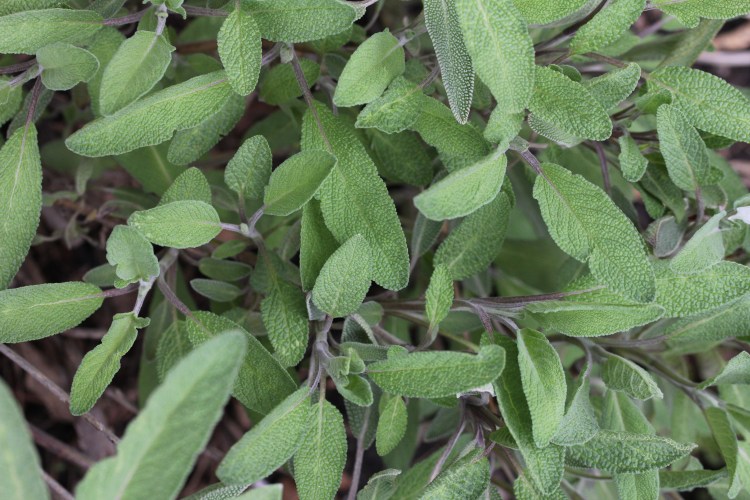
Sage is a shrubby perennial that is native to Europe. It grows well and overwinters even in my climate. In any garden that I have had it establishes itself as a “mother plant”. The stems are square, woody, long, finely haired and often leggy. With time and age my plants become less attractive but more productive in leaves. This herb can be sensitive. If you offend it, neglect it, damage it when harvesting-you may not see it the following year. The downy, oval shaped, crenated, opposite arranged leaves have a “sage” green color. The flowers are purple (sometimes white) tube shaped, two lipped, and grow widely spaced on terminal racemes. High in aromatic essential oils and botanical features clearly place it in the mint family.

Salvia is thought to be good for stress, depression, vertigo, hot flashes, digestive issues, gas, diarrhea, headaches, flu, congestion, menstrual problems, arthritis pain, blood clots, fever, and staph infections. She is a wonderful gargle for laryngitis, gum disease, bad breath, and sore throats. If you need to clear phlegm in any organ this plant is a good choice. As a bath Sage has been used externally to address eczema, insect bites, wounds, acne, rashes, and poison ivy/oak, dandruff, and vaginal discharge. There is a long history of using this plant as a symbol of wisdom, clarity, longevity, purification and protection. I like hanging bundles of the fresh herb in my house, washing the floors with the tea, or burning dried leaves to clean out energy from a space.

Parts used: Leaves

Energetics:bitter, dry, pungent, warming

Element:air

Spiritual/Emotional Uses-to remove negative energy, disturbances and bad luck. Helpful when one is struggling with the natural process of aging.

Contraindications:Large does in pregnancy. Do not use while nursing as it may dry up your milk supply. Do not use in therapeutic doses long term.

Tummy Calm Salve (Fennel)

Whether you are a first time or seasoned mom, it is difficult and exhausting to sit with a baby who has “colic”. Symptoms can be stomach spasms, bloating, constipation, diarrhea and pain. Causes can be an immature nervous system, allergies, poor/sluggish digestion, contaminated food, inflammation, tight muscles, and stagnation/energy blockage. Mom often just needs to buy some time for her little one’s system to mature, reset, and heal. Combined with infant massage techniques, this salve can help relieve symptoms. Mood and rest will improve for both mother and child so that bonding can occur.

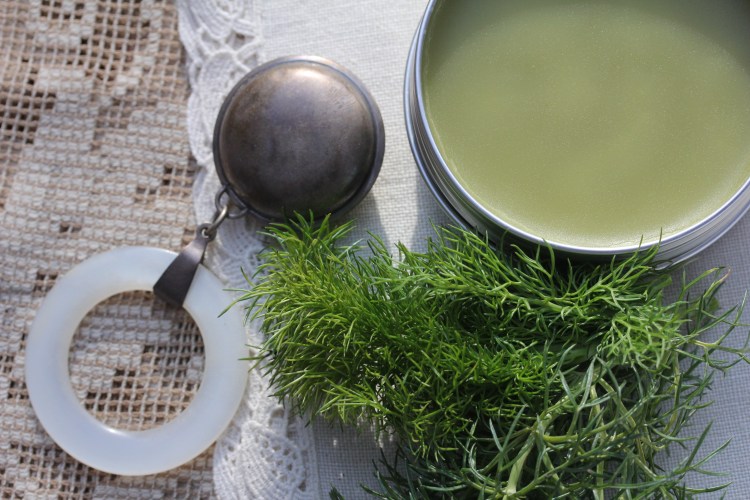
Instructions: Fill a 16 ounce jar with equal amounts (about 3/4 cup each) of fresh basil, fennel tops, dill tops, lemon balm, spearmint and chamomile. Press down if your jar overfills. Then fill the jar with organic olive oil. Let sit and top off before sealing. Infuse for 2 weeks and then strain. Proceed to use in your favorite salve recipe.

Foeniculum officinale

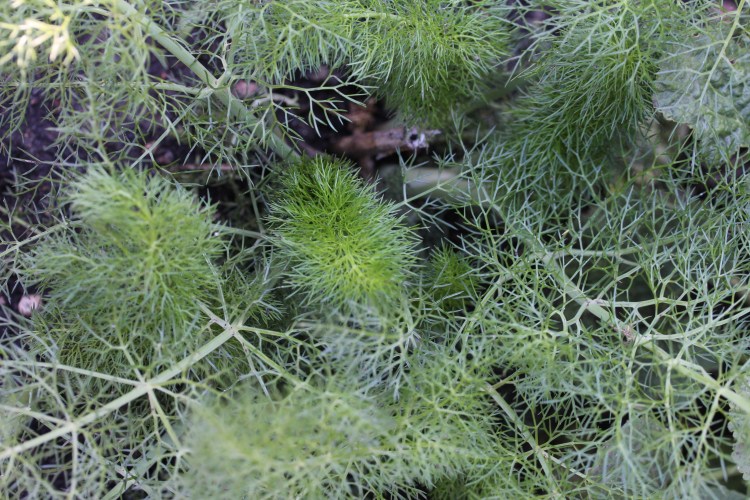
Foeniculum is a member of the parsley/carrot family that is often found in colonies. It is important to identify this herb accurately, even if growing in an urban yard or garden. Warmer climates produce a perennial almost 5 feet tall. A carrot shaped root is below the ground. When very mature the stem can form a large white “bulb” (like celery) at its base. There are 2-5 hollow, pithy, finely grooved bright/jade green stalks with bluish stripes. Some plants appear to have a waxy/white “bloom”. The leaves grow from the center/basal (immature) or branch off upper stalks as wide alternate sheaths (mature) that wrap around the outside. Leaf shape is pinnate, very compound, and constructed of numerous threadlike filiform segments (like some ferns or asparagus). Compound umbels produce yellow flowers in late summer or early fall. When cut, torn, or rubbed the plant parts produce a strong licorice scent. Fennel seeds are light green (becoming a bit yellow as they dry/mature) oblong, dense and a good size.

Caution: Poison hemlock and fennel are easy to confuse. Hemlock will have purple blotches/spots on the stalks, leaves that lacy/broader/more triangular, white flowers, and an unpleasant scent. Poison hemlock and young dying fennel in the fall can be especially hard to tell apart. When in doubt crush plant material or seeds with the foot and smell without touching the plant.

Foeniculum is well know as a remedy for stomach and intestinal complaints. It has been used to treat abdominal cramps, bloating, indigestion, nausea, constipation, heartburn, bad breath, gas, and colic. It expels mucus, relaxes bronchi and clears congestion in the lungs. It relieves a horse throat, moves stagnation in the liver, and increases the flow of breast milk. This herb may help stabilize blood sugar levels, Chewing dried fennel seeds stimulates the digestive juices, helps digest fats, assists in the assimilation of food and treats bad breath. As an infusion it serves as a diuretic for kidney stones and gout. As a weak tea it can lower fever, reduce teething pain, and stop hiccups in children.

Parts Used: Leaves and seeds

Energetics: sweet, warm, moist

Element: fire

Spiritual and Emotional Uses: To move stagnant energy and bring sweetness and freshness back into life. To restore trust, security and purity to a relationship. To repel negative energies.

Contraindications: Avoid therapeutic doses in pregnancy. Excess consumption can stimulate the nervous system.

Winter Bath Salts (Spruce)

Using herbs for winter baths is one of my favorite cold weather rituals. There will come a day in February when one is low in energy and craving a sensual experience that enlivens your very soul. When it comes to formulating a bath mixture I am all about letting instinct and aesthetics guide my hand. There are no measurements or proportions. Let the time of day, month, weather, and your garden whisper instructions as to what you need to harvest and how much. Feel free to add in essential oils. Though if you choose the right fresh plants you won’t have too. Good choices are mint, rosemary, hyssop, horehound, thyme, or lemon balm. Anything in the mint family or with aromatic/volatile oils

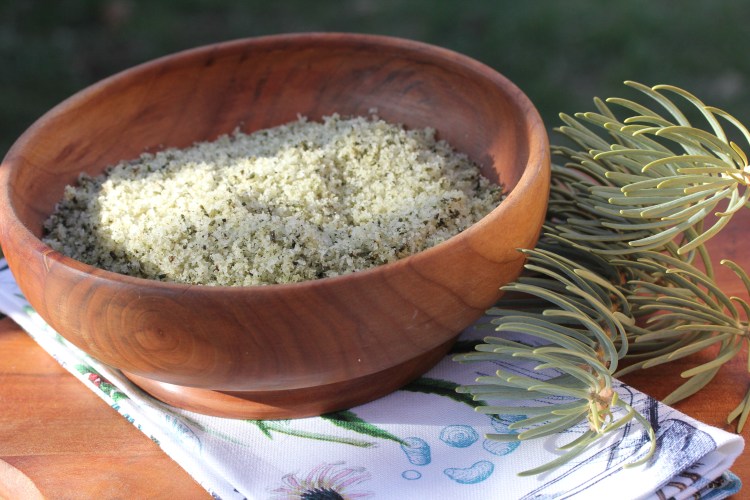
I used to think that wild fires happened in late summer. We have had several grass fires this late winter and early spring. Fueled by high winds that also brought down several tall spruce trees in our neighborhood. Never to let anything go to waste, I harvested a big basket of spruce boughs. After stripping the needles I ground them up with epsom salts in my food processor. When added to a bath they release the volatile oils that soothe the lungs, tired muscles, and the sprit. An inexpensive, easy, and lovely addition to to my fire victim care packages.

I recommend that you harvest only pine, fir, or spruce when making medicine or food. Some species of conifers could be toxic when consumed internally. It is best to use a field guide for identifying trees so I will not attempt the botany and descriptions in this post. Conifers have needles instead of leaves, “cones instead of flowers”, resins, and highly aromatic essential oils.

Those conifers with a historical use as medicine tend to be similar in their properties and uses. You will find them in syrups for cough, laryngitis and flu. An infusion can be made for indigestion and fever. As a bath they promote sweating and sooth aching muscles. A liniment can be used for arthritis, sciatica, and rheumatism. Steam inhalation can be helpful for congestion and sinus infections. Ointments and poultices have a history of treating wounds, eczema, boils, acne, and splinters. Tips are particularly high in vitamin C and have been used for blot clots and scurvy.

Contraindications. Use sparingly. Avoid if you have issues with your kidneys. Contact dermatitis may result from contact with the bark or pitch.

In years past I have used fir tips in a tincture and simple syrup. They make fantastic pickles, similar to capers in dishes that include wild salmon as a main ingredient. I have a jar that is two years old. They seem to last quite awhile if refrigerated.

Cysts and Growths Salve (VIOLET)

This salve may take a bit of planning to make as it really does require fresh dandelion, violet leaves, and milkweed leaves. You can infuse the ingredients separately and combine the oils when you make the salve. Or depending on where you live, timing might allow you the harvest and make an oil with all three at once. I use an oil infusion of these same herbs as a base for my daily homemade deodorant. Dandelion, violet and milkweed are know for their properties of drawing , clearing heat, clearing lymph congestion, reducing swelling, removing wastes/toxins, purifying “blood” and treating infection. Chickweed and red clover blossoms would also be possible additions to this recipe.

Cysts and Growths Salve

1 cup of infused oil. I use organic US grown olive oil. Pack a 16 0z. jar with clean, dry leaves if using fresh. Do not crush or macerate the leaves during processing to avoid releasing water into your infusion. Fill jar to the rim with oil, make sure no plant material has risen above the oil. Screw the lid on tightly and set jar on a saucer in case there is expansion. Let set 2 weeks before straining.

2-3 ounces of beeswax pellets

1 oz of shea butter

Add your strained oil infusion to a double boiler. Heat on medium for 5 minutes. Add in the 2 ounces of beeswax and all of the shea butter. As soon as it is all melted and you see no floating pellets-test consistency by dipping a metal spoon into the mixture and placing it in the freezer for 1 minute. If you are happy with the result remove from the heart. If not, add beeswax and test until you are satisfied. Let cool 2 minutes . Pour into small tubes, tins or jars. Let sit 2 hours before capping and storing.

Viola

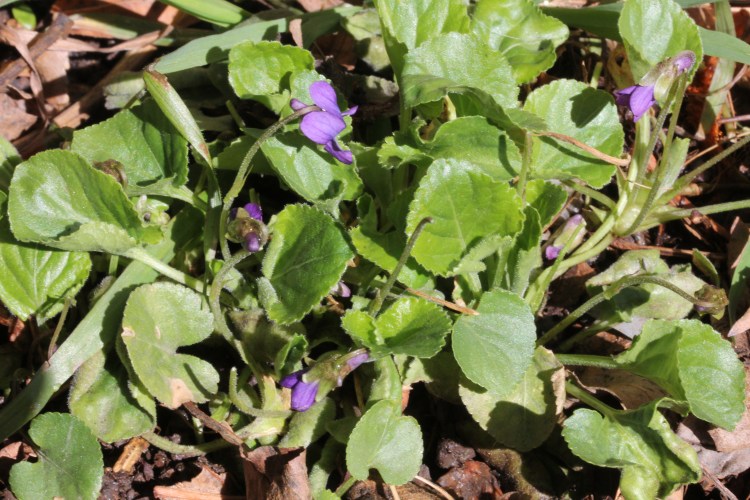
Garden violets can be found in lawns, woods, meadows, and roadsides that have light shade. This small (3-6 inches) perennial sends out runners/a creeping rootstock which takes hold and allows it to slowly spread. Vivid green heart shaped leaves are basal, petioled, and cordate. Nodding sterile purple flowers with 5 irregular petals appear on long peduncles in the early spring. The true seed producing flower are tiny and very hard to see. This plant prefers rich soil and a wet environment.

Violets are a lot more that French perfume and pastilles. As medicine they have a history of being used as an expectorant for colds, bronchitis, asthma and childhood illnesses. Clears heat, pain, infection, swelling and inflammation. Has been used to treat arthritis, rheumatism, cancer, tumors headaches, fever, and ulcers. Considered by some to be a blood purifier. High in mucilage which soothes irritations of the bladder, urinary tract, stomach, intestines, throat, and gums. This plant may help with constipation, insomnia, anxiety, eczema, cracked nipples, mastitis, acne, cradle cap, psoriasis, sore feet, skin growths/cysts, swollen glands/lymph nodes, varicose veins, conjunctivitis, hemorrhoids and bad breath. Violet can be used to ease heartbreak and grief.

Violet has become my go to for relieving flu like symptoms fast.

Violets make a lovely floral addition to syrups, sugars, salads, desserts, jellies, and other dishes. Infused into wine, vinegar, oil, glycerin and honey.

Family:Viola/Violet

Parts used:leaver, flowers, and roots

Energetics/Taste:Cool, moist, pungent, bitter, sweet.

Element:Water

Emotional/Spiritual Uses: to support fragility, vulnerability, subtleness, solitary life choices OR to encourage connection, openness, calm realtionships and sharing with others.

Contraindications: The seeds and roots may cause vomiting. Health issues that are “cold” in nature