Herbal Honey (CLARY SAGE)

If you have not tried to make an electuary or herb infused honey you are in for a treat! They are a plant based medicine that can be made all year round. In summer I infuse fresh flowers like elder, hyssop, rose or lavender. As a honey I drizzle it over fresh fruit or ice cream, add to sun tea. In winter I use fine powders made of warming ingredients like cardamon, turmeric, ginger, and cinnamon. Adding in immune system support herbs like calendula, rose hips, and hibiscus to ward off respiratory infections. As an electuary I place a spoonful into steamed milk or a decoction. Electuaries can be made with other sweet bases and are popular to make bitter or yucky tasting herbs more palatable to someone, especially children . Another benefit is all the medicinal and nutritional benefits of the honey itself. It is a natural anti-microbial that contains anti-oxidants, regulates blood sugar, suppresses coughs, and soothes an inflamed digestive system. Electuaries and infused honey make lovely and thoughtful gifts

Electuary Recipe

Infusing a honey is even easier than doing an oil. Fill 1/4 of clean jar with fresh herbs and the rest with honey. Strain out the herbs after 2 days. You can also powder (coffee grinder) dried herbs and whip them into honey using a food processor. You just use the pulse feature until the honey is no longer clear. 1-4 TBSP of dried herb to 1 cup of honey. If you whip there is no need to strain out fine herbal powders. The honey will preserve them for a very long time. I even have infused honey made from fresh flowers two years ago where I have not strained out the flowers.
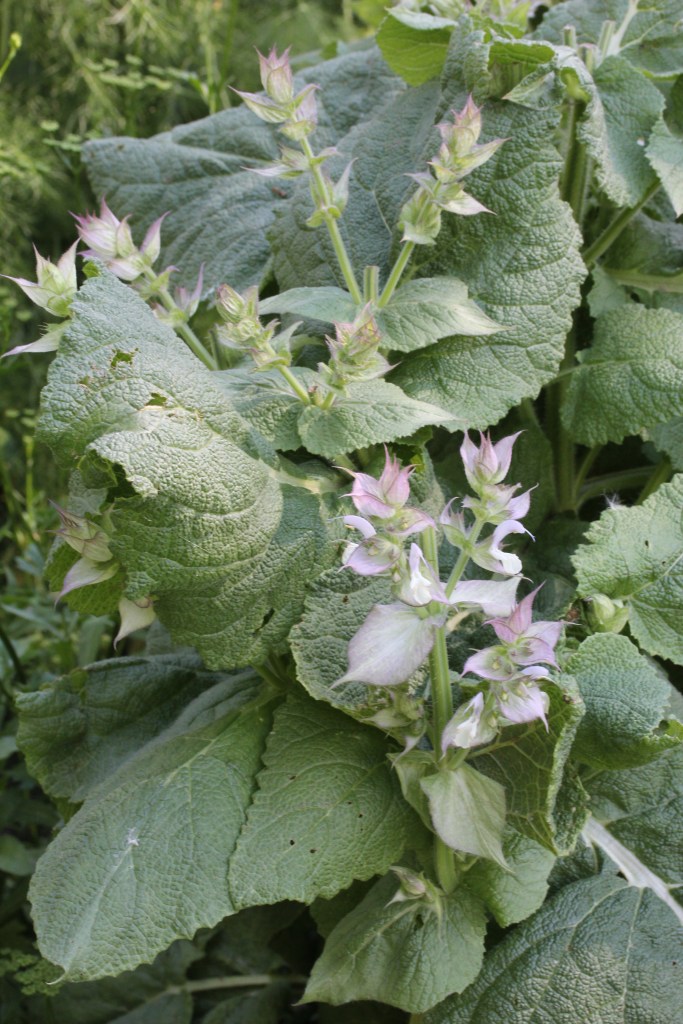
Sclarea is a a sage like the pineapple cultivar. It probably has many similar properties as the culinary spice you are familiar with. Like all member of the mint botanical family clary is high is volatile oils. Most alternative practitioners are only familiar with using this herb as an essential oil. I find the living flowers to smell even more amazing than what you get in a bottle. Clary sage has to be one of my favorite plants. The flowers are beautiful, loved by bumblebees and have an indescribable scent.

This year I decided to harvest the leaves because I noticed they have a lovely smell. I dried many of them in the dehydrator due to their texture, size, and moisture content. For the jelly I made an infusion of the fresh tops. The flowers make a remarkable electuary and dry well to be added to my floral bath mixture along with the leaves. I am always trying to find new ways to cook and make medicine with clary sage.

Clary sage is a perennial that grows 1-2ft high. In its first year or in spring in comes up a a dense rosette of green fuzzy leaves with rolling semi serrated margins. Leaves become larger and broader as the plant grows and matures. In late summer it sends up a thick square shaped stalk/stem. That terminates in a multi flower spike. Leaves are oppositely arranged. Flowers are pink, two lipped, irregular and when immature enclosed by sepals (note that these are not petals or leaves arranged on stems, theses are “false” despite the pink shade). A sure fire way to identify clary sage is its smell.

The flowering tops and leaves have been used historically in tea for delayed and painful periods, menopause (night sweats, hot flashes), PMS, a digestive tonic, stress/depression, and muscle spasms/cramps. Externally it can be as a wash for irritated eyes, vaginal douche, or sores.

As an edible, clary sage can be used in both savory and sweet dishes.

Family: Labiatae (mint)

Parts used: flowering tops and leaves

Contraindications-do not use if pregnant or nursing. Do not take large/therapeutic doses of the tea for more than one week at a time.

Chilblain Salve (horehound)*

My teen daughter gets the worse chill blains on her hands and feet this time of year. She has the bad habit of going outside without shoes and socks. Like her peer she is often underdressed during winter. I remember those years of bundling her up in wool to protect her vital energy and “kidneys”. Many girls her age have “yin deficiency” with symptoms of cold hands/feet, poor circulation, and dizziness upon standing. I created this salve for her poor blistered toes and fingers. I also have her taking my iron tonic and using my kidney rub oil.

This salve contains warming herbs high is essential oils to increase circulation to small capillaries. I added some calendula to help heal up the blisters and soothe the itchiness. The rue deals with stagnant/obstructive energies or emotions.

Chilblain Salve

A two inch piece of fresh ginger coarsely chopped

3/4 cup of fresh horehound leaves

1/4 cup of fresh rosemary leaves or 5 drops of the essential oil

1/2 cup of dried calendula flowers

2 TBSP of clove powder

1/2 cup of fresh or dried rue leaves

Place all ingredients in a jar that holds about two cups of liquid. Fill with organic Californian olive oil. Let sit in a cool place for 2 weeks. Strain and use in the following salve recipe…

Add your strained oil infusion to a double boiler. Heat on medium for 5 minutes. Add in the 2 ounces of beeswax ,1 ounce of shea butter and 1/4 cup of castor oil. As soon as it is all melted and you see no floating pellets-test consistency by dipping a metal spoon into the mixture and placing it in the freezer for 1 minute. If you are happy with the result remove from the heart. If not, add 1/2 an ounce beeswax beads and test until you are satisfied. Let cool 2 minutes and then add in any essential oil. Pour into small tubes, tins or jars. Let sit 2 hours before capping and storing.

Marrubium vulgare

White horehound is a perennial plant in the mint family that grows easily on several continents. You will find it in gardens, dessert pastures, the wild, and wastelands. The entire plant is downy and has a silver “bloom”. The fibrous twisted root sends up several square shaped stems. Numerous leaves are opposite, petioled, round/ovate, wrinkled and soft underneath. Tiny with a pink/white two lipped flowers with a spiny calyx grow in axillary whorls in late summer. Prefers sun and well drained soil.

Marrubium has been used for healing since ancient times. It is a common ingredient in cough syrups and lozenges because it clears phlegm and prevents infection from moving into the lungs. It is thought to helps with bronchitis, laryngitis, hoarseness, sore throat, asthma, pneumonia, and a hacking cough. Historically this plant has bee used to treat fever, anemia, hepatitis, retained placenta, stomach issues, heart conditions. It balances bodily secretions and makes a bitter digestive tonic. It increases circulation (vasodilator) and sweating. Stimulates the production of bile and supports the liver.

Externally a serum can treat blackheads and rough/dry skin. Adds a healthy glow and moisture to the skin. As a poultice/compress it can be used on deep wounds, a rash or for shingles.

Taste: highly aromatic/pungent (volatile oils) and bitter. Requires a lot of sweetner to make it palatable.

Energetics:Moves energy, clears heat/cooling and toxins. Drying.

Element: Air

Spiritual/Emotional uses: protection

Contraindications: pregnancy. Excessive use may lead to hypertension. Fresh juice applied to the skin may cause a reaction. Large doses may act as a laxative.

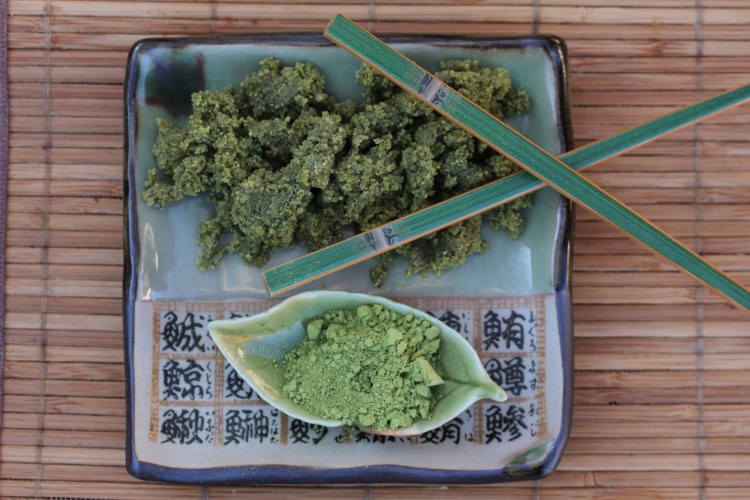
Matcha and Fresh Mint Sugar Scrub

February can be a cold, dry, and dark month. A time when the mind and skin feels dry and in need of and care. This scrub is fresh and invigorating. It helps to move energy and blood, clearing stagnation. It exfoliates the skin , leaving it silky smooth, nourished, hydrated and “brighter”. (properties of green tea?)

Matcha and Mint Sugar Scrub

2 cups of sugar

4 drops of green food coloring (optional)

1 cup of loosely packed fresh mint leaves

2 TBSP of goat milk powder

2 TBSP of betonite clay

2 TBSP of matcha/green tea powder

3/4 cup of shea butter

Add all of the above ingredients to a food processor, starting with the betonite clay. Cover the feeding tube of the processor with a towel to avoid a cloud of dust in your face during the first few rounds of mixing. Pulse/process until you have a nice, even consistency. Remove and pack into clean jars or containers. This scrub does not need to be refrigerated. If stored in a cool, dark place it will not mold or go off. Mine is over a year old and looks like I just made it yesterday.

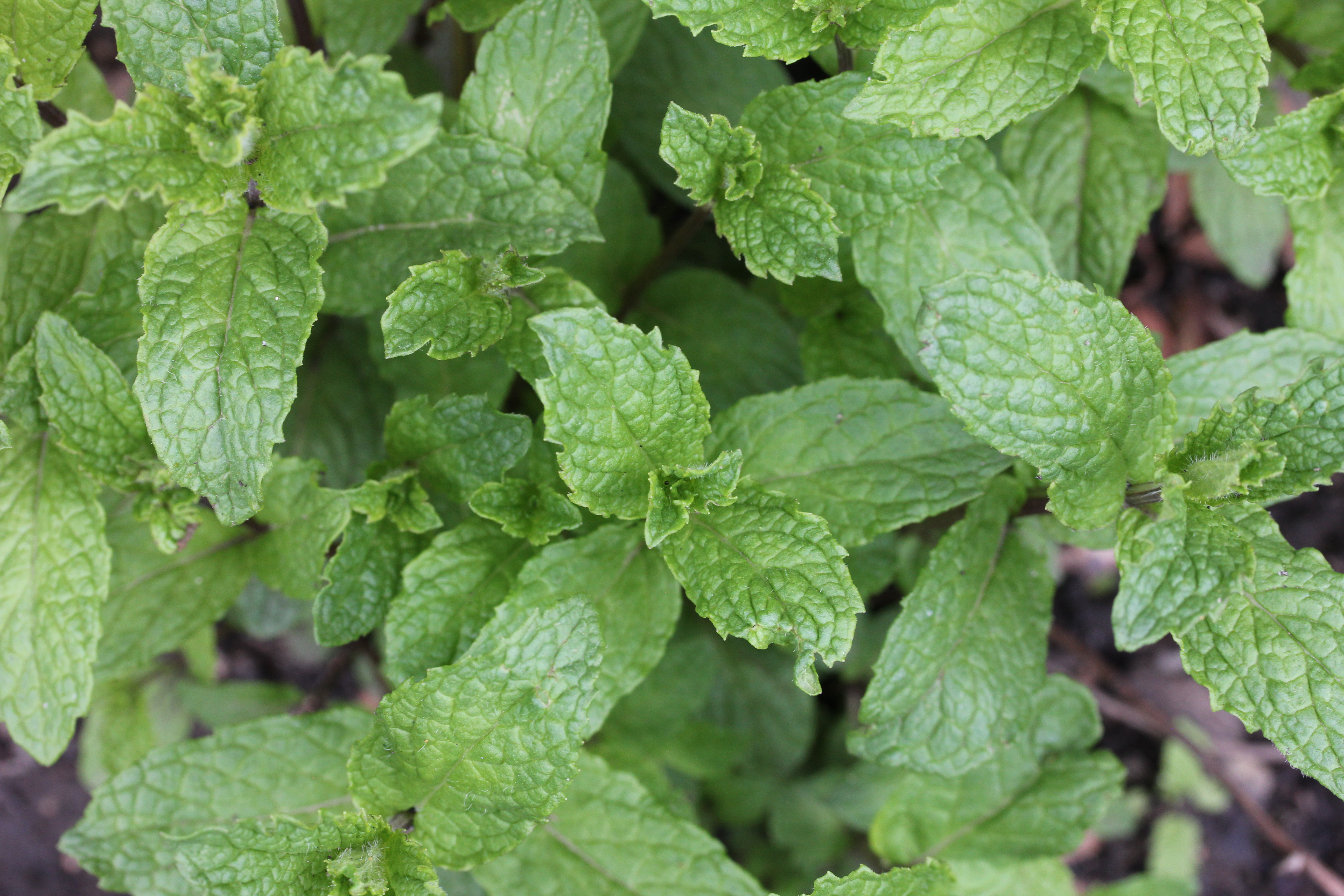
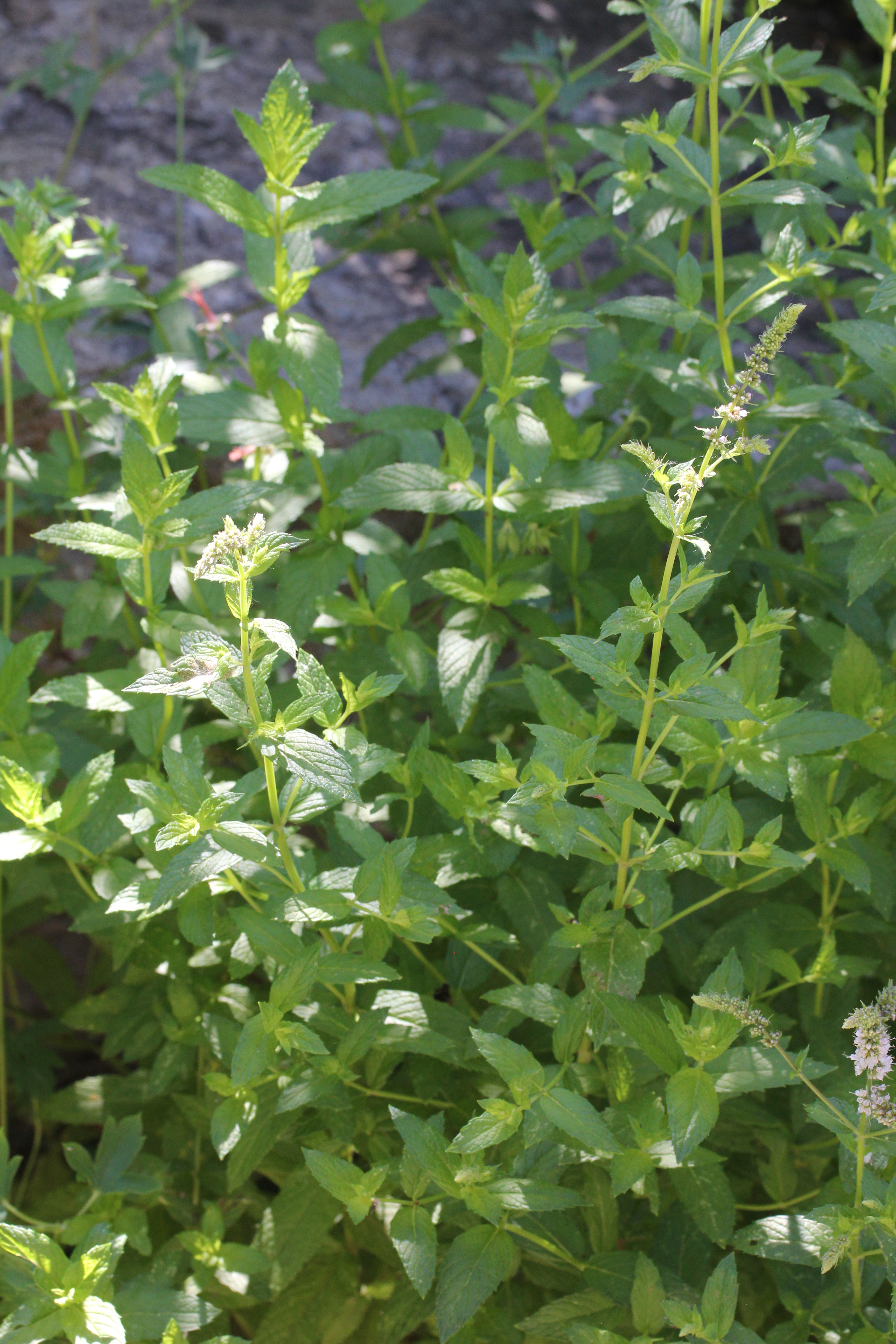
Mentha is in the mint/Lamiaceae family and includes both peppermint (Mentha piperita) and spearmint( Mentha spicata). Peppermint is a hybrid perennial plant that is most often found cultivated in gardens. This herb is highly aromatic( menthol). It has erect, square, branching, purple stems. It’s opposite leaves are opposite, oval/lance shaped and often serrated. The sepals and petals are united to form tiny purple flower that have 5 two lipped lobes (2 up, 3 down). These are arranged at the ends of axillary and terminal spikes. Spearmint lacks the purple hues in it’s foliage and is a more vibrant green. The leaves are often greater in number, larger and more serrated and “wrinkled”. They are sessile and have a very short petiole where they join the stem. This plant is usually taller than peppermint. The flowers are more numerous/dense on a larger , interrupted spike. Mints can be invasive and spread quickly through their rhizomes. They will tolerate any kind of soil and thrive in both sun and shade. Grow mints near your vegetables to keep them free of insects and other pests. These plants are a favorite of native bees.

Mints are known for their ability to clean damp/phlegm, increase circulation to the tissues and relax blood vessels. Their volatile oils warm the body, open the pores, and encourage sweating. Historically they been used to treat cramps, spasms, colds, coughs, flu, fever, sinus infections, sore throat, headaches, high blood pressure, menstrual problems, painful urination, nausea/vomiting, heartburn, stomach ache/colic, gas, digestive issues, liver stagnation, ulcers, parasites, bad breath, gum disease, nervous disorders and fainting. Externally mint has been used to treat pain, inflammation, rheumatism, bruises, rashes, hives, bug bites, and skin issues. A steam inhalation may help with asthma, bronchitis, chest congestion and laryngitis. Mints improve the flavor of other teas, are used in many culinary traditions, and can be burned as incense. Spearmint tends to have a sweeter, less spicy/hot/medicinal flavor than peppermint.

Parts used:aerial above ground parts

Energetics: sweet, pungent, cool, warm, dry

Element: fire and water depending on variety

Emotional and Spiritual Uses:Prosperity. protection. Brings movement, openness, and warmth to life. Allows the mind to think quickly and clearly so that we can envision and future and manifest our dreams.

Contraindications: Avoid large doses in pregnancy and nursing. Long term therapeutic use can stress the heart.

Herbal Bundles (feverfew)

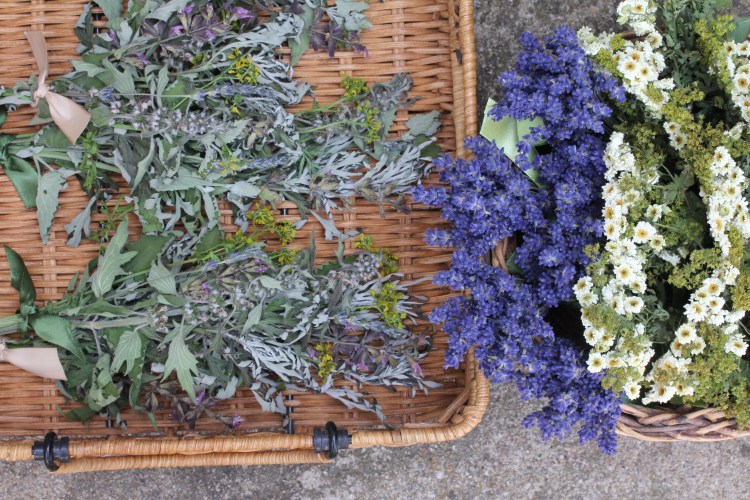
Some years there is an overabundance of particular plants. I try to plan for this as I harvest during the herbal year. They can be very useful to decorate my care packages. I dry them tied in bundles in my large dehydrator. This keeps their shape and vibrant pigments. So pretty when tied to the outside of a plain paper bag. At this winter time of year a bit of color is especially cheering and appreciated. When the day is cold and grey. When bad weather has kept us inside for way too long. We often need that reminder of spring and summer to come.

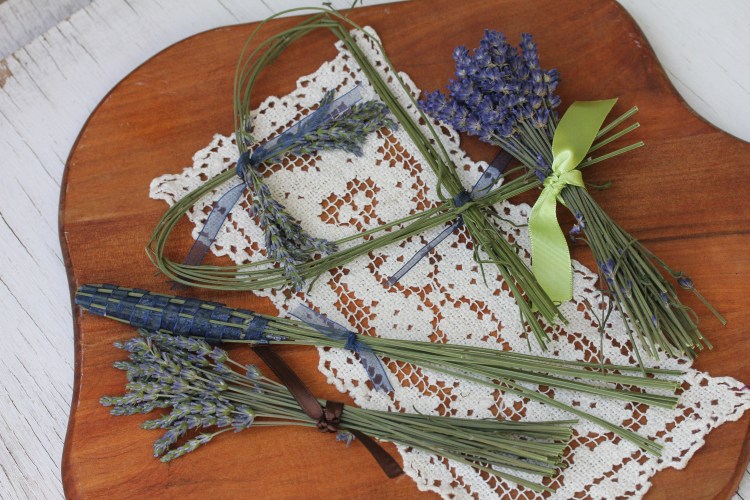
Bundles can be purely aesthetic, like lavender which can later be placed in a drawer or hung above the door.

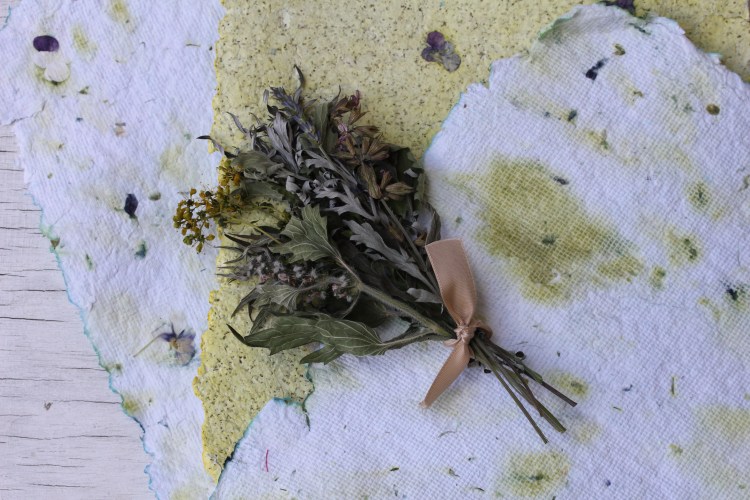
Spiritual/Emotional Bundle-rue, mugwort, motherwort, sage. Dried and ready to be used.

Some bundles are useful in a bath or under a pillow for spiritual/emotional uses. Other herbs to consider are chamomile, lemon balm, catnip, rosemary, basil, skullcap, violet and clary sage.

A respiratory tea bundle could contain thyme, horehound, mullein, bay, and hyssop.

Bundles can be burned as “incense”. I like juniper, sage, mugwort and lavender leaves for this.

My headache tea bundle contains feverfew and lady’s mantle. The possibilities for themes are endless.

Thoughtfulness in your choice of plants and how they are arranged can easily create something that is both beautiful and medicinally useful when needed.

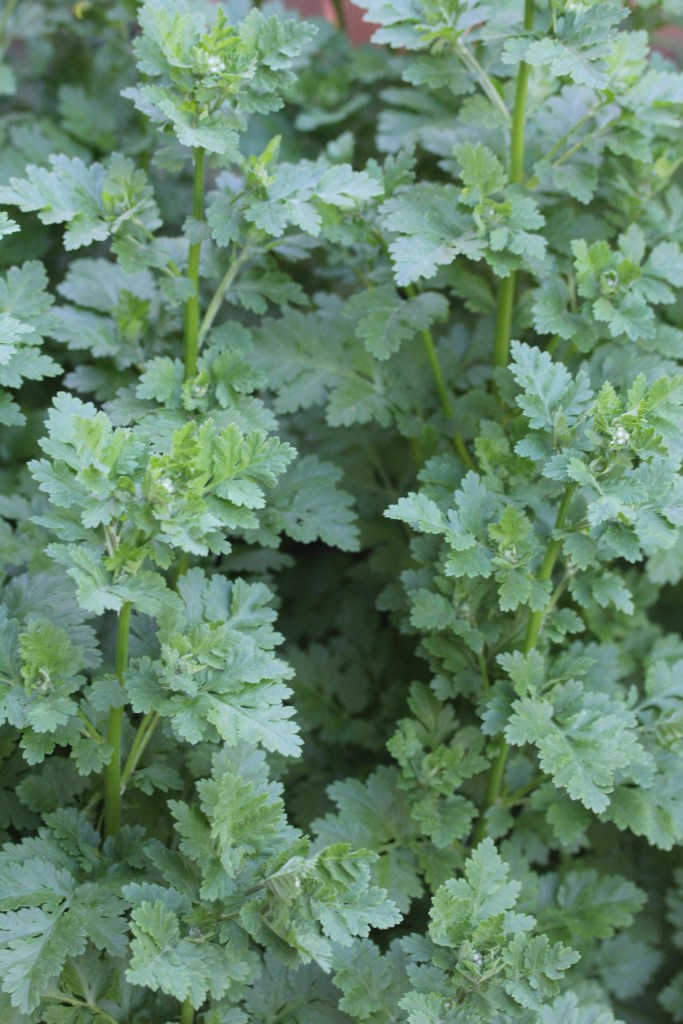
I have been growing Tanacetum for decades but rarely used it for medicine. The plant has lovely flowers which dry nicely for bouquets and it fills out an area nicely. You can find this plant in gardens and abandoned lots. It is in the Compositae/Aster family. Subfamily Anthemideae/Chamomile. Do not confuse it with Tanacetum vulgare (Tansy). Feverfew has light green feathery leaves arranged alternately on a round stem. It grows 6-18 inches high. The plant has a strong distinctive smell that is not quite pleasant. The flowers look like small daisies with white “petals” and a yellow center, If self seeds and spreads easily. It is not too invasive if you remove dead flower heads. Feverfew will grow in any type of soil and in most locations. It looks great for most of its season as a hardy perennial.

It is a mystery to me why more herbalists do not use this plant. It has been used to treat inflammation, digestive issues, allergies, arthritis, nausea, spasms (menstrual and muscle), asthma attacks, depression, menstrual problems, fever, flu, and colds. Externally is can be used to heal bruises or soothe insect bites. It is one of the first herbs to get a scientific study. Feverfew is best known as a very effective preventative strategy for migraines. As a compress it can relieve a headache. In a spray it can be part of a formula for a bug repellant. It is worth paying attention to feverfew right now because it prevents blood from clotting and inhibits the the release of inflammatory substances from the cells. It is also a powerful anti-microbial.

Parts used: leaves and flowers

Energetics:sweet, warm, moist

Element:fire

Emotional/Spiritual Uses: cleansing

Contraindications and Cautions: may cause mouth sores ,irritate the stomach or cause dermatitis in rare cases. Avoid during pregnancy and nursing. Do not consume if you are taking blood thinners, have a surgery planned or are allergic to plants in the ragweed family.

Basil, Lemongrass, Lime, and Ginger Lotion Bars*

My skin gets so dry in a high desert climate. Lotion bars are a great way to easily restore it to a healthy an happy condition. I like to apply one right as I get out of the shower. It does not leave a greasy residue on my clothing when I get dressed. The heat from the shower allows it to quickly penetrate.

Basil, Lemongrass, Lime, and Ginger Lotion Bars

Melt 1/4 cup of coconut oil, 1 and 3/4 cups of cocoa butter in a double boiler over medium heat.

Add 1/4 cup of Infused oil of basil, lemongrass, and ginger and marshmallow leaf

Add 1/4 cup of castor oil

Add 1/2 cup of grated or beads of beeswax

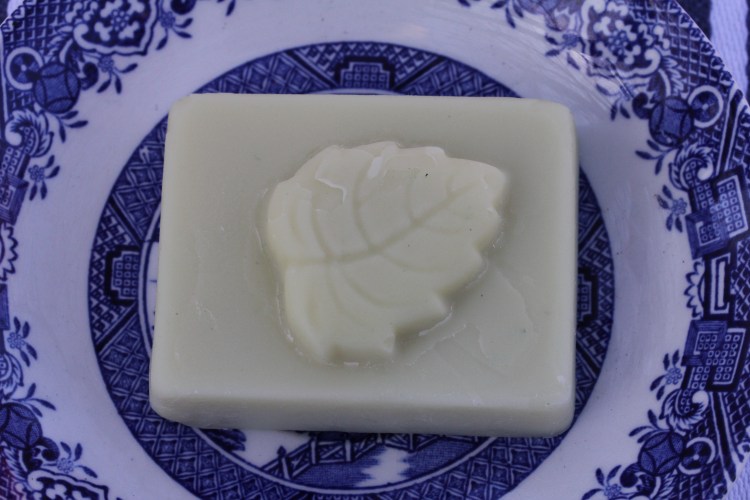
Once it is all melted dip a spoon into the liquid and place it into the freezer for a few minutes . Test the consistency. Add either more beeswax or more infused oil until you have what you want. It should not be as hard as homemade soap but it should not be as soft as salve. Pour into soap molds. Remove when solid.

When rubbed on warm skin it should make it feel soft, smooth, and silky.

Ocimum basilicum

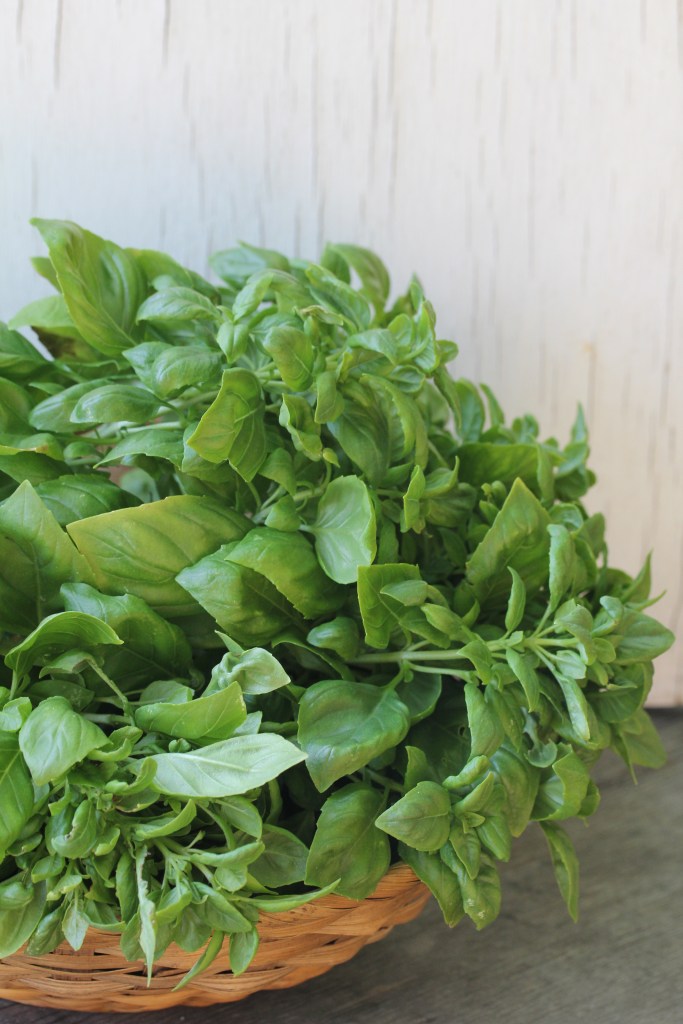
Basil is in the mint family. Typically it is an annual but will overwinter indoors. It is a very common garden herb used as a companion plant and insect repellant. A thin branching root produces several lush square stems growing 1-2 feet high. The leaves can vary from bright to dark green depending on the variety. Some types like Thai basil have purple in their oppositely arranged leaves. Leaves can be oval to spade shaped, toothed or smooth in their margins. Like others in the family, it has lots of small two lipped flowers that grow on racemes/spikes of 2-4 inches. These are a favorite of bumble bees and come in shades of white, red or purple. A distinguishing feature of Ocimum is the smell, similar in all varieties but with slightly different “notes”.

This plant warms, calms, and clears phlegm/damp. Historically basil has been used to treat all manner of digestive complaints such as cramps, vomiting, constipation, gas, low appetite, diarrhea, bacterial infections and inflammation. It stimulates the flow of breast milk, cures a headache, and calms a bad cough. Ocimum has been used for depression, the flu, fever, asthma, retained placenta, fever, anxiety, bronchitis, and fatigue. It works well to support the lungs.

Externally it has helped with acne, bug bites, fungal infections, sore muscles, and arthritis. The essential oils/scent make it useful in aromatherapy, ritual bathing/cleansing, beauty products and as incense.

Parts Used: Leaves and flowers

Energetics:bitter, warm, dry, pungent

Element:Fire

Spiritual/Emotional Uses: Integration, especially when two things seem contrary in nature. May be used to bring luck protection, or blessings to body, home or new relationships. Use it when there is conflict or negative energies in a situation. It is commonly used in ritual baths , especially for the dead.

Contraindications: Avoid large/therapeutic doses in pregnancy