Self Care Sunday Easter Basket (teens)

Some days my daughter awakens from sleep without her rosy cheeks, beautiful smile, and bright eyes. She has lost some vital energy in the night. Maybe she had a bad dream, needs a conversation with peers, stayed up too late, is worried about her future/current events, or is spending a lot of time indoors/on the computer. Her cup is emptying and is not getting a refill. It must be so hard to to live with the chaos, uncertainty and isolation of these times. When she is “low” I recommend that she tries to get outside/exercise, take a bath, play the piano/sing, send a message to a friend, or draw/create something. I know what what helps her to regulate or recharge. Lately those things are not enough and she requires “energy” work to retrieve what has been lost. So I get out my tuning forks. bells, broom, massage oil, healing hands, etc. Instantly I see a change in her mood and physical appearance.

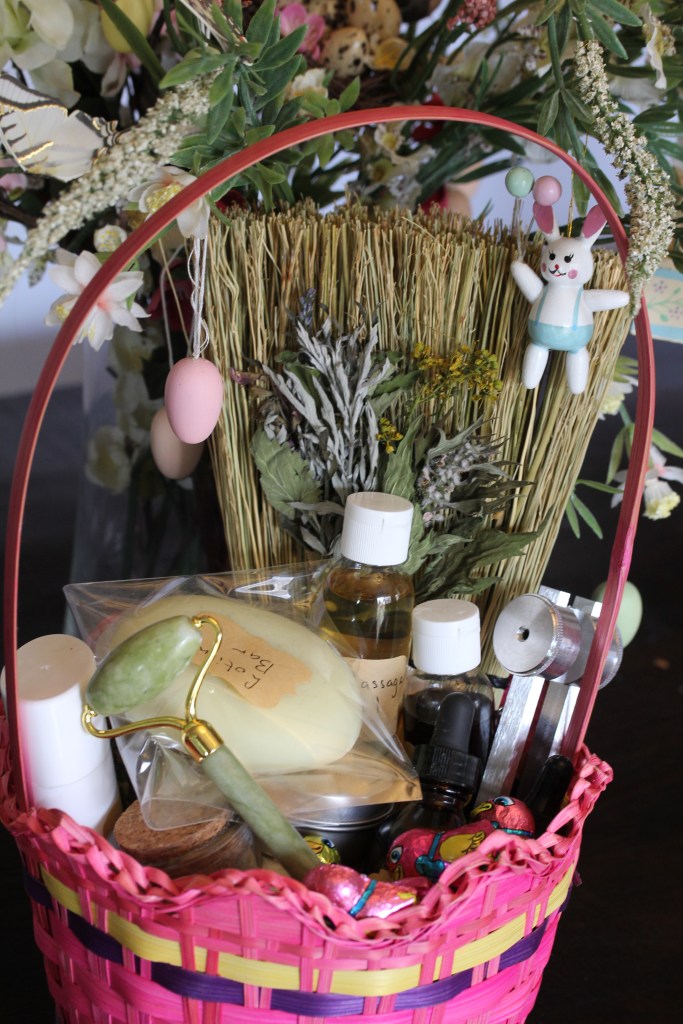
Both my daughters love these healing session. The connection and relaxation soothes their nervous system and restores harmony in the world. My kids are getting more emotionally intelligent and resourceful everyday. In the future they may not want my attention or I could be far away. My goal over the next six months is to support them to learn how to do their own self care. Ultimately they are responsible for maintaining physical and mental health. I hope to teach them not to project their pain and suffering onto themselves or others. So I put together these Easter baskets with a twist, replacing all those sugary filled sweets and plastic with something way more useful for a tween/teen girl.

Chamomile Milk Bath

Citrus Bath Salts

Floral Facial Toner

Constitutional Massage Oil

Basil and Lime Lotion Bar

Wound Powder for Acne Spots

Acne Tincture

Heavy Period Tincture

Soothing Bulk Tea

Cardamon and Rose Cleansing grains

Headache Herb bundle

Violet Leaf Deoderant

Elder and Yarrow Flower Cold Cream

Jade Roller

Weighted Tuning Forks

Whisk Broom for energy cleansings

and of course a bit of good quality chocolate.

What are some signs of vital energy loss in children?1) Nightmares/sleep problems. 2) Stomach complaints/food allergies. 3) Rashes and skin issues 4) Off complexion color (pale, yellow, gray, circles under the eyes) 5) Anxiety/fears. 6) Behavior/mood changes. 7) Self isolation. 8) Apathy/loss of interest in people and activities. 9) Fatigue/exhaustion. Obviously these “symptoms” resemble numerous minor and serious conditions that we recognize in our society. But the traditional medicine system of many cultures also see these as indicators of an imbalance that is not known or usually treated in the West.

What are some causes of vital energy loss in kids 1) Witnessing or experiencing an event that is traumatic/shocking. 2) Sudden disappearance of regular habits/routines. 3) Chronic illness or hospitalization. 4) Loss/death of loved one. 5) Persistent bullying, neglect, abuse, or sensory deprivation. 6)Stressful life situations (war, relocation, natural disaster, racism). 7) Unresolved PTSD, depression, or anxiety. 8) Missing connection (to self, family, community, peers, nature, spirit). 9) Exposure to energetic and environmental toxins. 10) Engaging in actions that violate agreements or cause harm to other sentient beings. 11) Repetitive exposure to activities/media that is violent, demeaning, destructive, harmful, or “ugly”. 12) Overconsumption of things that lack life force/Qi like processed non organic food and screens/computers/devices.

How can vital energy be retrieved? 1) Self care practices. 2) Spending time in nature. 3) Energy/healing/therapeutic work. 4) Establishing a relationship with spirit. 4) Rituals/celebrations/experiences that are beautiful and uplifting. 5) Reconnecting on an intimate level with people and activities that are important. 6) Physical activity/movement. 7) Creative activities (music, dance, writing, art, hand crafts). 8) Tactile/5 sense stimulation. 9)Prayer/meditation 10) Changing habits. 11) Confession/repair of ruptures and wrongs. 12) Service, volunteer work, doing something for others.

In the distant past when humans were tightly woven into the fabric of community, spirit, and nature vital energy loss was a rare and short lived concern. Family members knew how to recognize it and deal with it immediately before it moved deep into the system to create more problems. We live in a time when the choices we make draw vital energy from our reserves rather than make a deposit. Our society is based on the consumption of time, energy, information and resources above the giving of back these things to self/others. No wonder we all feel either empty, lost or spent. We all crave connection, joy, balance, and a state of well being but have lost the path/road map to get there.

Do you “see” vital energy loss? How do you treat it in yourself and those you love?

Calendula and Dandelion Citrus Cupcakes

Using Edible Flowers in Baked Goods

I love surprises and being creative in the kitchen. So when host a tea party this a what I make.

Edible Flower Cupcakes

  • 1 cup of brown rice flour
  • 1 cup of almond flour
  • 2  1/2 tsp of baking powder
  • 3/4 tsp of salt
  • 2/3 cup of butter or substitute
  • 1  1/2 cups of sugar
  • 1 tsp of finely grated orange peel
  • 1 tsp of finely grated lemon peel
  • 3 eggs
  • 2/3 cups of milk or substitute
  • 1/2 tsp of vanilla extract

Preheat oven to 350

Combine first four ingredients in a large bowl

In a second bowl beat butter for 30 seconds. Add sugar and peels. Beat until well combined. Add eggs one at a time and beat for 2 minutes. Stir in milk and vanilla extract.

Add wet ingredients to dry. Mix well.

Add in dried edible flowers to taste/aesthtics.

Line cupcake pans with paper liners. Fill each half full.

Bake 18-20 minutes. Cool 30 minutes before removing.

Frosting

Refrigerate 1 can of coconut cream upside down for 24 hours

Flip can and open, pour out liquid and save for another use.

Scoop out fat and place in a cold metal bowl

Whip, add sugar and vanilla extract to taste. Stop when you have the consistency of whipped cream. Serve immediately.

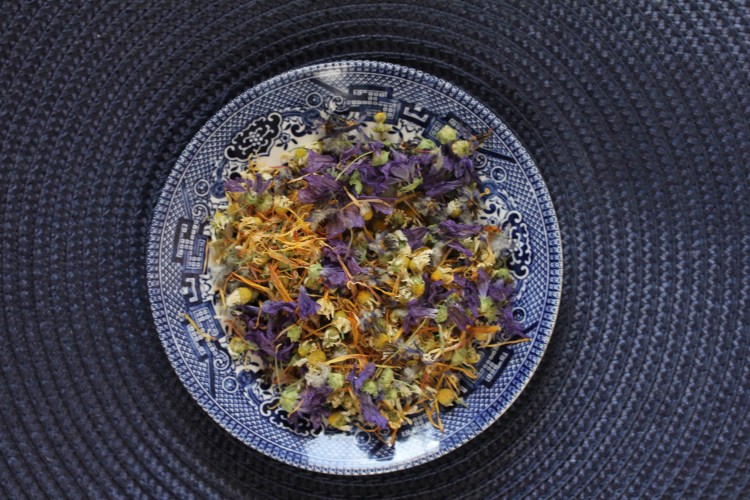
Dried Edible Flowers

I like to have a container of dried edible flowers on hand for special occasions. They can be mixed into batter or sprinkled on top of treats for a beautiful look.

Besides being a table decoration. Edible flowers are a great way to sneak vitamins and healing qualities into food. I will talk more about this is later posts.

Here is just a small list of edible flowers that dry nicely. Rose, borage, dandelion, violet, dandelion, malva, chamomile, lavender, and calendula.

Have you ever used flowers in food?

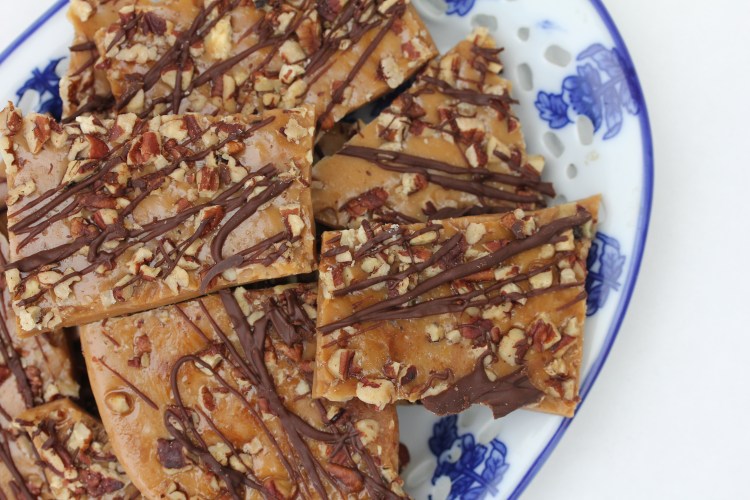
DANDELION Root Toffee

A twist on traditional toffee recipes with a subtle, rich taste from the infused roots. This is super easy to make and something fun to do with kids on a snowy day. Anytime one is melting sugar there must be close adult supervision to avoid burns or accidents. Dandelion can be quite bitter and not appealing to children as a taste. Yet even the young can really benefit from its healing qualities in small amounts hidden in a treat.

You will need a candy thermometer. Also make sure you have a hot mitt handy and nearby.

Cover a sheet baking pan with parchment paper.

Measure out 1/4 cup dried or coarsely chopped dandelion/burdock roots. Place in a saucepan with 1 cup of almond or other milk. Let simmer on low for 15-30 minutes. Remove from heat and strain out the roots. Set “milk” aside.

While you are simmering, toast 3/4 cup of chopped pecans in the oven at 250 degrees for 20 minutes. Remove from oven and let cool.

Now to a large cast iron or heavy bottomed pot add

1 cups (16 tablespoons/2 sticks) of butter OR vegan substitute (no coconut oil).

1 and 1/4 cups of granulated sugar

Your infused “milk” top it off with more milk if need be to measure 1/2 cup total.

1 TBSP of brown rice syrup (honey, maple syrup, agave if you need a substitute)

1/2 a tsp of salt

With the stove set at medium high let your ingredients melt. Then begin to stir constantly with a wooden spoon. The trick is to keep your mixture from scorching, burning or sticking to the bottom of the pan. It is handy to have one person stir and the other to hold the candy thermometer in the liquid. The thermometer should not touch the bottom of the pan but it needs to be submersed. It will take more time than you think to get above 200 degrees Fahrenheit.

Most recipes say you need to reach 285 degrees/soft crack stage but we tried two different thermometers and barely got above 200 before we needed to pour. This is well past the stage where it melted or got bubbly. So look for a substance that is thick/dense, not transparent, and a pale gold color. It will start to separate from the sides of the pan and pool in the middle, sliding around as one mass as you stir. It might start to burn at this point and it is probably ready. You can remove a small spoonful and see how hard it gets upon cooling in the freezer if you have time. Immediately pour onto your pan. (Reminder melted sugar is very hot and can leave a terrible burn even if just a drop).

Spread evenly on the sheet pan with the wooden spoon. Sprinkle on the nuts and press them onto the surface with the back of the spoon. Cool in the refrigerator or better yet in the snow.

While cooling you can melt white or milk chocolate chips in a double boiler. Use a fork to flick/drip lines on the top of the toffee once it is cool and solid.

Break toffee up into pieces. We got about 15 large pieces from the above recipe which can easily be doubled if you have a crowd.

Latin Name: Taraxacum officinaleFamily: AsterSubfamily: Cichoriodeae/Chickory

Taraxacum has yellow ray flowers that overlap all the way to the center. There is no round disk in the center like other plants in the aster family. The “petals” are straight and do not taper. It has bracts/modified leaves where the stem joins the flower instead of sepals. It has a hollow, round stem full of a white, latex like, sticky sap.There are related plants that look like dandelion (sap, yellow flowers etc.) BUT Dandelion has a reddish green , non branching stem that is 2-6 inches long (sometimes 18). The leaves do not grow off the stem, instead they grow around the base in a ring. There is one flower per stem .The leaves are very serrated like teeth , they get broader towards the top before ending in a point. Nothing about a dandelion is prickly or hairy. Single seeds look like a tiny parachute but together form a white fluffy ball.Habitat-lawns, parks, fields, waste land. Dandelion likes poor soil. Blooms and makes seeds all year round. One of the first flowering plants to appear in spring.Growing:will grown anywhere. Self seeds. No need to cultivate, it is an invasive but useful weed.Edible parts:Root, leaves, flower heads.Harvesting:Dandelion roots and leaves are most bitter in the spring, this is also when they have most medicinal qualities. Plants growing in the shade may be less bitter. Pick flowers mid morning when they are dry and have reached their biggest size. Wash well, the root may need to be scrubbed with a brush. When picking be aware of contamination from pets and pesticides/herbicides. Watch for bees, it is their favorite source of food right in the early spring.

Historically Dandelion has been used as a diuretic (water retention) and laxative (constipation). As a tonic it cleanses the blood/tissues/organs of wastes/toxins and clears heat. Dandelion is useful for skin disorders (acne, cysts, fibroids, poison ivy, rashes, eczema, abscesses etc.), hay fever, candida, allergies, varicose veins, gout, rheumatism, and weight loss. It cools heat (fever) , stimulates the immune system, and removes infection ( sinusitis, bronchitis, mastitis, hepatitis, herpes, and mono just to name a few) Internally Dandelion is best known for its action (astringent, tonic, stimulant) ) on the digestive system (gas, indigestion, appetite loss, heartburn, ulcers) the bladder ( urinary tract infection) liver (jaundice, cirrhosis) and gallbladder (gallstones) pancreas, spleen, and kidneys (kidney stones). Internally the flowers can be used for pain/anti-inflammatory (arthritis, cramps, headaches, and backache). Externally the flowers can be used for wounds and fungal infections. The sap from the stem is thought to remove warts.

Culinary uses- coffee substitute, wine, beer, syrup, jelly, baked goods, stir fry, juiced, pickles, and salad green just to name a few. Herbal products products-tea/infusion, tincture, oil/salve. The fresh leaves can be added to salads and soups or the dried to condiments to add a mineral source to the diet.

Contraindications: safe during pregnancy and nursing in small amounts. Because it is in the aster family, it may cause allergic reaction in people sensitive to those kinds of plants. The sap may cause contact dermatitis.

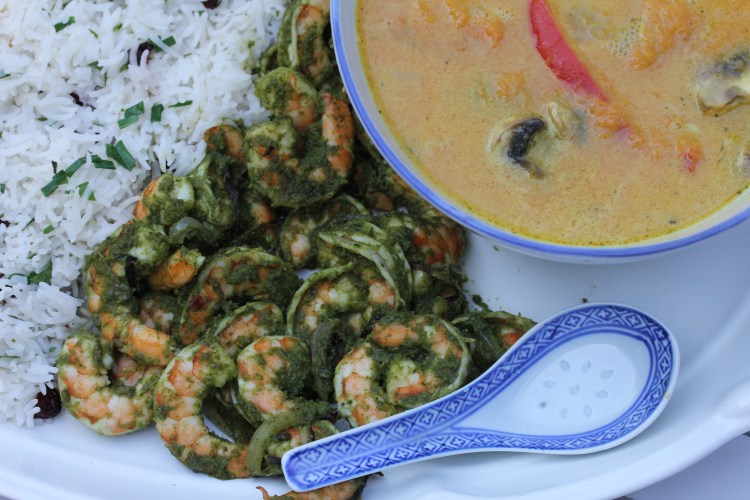
Shrimp in Green Thai Basil Curry Paste

There are all kinds of pastes. Numerous cuisines make use of them. They are the ideal way to store herbs long term. A spoonful can quickly be added to a grain or protein to make something healthy and tasty. In times and places without refrigeration they are essential. The components in a paste are a variety of fresh and dried herbs finely chopped and suspended in a base of vinegar, oil, sugars, or ingredients that will ferment. Pastes can be put in storage for one day or 12 months depending on the preservative qualities present in the ingredients.

Green Curry Paste

1 tsp of dried red chile flakes

1 tsp of ground coriander seeds

1/2 cup of fresh cilantro leaves

1 TBSP of finely chopped fresh ginger root

1 TBSP of of chopped fresh lemon grass

2 large cloves of garlic

2 TBSP of olive oil

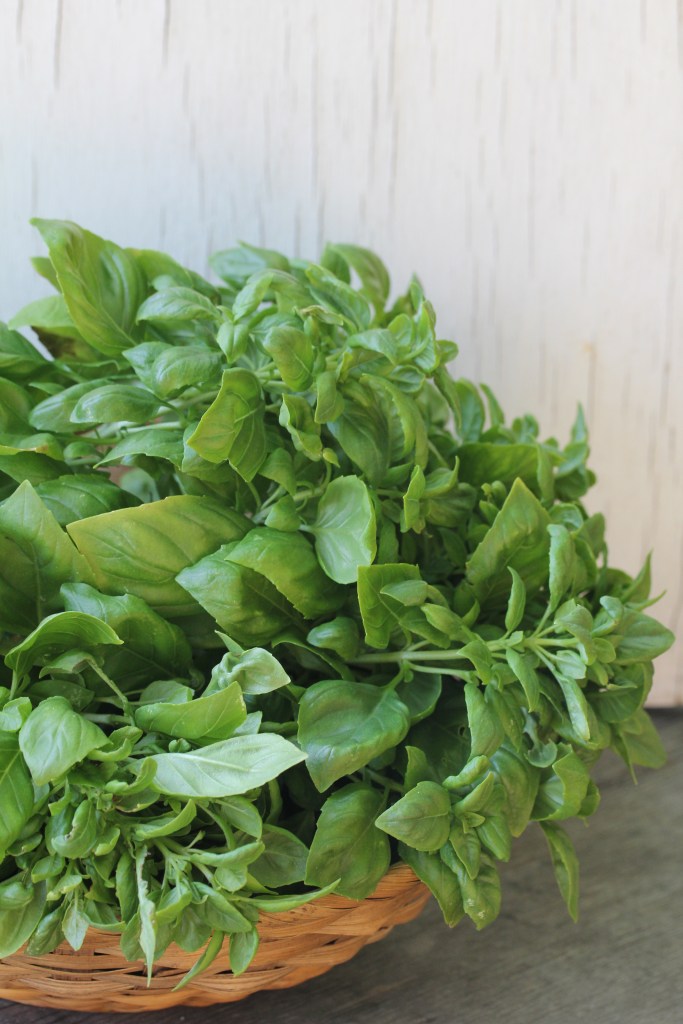
2 cups of or two large handfuls of Thai (or any type) basil

Blend all of the ingredients in a food processor until you have a smooth paste.

Can be stored in the refrigerator for up to two weeks.

To a large frying pan add 16 ounces of cooked shrimp (tails and shell removed), 2 TBSP of the green curry paste and 1/2 can of regular coconut milk. Simmer on medium heat until all ingredients are hot and sauce has thickened, about 15 minutes. Remove from heat, serve with batsmati rice.

Ocimum basilicum

Basil is in the mint family. Typically it is an annual but will overwinter indoors. It is a very common garden herb used as a companion plant and insect repellant. A thin branching root produces several lush square stems growing 1-2 feet high. The leaves can vary from bright to dark green depending on the variety. Some types like Thai basil have purple in their oppositely arranged leaves. Leaves can be oval to spade shaped, toothed or smooth in their margins. Like others in the family, it has lots of small two lipped flowers that grow on racemes/spikes of 2-4 inches. These are a favorite of bumble bees and come in shades of white, red or purple. A distinguishing feature of Ocimum is the smell, similar in all varieties but with slightly different “notes”.

This plant warms, calms, and clears phlegm/damp. It has a pungent/bitter taste with fire as its element. Historically basil has been used to treat all manner of digestive complaints such as cramps, vomiting, constipation, gas, low appetite, diarrhea, bacterial infections and inflammation. It stimulates the flow of breast milk, cures a headache, and calms a bad cough. Ocimum has been used for depression, asthma, retained placenta, fever, anxiety, bronchitis, and fatigue.

Externally it has helped with acne, bug bites, fungal infections, sore muscles, and arthritis. The essential oils/scent make it useful in aromatherapy, ritual bathing/cleansing, beauty products and as incense.

This herb is very popular in many cuisines as a pesto, salad garnish, and spice.

Contraindications: Avoid large/therapeutic doses in pregnancy.

Rejuvenation Pastes*

If you are familiar with the traditional medicine of China, India, or Tibet you have come across powdered formulas. Ancient recipes made from plant, animal, and mineral ingredients that are sometimes toxic and need to be consumed with knowledge and care. Powders can be taken as part of a tea, in capsules, or mixed into water. Ideally the ingredients are prepared and consumed in elaborate/specific ways based on the condition, properties in the herbs, constitution, and result the practitioner wishes to achieve.

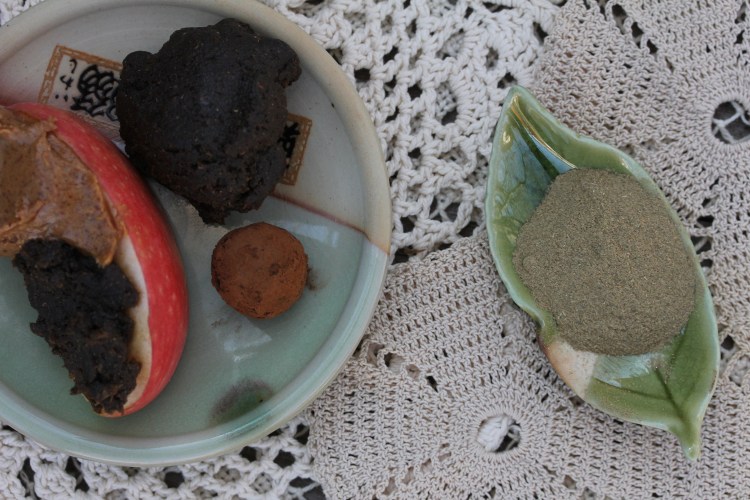
Client compliance can be an issue due to taste, texture, and hassle. When there is flexibility, I like making a paste. I start with a base of sweet/pleasant tasting, nutrient dense ingredients, some of which support digestion. A paste adds “energetics”, hides grit/dryness, and can be more user friendly than say a tincture or bitter tea . I like to spread it on fruit, bread, or crackers. Balls can be rolled in cocoa or carob powder and eaten like a truffle. If you have an herb dependent on a certain process for extracting the medicinal/chemical constituents pastes may not be the way to go. But if your recipe has a lot of “culinary” or “building” plants, this can be a great option for children or long term use. A bit like combining a tonic with an electuary or pastille. Since my practice is shifting more towards preventative care and rejuvenation, the use of pastes is becoming a way I really prefer to dispense my herbs. For this recipe, I personally would use only “tonic” plants that can be safely consumed longterm to prevent or support chronic health issues.

PASTE BASE

1/4 cup of dried currants or raisins chopped

1/4 cup of dried papaya chopped

1/4 cup of candied ginger chopped

10 chopped dried apricots, cut and chopped

10 soft whole dates without pits, chopped

1 tsp of coarsely powdered fennel seed

1 tsp of vanilla extract

1/2 cup of nut or seed butter of choice

Dose-1 TBSP daily after lunch

In a large food processor add your dried fruit. Pulse until you have a coarse substance that is finer and sticky.

Add in the fennel, vanilla and nut/seed butter. Process until you have a smooth paste that holds its shape well.

1/2 cup of powdered herbs are added when you do the fennel seed. This amount can be adjusted depending on dose, age/life status, and the properties of the plants chosen.

Dose: 1 TBSP daily after lunch or as a “snack”.

I would love to hear about your experiences with powders and pastes.