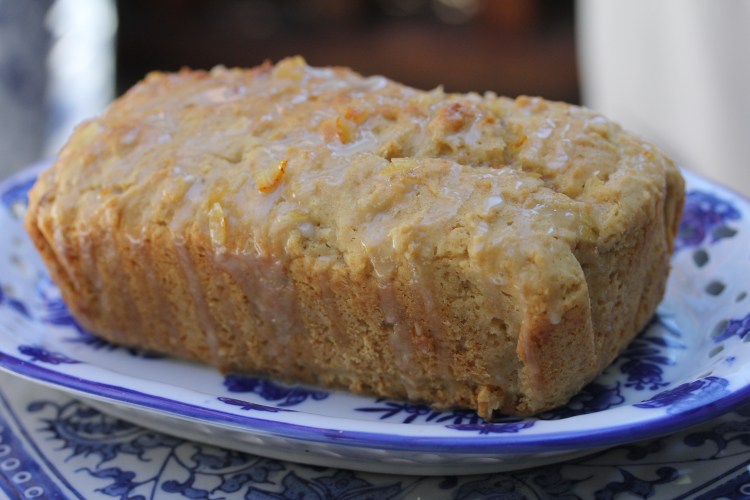
This is a lovely, aromatic bread, that has the texture of a scone. It is perfect for breakfast or brunch as it is not too sweet. An homemade whipped butter with a bit of lemon peel and honey would be “icing on the cake”.
Lemon Saffron Tea Bread
In a large bowl add the following dry ingredients and mix well…
1/2 TBSP fennel seed, crushed finely
2 cups of unbleached wheat white flour
3/4 cups almond flour
2 tsp baking powder
1/4 tsp baking soda
1/8 tsp of salt
Set aside.
In another bowl cream together……..
1/2 cup of vegetable shortening
3/4 cup of honey
2 eggs
Zest and juice from one medium lemon.
In a small saucepan heat on low… for 15 minutes
1/4 cup of milk with
1/8 tsp of saffron threads
Add this to your dry ingredient bowl.
Lastly stir in the ingredients from your wet ingredient bowl. Mix slowly and gently, just enough to remove any lumps.
Line a loaf pan with parchment paper and butter. Pour in your batter. Bake at 350 for 60 minutes ( until a wooden tester comes out clean). Remove from oven. Cool for 15 minutes. Release from pan onto a cooling rack or cutting board, and let cool for 1 hour.
Once fully cool, the bread needs to be stored in an airtight bag or container. This avoids it drying out too fast. If you live in a humid climate, I would refrigerate it to avoid molding as well.
I recommend a standard icing or glaze with powder sugar and lemon juice. I mixed in a bit of orange/citron marmalade with my glaze. It gave the top of my bread a really professional look. Do this when fully cool or the glaze will not set.
SAFFRON is the stigmas from the Crocus sativus plant. This plant is cultivated in many countries and can be easily grown in US gardens. In the early spring an onion like corm sends up several thin, long leaves from its base. The grey/green leaves have hairy edges. and are surrounded by a tubular sheath. In late summer each corm produces 3-4 funnel shaped lilac flowers. It has long red style, 3 yellow stamens and 3 yellow stigmas.
Saffron thought to be a nervous system tonic. While not common in the West it does show up in Ayurvedic and Tibetan medicine. It helps to calm and regulate many things in the body. Historically small doses have been used for cough, fever, asthma, shock, childhood illnesses, stomach cramps, depression, high cholesterol, insomnia, to increase circulation and as a sedative. This herb is thought to support the liver, digestion and cool heat disorders. Externally it can be used to treat pain and bruises. Saffron is the worlds most expensive spice and a common yellow dye. Saffron compounds are currently being scientifically researched to treat Covid 19 symptoms. This idea comes from an ancient Egyptian medicine containing saffron that is still in use today.
Flavor:bitter, sweet, pungent
Energetics:dry
Element:fire
Contraindications/Caution-can be poisonous and cause kidney damage. A powerful narcotic that can be lethal. Avoid all but the smallest doses. Do not use long term or during pregnancy. Use only under the supervision of an expert practitioner.

 Blackbird's Backyard Pharmacy