Elder Flower Syrup for “Soda” on the Solstice

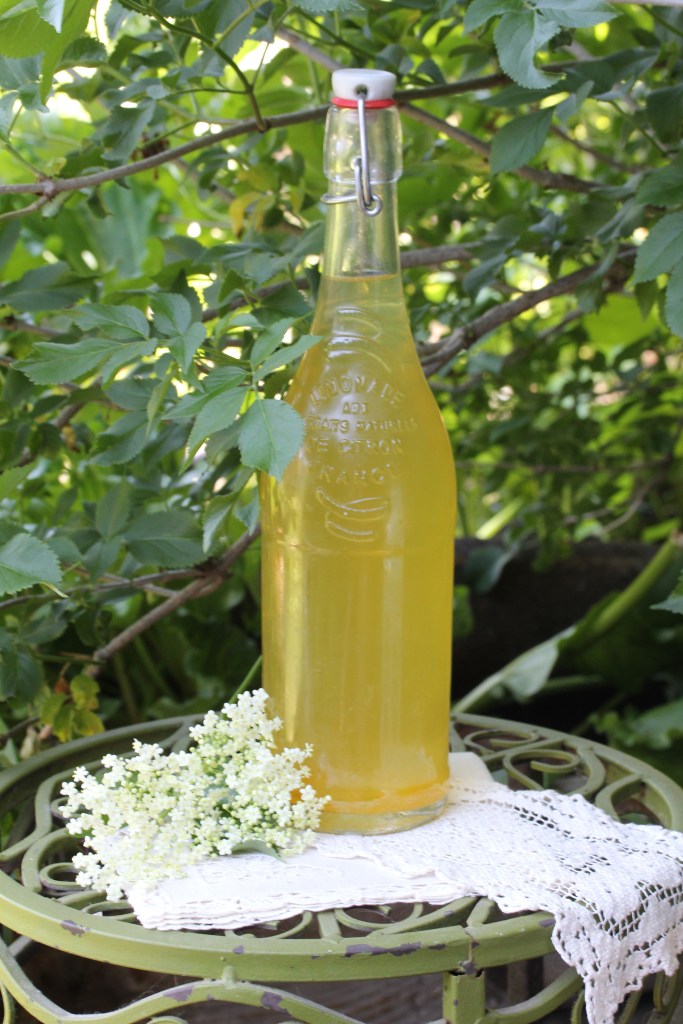
Elder flowers are an ancient tradition at Summer Solstice celebrations, especially in the form of cordial. Not being familiar with the taste of elder flowers or making a cordial, I played it safe and made the syrup. Elder flower is an acquired taste. Both very floral and something else that is a bit “funky”. It worked well in an ice cold soda for a special picnic but for regular consumption, I just don’t know. I added a few non traditional ingredients to increase the health benefits and make the taste more acceptable for my family.

Elder Flower Syrup

1 tsp of turmeric powder

1 TBSP of finely chopped fresh ginger root

Juice of half a large lemon

1 cups of sugar

2 cups of water

1/2 cup of very fresh, at their peak elder flowers with as much of the stem removed as you can manage.

Unflavored, carbonated, soda water

Boil the water. Remove from heat. Stir in the sugar until it is dissolved. Add in the fresh flowers and other ingredients. Let sit over night (8 hours). Strain out the flowers. Bottle and store in the refrigerator until needed. Decide the ratio of syrup to soda water that works for you. Serve over ice.

RECIPE #2

15 freshly picked elder flower heads. Pick them in the morning and they will taste more floral and less “funky”. Not waiting until after noon and using the flowers as soon as they are picked is a game changer for flavor.

2 large lemons coarsely chopped

1/4 cup of citric acid powder

5 cups of water

2 -3 cups of sugar

Bring your water to a boil. Add in the elder flowers, lemons, and citric acid. Reduce heat to low and simmer 2 hours. Strain through a fine mesh sieve. Stir in your sugar until clear. Bottle immediately. Store in the refrigerator. Makes two large bottles full.

There is no controversy surrounding the use of elder flowers in all manner of culinary dishes. BUT the roots, seeds, stems, and leaves contain an alkaloid that is believed to convert to cyanide when exposed to acids in the human stomach. No one wants to feel “poisoned”, get sick, or harm their kidneys/other organs. If you are curious about using elder it is important to never consume the roots, stems, branches, or leaves of the plant unless you are under the supervision of a healthcare provider who has lots of experience using Elder. To be safe only use cooked ripe berries (dried or fresh) where the seeds have been strained out. The “drama” around elder revolves around 3 three main topics.

1)Which plants in the Sambucus family can be safely consumed? To be safe avoid the ones growing in the wild and choose the ones that are commonly cultivated and researched like S. canadensis or S. nigra.

2)What role does Elder play in cytokine storms. Could that be a concern with some new viruses? I suggest you do your own research and make your own informed decision.

3) Are ripe dried elderberries safe to use? Cook them if you are unsure. Know that some herbalists feel comfortable using them dried and not cooked. Some people have reported feeling sick after consuming the dried berries when not cooked. There are no research studies that support the danger of ripe dried elderberries or the need to cook fresh or dried berries. The concern seems to be only with unripe berries. *Source-The Botanical Safety Handbook. It is the seed not the ripe fruit surrounding it that has the alkaloid. The apple, peach, strawberry, cherry, and strawberry also contain trace amounts of hydrocyanic acid.
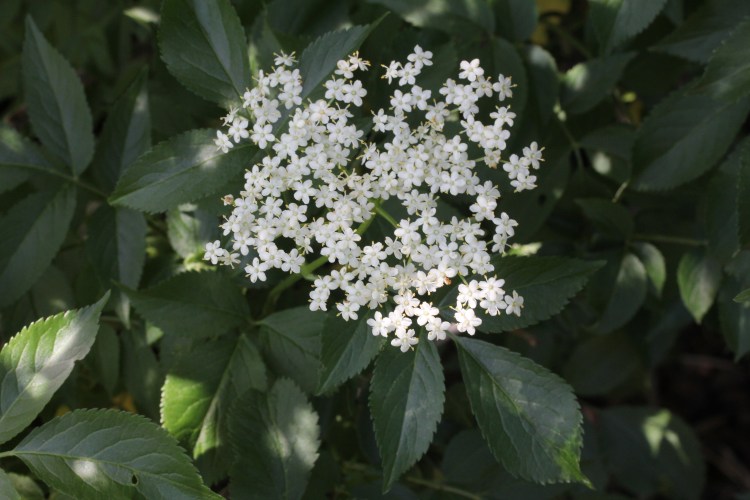
Sambucus canadensis

Elder berry and flowers encourage the body to release toxins through sweating, moving stagnant blood and urination. Research shows that elderberries contain constituents that prevent viruses from penetrating cells. Elder has been used since ancient times to treat fluid retention, colds, flu, hay fever, asthma, and childhood infections. This plant is thought to be useful for relieving a cough, opening the lungs, or increasing oxygen saturation and breathing capacity. It has a long history of being used as a laxative, purgative, and organ tonic. This herb support the nerves and digestive system. The berries are high in Vitamin C, and contain small amounts of iron and potassium. You will find them in syrups, jams, pies, and cobblers. Externally the flowers have been used in skin and hair products including salves, lotions, toners, and rinses. They have been used in eyewashes, gargles and compresses for infection, headache, skin conditions, bruising, and pain. They will lower a fever, relieve a sore throat, help with congestion. and clear heat as a tea or tincture. In recipes you can find them in salads, drinks, jelly, and baked goods.

Contraindications:-dehydration.

How do you like to use Elder?
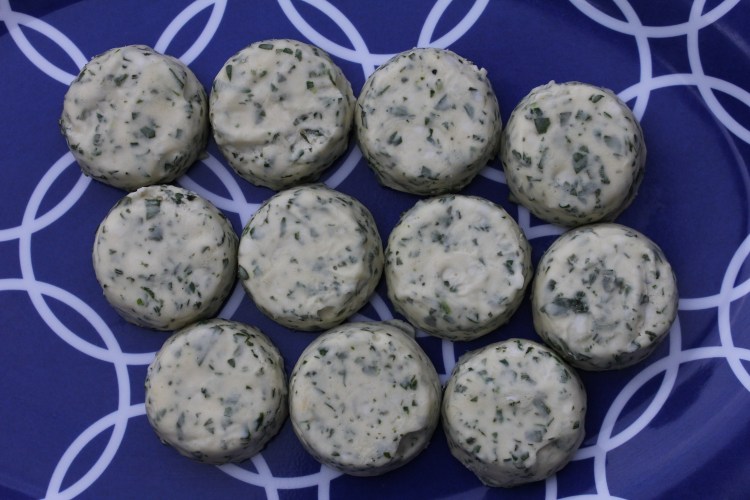
Herbal Migraine Butter (FEVERFEW)*

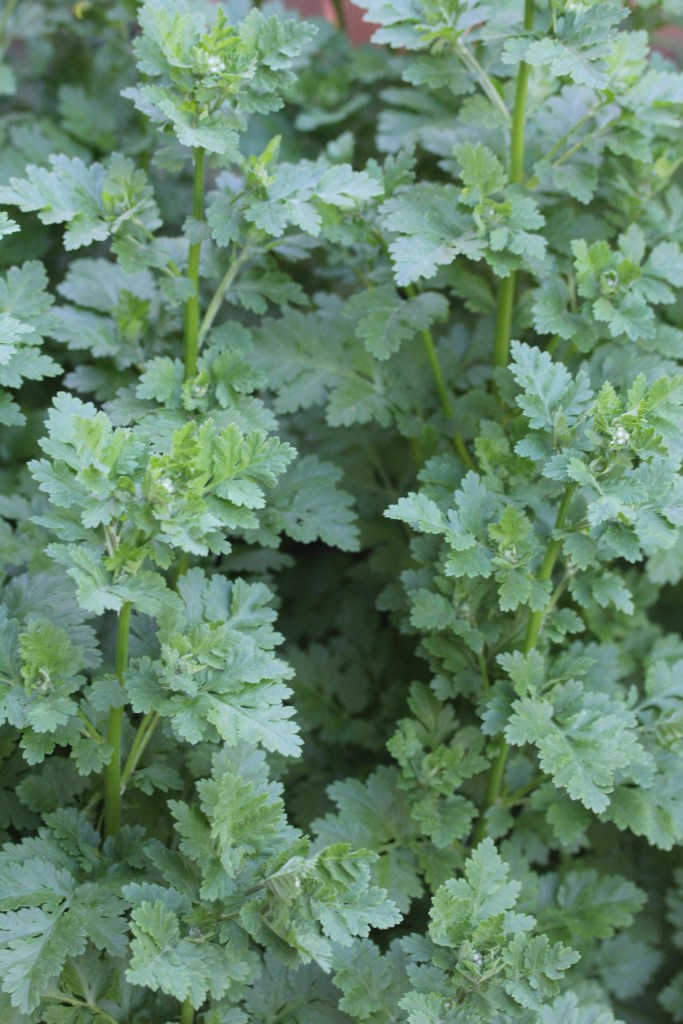
I have been growing feverfew for 40 years. Like rue it is one of those staples of any European herb garden. It has pretty white flowers and an an attractive shape. If you are mindful it will not become invasive when it goes to seed. Until recently I never used this plant. . My kids rarely get fevers and I usually don’t have migraines in the summer. Last year I combined it in a tincture with yarrow to have on hand just in case. Our study group is focusing on feverfew this week so I have been doing some research. I was convinced that there was no way to use feverfew as food. But then I came across a recipe that I adapted.

Herbal Migraine Butter

1 TBSP of finely chopped fever feverfew (about 20 fresh leaves)

1 tsp EACH of the following fresh herbs finely chopped-flat leaf parsley, cilantro, sage, mint, rosemary

1 tsp lemon zest

1 tsp fresh ginger root juice

Salt and pepper to taste

8 TBSP of butter or substitute softened at room temperature

Add all of the ingredients into a food processor and pulse until smooth and mixed.

Poor into small molds ( I used a mini muffin tin) and freeze. Remove and store into the refrigerator until needed. Use daily as a a preventative for migraines

Tanacetum parthenium. 

I have been growing Tanacetum for decades but rarely used it for medicine. The plant has lovely flowers which dry nicely for bouquets and it fills out an area nicely. You can find this plant in gardens and abandoned lots. It is in the Compositae/Aster family. Subfamily Anthemideae/Chamomile. Do not confuse it with Tanacetum vulgare (Tansy). Feverfew has light green feathery leaves arranged alternately on a round stem. It grows 6-18 inches high. The plant has a strong distinctive smell that is not quite pleasant. The flowers look like small daisies with white “petals” and a yellow center, If self seeds and spreads easily. It is not too invasive if you remove dead flower heads. Feverfew will grow in any type of soil and in most locations. It looks great for most of its season as a hardy perennial.

It is a mystery to me why more herbalists do not use this plant. It has been used to treat inflammation, digestive issues, allergies, arthritis, nausea, spasms (menstrual and muscle), asthma attacks, depression, menstrual problems, fever, flu, and colds. Externally is can be used to heal bruises or soothe insect bites. It is one of the first herbs to get a scientific study. Feverfew is best known as a very effective preventative strategy for migraines but it also is a great liver support herb. As a compress it can relieve a headache. In a spray it can be part of a formula for a bug repellant. It is worth paying attention to feverfew right now because it prevents blood from clotting and inhibits the the release of inflammatory substances from the cells. It is also a powerful anti-microbial.

Parts used: leaves and flowers

Energetics:sweet, warm, moist

Element:fire

Contraindications and Cautions: may cause mouth sores ,irritate the stomach or cause dermatitis in rare cases. Avoid during pregnancy and nursing. Do not consume if you are taking blood thinners, have a surgery planned or are allergic to plants in the ragweed family.

Are you growing or using any new herbs this summer?

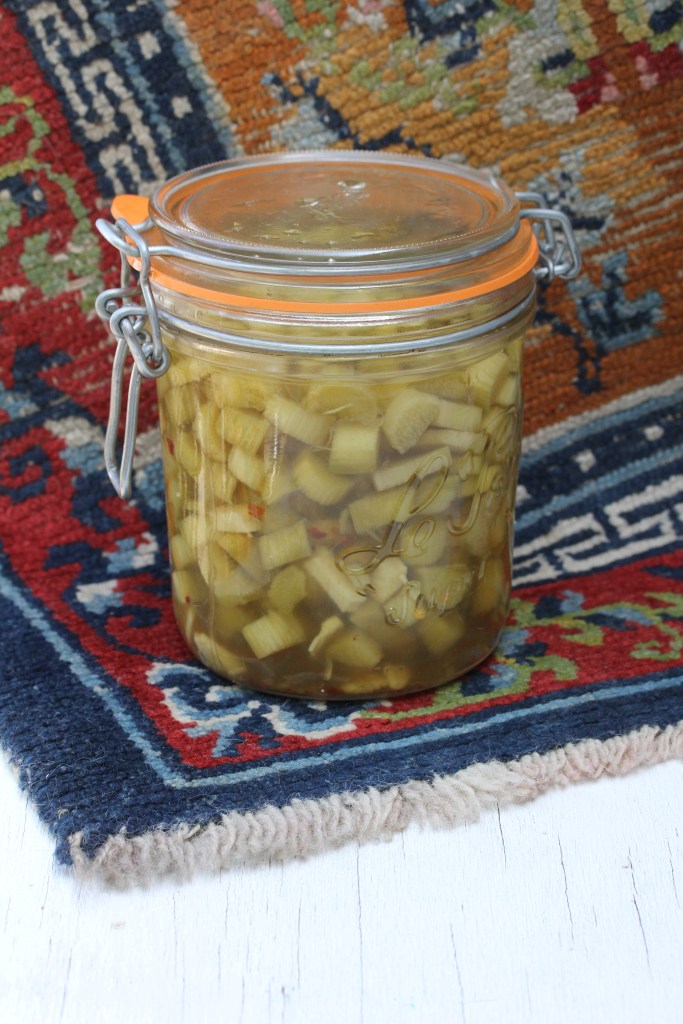
Rhubarb and Ginger Pickles

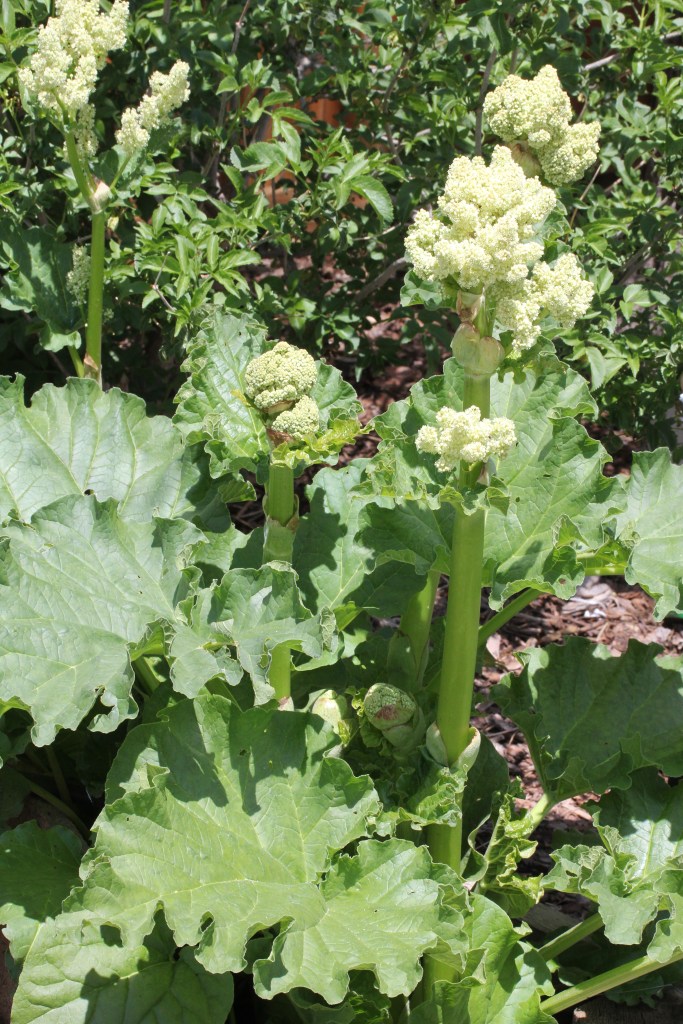
This is a summer favorite with my family. We love it for picnics and barbecues. My plants produce enough stalks to make one jar of pickles and one strawberry rhubarb crumble. My rhubarb does not turn red so I have to be mindful and harvest it the first week of June, before it flowers. The level of oxalic acid builds as the season goes on. This chemical can be hard on the kidneys and can be toxic in large amounts.

Ginger Rhubarb Pickles

Coarsely chop ( 1/2 inch pieces) the freshly picked rhubarb stalks/stems (no leaves) until you have 2 cups. Set aside

Peel and finely chop fresh ginger root. You will need 1 TBSP.

1 tsp of dried red chilies (coarsely ground not the powder)

1 cup of seasoned rice wine vinegar just boiled and removed from the heat. Mix in 1 TBSP of honey or sugar.

Loosely fill a canning jar with an alternate mix of rhubarb, chili, and ginger.

Pour in the vinegar. Top with more vinegar if you jar is not full to the brim. Let cool. Seal the jar and let sit out for 24 hours. Refrigerate. Will store in the refrigerator for several months.

Rheum rhabarbarum (garden rhubarb)

Rhubarb is in the buckwheat family. It has an ancient history of being used as medicine. Rhubarb is good at clearing heat, infection, and inflammation from the body. It has more vitamins and minerals that kale. The stalks are used all over the world as a perennial vegetable. The root has laxative and purgative qualities. It is thought to help the digestive tract to metabolize fats and flush out wastes. Each species contain different chemical constituents. Some are more powerful that others. Rheum officinale (Chinese Rhubarb) is the one most commonly used for healing. Its root is has been used to treat blood clots, constipation, diarrhea, fever, hemorrhoids, lack of menstruation, worms, high cholesterol, jaundice and worms. Externally it can be as a poultice to boils, burns, sores, and wounds. Adding in fennel, ginger, or peppermint prevents stomach cramping. The stalk of garden rhubarb is fine to use as food for those without kidney issues. Because this plant varies with species and has so many contraindications it should not be used for healing unless it is being given under the supervision of a trained professional.

Do you have a favorite rhubarb recipe?

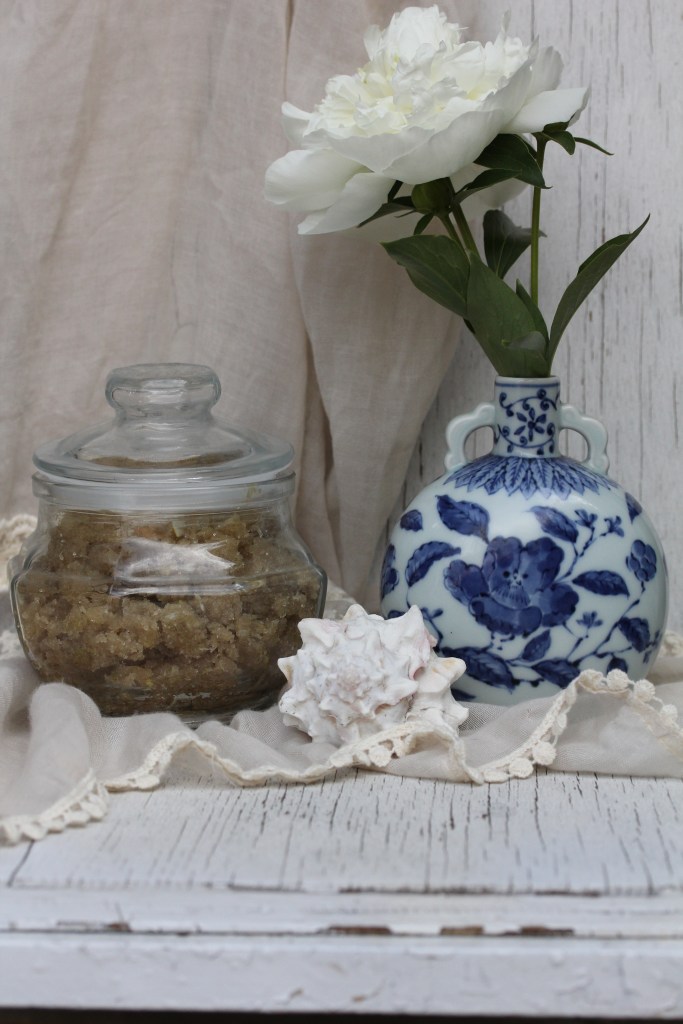
Peony Petal Sugar Scrub*

floral sugar scrub

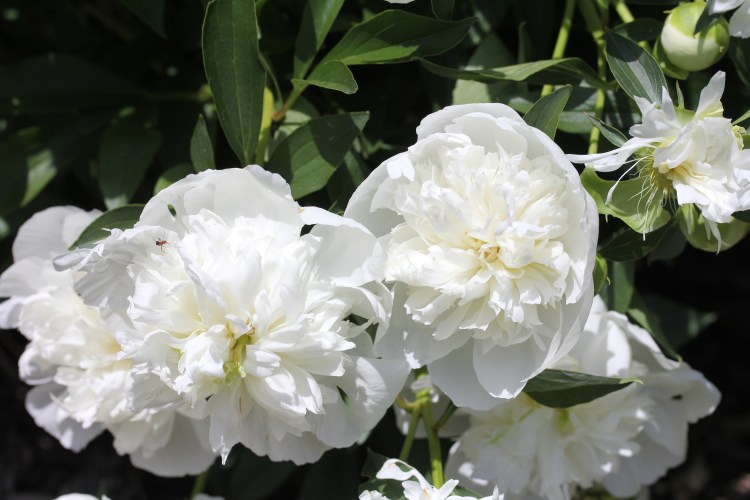
Peonies are my favorite flower. They bloom without fail the first week of June. They were in my wedding bouquet and serve to remind me of that anniversary every year. The scent is amazing and hard to describe or “create”, just like plumeria. This sugar scrub actually holds the scent quite well. I can’t wait to use it in the shower tonight.

Peony Petal Sugar Scrub

2-4 cups of peony petals (kindly remove the ants which have a symbiotic relationship with the plant. They work together and the ant is helping rather than harming the peonies)

1 tsp of powdered dried cardamom

2 drops of lemon essential oil

Added to 2 cups of sugar in the food processor. Pulse the mixture until you have a coarse paste. If it feels too moist and sticky add more sugar at the very end and barely pulse so that you get more texture/scrub.

Store in a jar with a tight fitting lid. Check frequently to make sure it is not molding or going off. I do not know the preservative potential of this particular set of ingredients.

Paeonia albiflora

I bet you never considered peonies to have healing qualities unless you studied Traditional Chinese Medicine. It is the root that gets used for seizures, irritability, restlessness, coughs, headache, stomach pain, sleep issues, lupus, rheumatoid arthritis, fever, muscle/menstrual cramps, diabetes, high blood pressure, and absent periods. The petals are great for rashes or aging skin with their anti-bacterial and anti-inflammatory properties. I only have one large plant and could not bear to dig it up to harvest roots. I feel fine about using the petals when they are about to fall. I hate to waste anything in the garden if it has a use.

Studying Herbal Medicine with Children Approaches for Preschoolers and Young Children.

A child is never too young to understand the potential and wonder of healing herbs. Any four year old can be taught how to identify plants and the common names. Just think how many animals a preschooler can recognize. There is a sense of mystery, magic, and independence that comes when a kid learns plants are medicine. When an adult shares knowledge, modeling, curiosity and passion through simple daily interactions it feels very natural to children. Like any value or worldview that gets passed onto the young- the more often exposure, the more that will be retained and use in later life. Pretend play, crafts, sensory exploration, and reading stories are all beloved. memorable activities for the child who learns with all of the senses.

I recommend close supervision and common sense with all of these activities.

Pretend Play

Rainbow Extractions-can be made from herbs combined with food coloring. A mortar and pestle along with all manner of jars and bottles can be added to stock a child’s herbal pharmacy.

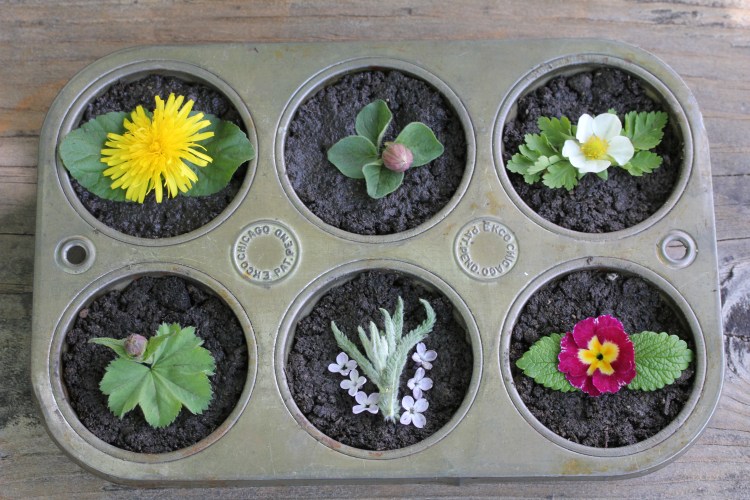
Mud Kitchens can bake cupcakes make from mud and fresh herbs. I used dandelion, violet, oregano, chive blossom, strawberry flowers, feverfew, sage flower, lady’s mantle, yarrow, lilac, primrose, lemon balm. Have a chef instead of a baker? Make a setup for street tacos using large leaves, “fillings” gathered from the yard, a spice bottle/salt shaker with dried herbs, a small squeeze bottle filled with a pesto like sauce. Sushi and nori rolls can also be a possibility. It is never too early to model the idea that healing can come in the form of food.

Sensory Bins-can be made with many things. Start with a large plastic bin or tub that is full of water, beans, or rice. Next add small cloth garden gloves, empty seed packets, tiny clay pots, child’s watering can, plastic bugs, wooden popsicle sticks to label your herbs, artificial plants and garden tools for kids like a shovel or trowel. If you add in a wooden mortar and pestle or containers children can enact the whole process from seed to harvest and product.

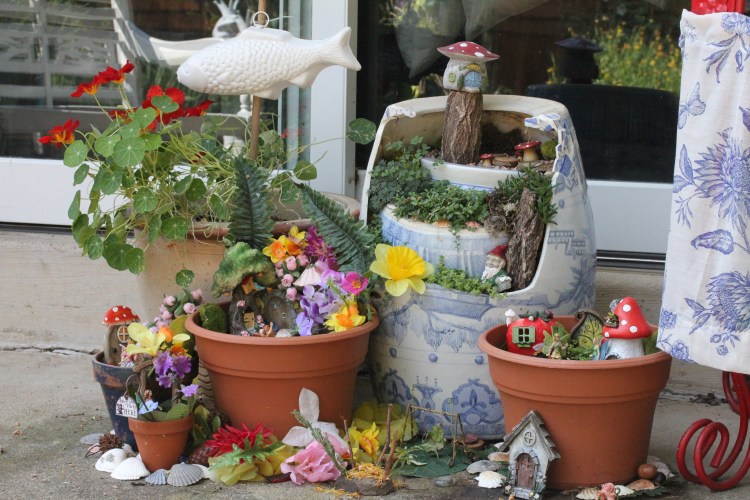
Fairy Houses-are very popular at my house even though my kids have grown so much. My girls like to act out scenes with fairies healing each other creatures with herbs. . If you are familiar with the series Warriors by Erin Hunter you will understand the world and importance of medicine cats. We have a whole set up of tiny cats, dens, etc. in my house that gets hours of use. Artificial flowers, real plants, shells, glass stones, pods/pinecones/bark, clay pots, toy fairies, and all manner of resin houses/doors/decor to be arranged over and over.

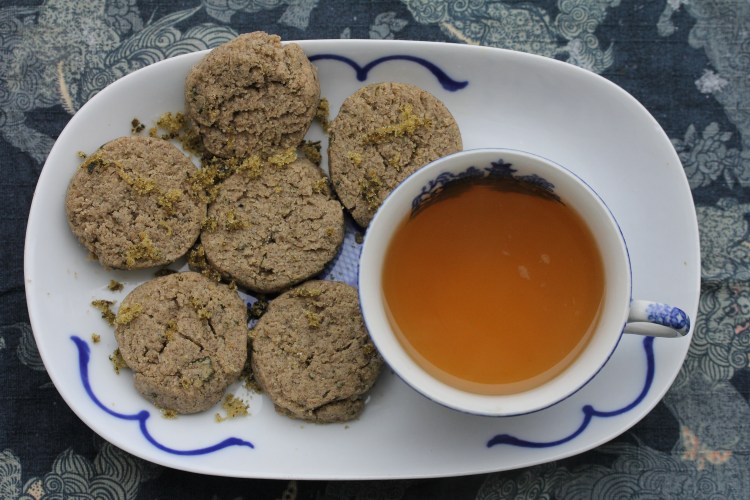
Tea parties and cookies made with herbs along with child friendly tea like mint ,are the perfect way explore their healing properties in food. Herbs can be used in all kinds of baked goods and frosting. For savory dishes you experiment using them in dips, spreads and fillings for high tea toast and sandwiches.

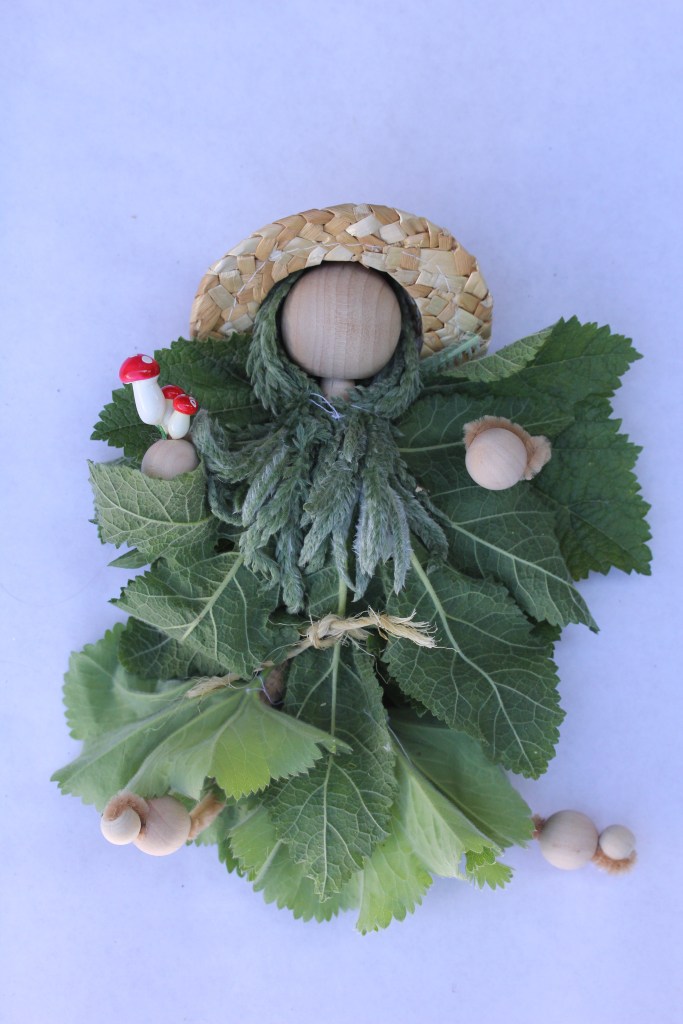
Animal Healers-appear in many picture books as a gnome or tomten character that supports the well being of animals in the forest. A hat, a cape, a pouch, a toy doctor kit is all you need to outfit your child for furry patients.

Apothecary shop-is inspired by something I did years ago with my girls. I purchased a bunch of wooden containers and odds n’ ends from a company that sells machined wood products . Perfect for the little herbalist to grind herbs or fill with imaginary salves and tinctures. A small medicine cabinet makes for ideal storage.

Herb Poppet or Healing Gnome-here is a link to the tutorial for making this toy

Experiential Activities

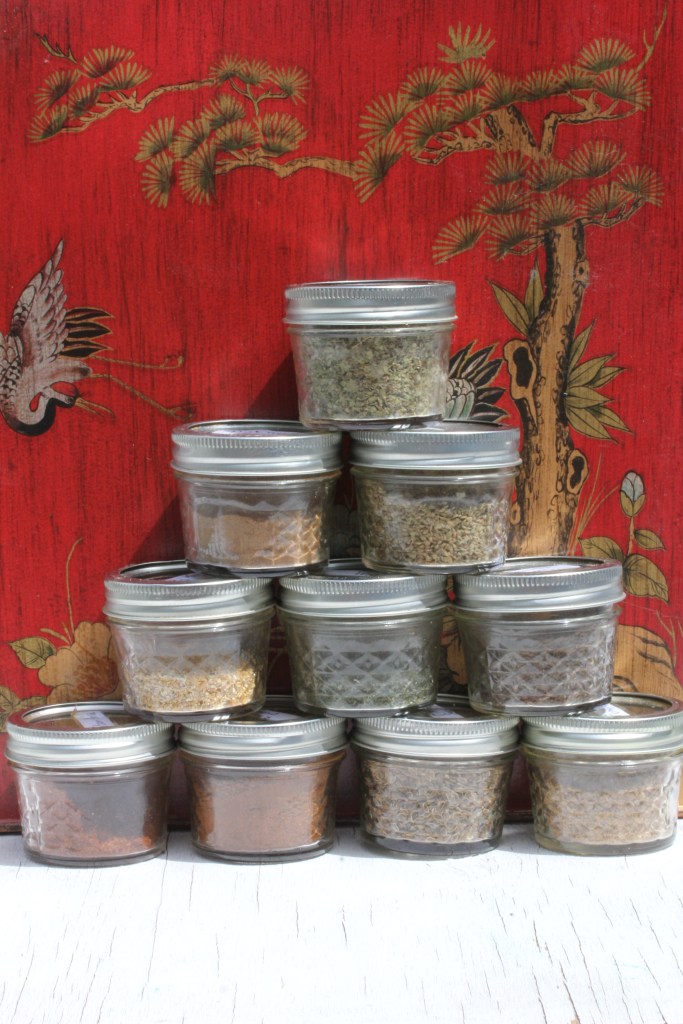
Smell Jars-are a Montessori inspired activity that is perfect for toddlers. Fresh herbs are best and caution must be used for dry herbs that could be over inhaled or gotten into the eyes. Many spices are warming and could cause a burning sensation. Model taking a light sniff to avoid problems. Place aromatic dried spices or fresh herbs in a jar and seal with a tight fitting lid. After a hour open the jar and instruct your child to inhale lightly. What do they smell ? How would they describe it? Do they like the smell? Are some jars more preferred that others? Etc. Many medicinal herbs have a unique smell that is key to their identification. Being able to identify a plant by smell alone is a useful skill set.

Play Dough -this link takes you to a recipe for hibiscus and lemon play dough with a non-edible salt dough base. It has a great texture and lovely smell. A fun activity to make with your child in the kitchen.

Sensory Bins-are basically a large container filled with beans, grains, sand or water. Objects are placed/buried in the bin for a child to discover, explore or use their imagination to play with. My girls loved these when they were small. We had a garden themed one that could be adapted for medicinal herbs. Items that would be fun to include are kid sized cloth garden gloves, empty seed packets, small clay pots, a child’s watering can, plastic bugs, wooden popsicle sticks to label your herbs, artificial plants, and garden tools for kids like a shovel or trowel.

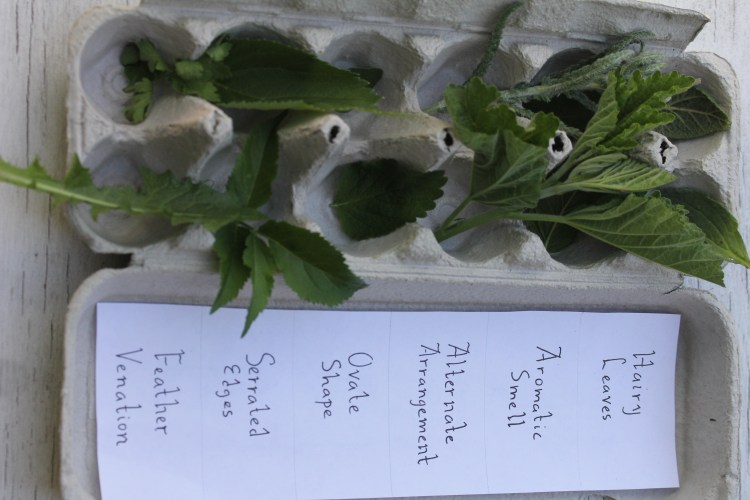
Scavenger Hunts-can come in all kinds of forms. From words written on a piece of paper to objects sorted into an egg carton. As the item is found it is crossed off the list/grid or put in the carton. This could also be a simple sorting exercise. Categories can be chosen based on the age of the child. Themes could be 1) plants that smell or have interesting textures. 2)leaf shape or type of flower 3) How the leaf are arrangement on the stem or the venation pattern. For older children you could try matching the herb to organ system that it supports.

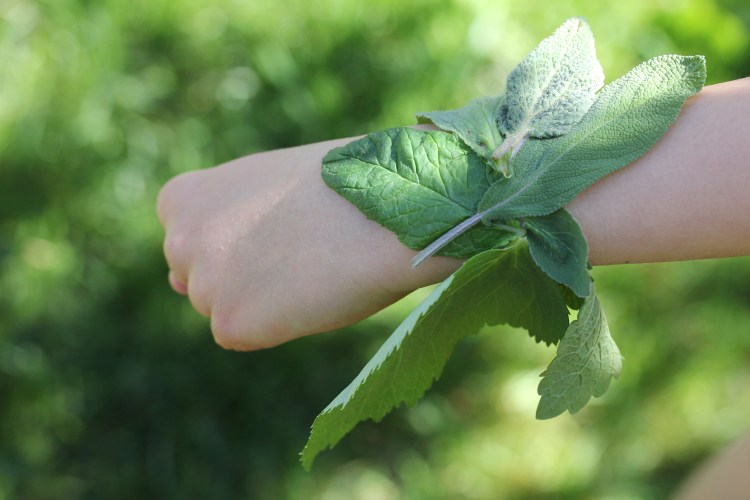
Herb Bracelet or crown-starts with a piece of tape secured around the wrist or forehead with the sticky side facing out. The child is encouraged to explore a natural area like a garden or walking trail. As he/she finds and identifies a medicinal herb, a leaf is attached to their bracelet or crown as a record and decoration.

Herb Pounding-begins by placing herbs “face” down onto a new 100% cotton pillow case or sheet. It is best to pre-wash it in hot water with ONLY standard detergent. Carefully cover the specimens with wide packing tape. Choose leaves of different shapes, sizes and shades of green. Add in flowers of various colors until you have a pleasing composition. Plants that are not too bulky or full of fluid are best. Less is better than more with a minimum of layering. Cover the herbs with sheets of copy or wax paper. You can tape these down if you wish. Pound over the the specimens one time. Remove the paper and tape. Iron both sides of the textile on medium heat to set the pigments. Crayola crayons or colored pencils can be used to clarify edges or fill in missing spots. Your lovely results can be turned into an apron or small sleep pillows full of calming herbs. Wash in cold water when needed. Multiple washings may remove the die.

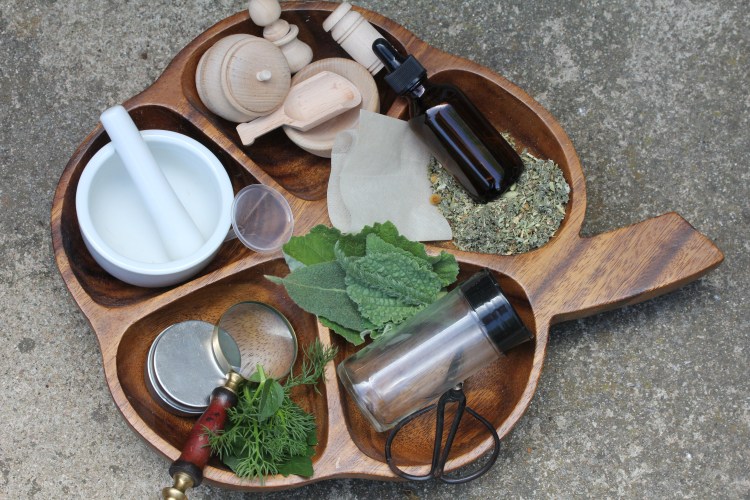
Herb provocation- will look familiar if you have done this familiar Reggio Emilia activity with a child. Several objects are left out in an intentional group for a child to discover and explore on their own. The purpose is to encourage further thought and interaction related to the objects or theme ( herbal medicine). For my provocation I chose scissors, an empty spice bottle, a magnifying glass, an empty tin, a mortar/pestle, a funnel, a tincture bottle with water, a tea bag, loose dry herbs and a wooden apothecary set. I picked herbs that had interesting textures or distinct smells. What will the child do with these things?

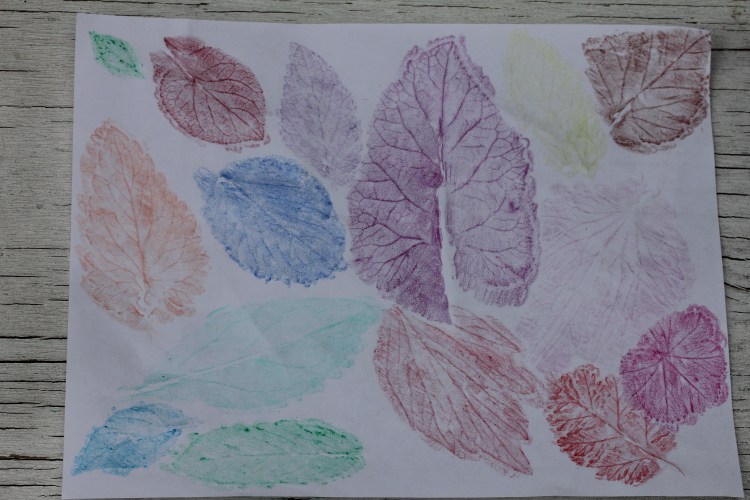
Herb Rubbings-give results based on the type of crayon chosen and will depend on the age or attention span of the child. Place a leaf on a hard surface with the backside facing up towards you. Cover it with paper. Rub the crayon across the surface to pick up the shape and pattern of veins. High quality crayons that have been sharpened work best. Small, tight circles are better than broad, straight strokes. Taping the leaf down at the stem may help some kids. You can experiment with taping the paper down or holding it in place with the non dominant hand. A single leaf per page may be easier for very young children to manage. To fill a whole page just replace the leaf and reposition the paper. Rubbings can be labeled. Leaf shape and venation are better botanical features to study over the characteristics of flowers.

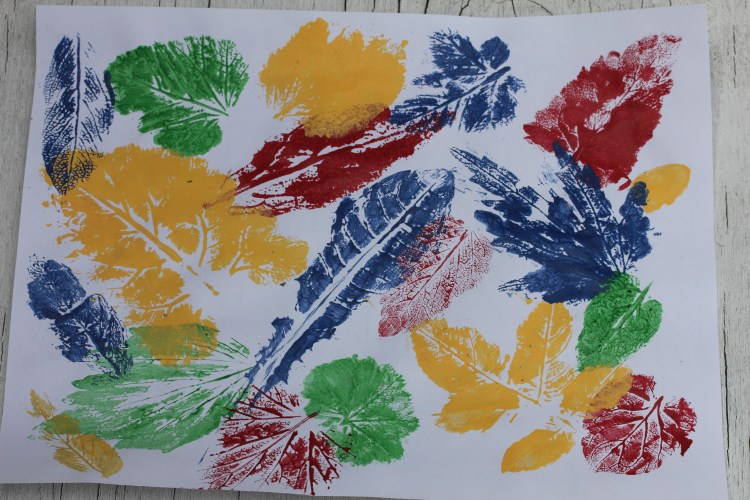
Herb Stampings– start by painting the backside of a leaf with acrylic paint. Turn it over and press it onto the paper like a stamp. Lift carefully and enjoy the results. You can also do this activity on textiles if you do not plan on washing them often.

Crafts

See this post

Picture Books

This Post

Educational Materials

This Post

I will be updating this post on a regular basis and adding new ideas . So check back often for inspiration.