Support Strategies for Colds and The Flu

My strategy for colds and flu

For once I feel ready for anything. The house is stocked full of food and other necessary supplies. It has not always been that way. When experiencing the worst of cold or flu symptoms I did not have a plan. Any herbal resources I had were either packed up in the basement or at the store. Useless when you are running a fever and unable to get out of bed. Out of reach when your child sick in the middle of the night.  Herbs can be easy to access, affordable, and might support the body to recover from illness. If I start the kids or myself on formulas that I have made as soon as someone feels a sore throat or run down, then the illness lasts less than 48 hours. Sleep or rest is also very important.

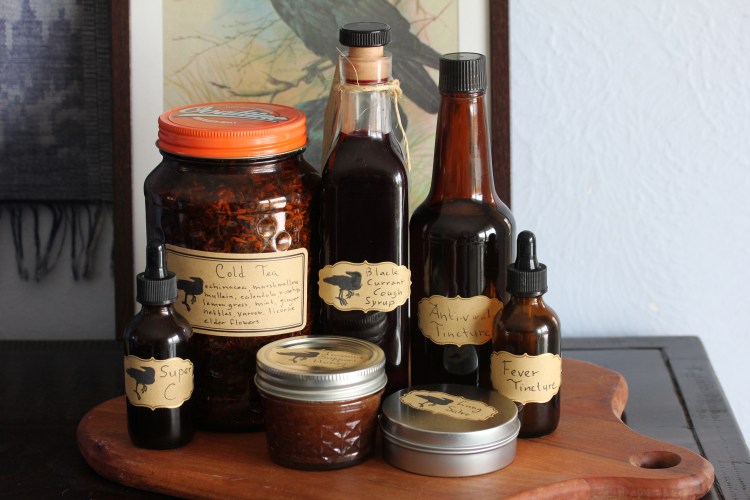
I prefer to have a preventative strategy that I begin early on. Waiting until things get really bad and then making a trip to the store or doctor is stressful . At the first sign of a sore throat, feeling tired/run down, a runny nose, or that “flu” feeling- I use my Super Immune glycerite (has echinacea). If we have been exposed to someone sick I start with the Super C glycerite (has rose hips). I also use the Immune Boost Honey in tea or milk. If symptoms progress and there is fever I use the Fever Tincture (yarrow and catnip). For cough I use either the Black Currant Syrup or a Horehound Syrup. My new Cold Tea is great for addressing symptoms that effect the respiratory or digestive system.  The Lung Salve breaks up congestion and relaxes the muscles in the chest. The Immune Support tincture that I just tinctured up last week (has osha, and usnea among other things) is used 24-48 hours after symptoms first appear. It depends on how fast the illness is moving and if there is cough or fever.
Whipped elderberry butter

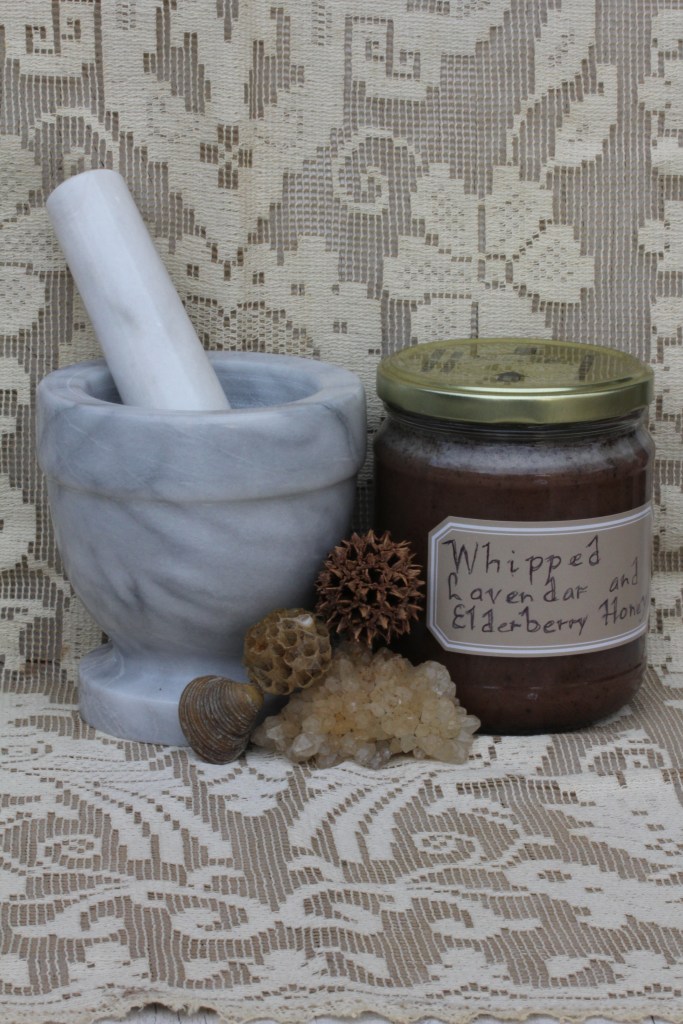
I was at the farmer’s market and saw this lavender colored honey. After chatting with the vendor for a bit I said to myself ” I can make that at home easily and at a much lower cost.” It smells heavenly and is a great way to get herbs into kids. I just mix it into a tea that they like. My girls are not fond of my glycerites or elderberry syrup.

Whipped Lavender and Elder Berry Honey

Add 2 cups of organic honey into a food processor (make sure the container is dry and you put the blade in first). Set aside

Grind about 1/2 cup of whole, dried elder berries in a coffee grinder until you have a fine powder. Add 1/4 cup of the powder to food processor. Store the rest.

Grind 1 TBSP of whole lavender flowers in the coffee grinder. Add 1 tsp of that to the processor.

Whip the honey until it thickens and is no longer clear.

Remove and store in a jar with a tight fitting lid. If you store in a dark place and only use clean utensils to dispense it, your honey will last for months without crystalizing.

*Note about using dried elderberries. Like apples, peaches, and strawberries the elder plant contains trace amount of alkaloids in the stems, leaves, roots, and seeds. It is believed that these chemicals can convert to cyanide when exposed to the acids in the human stomach. There are numerous reports of people getting VERY sick after eating unripe elder berries or the ripe berries of certain more wild member of the Sambucus family. To be on the safe side most people cook and then strain out the seeds when using elder berries. There are many herbalists who use the dried berries in tinctures, glycerides, and in other products. You will find recipes on-line that use them in smoothies, etc. Also stories of people feeling sick after eating the dried elderberries. None of my herb books or teachers expressed concern about using ripe berries that have been dried. The Botanical Safety Handbook mentions no reports or research studies about the dangers of ripe dried berries, only unripe fresh berries. There is also no mention of the need to the cook ripe berries (dried or fresh). Please do your research and make your own informed decision when using elder berries. There is no concern with consuming the elder flowers.

Do you have a go to plan or remedies that you use when you feel the first signs of cold or flu?

Making Healing Clays (RED CLOVER)*

The unexpected healing abilities of clay

Lately I feel like I am leading this secret double life. Friends and family see the typical homeschooling mom struggling to get the kids to activities, cook a meal, clean the house, do the laundry, educate the next generation, and support a gifted child. In my spare moments I try to squeeze in a blog that has no following, stock the apothecary cabinet for clients who may never come, and learn as much as can about true causes of chronic health issues. I am powdering herbs at midnight while my family sleeps, reading books on Chinese/Tibetan/Ayurvedic medicine during music lessons, and squeezing alcohol out of plants to the sounds Outschool in the background. It is exhausting and I wonder what my life will look like at this time next year. There are many moments of discovery and recovery. I forgot how much I loved working with healing plants.  I feel such joy going out into the garden to harvest plants just as the dew is drying. I feel transported to a bazaar when I open a cabinet door and the smell of herbs drifts out enticingly.


Last year I had the opportunity to take on-line classes and attend two weeks of workshops on the subject of traditional Mexican healing. One of the things I observed was the use of clay. Earth is an ancient and amazing healing substance. It can serve to draw out heat, energy, and toxins from sites of pain, inflammation or poor circulation. It is thought to address fever, headaches, hot flashes, growths, gout, and skin issues (acne, rashes, allergies etc.). Besides cooling, detoxifying, soothing, and healing there is a purifying element to clay. Being covered in clay is an experience that few people get to have here in America. We just don’t have the resources and venue for it.  I put my own spin on the tradition by adding in powdered herbs with healing l qualities. If clay can draw out then it can introduce in. I use bentonite clay as my base, apple cider vinegar as the liquid, and add the herbs at the end mixing until I get a smooth consistency.  There are some other tricks to a treatment.  If you want to know about those then you will have to stop by the backyard pharmacy and try it for yourself.

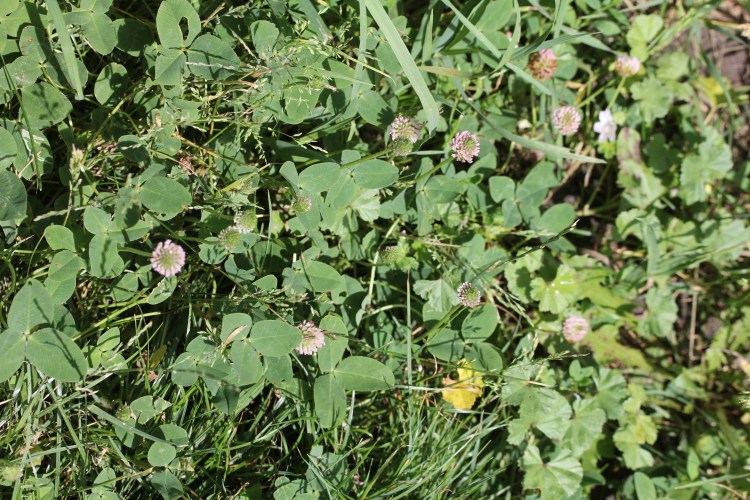
My “red” clay mixture has red clover as one of its ingredients. Maybe you are more familiar with this plant as animal food, a favorite of bumblebees, nuisance “weed”in your lawn or a nitrogen fixing crop. Trifolium is native and cultivated throughout the world. You will find this member of the pea family in fields, along roads, and sometimes wild in the mountains. The short rootstock produces several “fuzzy” stems that can be up to 2 feet high. The trifoliate/3 parted leaves grow from the base and along the stems. Oblong/oval leaflets have streaks of white/a single pale chervon and a slightly toothed margin. Trifolium has pink, magenta or purple flowers, sometimes white. These are quite small, resemble others in the pea family(banner, wings, keel), and form a dense domed head. Red clover will grow in any type of soil and prefers sun.

Not to be confused with crimson clover, Trifolium has a long history as medicine. Red clover has been used as a powerful blood cleanser. It removes toxins, increases the flow of bile, decreases swelling, reduces irritation, assists tissue repair, boosts vitality, supports the lymphatic system and improves elimination. It is thought to be high in vitamins and minerals. Red clover may help with constipation, pain/cramps, inflammation, poor appetite, degenerative diseases, bone density loss, coughs, congestion, bronchitis, asthma, cancer prevention, hot flashes/menopause, acne, eczema, psoriasis, arthritis, cysts, blood clots, diarrhea, infections, skin cancer, and infertility.

A poultice/compress/wash applied externally may relieve the discomfort conjunctivitis, gout and rheumatism or be used to treat sores, burns, growths, bug bites, and fungal infections.

Parts used:flowers and upper leaves. The plant is edible in a salad, cooked and the seeds are commonly sprouted. This plant is very high in minerals and vitamins.

Taste :Sweet and Salty

Energetics:moves phlegm/damp, blood and lymph. Moist and cool.

Contraindications:pregnancy, before surgery. Do not harvest in the fall when leaves could be moldy. Avoid use if you are on blood thinners.

Have you ever eaten clay, used it to build/throw a pot on a wheel, or used it in a facial? What was that experience like for you?

Immune Support Tincture Time

Flu Tincture

Some things are just too pretty to mess with (sigh).  I usually begin my tinctures in glass amber bottles/jars. A small amount of light will affect fresh herbs with green leaves. Maybe it does not change the chemical constituents and strength much but I do notice a change of color. Emerald green instead of brown. Sometimes I do not have enough amber glass and I have to use a jar that is clear. The one advantage of this is that some products are truly magical looking in their container. Oils with lots of flowers like calendula or in this case an immune support tincture with interesting textures. Dried powders, roots, seed pods, lichen just to name a few. Materials without much chlorophyll to begin with. This was a (snowy) week of taking a dozen tinctures started in the summer and straining out all the herbs. Hard on my aging wrists, so I have a press on order. There are lots of permanent green stains on my counter. It is a good thing those will be replaced soon (I need to reconsider white marble as an option LOL).

I think tinctures are the easiest thing that I make. I just harvest one or more herbs from the garden, stuff them into a jar and pour high proof alcohol over them. I try to remember to strain and bottle them within a month or two but in December I found some St. John’s wort that had never been finished (from the late 1990’s). Since it had not been opened and still had the beautiful ruby red color I figured it might be good. So it is currently done and in the apothecary cabinet. Now I know as a professional herbalist that this is very lazy and unscientific. I should be paying attention to the alcohol proof and the water or tannin content of each individual herb. I have tables and formulas for working all that chemical stuff out which is valid and useful. But I am more focused on the energetics of how herbs works, so prefer to spend my time and efforts on other things. In the end it is the results the herbalist/healer gets that count and not what is done to the herbs.

I will not go into a lot of depth here but I know readers want useful information more than my personal musings.

The immune support tincture contains a proprietary mixture of usnea , osha root (that a friend gathered and gave to me), star anise, echinacea tops, and  oregon grape root. All thought to be powerful antimicrobials that might target a virus like the flu. I easily could have added yarrow flowers, elder berries, horehound, lemon balm, catnip, and blackberry leaf. These herbs have been used to clear heat from the channels, support the lungs, reduce diarrhea, lower a fever, help with sleep, prevent stomach upset/nausea, and get rid of that achy feeling that we associate with illnesses like the flu. But those plants are better suited for teas and syrups.

Amber glass recycled and ready to go

Another thing that I did this week was to go through all the amber class and old herbs in my basement. Most of the herbs got tossed except some resins. I like to save any amber class that finds its way into my home. Plus I had all the jars I started with 30 years ago ( I am very partial to Ovaltine and CoffeeMate ). So after hours of scrubbing off labels, I ended up saving a lot of money on supplies. Which I promptly filled with many wonderful things, that were costly.  

What radical homemaker projects have you been up to this week?

Formulas for Everyday Teas

Clockwise-cold, stress, detox, and stomach teas.

I am into three things lately 1)using medicinal herbs in products other than tinctures. Alcohol extractions are simple to make,  require little plant material, preserve for a very long time and are easy for clients to take. But tinctures have their limitations and may not be ideal for many health issues. 2)creating  formulas over single herb remedies. Formulas allow the practitioner to combine herbs with different actions to create safer, better tasting, and more effective products. But a combination of many herbs negates the power of plant spirit medicine. 3)Choosing remedies based on the unique constitution and energetics (season, disease pattern/presentation, cause, organ system, etc.) of a client. This requires lots of study, a two hour intake, and lifestyle changes. But gives better long term results for chronic conditions.  I am trying to expand outside my comfort zone and exploit the benefits of various approaches that have very different worldviews.

Decorating the apothecary cabinet

My apothecary cabinet arrived this week. I feel like my life has changed. I drank a magic potion and sprouted wings to fly. All my tinctures, salves, dried herbs, oils, liniments, and other supplies finally have a home. I can easily reach and use them. I have been inspired by the cabinet to create a line of teas, to process the tinctures I started this summer, to make medicinal clays, and to explore the use of organ tonics. New furniture has totally shifted the energy in the house. It feels more clean, organized, and pleasant to be in the kitchen. I now have gathering place for educational activities, to apprentice my girls, and where I can do consultations. It has been so much work to fill the cabinet with plant based medicine but I could not be happier with the results. I really wanted an experience that felt beautiful and like a journey back in time. I want to remind people of what we are in danger of loosing and fill their souls with things that they thought lost. I have one regret. There is too much glass and reflective surfaces on the cabinet to get a decent photograph to post. Especially with all the snow still outside in the yard.  I’ve decided not to list the ingredients for each of my teas in this blog post. I have to keep some things a secret and out of the public domain for the moment.

Are there things that you have lost or miss in your life. How could you recover them?

Sore Muscle Liniment with Juniper

I have a lot of friends with aches and pains due to accidents, injuries, sore/tight muscles or aging. A liniment is similar to a tincture but you are extracting the medcinal properties using rubbing alcohol (as your menstrum) instead of something like vodka. Liniments are for external use only! Liniments feel cooling when there is inflammation and bring blood to the skin where they are applied. They reduce pain and increase circulation (removing heat, stagnation, waste products/toxins). Liniments evaporate quickly without leaving an oily residue, leaving the only the medicine behind to be absorbed by the body. Depending on the herbs chosen they can draw out infection, disinfect, warm, dry, or sooth. Handy to have available for the unexpected sunburn, bruise, sprain, or damaged ligament/tendon. I use 90% rubbing alcohol (not so cheap and easy to get anymore). Select herbs that are resinous (pine, juniper, myrrh) ,have a powerful scent/quality to them (rue, mugwort, rosemary) or are heating (cayenne, mustard). As a folk herbalist I let the plants guide now much I stuff into the jar, then I fill the rest with my menstrum. I let steep 4-6 weeks. A well prepared liniment once strained can last several years. Clear labeling is essential to prevent accidental ingestion. Keep tightly capped for storage in amber bottles.

Juniperus (cultivar)

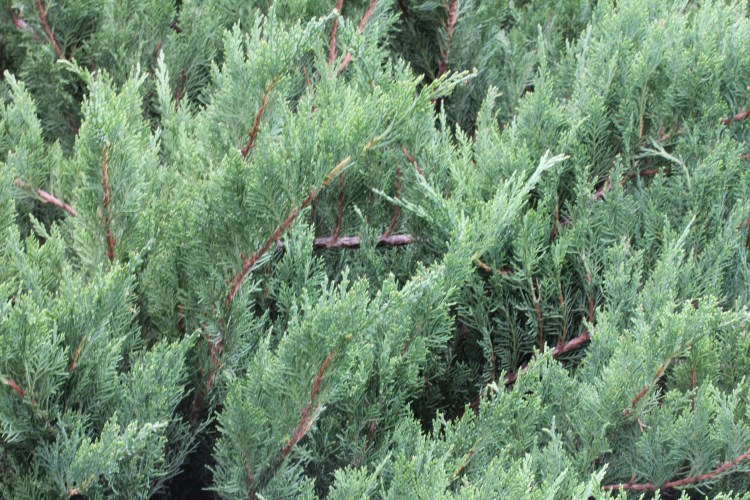
Juniper grows all over the world. You can find it in the wild and as a common (often unwanted) bush for landscaping. There were two large ones at the end of my driveway during my childhood in the 1970’s. They made excellent forts, a good choice for hide n seek, left an uncomfortable rash, and required “grooming” with hedge clippers on a regular basis. For years my husband and I talked about removing the ones on either side of the back porch. They are not very attractive and provide  the ideal place for leaves, spider webs and rodents to collect. Little did I know until I started researching the traditional medicine of Mexico and the Southwest that I had a treasure in my yard.

Historically the berries are used in cooking for flavor. In healing they are considered a digestive to help with gas, cramping, and stimulating  the appetite. Under the care of an expert it is diuretic for gout and water retention.

It can be used in steams for bronchitis and lung infections.

In a liniment it may help with rheumatism or problems with the bones and joints.

One of my favorite uses of juniper is as an incense/smudge. It burns fast, hot, and produces lots of fragrant smoke.

I hope this post inspires you to look at that “ugly” juniper bush in a new way. One never knows what beauty and use lied hidden beneath the surface.

Is there a plant which you use that other people dislike?