Yummy Elder Berry Gummies

A Big Hit with the Kids!

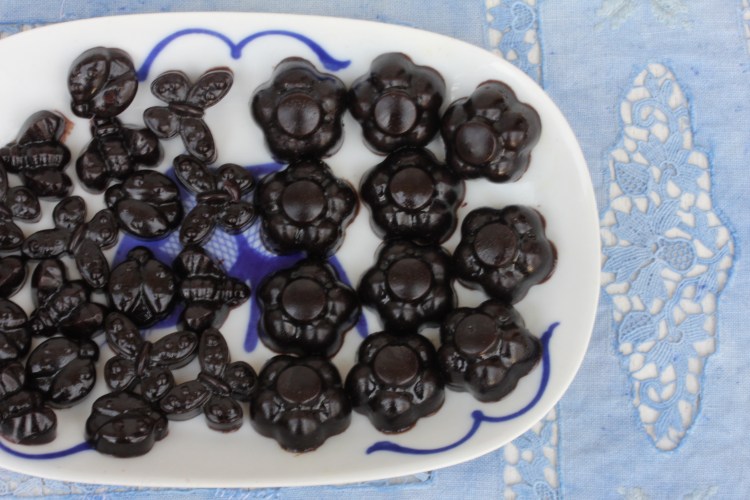
Elder berry syrup is not popular in my household. I had to come up with an alternative that my girls would like. Shall I say love, because to them these gummies are almost like candy. This recipes makes a lot, enough for weeks if you can keep them from growing mold and bacteria. Microbes love gelatin as food so past a week could be risky. I have not tried freezing these yet as an option for long term storage. I give each kid one a day as as part of a preventative strategy for all the flu and respiratory infections going around right now. My girls will be done with some virus in 48 hours but the adults in the house will take weeks to recover. I am very invested in making sure they do not get sick.

Elder Berry Gummies Recipe

Makes 20-40 gummies depending on the size of your silicon molds.

Grind 1 cup of dried elder berries in a coffee grinder until it looks like coffee grounds.

Place the powder in a saucepan with 2 cups of filtered water. Bring to a boil.

Reduce heat to low and simmer for 45 minutes.

Filter out the liquid with a strainer lined with cheesecloth (you could also use a coffee filter or press). Discard the wet powder residue. Better yet compost it.

Return the purple liquid to the pan and stove. On very low heat whisk in 3/4 cup of organic raw honey until it dissolves.

Slowly pour in 4 TBSP of gelatin/3 packets (you may not get as good of results using a vegetarian substitute). Whisk not letting it clump until is dissolves. Remove pan from heat. Add enough cool liquid to bring your amount to 2 cups, and whisk well until clear.

Grease your molds with a bit of oil that does not have a strong taste.

Place your silicon molds onto a baking sheet. Fill your molds.

Refrigerate for several hours until set.

The gummies should release and pop out easily. If not you can flip the mold over and run it under hot water for a few seconds. Obviously you want to make sure that the gummies do not get wet or fall onto a dirty surface like your sink.

Elder berries are powerful plant. I prefer the species Sambucus nigra for my fomulas. The berries are thought to be good for pain and inflammation. They have been used to treat tumors, digestive issues, asthma, fever, allergies, headaches, and sore throat. In Chinese medicine elder dries dampness and clears heat. The berries make a good tonic that restores and rejuvenates. They encourages the body to release toxins through fevers and urination.  Elderberry juice and syrup has been used for thousands of years in the treatment of colds and flus because elder is thought to block viruses from penetrating cell membranes. The fruit is commonly used in pies, preserves, syrups and desserts because of their flavor, high mineral and vitamin content.

What is your favorite thing to make with elder berries?

Special Delivery of Winter Salves

Basket of Goodies

One of the things that I enjoy most about being an herbalist is gifting to others the things that I have made. This week there were many special deliveries to friends in need. An iron tonic, a headache tincture, an immune glycerite, a liniment, and of course lots of salves. I hope that herbal products grown and processed with love are more effective in supporting healing that those bought in a store or made with artificial ingredients.

Winter Salves

Salves are one of easiest things that I make. I usually start by infusing herbs in oil. I prefer to use US grown virgin olive oil as I will have no issue with mold, water, in my product. I use both dried herbs and fresh herbs. 1 cup of infused oil seems to be a good amount to begin with. I add about 1/4-1/8 cup of beeswax beads to the oil and melt it in a double boiler.  I dip a spoon into the liquid and test it in the freezer for consistency. I tend to prefer my salves to be a little on the hard side.

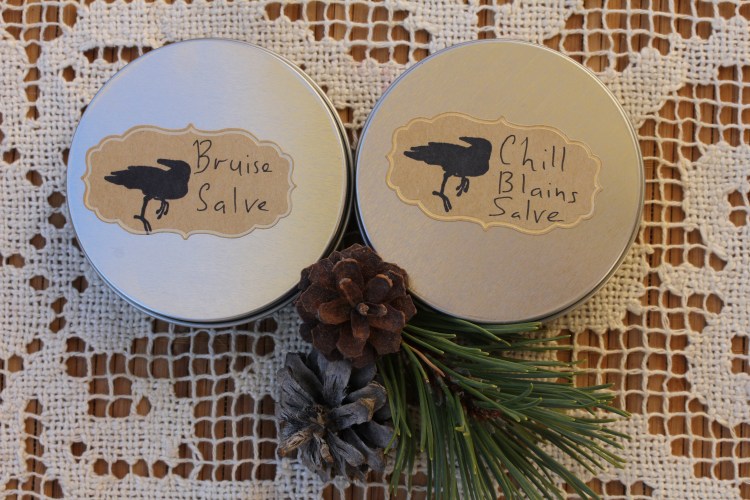
The Bruise Salve is a proprietary blend of comfrey root, white oak or witch hazel bark, rosemary, and arnica flowers. Because comfrey heals from the inside out I prefer to save it for things where there is not an open wound.

My daughter gets chilblains every winter from going outside or in the garage in bare feet. They do not heal up until summer and look terrible. So I made the Chilblains Salve for her this year. It probably works well for any circulation issues in the feet. It is a proprietary blend of clove, ginger root, rue, rosemary and horehound. It is very warming and increases blood flow to the area,  It is a preventative more than a treatment for.

I think I made 10 different salves this past summer. I have list of about five others that I want to try making over the next eight months. Winter seems to be the ideal time to make salves. There is no rush to get things out of the garden and it is nice to be in front of a cozy stove. Our winters are pretty dry here in the high desert so skin craves some extra care and moisture right now. Salves are 1)the ideal holiday gift 2) cheap and easy to make 3 )compact in size stored in a decorative container 3)Not likely to break or spill in transport and 4) I can give them to everybody without worry  of contraindications. I do have to plan the harvesting and drying in advance and make sure the oils are infused by October.

Everyone seem to have favorite herb blend for salves. What is yours?

Homemade Skin Astringent *(Blackberry)

It Doesn’t Get Easier Than This

I try to find the advantages of aging when I can. If I was not moving into menopause I would have no cause to experiment with things like a “skin astringent”. No one ever warns you or talks about what happens to your body despite all the exercise and healthy foods you eat. Women are especially ignorant about the role that estrogen plays in maintaining the function of so many systems.  If only there were as many support groups, classes, and books on the topic of “the change” as there is for childbirth. It might go easier for women over 50 if there were, and they might feel less invisible in society.

I was prepared for wrinkles and age spots but not hemorrhoids, or varicose and spider veins. I don’t even want to be seen in a bathing suit or engage in certain other activities. I know there are surgeries and hormone replacement therapy but I am not a good candidate for those. Genetics is not on my side either.  So since I prefer plant based solutions, I thought I would try making this astringent. It could be used as a simple facial toner as well.

Blackberry Bushes (Rubus)

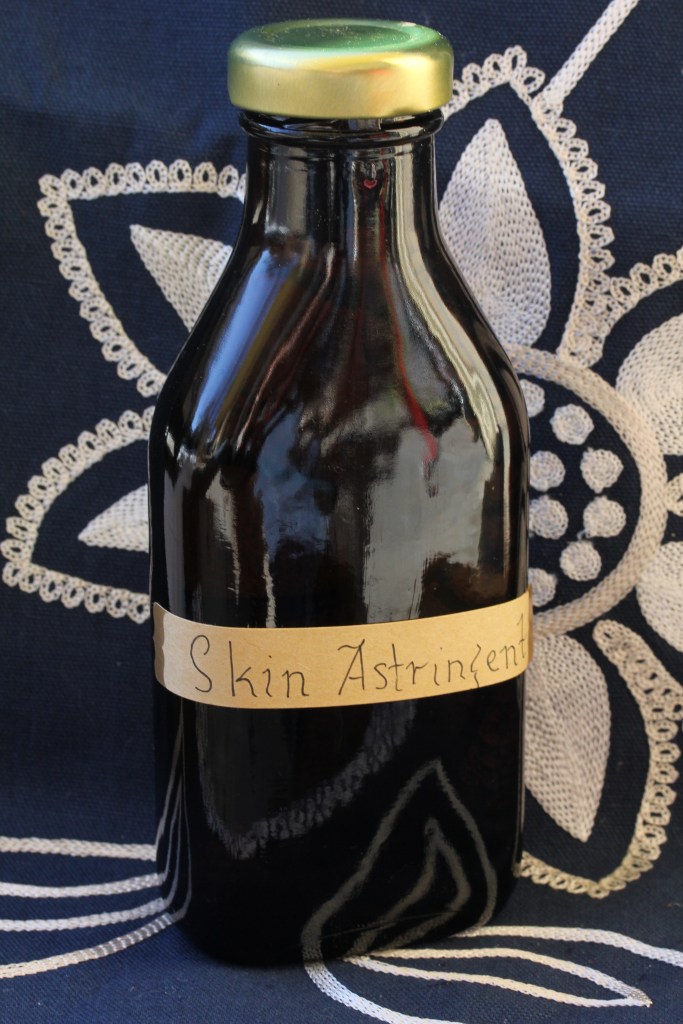
This homemade astringent contains a proprietary blend of blackberry leaves and white oak bark extracted into witch hazel (rubbing alcohol and witch hazel bark).

After a few weeks of extraction the plant material can be removed and the liquid bottled for late use. I like to store it in the refrigerator as a spray or soak cotton pads in the astringent and place them in a jar. The cold makes it even more refreshing and effective.

Many people struggle to tell the difference between the blackberry and the raspberry. Blackberries have a black fruit. The stems/canes can have large “thorns” more like a rose, those on a raspberry cane are more like fine brown hairs. If you flip the leaf over on a raspberry it will be white, all of the canes have a blue “bloom” on them. A blackberry will have very long invasive canes with red on them (except first year canes which may be white), the leaves are a darker green. There are also slight botanical changes between the veins, texture, and arrangement of the leaves. You will notice that a raspberry has left a bit of its insides on the plant when it has been picked. It appears hollow when you look inside. A blackberry can be bigger, longer and is very solid. I have both plants growing in my yard. They can often be used interchangeably. I tend to use raspberry for mild teas and blackberry for external preparations or tonics.

Blackberries have been used to treat anemia, fever, gout and cancer. The leaves or berries can be used to resolve diarrhea quickly. Externally the leavers can be used for oily skin, wounds, bug bites and hemorrhoids. They make a great mouthwash for infected gums or a sore throat. Blackberries are a good source of vitamin C and iron. It is rare to find a single plant that contains both of those. This is important because iron is best extracted and absorbed with a source of vitamin C.

Did a health condition inspire you to use plants in a different way than you would have considered before?

Homegrown Oregano

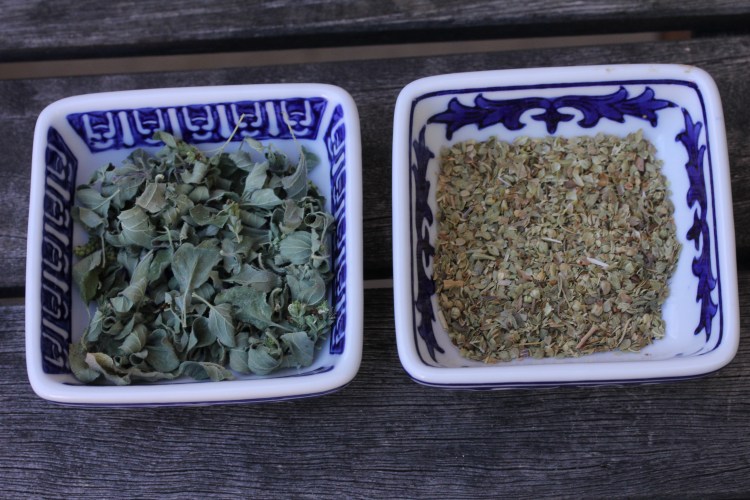
Comparison of Dried Oregano


One day I needed to go to the local herb store to buy some dried nettle for my husband. He was having issues with allergies and my garden was still in winter hibernation. The employee opened up the jar to dispense what I wanted and immediately I could smell Nettle from across the room. It was an amazing scent that I can’t even describe. I have been in many herb stores and never had that happen before. Since then I always check the color and ask to smell what I am about to buy. It is not just about how recently it was dried or how it was processed but also how that plant was grown and harvested. Is there any life force left to share and benefit from?

I have always used freshly harvested herbs in my formulas. 80% of what I make these days comes right out of my  organic garden and into the jar or a basket.  My care, love, intention and prayers go into everything I do. It was not always like that.

I love using fresh “living” parsley, cilantro, and basil when I cook meals. My cupboards are full of small jars of spice mixes that I have made from store bought dried herbs. This year I grew and dried my own oregano for the first time. As you can see from the photo above it is vivid green (and it also happens to smell amazing). It hardly resembles the faded, dried bits I typically use. I don’t have a large amount of what came from my garden and I have not found a really special recipe to use it in yet. I am sure that dish will be one to remember.

Oregano Fresh From the Garden

I did not decide to grow oregano as a culinary herb. Instead I was inspired by all the ways that Hispanics use it as medicine. I never imagined that a common spice in my kitchen could be such a powerful healing tool. You may have herd that pure oil extractions of oregano or the essential oil are popular recent trends. But it’s use goes back centuries.

Herbalists have used oregano to treat asthma, bronchitis, coughs, fever, headache, digestive issues, high cholesterol, motion sickness, and rheumatism. Externally it can be used on bruises, joint pain, sprains, and for swelling.

Hispanics use it to induce sweating and bring down a fever, for gas, colic, parasites, menstrual cramps, earache, toothache, snakebite and itchy skin.

I see my oregano spreading and transforming into a “mother” plant in the garden. It is also one of those plants that can address spiritual and emotional issues. I hope this post will inspire you to look at Oregano in a new way.

What is your favorite recipe that features oregano?

Happy (New Year) Harissa

Fresh Made Harissa

The arrival of winter happened only a few weeks ago and I am missing the presence of fresh herbs in my diet. Fortunately organic parsley and cilantro are easily available from many grocery stores. I love cooking ethnic food and see harissa mentioned a lot in magazines and cookbooks.

Harissa is similar to Chermoula, both of which are from North Africa, and Chimichurri which is from South America. All three are some combination of fresh chiles (red or green) with dried spices (corander, paprika, cumin, carraway, cloves, cinnamon, saffron) garlic, and fresh green herbs (mint, oregano, cilantro, and parsley).

This green version as it is not too “hot”. I like it out of the refrigerator and spread on crackers or toast.  It stores that way for several months if one uses high quality olive oil. Heated it can be used to roast or grill meats and vegetables. I look forward to mixing it into rice, pasta or yogurt.

Green Harissa

1 large jalapeno pepper

1 tsp ground cumin seeds

1 TBSP of coarsely ground coriander seeds

1 tsp cinnamon

1 tsp of fennel seeds

2 cloves of garlic

1 TBSP of finely chopped cilantro

2 TBSP of finely chopped parsley

1/2 tsp of salt

In a food processor, chop the garlic with the salt.

Add in the pepper and dried spices.

Finish with the fresh herbs and process until smooth.

Gradually add in the olive oil until the harissa is the consistency of mayonnaise.

Parsley is very high in chlorophyll and may support the body to better use the oxygen that is breathed in. It is thought to help the kidneys to function better by reducing the amount of fluid the tissues hold onto. Parsley contains several vitamins and minerals in small amounts. It has been used to treat gout, bad breath, arthritis, anemia, digestive issues, jaundice, and kidney stones.

Coriander is one of the world’s first cultivated spices.  Some people believe that the leaf/cilantro can remove heavy metals from the body. The seed has been used to treat anxiety, asthma, digestive issues, cramps, colic, diabetes, diarrhea, fever, allergies, high cholesterol, insomnia, sore throat, and vomiting.  Coriander is used in cuisines to flavor and preserve food.

If you enjoy ethnic food, what is your favorite dish that feature cilantro or coriander seed?