Cough Syrup for a Cold (HOREHOUND)

Black Currant Cough Syrup

I never intended to make this syrup but our refrigerator died. In the freezer were herbs (catnip, lemon balm, violet leaves, horehound etc.) that I keep on hand for emergencies. There was also 4 cups of red (not much) and black (lots)currant berries harvested from our bushes. I use black currant leaves often in my formulas. But I had no idea what to do with the fruit as they have a bit of a spicy taste (like juniper berries). So rather than waste all those ingredients I decided to see what I could make with them. I pretty much followed the recipe above except I cooked the berries first and pressed them through a sieve to remove the tough skins. Then I cooked the herbs in the juice. The result was a syrup the lovely color of red wine with a very strong taste. Probably not the best choice for kids but it really helped shorten my cold to two days while my husband’s cold went to his chest and lasted 12 days.

I had to do some deep digging to find some information about black currant berries. Herbalists have used them for sore throat, specifically with any hoarseness. In the past the juice was used as a treatment for whooping cough. The fruit is very high in Vitamin C.

A basic herbal syrup

  • Combine 1 ounce of herb and 1 quart of boiling water in a pan
  • Reduce heat and simmer until liquid amount is about 1 pint
  • Strain out the herb
  • Add one cup of honey, turn off heat and stir until honey dissolves
  • Bottle and store in the refrigerator
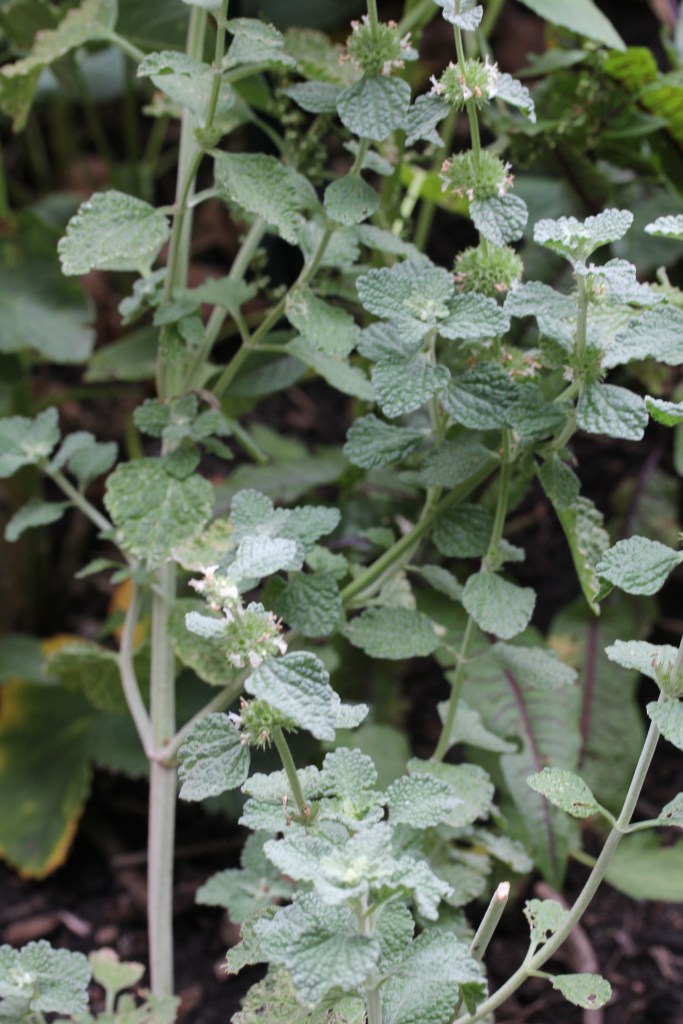
Marrubium vulgare

White horehound is a perennial plant in the mint family that grows easily on several continents. You will find it in gardens, dessert pastures, the wild, and wastelands. The entire plant is downy and has a silver “bloom”. The fibrous twisted root sends up several square shaped stems. Numerous leaves are opposite, petioled, round/ovate, wrinkled and soft underneath. Tiny with a pink/white two lipped flowers with a spiny calyx grow in axillary whorls in late summer. Prefers sun and well drained soil.

Marrubium has been used for healing since ancient times. It is a common ingredient in cough syrups and lozenges because it clears phlegm and prevents infection from moving into the lungs. It is thought to helps with bronchitis, laryngitis, hoarseness, sore throat, asthma, pneumonia, and a hacking cough. Historically this plant has bee used to treat fever, anemia, hepatitis, retained placenta, stomach issues, heart conditions. It balances bodily secretions and makes a bitter digestive tonic. It increases circulation (vasodilator) and sweating. Stimulates the production of bile and supports the liver.

Externally a serum can treat blackheads and rough/dry skin. Adds a healthy glow and moisture to the skin. As a poultice/compress it can be used on deep wounds, a rash or for shingles.

Taste: highly aromatic/pungent (volatile oils) and bitter. Requires a lot of sweetner to make it palatable.

Energetics:Moves energy, clears heat/cooling and toxins. Drying.

Element: Air

Contraindications: pregnancy. Excessive use may lead to hypertension. Fresh juice applied to the skin may cause a reaction. Large doses may act as a laxative.

This was the first year I made an effort to use syrups in our cold care plan. I am now a big fan and will use them in the future. What do you use that helps with cold symptoms?
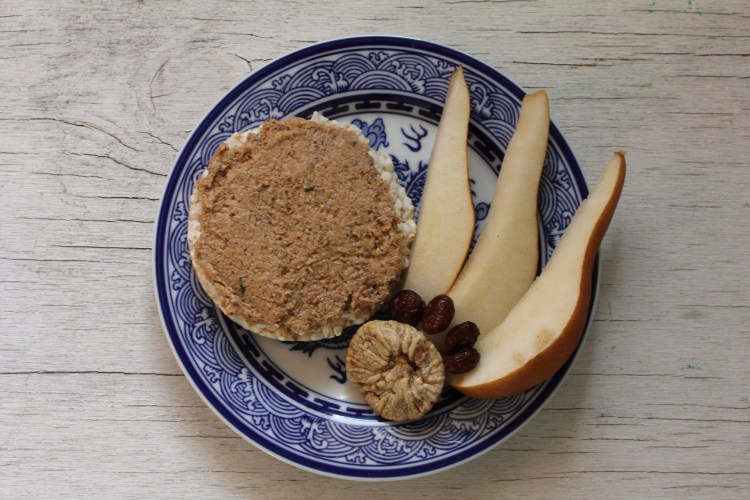
Party Pate-Mushroom and Rosemary

Simple but Gourmet

I have a very restrictive diet. When I find something that is easy to make, healthy, has no packaging involved, and can be used for several meals-I get very excited. I was pleasantly surprised by how amazing this tasted. It would make a great contribution to a potluck or holiday party. You only need to add artisan crackers or toasted sourdough bread on the side.  Shitake mushrooms really make the dish as they add a rich earthy taste. The texture and color really will remind you of traditional pate but this is a vegetarian option.

Mushroom and Rosemary Pate

1   1/2 cups of pecan halves toasted

2 TBSP of olive oil

1 onion finely chopped

1 pound of shitake mushrooms

3 TBSP of butter or substitute

1/2 cup of sliced green olives

2 TBSP of fresh rosemary

1/2 tsp of salt (less depending on your taste or your olives)

Saute onions in oil until soft

Add washed mushrooms to a food processor and pulse until coarsely chopped

Add mushrooms to pan and continue to saute until soft

Add pecans and rosemary to food processor and pulse

Add mushrooms, onions, salt, and olives to the nuts. Process until smooth

Serve at room temperature

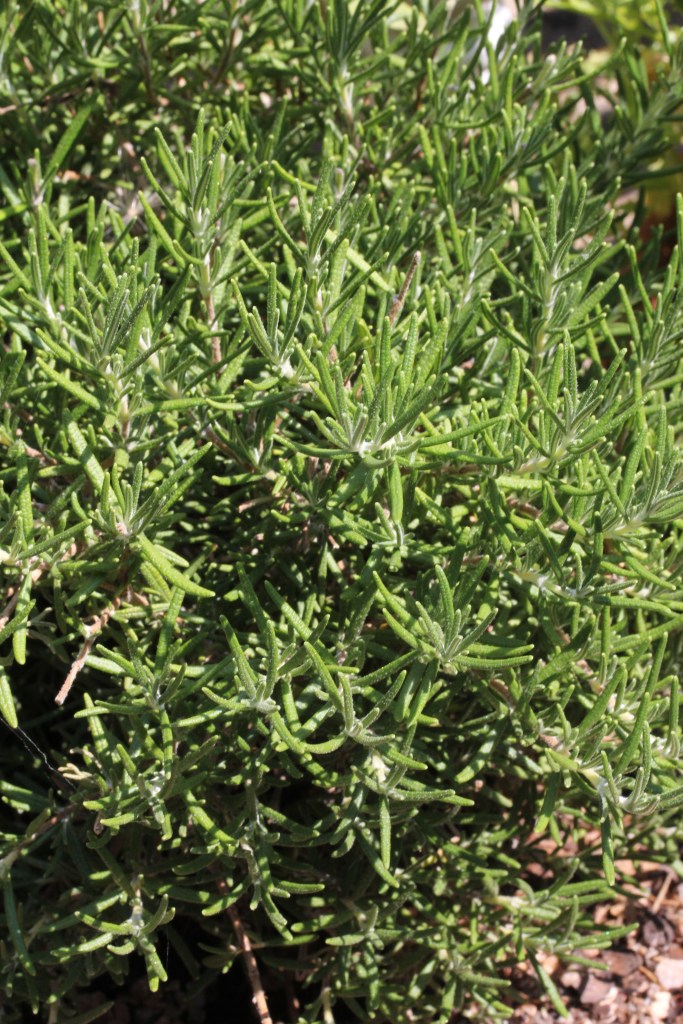
Rosmarinus officinalis

I bring my rosemary inside of the house to overwinter. So it is the only fresh herb from my garden that I can use during the winter months. This pate is a great way to get a dose of Rosemary’s strong healing qualities. It is not an overpowering taste but it is not subtle either.

Rosemary is thought to tonify the nervous system and improves circulation to all parts of the body. When eaten with food it can improves the digestion of fats and starches. It contains small amounts of several vitamins and minerals. Rosemary has been used to treat Alzheimer’s disease, asthma, colds, gallstones, depression, fatigue, menstrual cramps, vertigo, migraines, and issues with the menstrual cycle. It is considered by some to be a cancer preventative. The Ancient Greeks used it to keep their memory clear when taking tests. It is very effective at preserving food.

Do you use rosemary when cooking. Do you prefer fresh or dried? I think I am now a convert towards fresh. The stuff in my cupboard is pretty sad looking.

Bay Sticky Rice

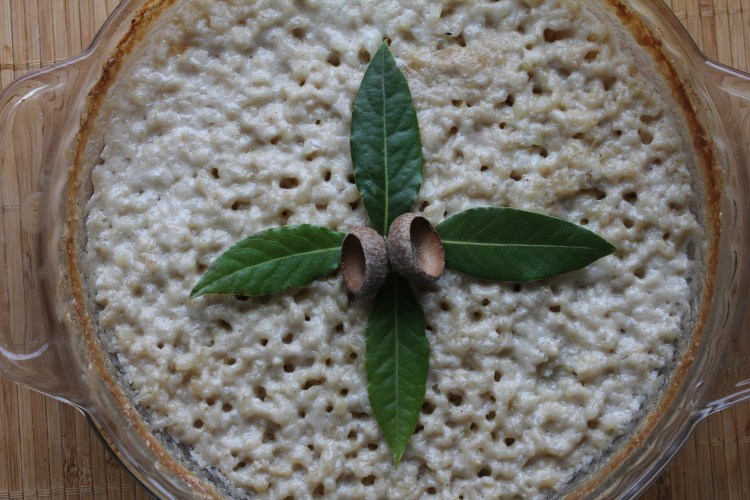
If it is snowing outside and you need a warm nourishing treat, this is the perfect recipe to consider (along with hot vanilla steamers).

Bay Sticky Rice

3 TBSP of sushi rice

1 TBSP of butter

2 tsp of maple syrup

1 can of coconut milk

1 cup of milk or subsitute

3 fresh bay leaves

1/8 tsp of cardamon powder

Preheat the oven to 400. Grease an ovenproof dish. Add in the rice, maple syrup, cardamon and milks. Stir and then add in the bay leaves making sure to submerge them under your mixture so that they will not scorch. Finely dice the butter and scatter it over the surface.

Place your dish onto a cookie sheet and bake for 30 minutes.

Reduce oven temperature to 300 and bake for an hour or until all liquid has been absorbed and your “pudding” is creamy and soft.

Serve warm.

Bay leaves are found in most grocery stores. I prefer to use fresh ones can be found packaged in plastic containers in the produce section. Dried bay leaves are pretty useless for medicine. If you plan to be simmering them for a long time in something like soup, as bouquet garni, they will impart flavor but not much else. I rarely use bottled pure essential oils for anything but “housecleaning”. They are just too concentrated and in my opinion hard to use safely as a layperson. I do use hydrosols, essential oils from the citrus family in baking, Chinese liniments, and on occasion eucalyptus essential oil (make sure to use a pure reputable source).

You may also know Bay as Laurel( not to be confused with Prunus laurocerasus or Umbellularia californica which are poisonous), an evergreen bush from the Mediterranean. Bay leaves are a rich green, shiny, lance shaped, and pointed on both ends. They are a bit tough and have leather like feel about them. White flowers grow in a cluster to later produce black/purple, oval berries.

The volatile oils found in both the leaves and berries can be used externally as a liniment for sore muscles, headache, sprains, arthritis or rheumatism. Historically an infusion has been used to treat fungal and bacterial infection of the skin, nails or scalp. A decoction mixed with honey can be applied to the chest for respiratory illness. Culinarily the leaves help with digestive issues by toning and stimulating the organs. This herb has been used to treat bloating/wind, menstrual pains, blood/energy stagnation, numbness, nerve damage, coughs/colds, jaundice, and edema. Bay leaves should always be removed and not consumed once they have been used for food or medicine. They make an effective insect repellent when placed in food containers or among books and textiles.

Contraindications: none if you have properly identified the right plant. As with all plants hight in volatile oils, use sparingly if pregnant.

Butter Up With Sage

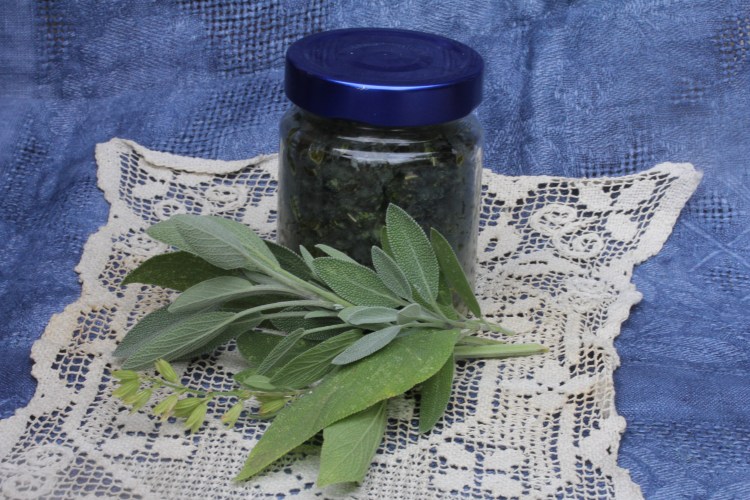
Sage Butter

I make this a lot because it is so versatile and will last in the refrigerator for months. It is a good substitute for all those dried particles in you cabinet that pass as spices. It contributes a lot of flavor, freshness, and “green” to those fall meals. It can dress up any protein, vegetable or grain. You can blend it into a soft cheese or sauce. I have used it to make salad dressings, marinades, etc. The possibilities are endless. I see it as a way to store sage over the cold times of the year until fresh is available again.

It is pretty easy to make. I coarsely chop the fresh sage. I turn the stove up to medium. I use a cast iron pan. I start with 1-2 TBSP of herb and brown it in 2 TBSP of butter until it crisps but still stays green. I scrape all the butter and bits out of the pan and put them in a small jar. I just keep going until the jar is filled and store it in the refrigerator.

Wise Mother Sage

Every garden has at least one “mother plant”. She is a perennial, one of the largest and most vigorous plants in the garden. She may be old, leggy, gnarly, asymmetrical and not as “pretty” as the other ones. She takes care of the other species in the area and she will take care of you. I have a sage plant like that now. I had one like that 30 years ago. She came to me one night in a dream. She was being hacked to pieces. When I visited her the next day in my community garden plot she had been dug out and destroyed by another gardener who did not understand the layout of the plots. She was the oldest plant in my garden. The only one living when I was first assigned the plot to rent. True story.

Sage is thought to be good for stress, depression, hot flashes, migraines, digestive issues, flu, arthritis pain and staph infections. She is a wonderful gargle for sore throats. As a bath she is has been used to address all kinds of skin issues. There is a long history of using her as a symbol of wisdom, longevity, and protection. I like hanging bundles of the fresh plant in my house, washing the floors with the tea, burning dried leaves to clean out energy from a space.

Is there an herb that you feel a strong connection to or have had unsual experiences with?

Fabulous Find (Saint John Wort Tincture)

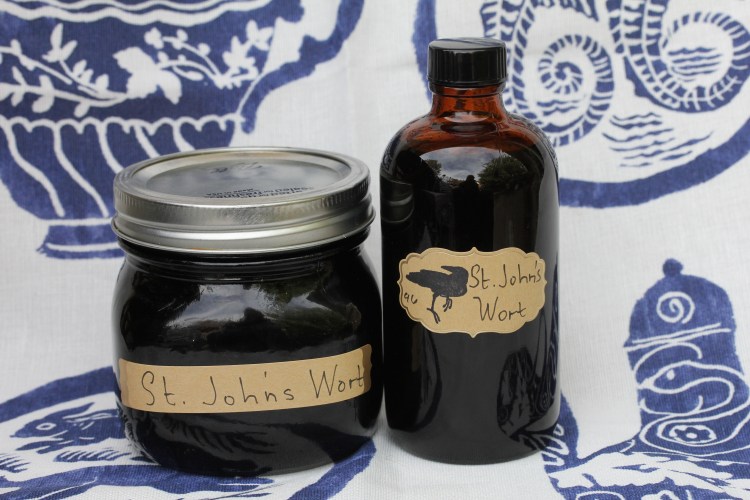
Hypericum Tincture (notice the red color)

I retired from midwifery a year after I moved into my house. All the herbs and equipment went into the basement. 12 years later while purging and cleaning I found a jar that was in pretty sad shape. The lid was actually glued to the top. I pried it off and saw the ruby red liquid inside. Even without the label I knew what it was. Since it has been sealed since I tinctured it 13 years ago and stored in the dark I am sure the healing properties are still good. St. John’s Wort is not easy to find in the mountains where I live. This batch was unexpectedly found in someone’s yard while on a client visit, I have never seen it in my ecosystem since. I have been unable to grow it from seed. So I am not about to toss this find until it has really been replaced. 

Growing in a Botanical Garden in New Mexico

If you hold a Hypericum flower up to the sunlight you will see tiny bubbles of clear oil or red pigment in the petals, also black dots along the margin. It is a good way to verify identification of the plant in the wild. There are several plants in the family, some are cultivars that you do not want. There are other plants that may go by the name of St. John’s Wort that are not the plant we are discussing here either. Hypericum Peroforatum has been used for over 1,000 years to treat depression. It is thought to support the nervous system, break up energy stagnation, and lift the spirit. Externally the oil infusion ( I found some of that in the basement too) can be used to heal damaged nerves. I used it a lot for back massage during labor, for pain, when I attended births. Herbalists have used the oil for bruises, burns, insect bites, cuts, tumors, varicose veins, sunburn, paralysis, sciatica, and arthritis. Internally among its many historical uses are relieving symptoms related to anxiety, ADHD, chronic fatigue, concussion, herpes, insomnia, neuralgia, OCD, flu, shingles, and gastrointestinal issues. Because it is thought to work on so many systems in the body I suspect it must have an affinity with the vagus nerve. The flowers and leaves are considered edible and in the past were used to make mead or bread.

In folklore the plant was used as decoration or in amulets to bring blessings or protect from death.

I have not needed to use St. John’s Wort in a really long time. I would love to hear about your experience with this plant.