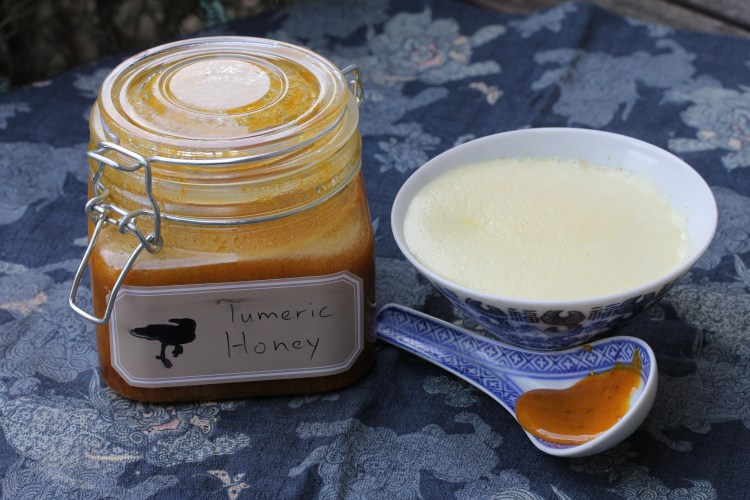
The weather is colder, some days are grey, the garden is in hibernation, and I am stuck inside wondering what to do. I miss creating my formulas already. Thank goodness I discovered the idea of herbal honey. They are very popular at the farmer’s market. I had an “I can make that myself moment”. Turmeric honey is a very easy one to start with. You just have to decide how much of the yellow spice you want to mix into the honey. I love it in golden chai with a bit of cardamom, ginger, and vanilla extract. Turmeric is a very warming. It is thought to helps balance the body’s microflora so that there is no bacterial overgrowth in the gut. Historically it is anti-inflammatory and anti -tumor. It is found in so many ethnic foods because is supports digestion of fats and proteins, thereby reducing gas, bloating, cramps, etc. I used it to prevent/treat arthritis in my dog by adding it to her food so that we could avoid expensive drugs.
Coming Down With Something?
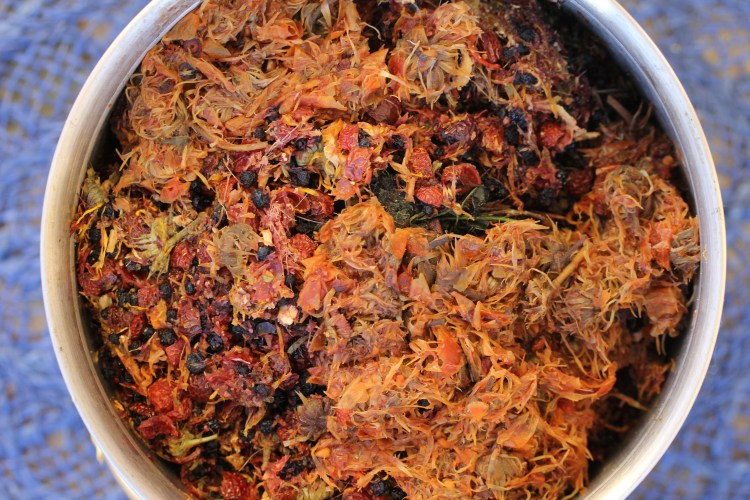
This one is a bit more complicated to make. But I have used it several times this year already. I can add a heaping teaspoon of it to a hot fruit flavored tea and the kids willingly drink it. It has dried elderberries, ginger, rosehips, orange peel, cardamom, cinnamon and calendula flower petals. I think it best to use dried herbs and spices. You can use coarsely chopped ingredients which have to be strained out (wasteful and time consuming) when you are done letting it sit for a month. OR Finely grind everything and leave it in and just consume it with the honey. The herbs in the Immune Boost Honey are either warming, high in vitamin C, anti-bacterial/viral or support the immune system. Take it as soon as you feel something coming on and you will be surprised that you managed to avoid getting the worse of whatever is going around.
What is your preventative go to when colds and flu are circulating in your community?
Fall is a great time to think ahead and prepare for the cold and flu season. Extracts using glycerin are the perfect option for children and individuals wishing to avoid alcohol. Glycerin alone is antimicrobial, antiseptic and a great preservative. It dilutes well with water without change, is very soothing to body tissues (when diluted), and naturally adds a sweet taste to preparations. When used for extracting it stores years longer than those done with alcohol. It is well suited as a solvent for plants with tannins. It does not dissolve or mix well with those high in oils, resins, or volatile/essential oils.
Instructions For A Basic Glycerite
1 part dried herb
2.5 parts glycerin
1.5 parts water
Mix glycerin and water, add powdered herb and stir well. Place into a clean jar and let sit 15-30 days. Strain, if possible squeeze out any remaining liquid through a coffee press. Add all liquid to small amber glass tincture bottles and store in a dark cool place until needed. Discard herb.
*NOTES: powdered dry herbs work best, a dense or fresh herb will absorb a lot of the glycerin, leading to a lot of waste and only a small amount of product.
By products of creation
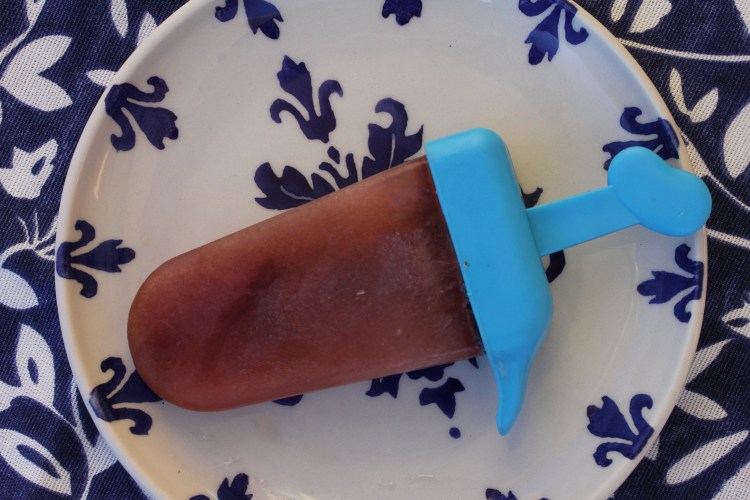
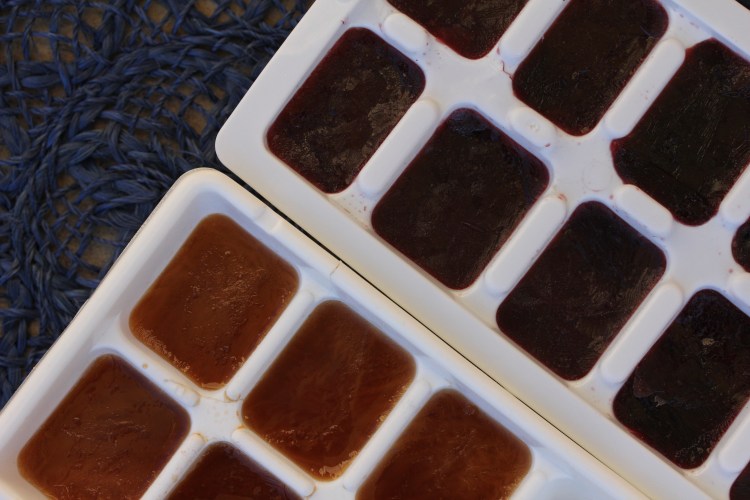
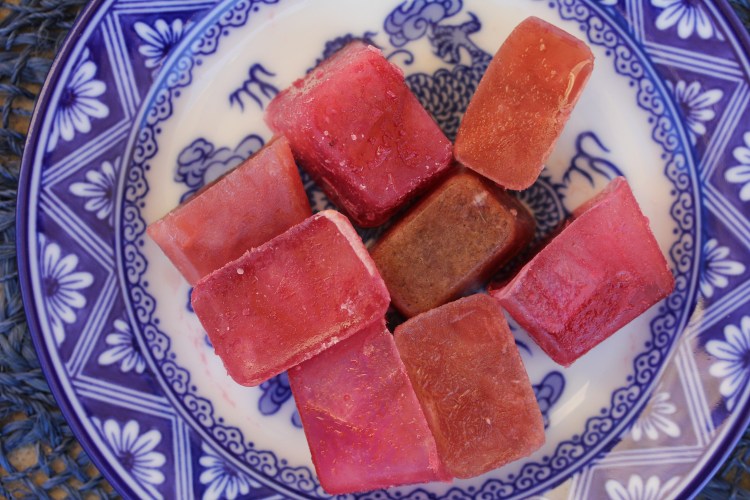
One of the results of a day spent straining out herbs from oil, alcohol, honey or glycerin is a lot of waste for the compost pile. There is still a lot of good honey and glycerin, and healing properties left on those herbs. By pouring boiling water over the herbs in a strainer and freezing the liquid, one is left with some great sweeetened “popsicles”. These can be used to soothe a sore throat or get herbs into a child who does not like the taste/form otherwise. NOTE: Glycerin does not exactly freeze solid in most freezers. The minimum freezing point of a typical glycerite (water and pure glycerin) would be below -36 F. (your bonus science lesson). So you can store the pops (they do get have a solid state) in the trays and just add them to juice when ready to use. The honey is not a problem, freezing and releasing just fine.
Frozen herbal treats
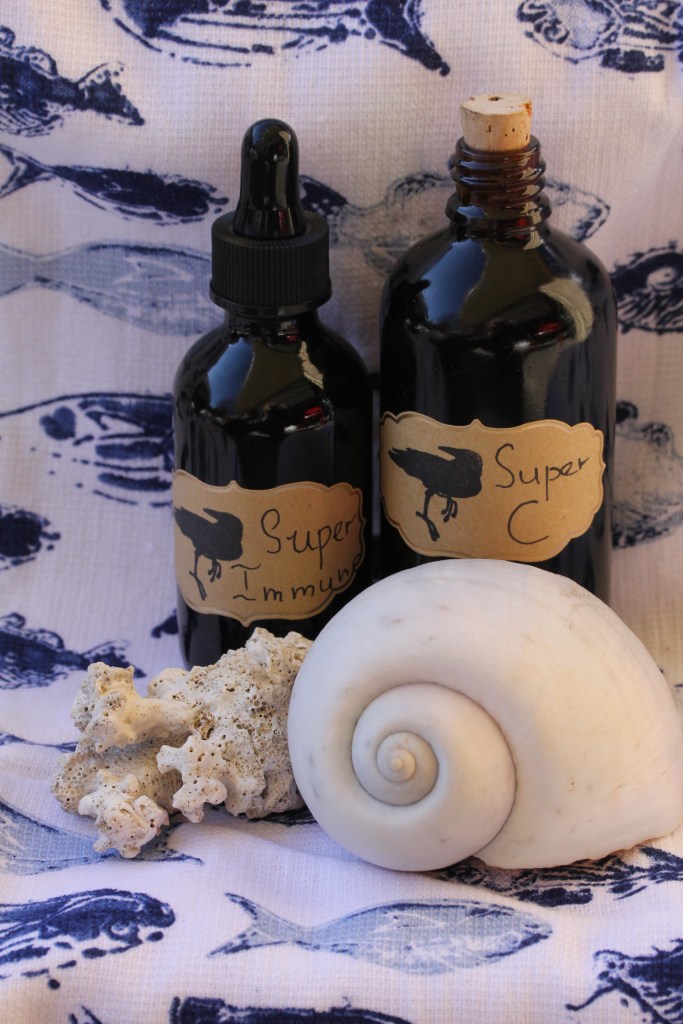
I bet you wish to know what is in my winter glycerites. Super Immune (for flu) contains dried elderberries, rosehips, hibiscus/jamaica flowers, and echinacea (root, flower heads, and leaves). Super C (for mild cold support) contains dried calendula flowers and rosehips. All of the above herbs are thought to support the immune system by being high in vitamin C, stimulating the lymphatic system, and being anti microbial/bacteria/viral. I hope the coming months find your family healthy and in good cheer.
I don’t enjoy shopping anymore. Too much noise, crowds of people, challenges to park, visual stimulation, and traffic just to get to the brand name store. Buying and driving less is a good thing. But there are things that I really do need and fewer options for where to buy them. I have come to depend on purchasing things on-line. It feels a bit like Christmas when someone delivers that box for me to open, even though I know exactly what is inside. This choice comes with lots of packaging and waste. I notice more local businesses that have closed, remember with fondness the ones that truly were a lovely aesthetic experience to visit. Consumerism is just like the wheel of Samsara. There is no escape from the rounds of gain and loss.
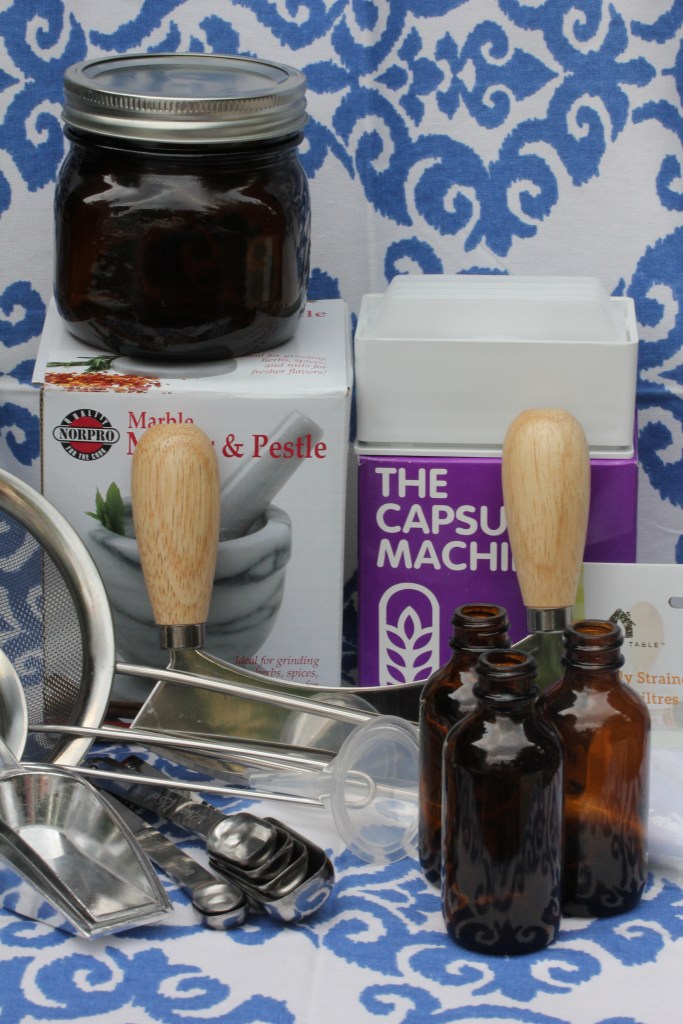
Pharmacy supplies
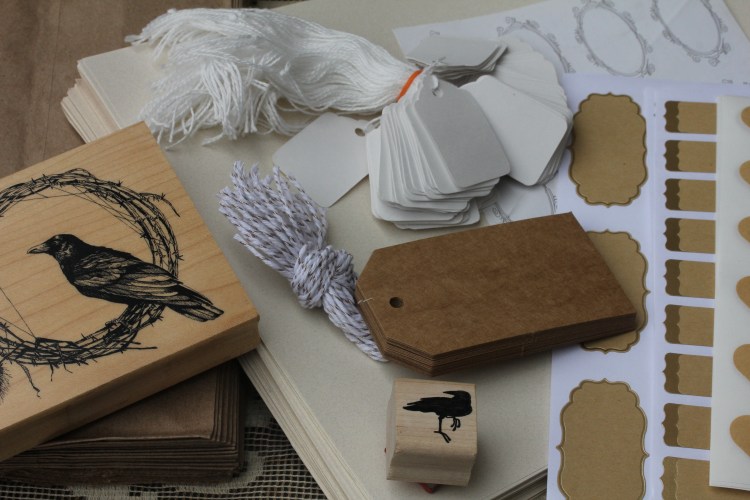
I have come to realize the true price of convenience and the bulk discount. The trick behind the treat one could say. My goal for 2020 is to strive for (and most likely fall short of ) zero waste, shop local, and support small on-line businesses with my direct purchase rather than going through the big A. There are still companies like Mountain Rose Herbs where I can get many things (like those items pictured above). I am able to spend my precious dollars there because I don’t charge for my products (no need to use the cheapest supplies) and instead the cost is in my services and consultations. The joy may no longer be in the shopping (I still get excited by the box) but in the give away of herbal products that I have so lovingly made. My passion is planting the seeds, watching them grow, harvesting leaves with prayers of thanks, making the tincture, designing the packaging, and finding out that my herbs contributed to a friend’s healing. We all have different strategies for setting an intention and manifesting our dreams . One could join a networking group, do research, learn a new skill, spend money on marketing, or create lots of inventory to sell. Each time I seem to fall into the habit of buying my supplies first. I need some kind of tangible and material evidence of my commitment to what I am sowing and harvesting. So my first baby step had to be part of the blog too.
October is always my favorite month. I love the smells of rotting fruit, roasting green chiles and dusty dry leaves. The air often feels crisp, cold, fresh, and invigorating in the mornings. One never knows what will happen in October. How early that first frost or snow might hit where we live. When to time the last picking of various fruits and vegetables still ripening.
I hate to see my plants go to waste. I must have done 20 tinctures and 10 salves to insure I got the most out of the garden this year. I look around the yard saying to myself “what is left and what can I create from that?”. It is a fun challenge, some days it feels frantic, and the kitchen is a mess.
So one afternoon, when I wanted to savor what could possibly be my last chance to enjoy an ice cold tea made from my fresh plants, I threw this together.
Violet leaves
Catnip and catmint leaves
Spearmint and peppermint leaves
nettle leaves
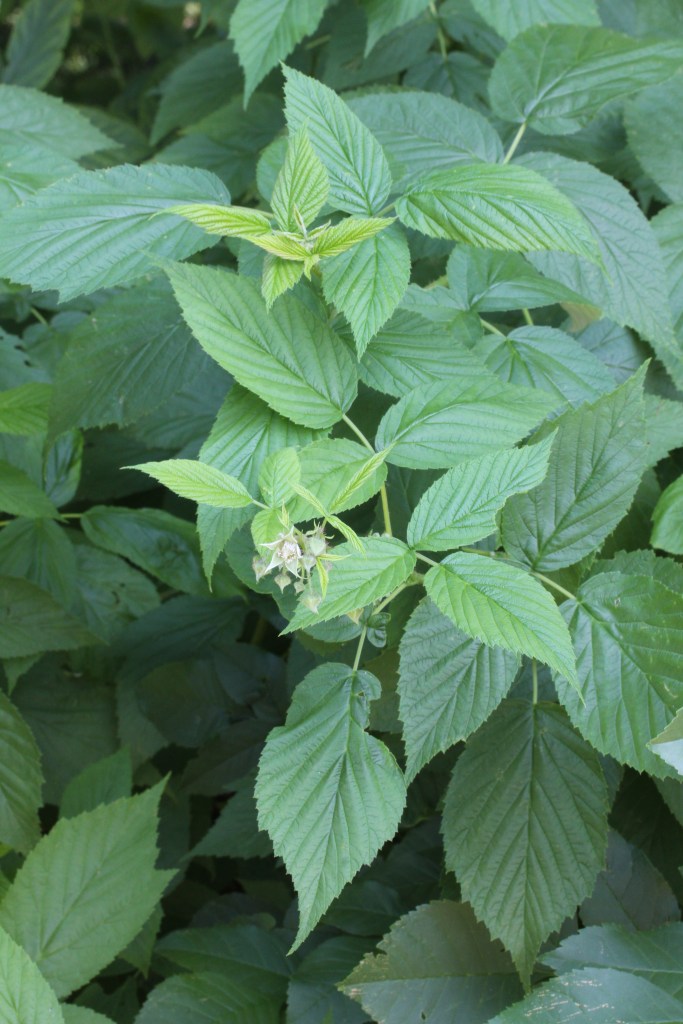
red raspberry leaves
Rubus idaeus
Raspberry is shrubby plant in the rose family that can grow as high as 6 feet tall. You can find it in wastelands, growing wild in the mountains, fields/meadows, as an unwanted thicket in urban areas and in gardens. The perennial root produces shooting stems/canes that live for 1-2 years. Some canes will have a blueish bloom on them and all are covered with fine “hairs” that may irritate the skin. Stems are covered in large alternate, pinnate leaves which are further divided into 3-7 leaflets which are serrated. These oblong/ovate leaflets have a pale/white downy underside. Clusters of white cupped shaped flowers with 5 petals appear in second year. The red edible fruit takes the form of a domed aggregate and is ripe in early or late summer. You will notice that a raspberry has left a bit of its insides on the plant when it has been picked. It appears hollow when you look inside. There are very distinct botanical differences between raspberries and black berries. Rubus prefers full sun but will tolerate some shade and poor/clay soil. It thrives best when well watered.
Historically this herb has been used to treat-nausea, vomiting, diarrhea, anemia, gum disease, , heavy periods, flu, labor pains, cramps, osteoporosis, sore throat, irritated eyes, arthritis, muscle cramps, low milk supply, hemorrhage, organ prolapse, and infertility, As an astringent it makes an excellent toner for the heart and uterus. It is thought to be high in iron. When used externally as a wash/poultice it may be helpful for sores, fungal infection, acne, inflamed tissues, varicose veins, and burns. It is very effective as a gargle for sore throat and laryngitis.
Although blackberry and red raspberry leaves can be used interchangeably in most cases, I prefer to use blackberry externally and raspberry internally.
Energetics:cold, dry, bitter.
Element:Water
Contraindications: avoid consuming decaying leaves as they may be higer in cyanide.
All of the herbs in my tea have a mild and pleasant taste. It can be safely enjoyed by everyone in the family. The high mineral content supports the bones and nervous system. It is calming and a great aid to digestion.
I think it a rare treat to enjoy a tea made from fresh plants that I have placed into the earth and later harvested. I feel a bit of myself is in those herbs and that there is an exchange of life force between us. I get much more that just a chemical constituent or physiological effect. It is a deep healing at the level of the spirit.
What is your favorite tea? How do you think it benefits you?
I really enjoy cooking, especially if my ingredients include exotic spices, fresh herbs or vegetables grown in my garden. There is a long tradition of using food to support health. An obvious example would be dandelion leaves included as part of a spring salad. They would help to support digestion and detoxify the liver in a body that has overindulged over the winter. It makes such sense to use something free and easy to find when food stores would have been running low. Modern life provides little incentive to harvest greens out of the lawn or from a patch of weeds
Anyone who likes to make Italian food has dried oregano in their spice cabinet. It is an essential addition to any spaghetti sauce. They probably are not aware that besides great flavor they are also getting a small dose of chemicals. Some serve as an antibiotic (to any bacteria in the food), a tonic (to support healthy stomach function), and an anti-inflammatory (in case they have an unknown food sensitivity or arthritis). There was a time when every home cook understood how to use herbs and spices for more that taste . Serving a family meal was also preventative care.
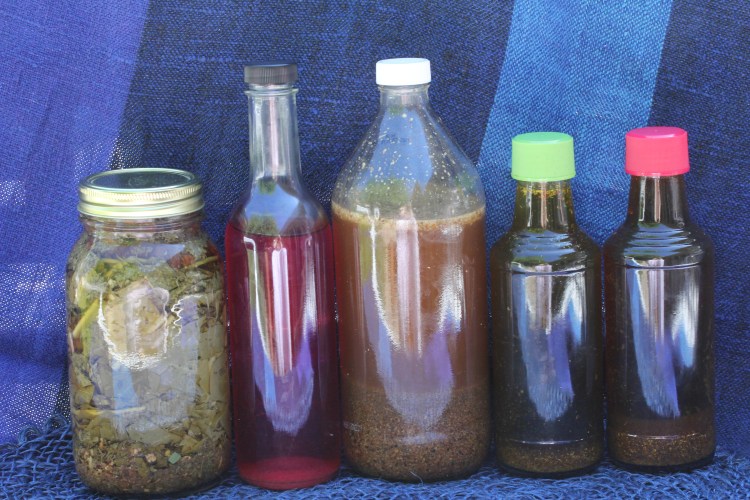
One of my favorite ways to get healing qualities into food is in the form of herbal vinegars and oils. They take only a few minutes to make. The inexpensive ingredients are already found in most kitchens. The bottles can be used and stored for a very long time without going bad. Either can be poured over vegetables and roasted in the oven to create something worthy of a fancy restaurant. My friends are always so surprised that my potluck offering was so quick and easy to make. The oils and vinegars can be combined with other ingredients to create dressings, sauces and marinades.
I start with high quality apple cider or rice wine vinegar and add fresh chives, rosemary, basil, thyme, parsley, or sage with a bit of honey. The acidity in vinegar is really good at extracting out any vitamins or minerals in fresh plants.
For an oil I would choose organic olive oil grown in the US. I add dried powdered herbs like coriander, fennel, tumeric, ginger and cardamom. All of which help in the digestion of food while preventing gas, heart burn and bloating.
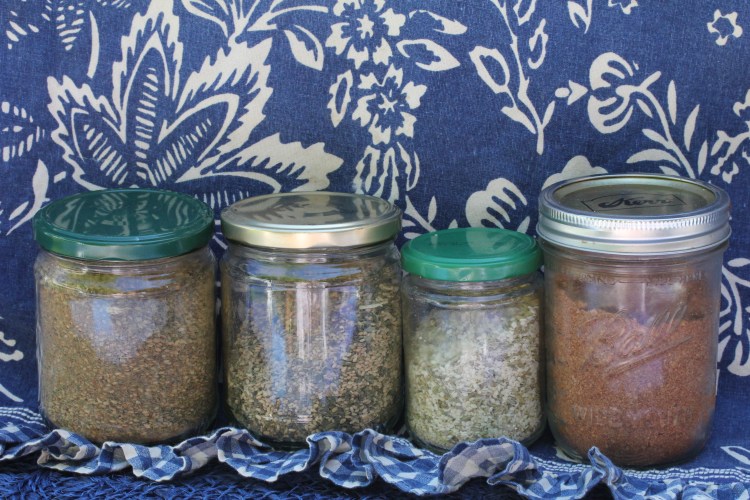
Savory and Sweet seed mixtures
These are very simple to make as well. I keep them stored in a lazy susan (you saw it in the picture from the last post) on the table. It then becomes ever so easy to add the mixture to grain, yogurt, hot cereal, pasta, or vegetables that are on your plate. The base of the savory mixes is seseame seeds and kelp mixed with dried herbs like nettles or horsetail. All high in minerals. The “sweet” usually contains ground sunflower seeds or nuts and dried spices that are anti-inflammatory.
Here are two recipes inspired by Kami McBride’s amazing book The Herbal Kitchen.
Liver Support Condiment
8 TBSP of sesame seeds
8 TBSP of powdered dandelion leaf
4 TBSP of powdered parsley
4 TBSP of powdered nettle leaves
4 TBSP of powdered dandelion root
2 TBSP of kelp powder
Mix well and store in the refrigerator, It is ok to store smaller amounts on the table.
For Your Bones Vinegar
1/4 cup of shaved fresh burdock root
1/2 cup of fresh dandelion leaves
1 TBSP of chopped fresh spearmint leaves
1/4 cup of chopped fresh parsley leaves
1/2 cup of fresh nettle leaves (see below)
1/4 cup of fresh cilantro leaves
2 TBSP of chopped fresh chamomile
2 TBSP of dried oatstraw
1/4 cup of raisins
Place all of the ingredients into a wide mouth canning jar. I always use tongs to handle fresh nettles to avoid getting “stung”. Add 3-4 cups of apple cider vinegar (until jar is full and herbs are covered). Let sit for one month. Strain out herbs and pour into a user friendly bottle that does not have a metal lid. If your canning jar has a metal lid place a piece of plastic wrap or similar material between the lid and the lip of the jar.
These are only a few of the ways to use food to support your health. Leafy green nutritive herbs can replace spinach in recipes. Pesto can be made of many fresh herbs other than basil. There are herbal butters and honey. I personally like multi-ingredient spice mixtures. There will be many more posts to come where I use herbs in cooking. Plus gorgeous photographs with the recipes.


 Blackbird's Backyard Pharmacy