The weather is just starting to get nice. Plants and insects are making their appearance to coincide with more time spent outdoors. It is good to be prepared for things like bug bites/stings, poison ivy/oak, acne, boils, and itchy rashes of all kinds. This lotion contains ingredients to soothe, heal, draw out, prevent infection, and neutralize. Giving relief to symptoms such as swelling, redness, pain, inflammation, heat, stagnation, irritation, and itchiness. You can make this “lotion” in a single use batch. OR you can make larger amounts of 1)powder, 2)liquid, and 3)oil to save time and effort. Combining them later as needed, storing them separately. If traveling or camping one can just store small amounts in appropriate containers for later use. The addition of chamomile powder and essential oils to this product supports healthy skin and reduces microbial growth. Not to mention giving it a lovely, relaxing scent.
Homemade Calamine Lotion
Powder ingredients-
4 TBSP of sea salt
4 TBSP of baking soda
4 TBSP of betonite clay
1 TBSP of finely powdered dried chamomile flowers
Oil ingredients-
10 drops of lavender essential oil
10 drops of peppermint essential oil
10 drops of chamomile essential oil
4 tsp of herb infused olive oil. Possible choice of medicinal plants could include-mugwort, yarrow, plantain, calendula, feverfew, basil, lemon balm, hops, coriander, thyme, sage or nettles.
Liquid ingredients-
Enough witch hazel to make a paste
Directions-combine all the “powder” ingredients, set aside. Combine all the “oil” ingredient, set aside. Measure out 4 TBSP of powder and 1 tsp of oil. Add to a bowl with enough witch hazel to form a smooth and creamy lotion.
Store unused portion in the refrigerator for up to 2 weeks.
You could omit the liquid and use the oil and powder ingredients in a salve recipe. Pour you mixture into a small tin or lip balm tube for easy, on the go application.
Caution-discontinue use if signs of allergic reaction occur or symptoms worsen.
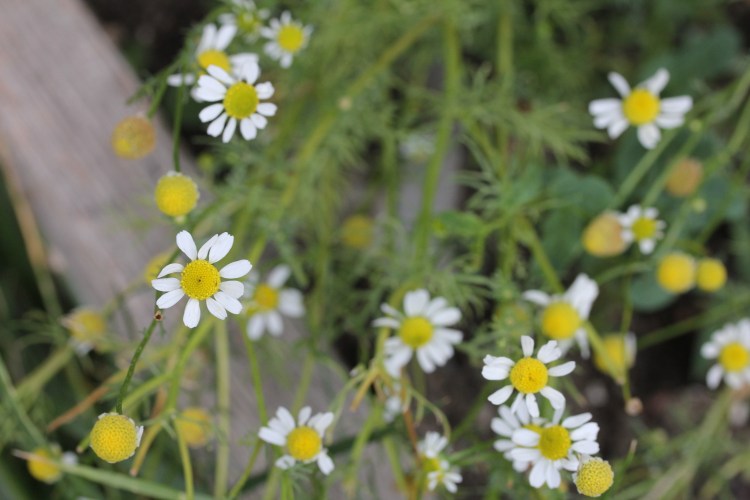
German Chamomile. Is an annual. Latin Name -Matricaria recutia/chamomilla. Family-Aster. Sub Family-Anthemideae (aromatic members of the aster family). Like all asters, this plant is missing the green sepals. Instead it has translucent bracts (modified leaves) surrounding the flower head. Numerous tiny five petaled disc flowers fill the yellow round center which is surrounded by a ring of white single petaled ray flowers. Similar to a daisy but much smaller in size and different leaves. Each flower sits a top a short stalk attached to a long leggy stem ( may grow to 24 inches) which has numerous blooms. The alternate leaves are brilliant green, fine, and feathery. Chamomile has a sweet pleasant aroma, almost like apples. Roman chamomile is similar in appearance but shorter and often a ground cover. In the garden this plant prefers any kind of soil, regular watering and full sun for best growth. This cultivar sometimes escapes to be found in pavement cracks or an empty urban lot. Self seeds and spreads easily under the right conditions. Not to be confused with pineapple weed which can be found growing “wild” in many places.
Chamomile contains several volatile oils and constituents that assist the recovery and health of skin or mucous membranes. Studies show that this herb is anti-microbial specifically for candida, staph, strep, e. coli and fugal infections. Compresses, lotions, salves, washes, douches and gargles have been used externally to cool and speed the healing of burns, eczema, acne, dermatitis, insect bites, psoriasis, cracked nipples, bleeding gums, toothache and eye infections. The flowers have a long history of being used in hair products like dye, shampoo and rinses. They have also been used to flavor food, drinks and scent incense, massage oil or dream pillows. Matricaria reduces inflammation, clearing toxins and heat. Herbalists like chamomile as a sedative for insomnia and anxiety. It is very well suited for restless, nervous and hyperactive kids. A weak tea can support cranky, teething, and colicky babies or reduce nightmares and bedwetting in children. A study shows that this herb acts on the smooth muscle of the intestines and uterus, helping them relax and stop spasming/cramping. The flowers of this plant have been used to treat ulcers, gas, heartburn, morning sickness, IBS, indigestion, diarrhea and other digestive upsets. Herbalists use this plant for menstrual pain and migraines related to PMS/hormone shifts. It is thought that chamomile can reduce the pain of rheumatism, sciatica, and lumbago. Inhaling the stream from an infusion clears phlegm and may reduce the symptoms of asthma.
Parts Used: flowers
Energetics: Bitter, sweet, moist, neutral
Element: Water
Spiritual and Emotions Uses:calming when there is restlessness and irritation. Releases emotional tension. Harmony and peace. Stability when one has changing emotional states.
Contraindications-avoid large doses in pregnancy. Do not use if you are allergic to ragweed or other members of the daisy/aster family.
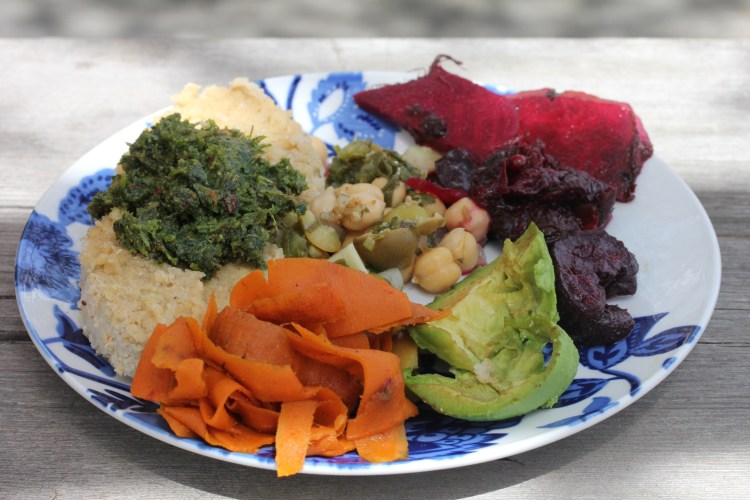
What is salmoriglio? Is is a condiment from Italy that is used as a marinade or sauce. Thinned it can be used in a dressing, thickened it can be used more like pesto. The base is olive oil, lemon juice, salt, garlic and fresh herbs. It can be used to tenderize meats/seafood/protein before grilling, to baste vegetables before roasting, as a spread in a sandwich, or mixed into grains. It has a fresh and sour taste, reminding me a lot of chimichurri or harissa. A jar of it can be stored in the refrigerator for months. One can use add any combination of leafy, mineral rich herbs or foraged plants including-arugula, chickweed, nettle, lovage, borage, purslane, lambs quarters, plantain, mallow, dock, sorrel, chicory, violet, catnip, lemon balm, nasturtium, marjoram, feverfew, sage, tarragon, hyssop, red clover, thyme, mint, yarrow, and miners lettuce. I even saw an on-line salmoriglio recipe with monarda. My additions were dandelion and fennel.
Salmoriglio
1 cup of fresh dandelion leaves coarsely chopped
1 cup of fresh parsley coarsely chopped
1 cup of fresh cilantro coarsely chopped
1/4 -1/2 of high quality olive oil
1/2 tsp of smoked salt
1/2 tsp of ground pink peppercorns
1 tsp of ground dried coriander seeds
1 TBPS finely chopped fresh fennel leaves
2 TBSP of fresh chives finely chopped (or garlic)
2 TBSP of fresh oregano finely chopped
Juice and zest of a small lemon
Combine all ingredients in a blender or food processor. Pulse until your desired consistency is reached. Can be thinned with water or a high quality vinegar. Leftovers can be place in a clean canning jar and stored in the refrigerator.
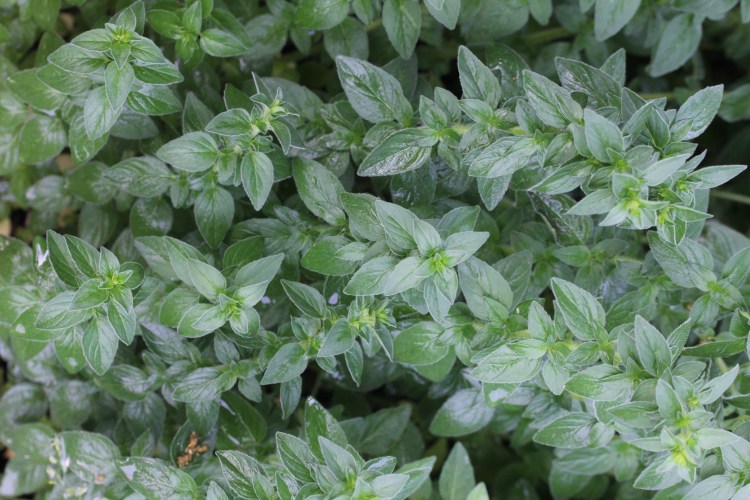
As a member of the mint family oregano/wild marjoram has its own aromatic essential oils. It is a common perennial found all over the world. Lots of small, ovate shaped, gray/green leaves grow oppositely on a single, downy, square stem (sometimes purplish). These are dotted with very small depressions. This plant grows about 24 inches high. Numerous, tiny ,two lipped white flowers ( with pink or purple tints) grow on erect, terminal clusters. Oregano often appears to grow as a bush shaped patch. It will thrive in just about any soil, tolerates drought, and prefers full sun.
Many older classic herbals leave this herb out as it is more known for culinary use in the US. If you wish to dig deep into the medicinal uses of Oregano you might consider resources originating from Hispanic cultures and countries. Here you will see it used for “cold invasion” or a more bile/pitta constitution. Oregano is gaining more popularity in the west for its antiseptic/antiviral and vasodilating properties. Historically this plant has been used to treat childhood illnesses, headaches, the flu, fever, colds, bronchitis, and asthma. It may help with digestive issues such as colic, gas, indigestion, nausea, vomiting, poor appetite, and parasites. Some herbalists have used it for problems related to menstruation, cramps, headaches, earache, insomnia, inflammation and high cholesterol. Externally it is used as a liniment, poultice, or compress for sprains, injuries, swelling, pain, itchy skin, animal or insect bites/stings, dizziness, and bruising. When inhaled as steam it can help clear and open the lungs, relieving a bad cough. In Hispanic cultures oregano is a popular remedy for conditions of a “spiritual” nature where it might be used in a ritual spray, bath or cleansing.
Latin Name: Origanum vulgare
Botanic Family: Lamiaceae/Mint
Parts Used: leaves
Energetics:pungent, bitter, warm, dry
Element: air
Contraindications: avoid all but culinary use during pregnancy
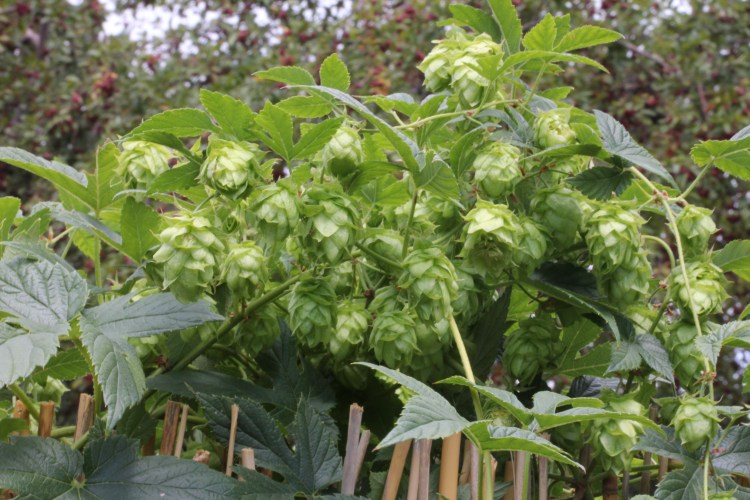
Last summer I harvested a bumper crop of hops. I was never a fan of this herb until I grew my own. My dried hops is nothing like what I have purchased in a store or on-line. Because I timed the harvest just right and dried the cones properly, I ended up with a product that was brilliant green and so fragrant. I was able to achieve its true taste and aromatics without the bitterness. There were notes of pine, citrus and florals. I quickly became very fond of my hops based morning chai. It is now almost a year later and the dream pillow I made with this plant still smell heavenly.
I used my creative super powers to find several ways to use up my bounty. This culinary oil is superb on roasted vegetables, starches or grains, grilled meats or proteins, and savory stews or soups. Such a simple and quick way to impress guests. A bottle of this oil makes a very attractive hostess gift.
Hops Culinary Oil
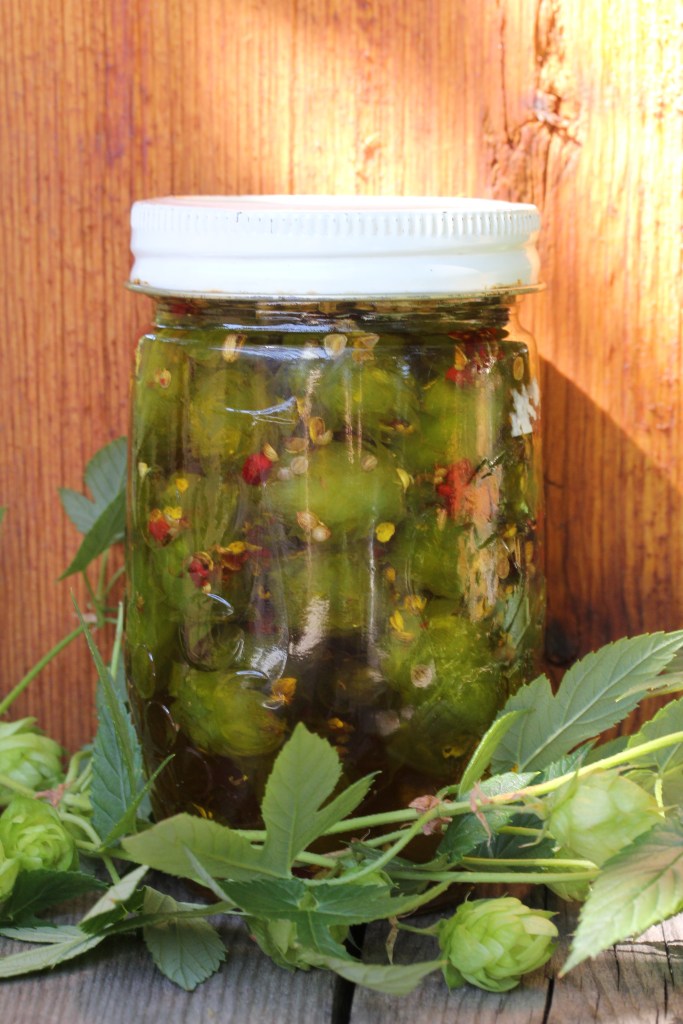
Loosely fill a pint canning jar 1/2 way with hops cones. Grind 1 TBSP of pink pepper corns and 1 TBSP of coriander seed in a mortar and pestle. Add to your jar. Fill with high quality virgin olive oil, stir, let settle and tap on a counter to release bubbles. Top with more oil if necessary. Store in a cool, dry, and dark place. There is no need to strain this oil.
In spring the perennial rootstock of hops will send up several spiny, woody, angular stems/shoots that can be up to 20 ft. long. These “vines” like to climb, twist and attach. Hops is known for its “aggressive” and smothering growth. Leaves are darker green, rough, cordate, serrate, opposite, palmate, with 3-5 lobes. These grow on long stems from off of the vines. Flowers are quite small, without petals, and grow in clusters on separate plants. Male flowers are small panicles/racemes appearing early in the summer. Female flowers, are catkins. These grow in size to form numerous, larger, vibrant green, highly aromatic “flowers”/strobiles with overlapping layers of bracts/scales (technically a cone shape fruit). Hops can be found growing in hedges, in the woods and sometimes along a stream as it prefers damp soil. It does well cultivated in the garden.
Hops has been used to treat insomnia, stress, muscle tension, anxiety, restlessness, hyperactivity, headaches, pain, fever, low milk supply, mastitis, menstrual problems due to low estrogen, hot flashes, menopausal symptoms, poor appetite, diarrhea, gas, IBS, Chrone’s disease, inflammation, digestive tract infection, ulcers, and rheumatism . As a bitter, it supports the liver, spleen and digestive system. Hops is a good diuretic for several conditions like cystitis, edema/water retention and kidney stones. Its antispasmodic properties make it useful for coughs and gastrointestinal spasm. Externally it has been used to treat dandruff, eczema, acne, boils, rough skin, rashes, growths, sprains, abscesses, bruises and wounds. A poultice can be helpful for headache and earache. The vines have been used to make cord, cloth and paper just like hemp which is in the same botanical family. Hops could also be used as a source of pectin.
Latin name: Humulus lupulus
Botanical Family: Cannabidacae
Parts Used: female cones/strobiles “flowers”
Energetics: cold, dry, bitter, pungent
Element: air
Spiritual Uses: To support our efforts when we need to achieve a goal. Helps us to develop patience, cooperation and perseverance. Some things take a long time to manifest. Be open and receptive as often the unexpected/unwanted can be the most beneficial to us in the moment. Reminds us that giving and receiving must come from the heart. Encourages us to share ourselves with the community. But with the caution that any gift should be truly needed and requested by the receiver. This prevents energy depletion and resentment. Calming when one fears loss. Sometimes we need to loose everything in order to gain what we most want.
Contraindications: Do not use during pregnancy. Because of its sedative effect hops may not be appropriate for those with a history of depression or the use of prescription sedatives. Can cause contact dermatitis or eye irritation in sensitive individuals. Dried hops that are several months old will have a stimulating effect. This herb has a history of suppressing menstruation in women and sex drive in men. Many not support those struggling with infertility. Prolonged high doses may stress the kidneys.
I bought my first oracle/tarot deck when I was 12 years old. This coincided with when I planted my first backyard herb garden. I wrote my own tarot card book in my 20’s. Did the entire Major Arcana and some of the Minor Arcana as photographs for an exhibition in college. Doing readings for myself or others was never that appealing. Instead I was attracted to the imagery and symbolism as an artist. My studies in anthropology and art history also led to an exploration of our cross cultural collective unconscious. I frequently moved in my 30’s and 40’s. That book and deck disappeared.
A local bookstore has an incredible selection of decks. I was entranced by all the interesting artwork and new interpretations. I noticed one that featured medicinal herbs. Without much thought, I spontaneously purchased it. As I went through the cards and read the guide book, interesting possibilities came to mind. Were there other plant based decks out there? The herbalist and botanical artist in me had to know. I started researching on-line and found over a dozen botanically influenced decks. I purchased the ones that seemed the most interesting and useful to me. Oracle decks are pretty trendy right now. A popular way to get your artwork out there. You can publish multiple decks with a different theme without having to do much research or acquire any lived experience with the decks or their content.
There are many ways an herbalist can use tarot or oracle decks a a study tool for understanding medicinal plants at a deeper level. Here are some ideas that I came up with.
To study the magical, historical, spiritual, and symbolic uses of the plants by using information in the included guidebooks.
2) As encouragement and support for observing and drawing the physical form of an herb.
3) To investigate the doctrine of signatures as a learning and prescribing tool
4) To learn about non Western herbal traditions and the use of flower essences.
5) As a path to explore plant spirt medicine or as an aid in a plant journey/dieta.
6) As a way to investigate the meaning of dreams, archetypes or knowledge from the collective unconscious.
7) As a way to support meditation or your own artistic expression.
8) As a way to get insight about a situation or for another as part of a treatment protocol. When a client is stuck and not showing change in health, the cards may guide you to a better choice in regards to an herb and how to take it.
9) As attractive “flashcards” for your studies
10) As a game or activity with young children when trying to teach them about the uses or how to ID plants.
Oracle Deck Reviews
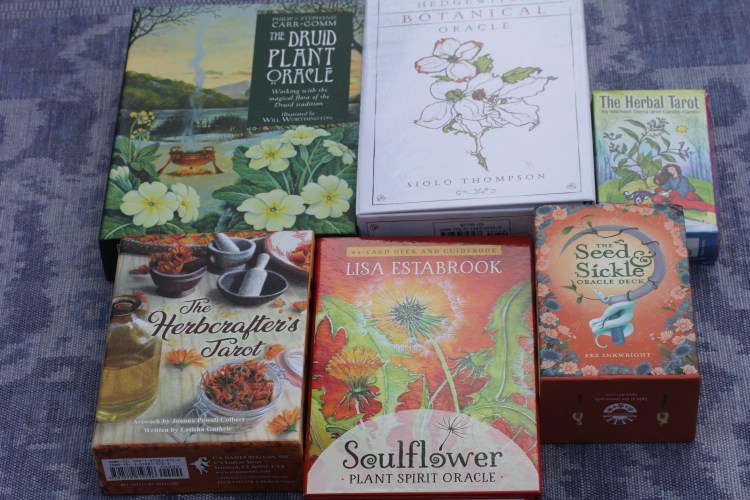
The Druid Plant Oracle by Phillip and Stephanie Carr-Gomm ,Will Worthington (artist). 36 cards. No suits or Arcanas (not traditional Tarot structure). Reversals. Guidebook included. Most of the cards are medicinal plants. There is a brief plant description to supplement the gorgeous, detailed and botanically accurate artwork. Magical/spiritual uses of the plant are included, based in contemporary use or folklore/mythology. There is very little information on how these plants were used medicinally in the past or currently. The plants featured are common to Europe (most native), specifically the British Isles. Plants found growing wildly in meadows, hedges and woods. World view is modern Druidic/pagan. This deck is part of a series done by the illustrator and writer.
Soulflower Plant Spirit Oracle by Lisa Estabrook. 44 cards. No suits or Arcanas (not traditional tarot structure). No reversals. Guidebook included. About half the cards are medicinal plants, many are flower essences. Most are common cultivars found in backyard gardens. The dreamy artwork is loosely realistic, not ideal for plant identification. There are no plant descriptions or information about medicinal use. World view is New Age with lots of suggested affirmations and positive word prompts. The guidebook reads like a flower essence manual. The author has spent time doing “plant journeys” to inform her knowledge.
Seed and Sickle Oracle Deck by Fez Inkwright. 54 botanical cards plus 2 more cards, Seed (potential growth) and Sickle (harvest/fruition). Cards are further categorized into 4 seasons. Reversals are optional. A wide variety of plants that are food, medicine, trees, flowers. Some are toxic and would only be used “energetically”. Many are also flower essences. Most are commonly found in the US. and Europe. Two guidebooks included that allow you to read the included cards in different ways in relation to 1)Dawn (solar) is for expansive energy where there are external opportunities to be related to your question. 2) Dusk (lunar) for contractive, internal energy where there are more personal things related to your question. Each booklet ends with several interesting spread ideas further related to cycles and seasons. I bought this deck for the artwork. The color palette, composition, graphic stylization, and interesting symbols. The cards remind of woodblock prints. You won’t see information to help you with plant identification or about their medicinal uses. There is a bit of global folklore. But mostly lots of helpful guidance and support to encourage reflection in regards to your inquiry. Worldview-is neutral and inclusive of all spiritual outlooks. The creator has done other decks and books about plants.
Hedgewitch Botanical Oracle by Siolo Thompson. 40 cards. No suits or Arcanas (not traditional Tarot structure). No reversals. Guidebook included. Botanically accurate. Possibly enough detail to use in the field to identify plants. Lisa does illustrate a limited number of important scientific features/details for some plants along with binomial and other common names. A very brief plant description is included. The medicinal uses (when included) are very basic . Some of the plants could only be used as food, a couple are toxic. You would find the chosen plants common to the recovering woods of the Eastern US. A few might be in your garden. Most of the information in her descriptions relates to folklore and culinary use. There are some nice recipes included throughout the guidebook. I feel like this project came from researching a little on a lot of things and very little actual lived experience with the plants or their varied uses. Worldview-New Age/American Wiccan, truly meant to be used as an oracle/for personal insight. The author has done other decks
The Herbcrafter’s Tarot by Latisha Guthrie, Joanna Powell Colbert (artist). 77 cards. This deck is full of traditional tarot card symbols, archetypes, and structure. All the court cards/Major Arcana are “female” representing life stage archetypes. The suits/Minor Arcana are based in the 4 elements of earth, water, air and fire. No reversals. Information contained in the included guidebook lists-binomial name, affirmations/word prompts, a detailed description of the symbolism in each card and fun ways to use the plants in real life. Scientific details or medicinal use is so basic as to not be very useful to the knowledgeable. It is more or less trivia. The featured herbs are common medicinal plants found easily in different US ecosystems. The backgrounds are copied from photos taken in the unique growing enviroments of the chosen plants. The artwork is lovely, dense with symbolism and mystery. There is definitely a sense of season, place, time, and mood in these images. World view is Curanderismo (traditional medicine/culture of Mexico, South America, and the Southwestern US) and contemporary Druid. This deck is primarily lots of well meaning advice about emotional self care. This is by far my favorite deck ever, for lots of reasons.
Herbal Tarot by Michael Tierra, Candis Cantin (artist). 77 cards. The deck can be purchased with the guidebook or not. Honestly one could not buy the deck at all. Very traditional interpretation of the tarot. A close copy of the well known Rider Waite deck down to the artistic style, compositions, and symbolism. The artwork is not particularly inspiring. This guidebook is probably the most useful for herbalists compared to all the others discussed. Includes information on the four elements, planets, constellations, binomial names, a nice herbal medicine glossary, and lots of spreads to choose from. Each herb card has good and detailed information concerning the spiritual properties, medicinal properties, dosage, and preparations of a wide selection of Western, Ayurvedic and Chinese herbs. Also included are sections for key words, affirmations and herbal allies. There is an extensive description of the imagery and symbols found in the artwork of each card. This deck and book pair well with Michael Tierra’s book The Way Herbs. Worldview-non Western and new age.
Decks not featured/purchased- The Herbal Astrology Oracle, Green Witch Oracle Cards, The Witches Apothecary, Mushroom Spirit Oracle, Midnight Magic Mushroom Tarot Deck, The Magikal Botanical Oracle, Oracle of Roses, Flowers Oracle, 50 Plants That Heal: Discover Medicinal Plants That Heal Card Deck, Herbs and Medicinal Plants: The Academy of Natural Sciences and Knowledge Cards, The Illustrated Herbiary Oracle Cards, The Herbal Healing Deck, Celtic Tree Oracle, Voice of Trees Deck, Tree Spirit Tarot, The Tree Angel Oracle Deck, Oracle of the Trees, The Wisdom of Trees Oracle, Roots :A Ogham Book and Oracle Deck Set, Houseplant Tarot, There are also two pot/cannabis decks. Two of the decks in this list are not oracle/tarot but rather serve like study flashcards or “notes”.
Most decks have a guidebook with all kinds of information which may or may not prove useful to you. It depends on how you want to use the cards and what you already know. I find some “worldviews” a turnoff. Instead I let the artwork or symbols (if included) speak to me. instead of checking in with the book. Do I get a sense of the “personality” of the plant from how it was depicted? What meaning, connection, or inspiration comes as I view the cards? I went through each individual deck pulling out my favorite cards. Next I tried to make sure that I had no doubles and that all individual herbs were included. In a sense I made a master deck from all the ones purchased. Obviously I can’t shuffle it as one unit. So I tend to use it in parts based on my mood or needs at the time. One could read through all the guidebooks when pondering a particular card to get multiple takes on what it might be trying to inform you about.
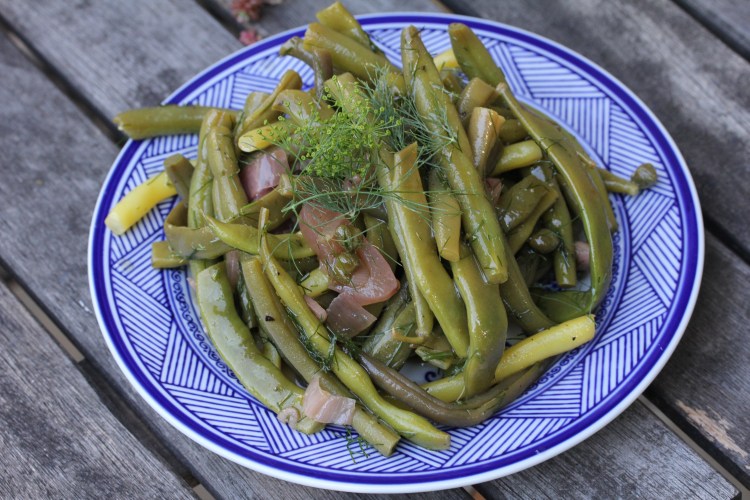
It feels like spring when asparagus or green bean are fresh and plentiful in the grocery stores. If you live in a climate where dill overwinters or you have a “mother” plant that has come back once again in even greater size and glory, you might have something to harvest now. Let this post inspire a visit to the garden to take inventory of those herbs making an appearance. This is one of my go to recipes for unexpected guests. It dresses up a basic dinner of rice, green salad and protein.
Green Bean Salad With Dill
2 TBSP of capers
2 TBSP of finely chopped pickled/fermented red onion
3 TBSP of finely chopped fresh dill weed
Salt and pepper to taste
3 TBSP of olive oil
3 TBSP of the seasoned vinegar of your choice
3 cups of just cooked green beans. You will want to remove the ends before steaming and pay attention to that sweet spot when they are just done.
You can serve this side dish warm or chill it overnight to allow the flavors to blend and intensify. Mix all of the ingredients in a large bowl and stir well. Garnish will generous portions of dill weed.
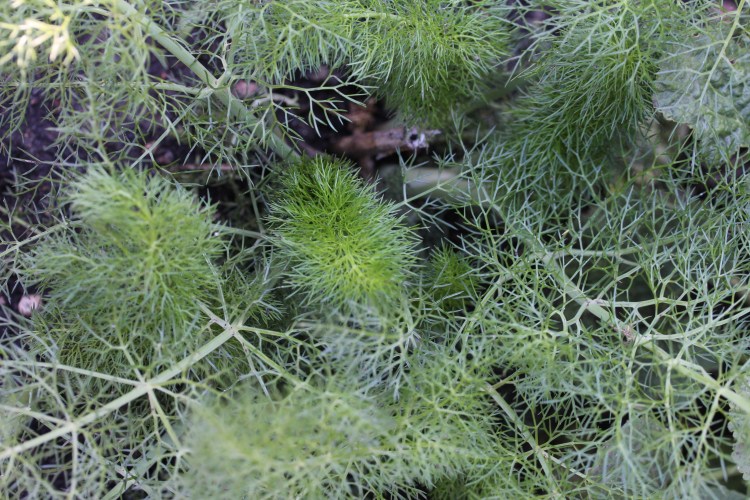
Fennel
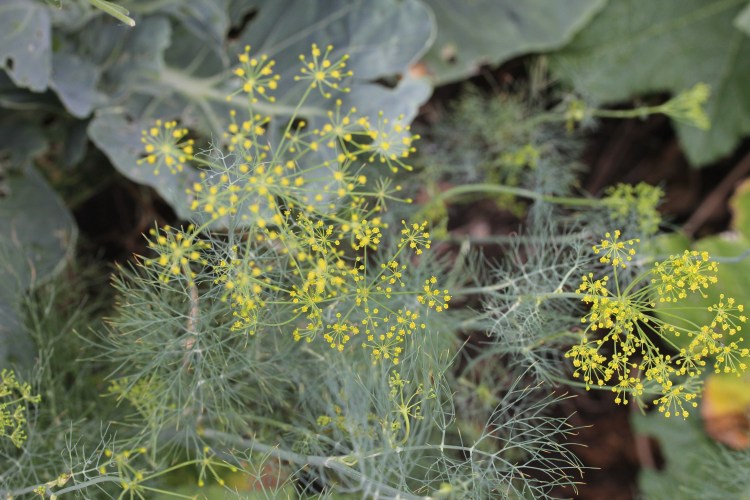
Dill is typically an annual plant, sometimes biennial. It has a hollow, finely grooved stem that grows 1-3 feet high. This appears striped green with dull light blue areas. Leaves are bluish green, bipinnate, with filiform leaflets. Each leaf dilates at its base to wrap around and join the the stem as a sheath. The flowers are flat compound umbels of tiny yellow flowers that mature into narrow, oval, ribbed seeds.
Historically this plant has been used to treat colic, heartburn, hiccups, stomach cramps/ache, gas, low appetite, indigestion, diarrhea, insomnia, low breast milk supply, colds, flu/viruses, coughs/congested lungs, bad breath, and nightmares. It regulates metabolism, increases circulation and moves stagnation. It has been used as a wash externally to treat lice and hemorrhoids.
Spiritual/Emotional uses: Supports the ability to let go and make a new start in life. Allows us to have a fresh point view and generate innovative ideas. Brings clarity, focus, optimism, energy, and attention to goals and projects that are in their beginning stages.
Contraindications: Although mild enough to use with infants, this plant should not be used medicinally in pregnancy due to its high levels of volatile oils.
This blog is a lot of work. I have to remind myself of the true return I continue to get from doing it. I am forced to research, learn, and be creative when it comes to the more “humble” plants around me. As I find more ways to use what grows in my backyard as food or medicine, I support the values that I hold dear. I model a lifestyle that is local, affordable, environmental, and sustainable. My knowledge base continues to grow and expand. After more than 40 years I am still surprised when I make an important new discovery.


 Blackbird's Backyard Pharmacy