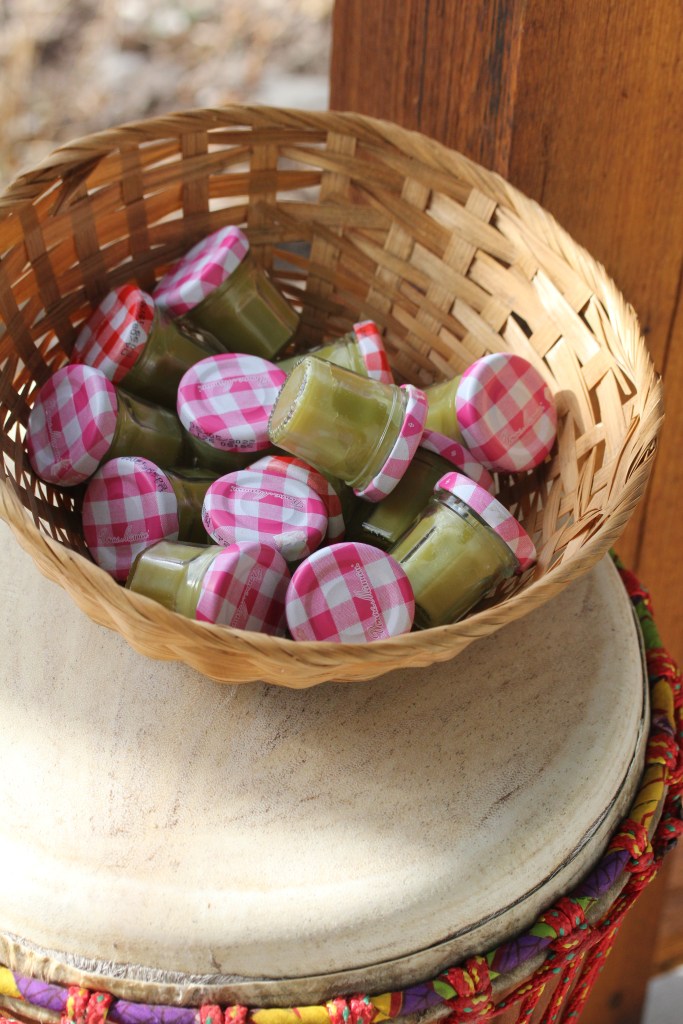
My husband and I started taking a djembe drumming class a few months ago. It has helped us to feel less isolated and meet people over the age of 45. Our teacher is great fun and so creative. I can’t leave the circle without having experienced lots of laughter. We are now advanced beginners and have purchased our first drum. This allows more regular practice to be done at home. With more progress comes sore hands. I created this salve for myself and fellow drummers. I was fortunate to find some cute drum shaped jars down in my basement too.
I made an oil infusion of Arnica flowers, Poplar buds, Skullcap tops, Mugwort tops , St. John’s wort flowers, and Comfrey leaves. As I made the salve I added a small amount of my pain, exercise, arthritis, and muscle rub formulas.
Latin Name: Arnica montana
Botanical Family: Compositae/aster
Parts used: flower heads
Energetics: warming
Emotional/Spiritual uses: for any kind trauma. To prevent disassociation. To support the release of shock when there has been an accident or violent experience so that the energy does not become locked in the body or repeated in “cycles” of fight/flight/freeze unconsciously. To encourage healing, recovery, and soul embodiment after “loss”.
Contraindications: Most herbalists consider this plant for external use only, on unbroken skin. It is considered poisonous internally except in its homeopathic form. May cause a rash in sensitive individuals.
Arnica is a perennial plant found in the mountains of Canada and the US. It is often found growing underneath trees in the conifer family. The rootstock/rhizome is horizontal, dark brown/black, slender and branches into numerous filiform roots. The simple, erect, hairy, rough, striated stem can grow 6-12 inches high. Basal leaves have short petioles, are 2-3 inches long, opposite, and have an oblong/ovate shape. Upper leaves are smaller and have a sessile attachment on the stem possibly at the base of one pair of opposite branches. 1-9 yellow, daisy like flower heads appear during summer. The 15 ray flowers are notched on the outer tips, while the disk flowers form a yellow center. Arnica blooms in July or August.
Historically this plant has been used to make a liniment for aching joints, sore muscles, strains, broken bones, injuries, rheumatism, swollen feet and inflammation. It can be used as a poultice/compress on the stomach to relieve abdominal discomfort or for a headache. A salve can be used on chapped lips, inflamed nostrils, and bruises. Arnica dilates blood vessels near the skin’s surface improving circulation to the injured area.
Ritual and connection are important nourishment for the human spirit. I was torn on which title to choose for this blog post. I am not trained in the ceremonial use of cacao. When I use this plant in a sacred way, I am doing so in the spirit of a Japanese tea ceremony. Cacao is special gift from our mother earth. There are some things to keep in mind when drinking it.
Cacao is considered by many to be plant spirit medicine. It must be treated with respect. Please consider your own spiritual/cultural traditions when using and handling this herb. You might say prayers, utilize special utensils, or engage in other practices when preparing it. I use this cacao beverage when doing self care and for connecting with my daughters. For my family it is a very private and intimate thing. I feel fortunate to have found a drink that I can consume in a ritual context, especially with my kids. Many of the obvious ones I can’t imbibe for various reasons.
I like to add small amounts of medicinal plants to my cacao formula. I chose herbs for their flavor, digestive/organ support, “spiritual” qualities, energetics (warming, sweet, and stimulating) and individual roles as powerful emotional allies. Dandelion supports the liver in its job to remove toxins. This seems like a good choice when there is a concern with heavy metal build up in the body.
Cacao is contains iron, magnesium, and antioxidants. It is thought to open the heart and promote a relaxed mood. The seed pod of this plant is processed to make what the world knows as chocolate.
CULTURAL APPROPRIATION: cacao is drunk and eaten in various forms worldwide. Cacao grows as a native plant in several places in Central and South America. It has be exported and cultivated as far away as Africa. We know that cacao was consumed by certain cultural groups in the historical past but it is unclear as to exactly when and to what extent it was used in a ritual context. You can encounter modern “cacao ceremonies” while on retreat or in a spiritual context globally. We know that it was used by the Maya as money, food, and medicine. When purchasing and using it, I try to be mindful of the source and treatment of the plant. I give thanks to the people who live where it is grown and to those who harvest it. Colonialism, exploitation, conservation, and ethics need to be considered when using this plant in a sacred “space” with groups.
CONTRAINDICATIONS: avoid large amounts of cacao in the cases of heart disease/conditions, high blood pressure, pregnancy, epilepsy, or the use of anti-depressants.
HEAVY METAL WARNING: Over time as it grows and as it dries on the ground, cacao takes in lead, aluminum and cadmium. Enough that there are now warnings and concerns with its use. Please do your research and use appropriately. Once a week is probably not a concern. The Navitas brand claims to have low levels of these heavy metals. Cacao grown and processed in Africa is also testing lower in heavy metals.
Sacred Cacao Drink
2 cups of high quality unsweetened organic, fair trade, fermented (not heated) cacao powder. I choose powder over the “ceremonial grade” blocks for many reasons.
2 TBSP each of dried and finely ground-orange peel, tulsi leaf, and rose petals.
1 TBSP of dried and finely ground-fennel seeds
1/2 tsp each of powdered-star anise, nutmeg, cardamon, cinnamon
Place all ingredients in a large bowl. Mix very well. Store in a cool, dark place, in a very special jar.
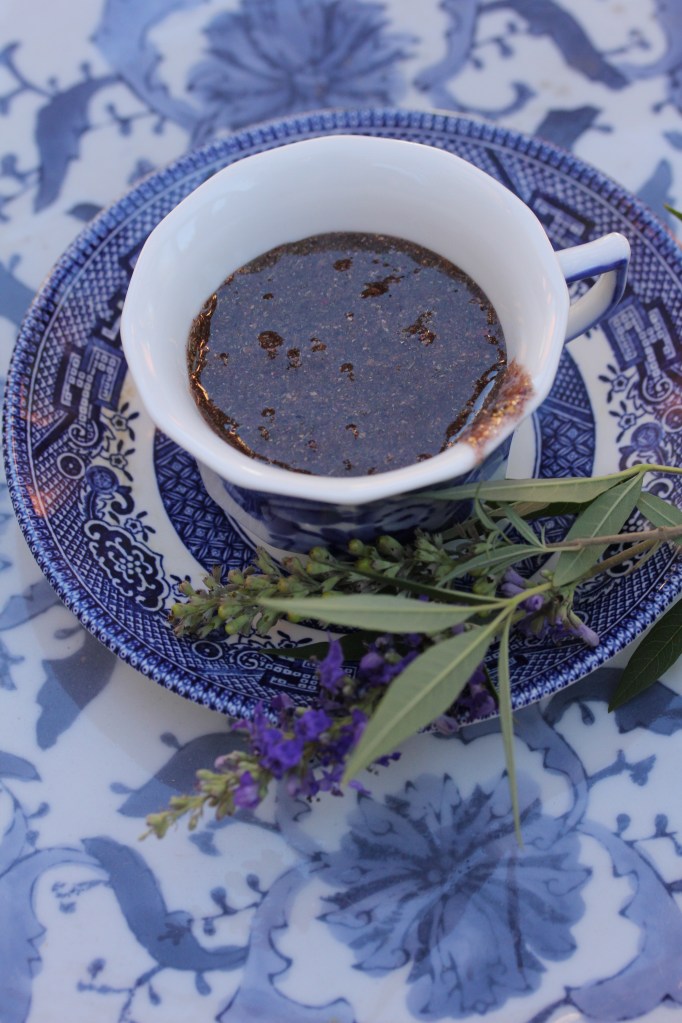
To prepare you can use a blender, milk frother or whisk. You can also use a wooden tool such as molinillo or a bamboo matcha whisk. I add 2 level TBSP of powder to 1 cup of dandelion root infusion. Then use the whisk/frothing method of my choosing. I find that with the addition of the other herbs that I do not need to use sweetener. Milk is not traditional but it protects the stomach from any tannins in the cacao and makes it taste better to my girls.
I start my cacao ceremony by setting out a special tray, tea pot, my favorite tea cups and other utensils. I dispense and hand grind the powder to release the volatile oils and lovely scent. I want this to be a sensory experience. As I grind I recite blessings and prayers of gratitude. I heat the water and make my dandelion root infusion. I add this to a nice large bowl, with the powder and whisk using the bamboo matcha tool. I add heated milk and whisk until my beverage is quite frothy. I pour this into my teapot and serve. I often read poetry or other things to my daughters as we savor the beverage slowly and consciously.
Latin Name: Taraxacum officinaleFamily: AsterSubfamily: Cichoriodeae/Chickory
Taraxacum has yellow ray flowers that overlap all the way to the center. There is no round disk in the center like other plants in the aster family. The “petals” are straight and do not taper. It has bracts/modified leaves where the stem joins the flower instead of sepals. It has a hollow, round stem full of a white, latex like, sticky sap.There are related plants that look like dandelion (sap, yellow flowers etc.) BUT Dandelion has a reddish green , non branching stem that is 2-6 inches long (sometimes 18). The leaves do not grow off the stem, instead they grow around the base in a ring. There is one flower per stem .The leaves are very serrated like teeth , they get broader towards the top before ending in a point. Nothing about a dandelion is prickly or hairy. Single seeds look like a tiny parachute but together form a white fluffy ball.Habitat-lawns, parks, fields, waste land. Dandelion likes poor soil. Blooms and makes seeds all year round. One of the first flowering plants to appear in spring.Growing:will grown anywhere. Self seeds. No need to cultivate, it is an invasive but useful weed.Edible parts:Root, leaves, flower heads.Harvesting:Dandelion roots and leaves are most bitter in the spring, this is also when they have most medicinal qualities. Plants growing in the shade may be less bitter. Pick flowers mid morning when they are dry and have reached their biggest size. Wash well, the root may need to be scrubbed with a brush. When picking be aware of contamination from pets and pesticides/herbicides. Watch for bees, it is their favorite source of food right in the early spring.
Historically Dandelion has been used as a diuretic (water retention) and laxative (constipation). As a tonic it cleanses the blood/tissues/organs of wastes/toxins and clears heat. Dandelion is useful for skin disorders (acne, cysts, fibroids, poison ivy, rashes, eczema, abscesses etc.), hay fever, candida, allergies, varicose veins, gout, rheumatism, and weight loss. It cools heat (fever) , stimulates the immune system, and removes infection ( sinusitis, bronchitis, mastitis, hepatitis, herpes, and mono just to name a few) Internally Dandelion is best known for its action (astringent, tonic, stimulant) ) on the digestive system (gas, indigestion, appetite loss, heartburn, ulcers) the bladder ( urinary tract infection) liver (jaundice, cirrhosis) and gallbladder (gallstones) pancreas, spleen, and kidneys (kidney stones). Internally the flowers can be used for pain/anti-inflammatory (arthritis, cramps, headaches, and backache). Externally the flowers can be used for wounds and fungal infections. The sap from the stem is thought to remove warts.
Culinary uses- coffee substitute, wine, beer, syrup, jelly, baked goods, stir fry, juiced, pickles, and salad green just to name a few. Herbal products products-tea/infusion, tincture, oil/salve. The fresh leaves can be added to salads and soups or the dried to condiments to add a mineral source to the diet.
Emotional/Spiritual Use-for cleansing, rejuvenation, reflection, stress/tension, fear, or hesitation. Promotes trust, openness, balance, ease and relaxation in those who overdue it or have perfectionist tendencies.
Parts Used: leaves, flowers, root
Energetics: bitter, sweet, cold, moist
Element: Air
Contraindications: safe during pregnancy and nursing in small amounts. Because it is in the aster family, it may cause allergic reaction in people sensitive to those kinds of plants. The sap may cause contact dermatitis.
This was my year to experiment with honey as a medicinal base. I have used it in a burn ointment, to make floral infusions, and as electuaries. What is an electuary? It is a powdered herb mixed with raw honey. The texture can vary from more like a syrup when less powder has been added and the honey used is warmed and runny. Or it can be thick paste that can be rolled into pills or lozenges. Infused honey is usually made with fresh flowers or aromatic herbs that are later strained out. With an electuary you can leave the herb mixed in and consume it together. Electuaries are a great way to consume dried roots, barks, seeds or berries that can be quite coarse and starchy. I like them as daily “tonics” for things like digestion, thyroid issues, or menopause. Honey makes a fantastic preservative. I can store a large amount of product in my refrigerator for months without spoiling.
My electuaries tend to contain herbs that are course and don’t make a fine powder. I often prefer ingredients that are high in volatile oils. Often “taste” is an important part of an herb’s action, especially when it serves to improve digestion or move stagnation. My base powder for this formula contains herbs known to support the healthy function of heart, liver, kidney, and spleen/stomach/intestines. It provides minerals to maintain bone density. There are herbs that are a source of vitamin C or improve immune system function . Lastly there are plant allies to smooth the journey of menopause as hormone levels change and adjust to a new normal.
Menopausal Electuary
Make a base powder first.
You need 1 heapingTBSP each, finely powdered, of the following dried herbs. I like to use a standard coffee/spice grinder for this.
burdock root, hyssop tops (leaves and flowers), hibiscus flowers, fennel seed, hops “flowers”, echinacea tops (flowers and leaves), horsetail, sage, and nettles. Once measured, add all to a small bowl and set aside.
2 TBSP dried chaste tree berries. Make these into a fine powder and add to your bowl.
Lastly you will need to make 2 TBSP of powder from dried, whole, red clover blossoms. Add to your bowl.
Fill a very clean 4 oz. canning jar 1/2 full of very clear , room temperature, runny honey.
Add two TBSP of your base powder to the jar. Mix well to remove lumps and create a smooth, evenly mixed product. Top the jar with more honey and mix. Seal tightly.
Store the jar and any unused powder in a cool, dark, place. Avoid crystals in your electuary by using very clean utensils to dispense. You can whip it if it separates.
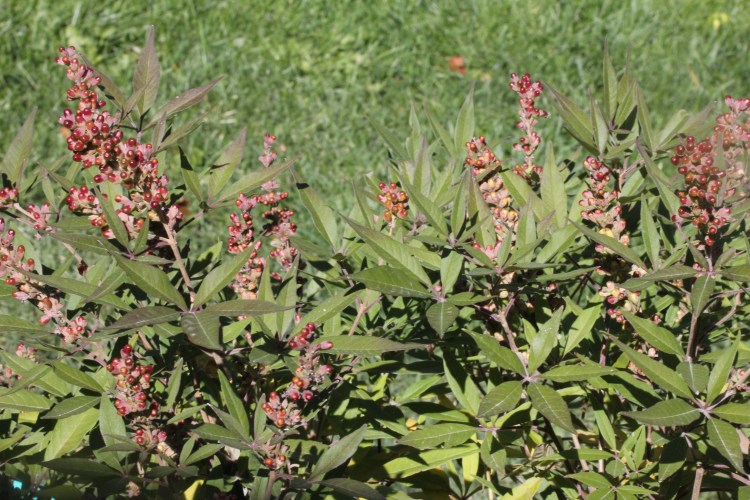
Chaste tree/Vitex does not thrive in my Colorado garden zone. I can’t buy a bush here and actually had to bring one up from New Mexico where it is commonly grown. In my yard it is a very late bloomer. By the time that berries could be ripe, drying, and ready to harvest they have already been damaged by low temperatures. So while I can enjoy it aesthetically, I can’t use my bush for medicine. I have to order the dried berries from a on-line supplier. Chaste tree is typically consumed as a tincture. An electuary provides another option.
This perennial, ornamental, shrub/bush can grow up to 9 feet high. Aromatic leaves are opposite, palmate with 5 spade shaped, fully separated lobes/leaflets on long stems. These have smooth margins, prominent veins, and are a bluish green. Tiny purple/blue flowers (irregular, tube shaped) grow as long clusters/racemes/spikes at the end of stems. Numerous, “spicy” red berries mature into blue-gray seeds that are similar to peppercorns.
Vitex is thought to regulate the menstrual cycle. Its action on the female hormones has been used to treat PMS (migraines, acne, herpes outbreaks, breast tenderness, fatigue, anxiety, mood swings), water retention, excessive/irregular/prolonged menstrual bleeding, painful menstruation and fibroids. It has a history of milk stimulation when breastfeeding or for organ support in the case of liver and spleen. It tonifies the blood and improves circulation. Herbalists have used this plant for pituitary disfunction, respiratory infection, nausea, indigestion, constipation, stomach cramps, cysts/tumors, endometriosis, infertility, threatened miscarriage, menopause symptoms (depression, hot flashes, irritability, vaginal dryness), rheumatism, arthritis, and fibromyalgia, As a poultice it has been used to treat pain, spasms, weakness and poor circulation in the limbs. Very few of my herbals discuss the use of vitex as medicine. I think it is worth exploring the historical use of this plant more in detail.
Latin name: Vitex agnus-castus
Botanical Family: Verbenaceae/Vervain or Mint/laminaceae
Parts used: the berries/dried seeds
Energetics: bitter, acrid, cool, sweet
Element: air
Spiritual/Emotional uses: to relieve emotional tension. To restore balance and rhythm in life after disruption or change.
Contraindications: none but discontinue use if odd symptoms or reaction occurs. Not recommended during pregnancy or lactation these days.
Spring can not get here fast enough. Sigh, we are still a full month away from the Equinox. This recipe is perfect when you need a reminder of that winter does not last forever. A slice with a cup of herbal tea is lovely as you pour over seed catalogues and dream of those first moments back in the garden. If you want to wait until April or May, consider this dish for a Sunday brunch with special friends and family. This tart is packed full of protein and ingredients that say “spring!” such as leeks, peas, new potatoes, fresh basil (or other herbs). You can experiment by substituting other obvious things such as real ricotta, spinach, capers, or smoked salmon.
Savory Green Tart
Blind bake two pre-made pie shells for 10 minutes at 350. Remove from oven and let cool.
Saute 1/2 of a thinly sliced onion in 1 TBSP of olive oil or butter until soft. Leeks make a great substitute if available.
In another pan, boil 6-10 very small red potatoes for 10 minutes. Remove , cool and slice.
Add the potatoes to your saute pan along with
2 TBSP of pesto
1/4 tsp of salt.
1 cup of cooked white rice
Mix will and set aside.
To a bowl add 1 cup of frozen peas and 1 cup of grated zucchini. Set aside
To a blender add
1/2 cup of milk or dairy substitute
8oz of Pumfu or firm tofu, crumbled
7 oz of vegan or regular feta cheese crumbled
1 pinch of nutmeg
1 cup of chopped fresh basil
Blend until smooth and set aside.
Assemble you tarts in the following order by roughly splitting in half….
potato and rice mixture
pea and zucchini mixture. Press down well with your fingers
green mixture. Spooned in and spread flat with a knife.
Bake in the oven for at 350. Remove, let cool and serve. This tart is best served at room temperature. It gets more solid as it cools. I made two tarts and we enjoyed slices over several days as leftovers for lunch.
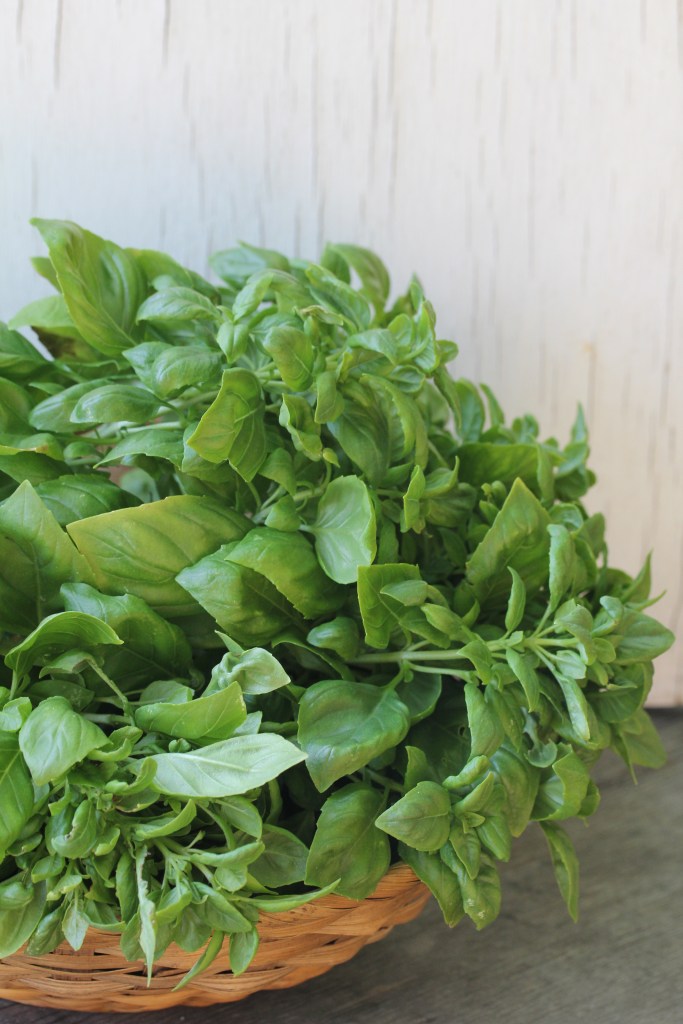
Basil is in the mint family. Typically it is an annual but will overwinter indoors. It is a very common garden herb used as a companion plant and insect repellant. A thin branching root produces several lush square stems growing 1-2 feet high. The leaves can vary from bright to dark green depending on the variety. Some types like Thai basil have purple in their oppositely arranged leaves. Leaves can be oval to spade shaped, toothed or smooth in their margins. Like others in the family, it has lots of small two lipped flowers that grow on racemes/spikes of 2-4 inches. These are a favorite of bumble bees and come in shades of white, red or purple. A distinguishing feature of Ocimum is the smell, similar in all varieties but with slightly different “notes”.
This plant warms, calms, and clears phlegm/damp. Historically basil has been used to treat all manner of digestive complaints such as cramps, vomiting, constipation, gas, low appetite, diarrhea, bacterial infections and inflammation. It stimulates the flow of breast milk, cures a headache, and calms a bad cough. Ocimum has been used for depression, the flu, fever, asthma, retained placenta, fever, anxiety, bronchitis, and fatigue. It works well to support the lungs.
Externally it has helped with acne, bug bites, fungal infections, sore muscles, and arthritis. The essential oils/scent make it useful in aromatherapy, ritual bathing/cleansing, beauty products and as incense.
Latin name: Ocimum basilicum
Parts Used: Leaves and flowers
Energetics:bitter, warm, dry, pungent
Element:Fire
Spiritual/Emotional Uses: Integration, especially when two things seem contrary in nature. May be used to bring luck protection, or blessings to body, home or new relationships. Use it when there is conflict or negative energies in a situation. It is commonly used in ritual baths , especially for the dead.
Contraindications: Avoid large/therapeutic doses in pregnancy
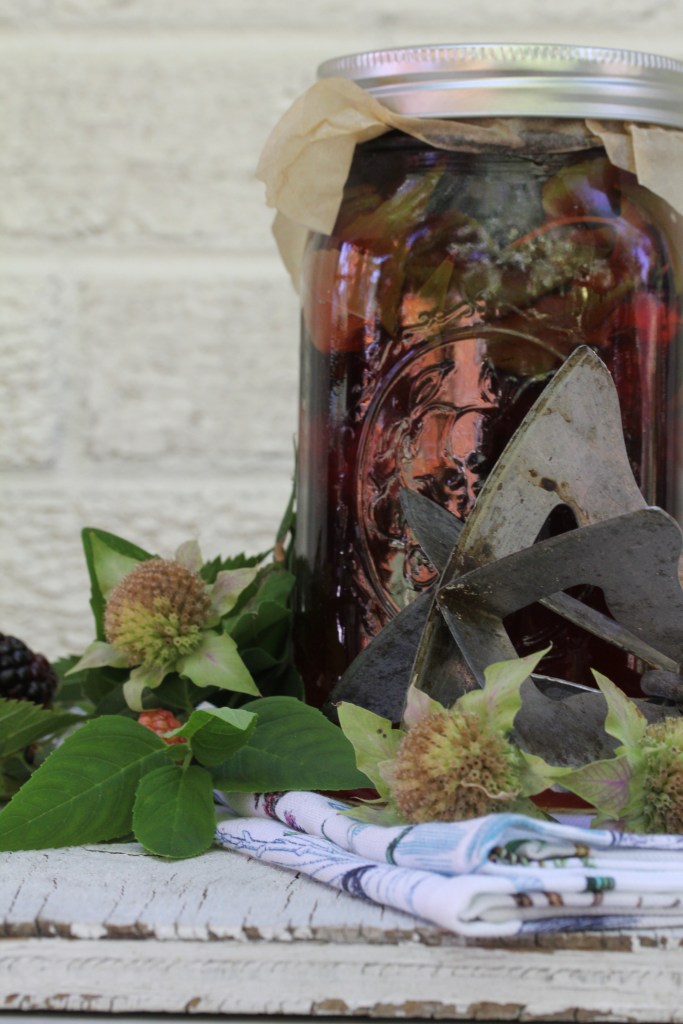
I try to make at least one oxymel a year. I enjoy experimenting with different combinations of fruits and spices. An oxymel is an infusion of herbs into vinegar and honey (see also shrubs, kvass, kombucha, switchels and other similar fermented “sodas”/drinks ). Plants easily give up their vitamins and minerals when added to vinegar. The raw honey serves as a powerful antibiotic when not exposed to heat. The yummy result can be mixed into salad dressing, braises or marinades. A tablespoon added to carbonated water or iced tea makes a refreshing drink. Because of a hiatal hernia I am highly sensitive to both the acid and spices in a typical fire cider. I can safely and comfortably consume a small amount oxymel and some of its health benefits (nutrients, medicinal properties, pro-biotics, and acid).
Monarda and Blackberry Oxymel
I typically start with a large 2 quart canning jar I fill it…
1/4 of the jar with honey
1/4 of the jar with fresh blackberries compacted
1/4 of the jar with apple cider vinegar
1/4 of the jar with fresh wild bergamot ( m. fistulosa) flowers and leaves compacted
Combine all ingredients by gently stirring. Put a piece of plastic wrap or baking parchment between the lid and jar lip. Seal tightly. Let sit six weeks in a a cool dark place. Shake and invert weekly. Press and strain to remove any solids or seeds. Divide up into smaller bottles which can be stored or refrigerated. With proper storage an oxymel will last for at least a year.
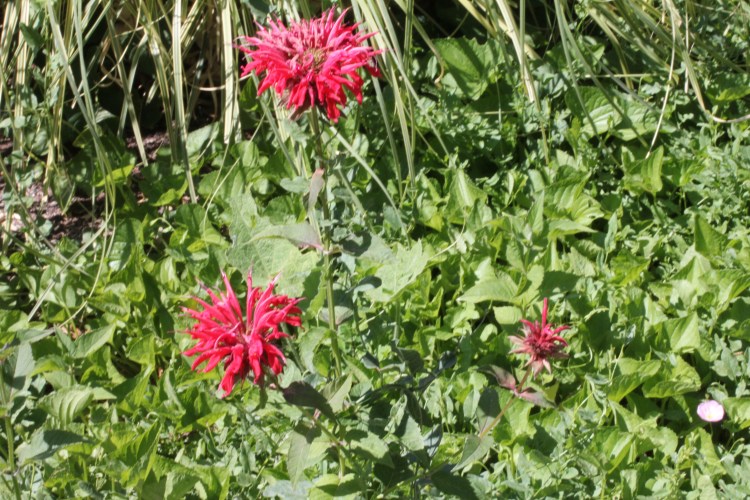
Monarda is a perennial herb that is native to the United States. This herb grows 2-3 feet high. It has opposite, ovate/lanceolate, serrate, deep green leaves. Like all members in the mint family it has square stems. These are hairy, slender and branching. This plant has numerous, tubed shaped, two lipped and irregular flowers with united sepals and petals. These grow in solitary terminal heads/clusters. M. fistulosa has hairier leaves and flower parts and a stronger volatile oil/scent.
Historically monarda has been used to treat, gas, colic, nausea, vomiting, fever, colds, flu, headache, parasites, menstrual cramps, candida, inflammation, sepsis, and stress. Externally it has been used for rashes, burns, wounds, bleeding and rheumatism. As a gargle for sore throats, gum disease, and bad breath. As a steam it loosens phlegm when there is congestion or respiratory infection.
Latin name: Monarda didyma (rose or light purple flowers). Monarda fistulosa (scarlet flowers)
Common names: Oswego tea, bee balm, mountain mint, wild bergamot
Parts used: leaves and flowers
Energetics: cool, astringent
Contraindications: due to the volatile oils do not use in pregnancy.



 Blackbird's Backyard Pharmacy