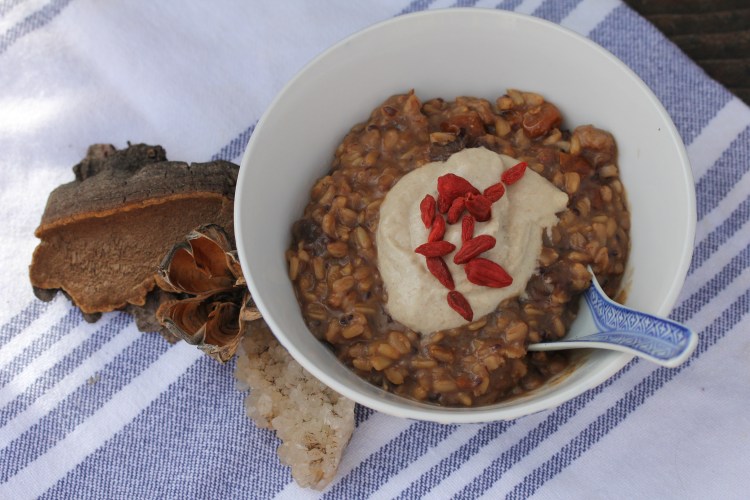
Slow Cooked Oats with Goji Berries

This is the perfect meal for cold winter mornings. Packed with nourishing grains, fat/protein, and sweet dried fruits. If you have to go out for a morning hike, ski, or snowshoe this will set you up for several hours of vigorous exercise. I love that you can quickly throw all the ingredients into the crockpot after dinner, push a button, and wake up to a great breakfast. If you cook for a big group of people, be sure to keep this recipe in mind. It can also be adapted for camping. The ingredients are easy to store and transport.

Last summer I noticed a strange stalk growing from the neighbors yard under my fence. Since he is a doctor of oriental medicine I suspected it might be something interesting. Sure enough I discovered it was Goji. It managed to over winter in our climate, send out many more stalks and produce some lovely berries this year. I have been purchasing the dried berries recently. I like to use them in my rejuvenation pastes. I also eat them by the small hand full when I crave something sweet after dinner. I love the slightly astringent/bitter taste at the end. I find the fresh berries pleasing as well. I look forward to larger harvests through the years and experimenting with this plant. If you have been resistant to using goji, this hot cereal might be the incentive to use this “heal all. In Chinese medicine goji is a popular ingredient in medicinal soups, stews, and porridges.

Slow Cooked Oats with Nuts and Dried Fruit

To a standard crockpot/slow cooker add…

One 8 oz. can of coconut milk with fat

1 cup of water

2 cups of milk of your choice

1/2 cup of goji berries

1/2 cup your choice of dried fruit, diced if needed (raisins, prunes, figs, cranberries, golden berries etc.)

1/2 cup of chopped nuts of your choice (hazelnuts, pecans, walnuts, almonds)

1 ripe banana

1.5 cups of oat groats/steal cut

Cook on low, overnight, in a crock pot.

Sweeetner as desired. Top with yogurt or cashew cream.
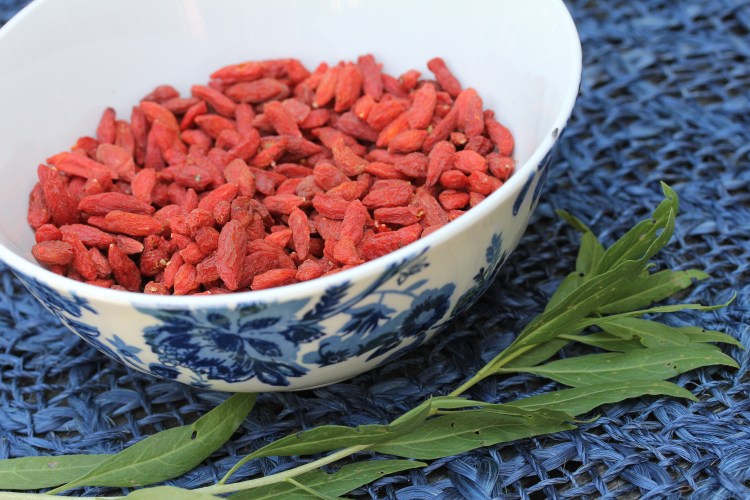
This evergreen/perennial is considered native to Asia but is commonly cultivated in Europe. It is in the nightshade family (ground cherry, tomato, chiles/peppers) The “bush” typically grows from the ground in 6ft long stalk/stems which may have short occasional short branches. These fall over like tomatoes and benefit from being on a trellis. Stems may have spines and have a whitish film, Leaves are medium green, alternate, narrow, spade shaped, with smooth margins. Orange/red berries are drop shaped. Pale purple (greenish) flowers are tube shaped with 5 partially joined petals. Prefers full sun and poor , well drained soil. There is a native variety that grows in the American Southwest (L. pallidum).

Do not confuse with other members of the solanaceae family that have red berries like Solanum dulcamara or americarum which are poisonous.

Lycium is used in both Eastern and Western medicine. You may not find this plant discussed in some of your Western herb books because it is not cultivated much in the US. Goji berries are a great adaptogenic herb for when the body is ill or under stress. As a nutritive herb, the provide support/strength for the liver, kidneys, endocrine system and the “blood”. Lycium helps remove toxins and is considered a Yin tonic. This herb has been used to treat weak muscles/back/ligaments/veins, night sweats, fevers, colds, pneumonia, dizziness, bleeding, inflammation of the bronchial tubes, asthma, hair loss, low blood sugar, infertility, symptoms of hormone imbalance or menopause, tinnitus, vertigo, aging, diabetes, anemia, high blood pressure, varicose veins, poor circulation, fatigue, dry skin/tissues, poor immune system, tumors, impotence and to reverse weight loss associated with cancer or AIDS. They may improve eye health (macular degeneration, cataracts, glaucoma) and sight as they are high in carotenoids, lutein, and flavonoids. When used regularly in the diet, berries can help support the growth of healthy bowel flora and decrease cholesterol levels.

Latin Name: Lycium barbarum/chinensis (most commonly cultivated)

Botanical family: Nightshade/Solanaceae

Parts used: fully ripe or dried berries. The bark and root only by experienced doctors of Oriental Medicine. The immature leaves sometimes in soup.

Energetics: sweet, warm, bitter or neutral, cooling and sour

Element: water

Emotional/spiritual uses:grounding, nourishing, calming, strengthening

Contraindications: acute fever, diarrhea, bloating, “damp” constitution

The Fall Garden Tea (Mint)

In fall (early October) I like to go around the garden before the first frost hits and gather some of my favorite plants. It is a cherished ritual that I use to close out the herbal year. A way of saying goodbye to and thanking “my friends” until I see them again come April. I gather I small amount of those that call out to me. Then I make 2 quarts of tea which I refrigerate and enjoy for the rest of the week. This time I chose Hops, Calendula, Plantain, Marshmallow, Echinacea, Rose hips, Red Raspberry, and Mint. Any “nutritive” herb will work. Today I decided to talk about mint because I have been drinking the tea a lot lately. It has strong volatile oils that that open, clear, and get things moving. This herb is also a great choice if you have a condition that requires a cooling action. Here is is early and I can still find small fresh amounts of it growing in the garden. At the moment Mint likes to hideout close to the ground under the apple leaves. Of course you can make this special tea any time of year when you feel the need connect on a deeper level to medicinal plants.

Mentha is in the mint/Lamiaceae family and includes both peppermint (Mentha piperita) and spearmint( Mentha spicata). Peppermint is a hybrid perennial plant that is most often found cultivated in gardens. This herb is highly aromatic( menthol). It has erect, square, branching, purple stems. It’s opposite leaves are opposite, oval/lance shaped and often serrated. The sepals and petals are united to form tiny purple flower that have 5 two lipped lobes (2 up, 3 down). These are arranged at the ends of axillary and terminal spikes. Spearmint lacks the purple hues in it’s foliage and is a more vibrant green. The leaves are often greater in number, larger and more serrated and “wrinkled”. They are sessile and have a very short petiole where they join the stem. This plant is usually taller than peppermint. The flowers are more numerous/dense on a larger , interrupted spike. Mints can be invasive and spread quickly through their rhizomes. They will tolerate any kind of soil and thrive in both sun and shade. Grow mints near your vegetables to keep them free of insects and other pests. These plants are a favorite of native bees.

Mints are known for their ability to clean damp/phlegm, increase circulation to the tissues and relax blood vessels. Their volatile oils warm the body, open the pores, and encourage sweating. Historically they been used to treat cramps, spasms, colds, coughs, flu, fever, sinus infections, sore throat, headaches, high blood pressure, menstrual problems, painful urination, nausea/vomiting, heartburn, stomach ache/colic, gas, digestive issues, liver stagnation, ulcers, parasites, bad breath, gum disease, nervous disorders and fainting. Externally mint has been used to treat pain, inflammation, rheumatism, bruises, rashes, hives, bug bites, and skin issues. A steam inhalation may help with asthma, bronchitis, chest congestion and laryngitis. Mints improve the flavor of other teas, are used in many culinary traditions, and can be burned as incense. Spearmint tends to have a sweeter, less spicy/hot/medicinal flavor than peppermint.

Parts used:aerial above ground parts

Energetics: sweet, pungent, cool, warm, dry

Element: fire and water depending on variety

Emotional and Spiritual Uses:Prosperity. protection. Brings movement, openness, and warmth to life. Allows the mind to think quickly and clearly so that we can envision and future and manifest our dreams.

Contraindications: Avoid large doses in pregnancy and nursing. Long term therapeutic use can stress the heart.

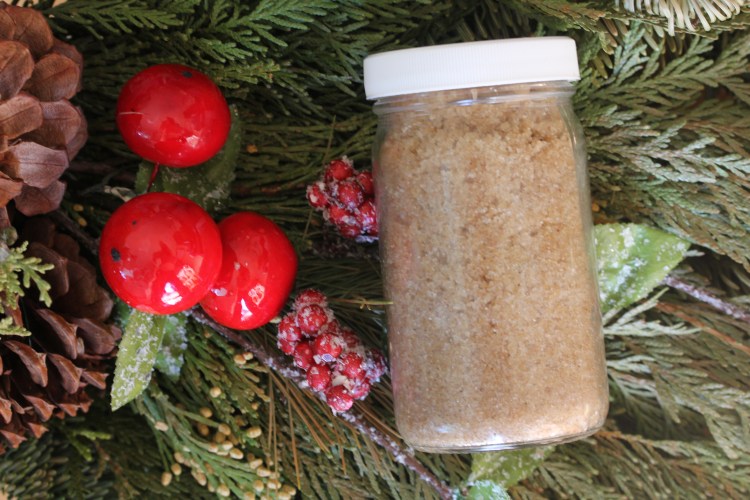
GINGERbread Spice Sugar Scrub

I always try to come up with a few “holiday” recipes each year. They make great last minute gifts and additions to my crisis care packages. This sugar scrub is very quick and easy to make. I did some research, looking at several recipes. The addition of tapioca starch makes this scrub less likely to separate over time. I like the texture in this formula and its divine scent. It contains several of my favorite spices to work with. All have warming qualities which are perfect if you have poor circulation or “weak kidneys”. Winter tends to exasperate both of these conditions.

Gingerbread Spice Sugar Scrub

In a large bowl measure out…..

4 cups of white granulated sugar

1 cup of brown sugar

Use your hands to work out or remove any lumps.

Then add

1 and 1/4 cup of tapioca starch

Use a fork to mix it into the sugar. If you have sensitive lungs you might want to wear a dust mask for this step. Set aside.

In a large saucepan melt on medium high heat…

3/4 cup of solid coconut oil

1/4 cup of shea nut butter (liquid, semi solid or solid)

Remove from heat and let cool for five minutes.

To your bowl of sugar mixture add…..

1 tsp of vanilla extract

1/2 tsp of star anise powder

1/2 tsp of nutmeg powder

1/2 tsp of cinnamon powder

1/2 tsp cardamon powder

1/4 tsp of clove powder

10 drops of Ginger essential oil

Mix well with your hands or wooden spoon.

You can test a sample and see if you want to add more of these spices.

Add the melted oils and mix well with a wooden spoon.

Fill your containers. I like to tap them on a counter in between spoonfuls to really get them packed. Refrigerate for 15-30 minutes. Remover and store in a cool dark place until used.

This recipe fills up six decent sized containers with about 1 cup of scrub.

Zingiber is the aromatic rootstock of a perennial plant that grows in the tropics. It is very common and easy to find in most grocery stores worldwide. It can be cultivated or found in the wild. The rootstock is thick, fibrous, and light tan colored. It grows in a finger like/branched formation. As it creeps the root can become quite large, often palm sized. Ginger produces a simple stem wrapped by layers of long, narrow, lance shaped, alternate arranged leaves. It can grow almost four feet high. As the green leaves mature and separate from the stem they can measure 6-12 inches long . Sterile yellow/white flowers with purple streaks grow on short dense spikes. You will often see images for “red ginger”confused with Zingiber officinale. They are not the same plant. Ginger likes partial shade and moist, fertile soil.

Ginger has a “heating action”. It stimulates digestion, perspiration, and breastmilk production. Historically this herb has been used internally to treat colic, gas, bloating, indigestion, nausea/morning sickness, suppressed menstruation, the flu, headache, sore throat, laryngitis, vertigo, blot clots, colds, cough, high blood pressure, hypothyroidism, poor circulation and heart disease. Many herbalists use it to reduce inflammation. Fresh ginger being preferred for respiratory conditions and dried ginger for digestive complaints. Externally this plant has been used to treat, pain, migraines, chills, muscle soreness, congestion, asthma, athletes foot, arthritic joints, and weak kidneys.

Energetics:pungent, sweet, bitter, warm, dry

Element:fire

Contraindications:ulcers, acid stomach, inflammatory/heat conditions. Anticoagulant drugs like Coumadin or aspirin. Although commonly used for morning sickness, use only very low doses in pregnancy. Do not use during childbirth, especially when there is a risk of heavy bleeding.

Sugar Cookie Lotion Bars (yarrow)

I was invited to participate in a holiday fair to raise money for a local non-profit. While I had a lot of stock on hand for my crisis care packages, there were no items with a clear Christmas theme. Adapting my go to recipe to create these really cute lotion bars proved very easy to do. After they were packaged up, I added a real cookie cutter which were on sale for $.80 each. I try to include herbs from my garden in everything that I make. Finding an infused oil to use from my apothecary cupboard proved a little challenging at first. An oil with strong color would would darken my “cookies” too much. A strong smell would overpower the sweet scent that I was going for. After removing dozens of bottles in search of the perfect one, yarrow caught my eye. I use yarrow oil in lots of my skin care products. It is almost a popular as calendula in the backyard pharmacy.

Sugar Cookie Lotion Bars

My skin gets so dry in a high desert climate. Lotion bars are a great way to easily restore it to a healthy an happy condition. I like to apply one right as I get out of the shower. It does not leave a greasy residue on my clothing when I get dressed. The heat from the shower allows it to quickly penetrate.

For this adaptation I started with cookie shaped silicone molds. I sprinkled a few holiday candy sprinkles into the bottom

Melt 1/4 cup of coconut oil, 1 and 3/4 cups of cocoa or shea butter in a double boiler over medium heat.

Add 1/4 cup of Infused oil

Add 1/4 cup of castor oil

Add 1/2-3/4 cup of grated or beads of beeswax

1/2 tsp of nutmeg powder

Once it is all melted, dip a spoon into the liquid and place it into the freezer for a few minutes . Test the consistency. Add either more beeswax or more infused oil until you have what you want. It should not be as hard as homemade soap but it should not be as soft as salve.

Pour into a large , glass measuring cup and let cool for 5 minutes. Stir in 1 tsp each of almond and vanilla extract. 10 drops of lemon essential oil. Mix really well. Quickly pour into soap molds. I like to use a freezer for setting, 30 minutes should do it. Once fully set, remove bars from the molds and store in a cool dark place.

When rubbed on warm skin it should make it feel soft, smooth, and silky.

Yarrow/Milfoil is best known for lowering a fever. When I was a midwife I had it as a tincture in my birth kit for minor hemorrhaging The tannins in the plant also make it an excellent wound healer which serves to tighten the tissues and arrest bleeding. It has a history of being used for nosebleeds. bleeding hemorrhoids, and abscesses, Other constituents in the plant help with pain, infection, bringing on a fever/sweat, lowering blood pressure, relaxing muscle spasms, strengthening blood vessels, calming the nervous system, opening pores, “cleaning” the blood, toning/stimulating organs or tissues, building blood and reducing inflammation. Historically this herb has been used to treat colds, flu, allergies, headaches, blood clots, menstrual issues, digestive problems, diarrhea, poor appetite, cramps, gas, bloating, rheumatism, childhood illnesses, toothache, earache and ulcers. A wash of the infusion, a poultice, or compress has been used for wounds, varicose veins, bleeding hemorrhoids, vaginal discharge, acne, blood blisters, bruising, eczema, hair loss, chapped skin, and sore nipples in nursing mothers. Dye can be made from the flowers and the essential oils are used to reduce inflammation when used in skin care products.

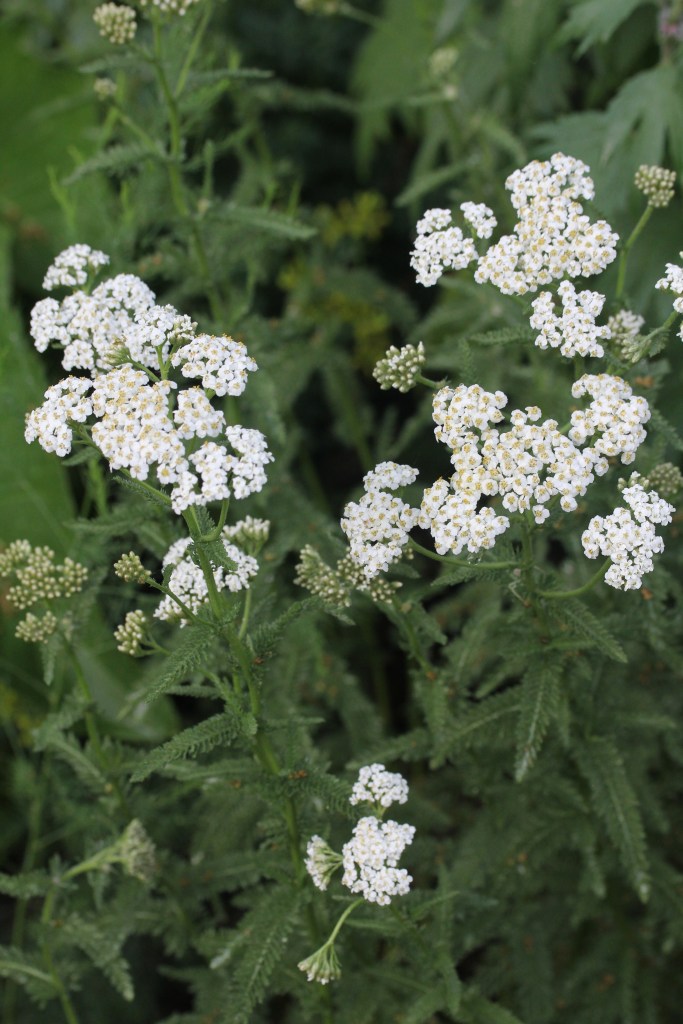
Yarrow is found all over the world. It grows easily in gardens, meadows, along the road, in the wild/mountains and wastelands. It prefers full or moderate sun, dry soil and very little water. There are cultivars with very attractively colored flowers and textured leaves. Yarrow, as a companion plant, helps its neighbors to resist disease. The shallow growing rootstock allows this plant to spread quickly and become invasive. The majority of the finely pinnately leaflets (sharply cleft) give the dark green leaves (lance shaped and alternately arranged) the appearance of feathers. These are 3-4 inches long and form dense growth near the ground. The tiny ray flowers (5 petals) are typically white (can be pink or pale purple) with the discs being yellow, fading to brown as they mature. These are arranged in a flat or raised compound corymb at the top of a tall stem (1-3 ft. tall). Often the stalk is fuzzy with small leaves arranged alternately with wide spacing up the stalk.

Latin name: Achillea millefolium

Parts used: Leaves and flowers

Energetics: bitter, sweet, pungent, cool, dry

Element: water

Contraindications: allergy to aster/ragweed family. Sensitive individuals may experience dermatitis or sensitivity to sun.

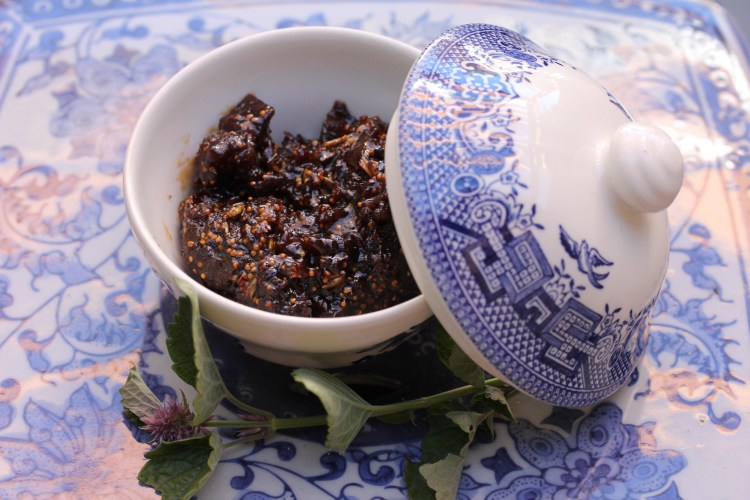
Fig Jam With Anise Hyssop Flowers

I come across dried fig jam being sold in many places where I live. It is a popular item on a cheese board. Orange is a common”flavor”in many recipes. When I was harvesting hyssop in October I was inspired to create this variation. Anise hyssop adds both floral and subtle anise notes. This jam is quick and easy to make, no canning required. I like to serve this for afternoon tea. It goes well with butter , spread on any kind of bread or cracker. I imagine it would also be a great way to dress up a peanut butter and jelly sandwich. I often used dried figs in salad dressings and marinade. One could easily thin this jam to make both of those things. I might try it as a substitute for apricot jam in my lentil loaf or mixed with grains in an autumn stuffed squash dish.

Fig and Anise Hyssop Flower Refrigerator Jam.

To a large stock pot add..

2 cups of water

12 large dried figs-stems removed and coarsely chopped

1 cup of sugar

3 generous TBSP of balsamic vinegar

Cook the mixture on medium for 10 minutes

Use a potato masher to crush, simmer until thick for 5 minutes.

Then add

1/2 tsp of pure vanilla extract

1/4 cup of fresh anise hyssop flowers

Stir your jam well, then pour into a very clean jar.

Let cool for 20 minutes then seal with a lid.

Refrigerate. This will store for many months if you keep it cold and use clean utensils for serving.

Makes 1 pint

Agastache is in the mint family. It is one of the few cultivated medicinal herbs that is native to North America. This perennial grows up to three feet in height. It has brilliant green leaves that are oval/spade shaped with pointed tips. These are oppositely arranged on a square stem and have a fuzzy underside. Anise hyssop has very small purple/blue flowers densely arranged on a spike, typically at the end of each stalk. It prefers to grow in moist habitats with full sun. When rubbed with the fingers the plant has a pleasant anise/spicy scent. This subtle flavor makes it fun to use in all kinds of recipes from sorbet to lamb.

Anise hyssop has a warming stimulating action that clears heat. It supports the the lungs, digestive system and spleen. Historically it has been used for bloating, nausea, gas, indigestion, vomiting and diarrhea. It can be added in a respiratory formula for flu, fever, colds, asthma, bronchitis and sore throat. The aerial parts can be used in a poultice to be applied externally for migraine, heatstroke, sore, fungal infections, bruises, bug bites, and burns.

Parts used:Flowers and Leaves

Energetics:pungent, sweet, warm, dry

Element:air

Contraindications: None, can be used regularly as a “tonic”or in culinary dishes. Anise hyssop has the same medicinal uses as Hyssopus officinalis but different essential oils and constituents. Hyssopus is much stronger and should not be taken in large doses or in the long term as medicine.