Gluten Free Pear, SAGE, and Hazelnut Sweet Bread

We have had an unusually warm November. Many of my plants can still be harvested. Juniper, rue, lavender, marigold, sage, mugwort, motherwort, oregano, mint, nettles, feverfew, horehound and hyssop. Plants that are resinous, unwanted, strong of taste, or high in essential oils that are still hanging on as we approach winter, Many of these herbs have a strong energy and are common in many cultures for healing at the spiritual level. Work you resort to when nothing else has helped. I often use them as in formulas for incense, ritual powders, liniments, and special oils. Other than sage butter or (condiment) or tempura, I don’t use sage much in cooking. I was delighted to find a desert recipe that called for fresh sage. Bonus in that it used up some of our bumper crop of pears that we had in storage.

Gluten Free Pear, Sage, and Hazelnut Bread

WET INGREDIENTS

2 TBSP of walnut oil

2TBSP of Sage Butter

1 tsp of almond extract

1 TBSP of rice syrup

1 cup of milk or substitute

2 eggs lightly beaten

2 cups of shredded pear

DRY INGREDIENTS

1 cup of almond flour

1 cup of brown rice flour

1 cup of buckwheat flour

2 tsp baking powder

1/4 tsp baking soda

1/4 tsp smoked salt

1/2 tsp ground cardamon

1 cup of toasted hazelnuts, skins removed and cut in half (best you can)

3/4 cup of rolled oats

line and oil a round springform pan

preheat oven to 350

mix wet ingredients in one bowl, dry in another. Add dry to wet bowl. Stir until well combined

bake one hour or until a toothpick comes out clean when inserted.
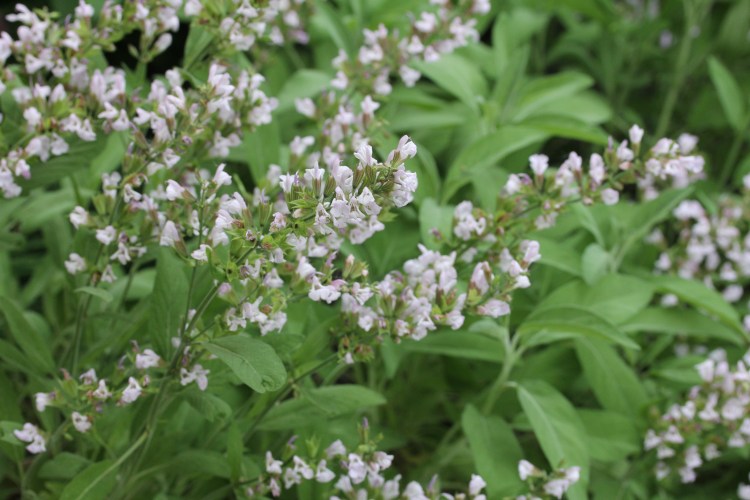
Salvia officinalis

Sage is a shrubby perennial that is native to Europe. It grows well and overwinters even in my climate. In any garden that I have had it establishes itself as a “mother plant”. The stems are square, woody, long, finely haired and often leggy. With time and age my plants become less attractive but more productive in leaves. This herb can be sensitive. If you offend it, neglect it, damage it when harvesting-you may not see it the following year. The downy, oval shaped, crenated, opposite arranged leaves have a “sage” green color. The flowers are purple (sometimes white) tube shaped, two lipped, and grow widely spaced on terminal racemes. High in aromatic essential oils and botanical features clearly place it in the mint family.

Salvia is thought to be good for stress, depression, vertigo, hot flashes, digestive issues, gas, diarrhea, headaches, flu, congestion, menstrual problems, arthritis pain, blood clots, fever, and staph infections. She is a wonderful gargle for laryngitis, gum disease, bad breath, and sore throats. If you need to clear phlegm in any organ this plant is a good choice. As a bath Sage has been used externally to address eczema, insect bites, wounds, acne, rashes, and poison ivy/oak, dandruff, and vaginal discharge. There is a long history of using this plant as a symbol of wisdom, clarity, longevity, purification and protection. I like hanging bundles of the fresh herb in my house, washing the floors with the tea, or burning dried leaves to clean out energy from a space.

Parts used: Leaves

Energetics:bitter, dry, pungent, warming

Element:air

Spiritual/Emotional Uses-to remove negative energy, disturbances and bad luck. Helpful when one is struggling with the natural process of aging.

Contraindications:Large does in pregnancy. Do not use while nursing as it may dry up your milk supply. Do not use in therapeutic doses long term.
Fruity Tropical Hair Mask (HIBISCUS)

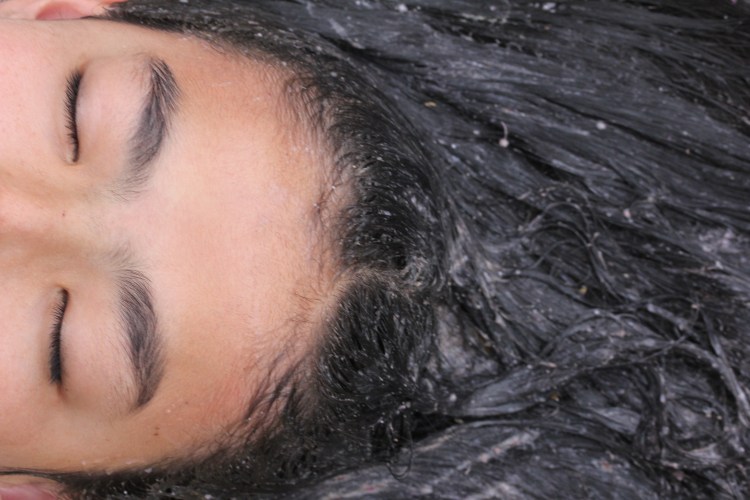
My teenage daughter is always inventing new beauty products. Lately she has been fomulating her own eye shadow from natural ingredients. Her favorite thing to make as part of her regular skin care routine is a face mask made with rice water. It leaves her already flawless skin silky smooth and soft as a flower petal. After some research we created this recipe together. It reminds us of our favorite place to be-Hawaii! This hair mask has a lovely pastel pink color and it smells like an exotic fruit.

If you have not indulged in a hair mask, I hope this inspires you to try one out. After use you may notice 1) Softer, shinier, stronger hair 2)a scalp that is healthier with less dandruff/flaky skin 3) less hair damage and breakage 4)reduced frizz and more manageability, 5)skin and hair that is better nourished and hydrated. A hair mask will not actually lead to hair growth but healthier hair it will break less.

The ingredients in a homemade hair mask are of better quality than what you can buy in the store. They are very concentrated and can be left to deeply penetrate for at least 20 minutes. Recipes typically call for nutrient dense items that you already have in your kitchen-eggs, honey, avocado, banana, apple cider vinegar, beer, olive oil, green tea, lemons, brown sugar, yogurt, milk, mayonnaise, or strawberries.

Directions-apply a generous amount to hair that is damp but not soaking Let sit for 10-20 minutes. Then rinse out and let air dry. You can shampoo if you wish. It is important to remove all the mask ingredients from the hair before it dries and sets.

How often to apply-Weekly until you notice a big difference in the health and quality of your hair. Damaged, aging, coarse or dry hair will need longer and more frequent applications. A room temperature hair mask feels the most comfortable.

Tips for keeping your hair healthier-Do not wash it with hot water. Avoid rubber bands and other accessories that will pull and stress. Don’t use chemical based salon treatments. Reduce the use of heat tools like blow dryers and irons. Wash only as often as needed. Consider using a dry shampoo and products made from natural ingredients that are non toxic.

Tropical Hair Mask

Make an infusion using the following, then strain out the solids

1/2 cup of coconut milk (remove the fat/cream beforehand)

1 inch piece of fresh ginger root, coarsely chopped

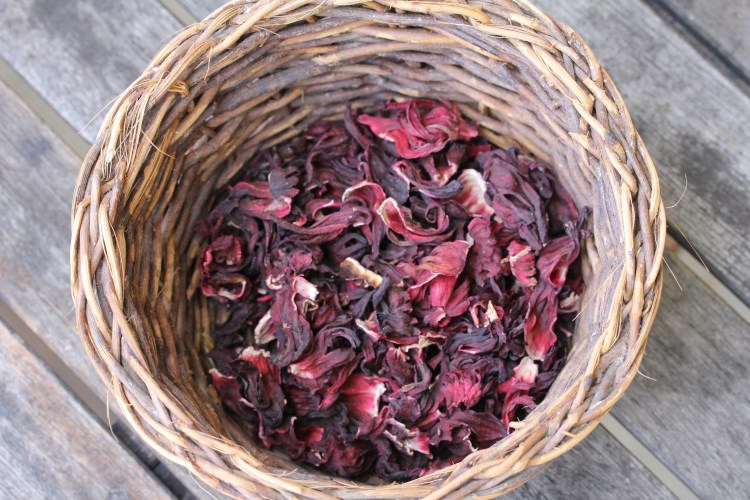
1/4 cup of dried roselle calyces

In your blender cup/bowl add and blend well until smooth

1/2 large banana

1/2 cup of fresh/frozen pineapple

1 pinch of clove powder

1 pinch of cinnamon powder

The cooled coconut milk infusion

rice water (to prepare cook 1/2 cup of white rice in 2 cups of water until it is falling apart, then mash until it is the consistency of hot cereal. Strain to make 1 cup of rice water. Add in 2 TBSP of “rice cereal” and mix.

Remove container and stir in

1 tsp of betonite powder

1 tsp of orange blossom water

*Application directions are written above. This makes about 1.5 cups. For longer, thicker hair you may need to double or even triple the recipe to get good and consistent coverage.

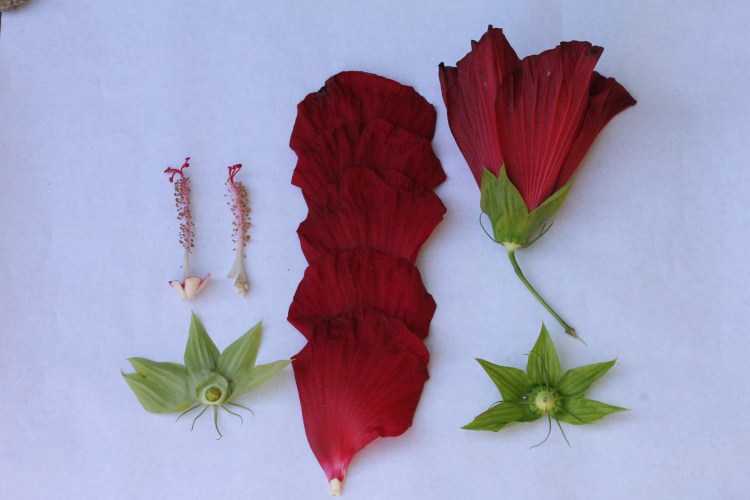
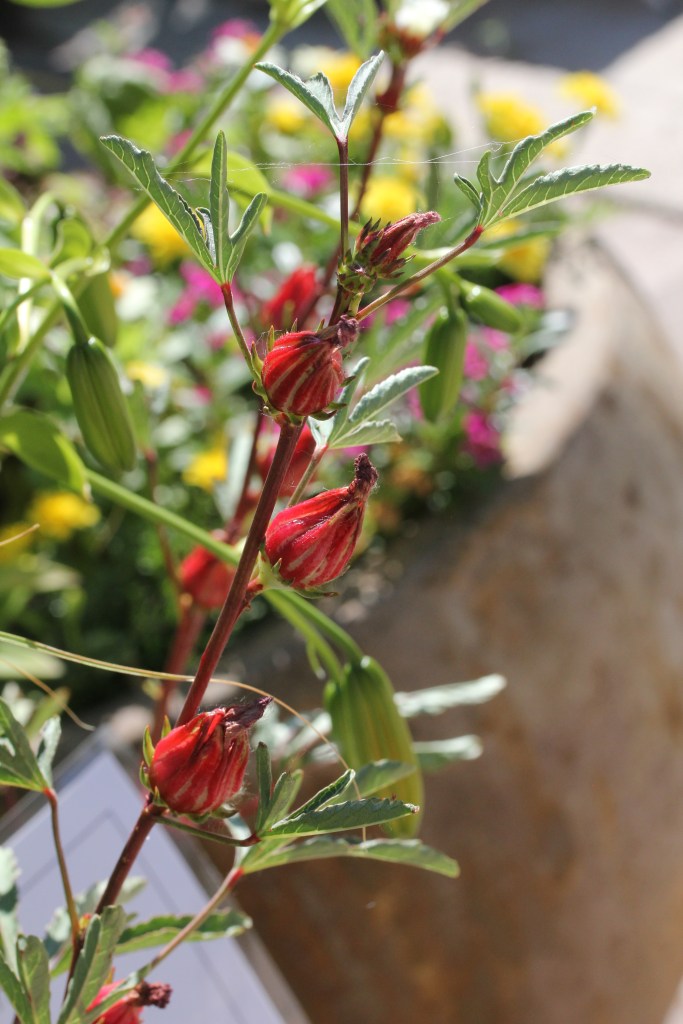
Hibiscus is in the Malvaceae family along with cotton, okra, rose of Sharon, malva, and marshmallow. The plant I prefer to use is not Rosa sinesis, the Asian tropical ornamental we are all so familiar with. In my opinion Roselle (Hibiscus sabdariffa), which originates from Africa, is more medical. It provides the strong red pigment in “hibiscus tea”. Roselle is an herbaceous/bush like perennial or rapid growing leggy annual depending on the climate. It grows long (3-9ft) red stalks. Young foliage has a single lobe but mature plants have red veined leaves with 3-5 lobes. The large (3 inch), delicate, yellow/cream flowers have 6 petals and a cup like red center. The NUMEROUS “fruit”/red calyces mature in fall. This plant prefers full sun and well drained soil. It can be cultivated in North America in places where winters are mild. It is very drought tolerant.

Historically roselle has been used to treat high blood pressure, diarrhea, constipation, inflammation, parasites, bleeding, respiratory congestion, heart disease, menstrual problems, fever, bladder infection, headaches, high cholesterol, kidney weakness, vitamin C deficiency, and stomach issues. In hispanic cultures it is popular tea during pregnancy due to its high vitamin C content which helps the absorption of iron which prevents anemia and hemorrhaging during childbirth. It is well known for its ability to moisten, clear heat, or eliminate excess fluid from the tissues. Externally it can be used as a wash for eye infections, itchy skin, infected wounds, abscesses and bacterial infection in the vagina. Tea of roselle, made from the calyces, is very tart and refreshing. It is commonly served cold with lots of sugar, ginger, cinnamon and clove. It pairs well mint. The “fruit” can also be used for jam, jelly, juice, wine, and syrup. It needs a lot of sweetener to balance its very sour flavor. The young leaves have been eaten like spinach or put into curries.

Energetics-sour, sweet bitter, cool, moist

Element-water

Emotional/Spiritual Uses– for trauma (especially sexual), loss of connection to the feminine, to restore vital energy.

Contraindications-cold conditions

Herbal Furikake Seasoning (DANDELION)

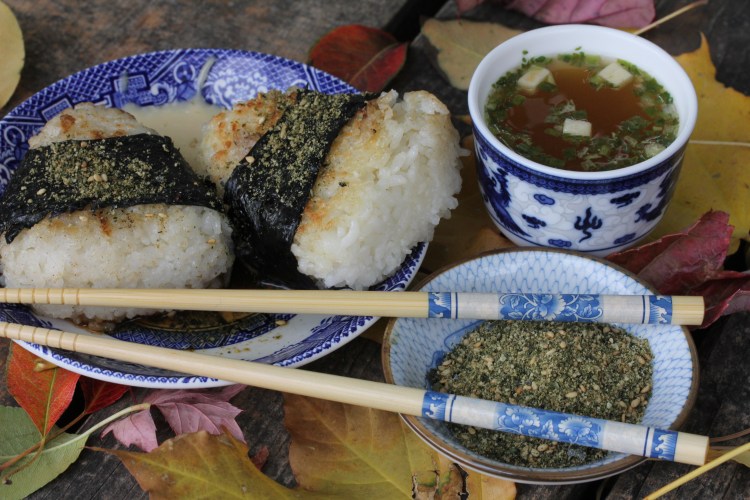
What is furikake– a Japanese condiment made with tiny bits of dried ingredients like wasabi, nori ,egg, bonito/fish flakes, sesame seeds, and shiso leaves. . It is typically served on bland things like rice, noodles, vegetables, or fish. I like it served on popcorn or onigiri (a Japanese style rice “sandwich”) It is not the same as gomasio which is ground unhulled sesame seeds and sea salt. Urban legend says that furikake was invented to address calcium and protein deficiencies in the early 1900’s and during WW II.

Herbal Furikake Recipe

1/4 cup of dried crumbled nettle leaves broken up into fine pieces

1/4 cub of dried crumbled dandelion leaves broken up into fine pieces

1/8 cup of finely chopped then dried mugwort leaves (otherwise you get moxa/incense)

2 sheets of nori seaweed broken up and run through a spice grinder (don’t let it become a fine powder).

1 TBSP of kelp powder

1/4-1/2 tsp of sea salt

1/2 cup of toasted sesame seeds (1/4 cup ground in a spice grinder)

Shiso leaves would be traditional in the recipe but I have not been able to get it planted in my garden for years. I also like the idea of using dried burdock or feverfew leaves. Maybe I will add those to my next batch.

Mix all of your ingredients together in a large bowl. It should be mostly the same size and consistency. You should be able to use it through a coarse spice shaker and sprinkle it on food easily.

For my formulation I tried to choose herbs that are good for digestion, support the liver, have a decent mineral content and would still have the aesthetic/taste of a traditional furikake seasoning. Mugwort while medicinal in our culture, is used in a lot of Japanese dishes.

Serve your onigiri with wasabi mayo and ponzu sauce.

Latin Name: Taraxacum officinaleFamily: AsterSubfamily: Cichoriodeae/Chickory

Taraxacum has yellow ray flowers that overlap all the way to the center. There is no round disk in the center like other plants in the aster family. The “petals” are straight and do not taper. It has bracts/modified leaves where the stem joins the flower instead of sepals. It has a hollow, round stem full of a white, latex like, sticky sap.There are related plants that look like dandelion (sap, yellow flowers etc.) BUT Dandelion has a reddish green , non branching stem that is 2-6 inches long (sometimes 18). The leaves do not grow off the stem, instead they grow around the base in a ring. There is one flower per stem .The leaves are very serrated like teeth , they get broader towards the top before ending in a point. Nothing about a dandelion is prickly or hairy. Single seeds look like a tiny parachute but together form a white fluffy ball.Habitat-lawns, parks, fields, waste land. Dandelion likes poor soil. Blooms and makes seeds all year round. One of the first flowering plants to appear in spring.Growing:will grown anywhere. Self seeds. No need to cultivate, it is an invasive but useful weed.Edible parts:Root, leaves, flower heads.Harvesting:Dandelion roots and leaves are most bitter in the spring, this is also when they have most medicinal qualities. Plants growing in the shade may be less bitter. Pick flowers mid morning when they are dry and have reached their biggest size. Wash well, the root may need to be scrubbed with a brush. When picking be aware of contamination from pets and pesticides/herbicides. Watch for bees, it is their favorite source of food right in the early spring.

Historically Dandelion has been used as a diuretic (water retention) and laxative (constipation). As a tonic it cleanses the blood/tissues/organs of wastes/toxins and clears heat. Dandelion is useful for skin disorders (acne, cysts, fibroids, poison ivy, rashes, eczema, abscesses etc.), hay fever, candida, allergies, varicose veins, gout, rheumatism, and weight loss. It cools heat (fever) , stimulates the immune system, and removes infection ( sinusitis, bronchitis, mastitis, hepatitis, herpes, and mono just to name a few) Internally Dandelion is best known for its action (astringent, tonic, stimulant) ) on the digestive system (gas, indigestion, appetite loss, heartburn, ulcers) the bladder ( urinary tract infection) liver (jaundice, cirrhosis) and gallbladder (gallstones) pancreas, spleen, and kidneys (kidney stones). Internally the flowers can be used for pain/anti-inflammatory (arthritis, cramps, headaches, and backache). Externally the flowers can be used for wounds and fungal infections. The sap from the stem is thought to remove warts.

Culinary uses- coffee substitute, wine, beer, syrup, jelly, baked goods, stir fry, juiced, pickles, and salad green just to name a few. Herbal products products-tea/infusion, tincture, oil/salve. The fresh leaves can be added to salads and soups or the dried to condiments to add a mineral source to the diet.

Emotional/Spiritual Use-for cleansing, rejuvenation, reflection, stress/tension, fear, or hesitation. Promotes trust, openness, balance, ease and relaxation in those who overdue it or have perfectionist tendencies.

Parts Used: leaves, flowers, root

Energetics: bitter, sweet, cold, moist

Element: Air

Contraindications: safe during pregnancy and nursing in small amounts. Because it is in the aster family, it may cause allergic reaction in people sensitive to those kinds of plants. The sap may cause contact dermatitis.

Healing Band (Feverfew)

I have two girls in puberty at the moment. My youngest has started to have migraines. They are terrible, starting out of the blue with blurred vision, light sensitivity, a pounding headache, tears, and the need to lie down in a dark bed room for hours. In the late morning, as a preventative, I have her drink a tea of mint (to “cool” the head ) and dandelion leaf (to support her liver to process wastes and hormones). If she gets a migraine I give her a small amount of feverfew tincture. I also have a headache oil infused with rosemary, chamomile, feverfew and bay. I soak red wool in the oil and then use the healing band to hold it in place.

The healing band is adjustable so that it could also be used to hold a compress or poultice on limb. Sprained ankle, bug bite. It would also work for ice packs.

I have also started to give her foods with a little

herbal migraine butter added in. Starchy foods like oatmeal, homefries , rice or toast for breakfast.

She no longer gets the migraines after lunch that would typically disrupt her day for 2 hours.

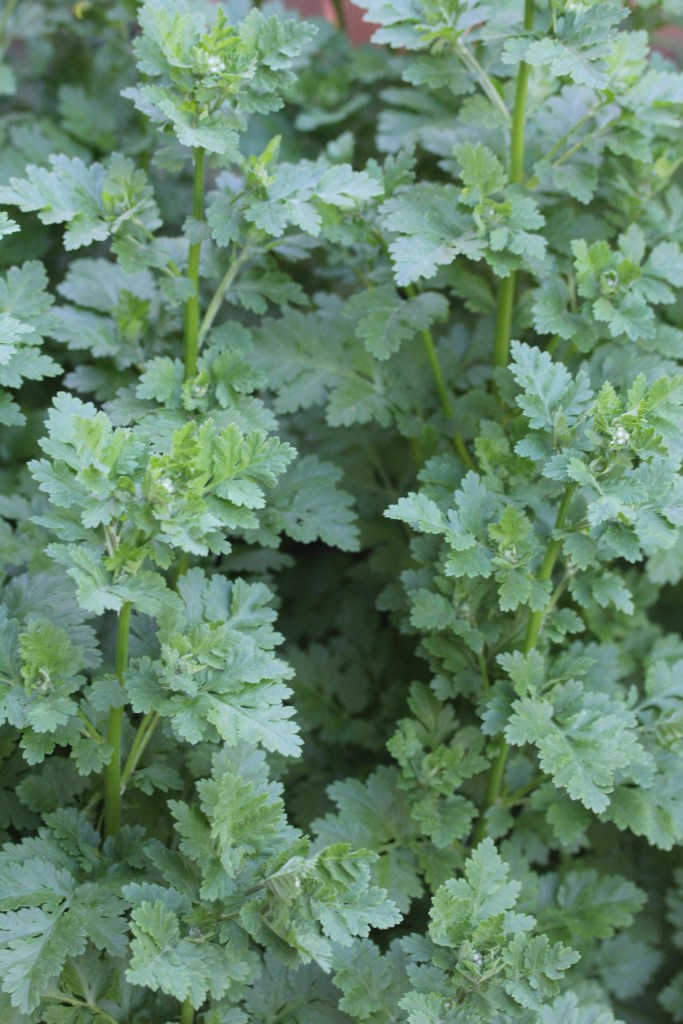
I have been growing Tanacetum for decades but rarely used it for medicine. The plant has lovely flowers which dry nicely for bouquets and it fills out an area nicely. You can find this plant in gardens and abandoned lots. It is in the Compositae/Aster family. Subfamily Anthemideae/Chamomile. Do not confuse it with Tanacetum vulgare (Tansy). Feverfew has light green feathery leaves arranged alternately on a round stem. It grows 6-18 inches high. The plant has a strong distinctive smell that is not quite pleasant. The flowers look like small daisies with white “petals” and a yellow center, If self seeds and spreads easily. It is not too invasive if you remove dead flower heads. Feverfew will grow in any type of soil and in most locations. It looks great for most of its season as a hardy perennial.

It is a mystery to me why more herbalists do not use this plant. It has been used to treat inflammation, digestive issues, allergies, arthritis, nausea, spasms (menstrual and muscle), asthma attacks, depression, menstrual problems, fever, flu, and colds. Externally is can be used to heal bruises or soothe insect bites. It is one of the first herbs to get a scientific study. Feverfew is best known as a very effective preventative strategy for migraines. As a compress it can relieve a headache. In a spray it can be part of a formula for a bug repellant. It is worth paying attention to feverfew right now because it prevents blood from clotting and inhibits the the release of inflammatory substances from the cells. It is also a powerful anti-microbial.

Parts used: leaves and flowers

Energetics:sweet, warm, moist

Element:fire

Contraindications and Cautions: may cause mouth sores ,irritate the stomach or cause dermatitis in rare cases. Avoid during pregnancy and nursing. Do not consume if you are taking blood thinners, have a surgery planned or are allergic to plants in the ragweed family.

House Cleansing and Blessing Solution (Angelica)

The weather is starting to change and in the evenings I often feel chilled. I still have a few fresh herbs in the garden. This self care practice is perfect for moving stagnant energy, purifying living spaces and clearing the energy of the “old year”. In many cultures washing floors is more than removing dirt. Some people consider the end of October to about beginnings/birth rather than endings/death.

I lived in Central Asia for 9 weeks and witnessed the regular ritual of the babushka in our apartment block. She would wet and sweep the packed dirt entrance way both to keep down the dust and provide some kind of “magical” service for the community.

When doing a house blessing one can imagine bringing abundance, health, fertility, wealth, good luck and other positive qualities into a home. When doing a clearing one can imagine illness, bad memories, misfortune, conflict, obstacles, traumatic events, stress and negative aspects being expelled. This is an opportunity to do some “house cleaning, start over, repair ruptures with people and nature, or begin a new habit or project.

To prepare the solution pour 1 gallon of boiling water over 1-2 cups of fresh or dried herbs. Let cool to room temperature and strain out the herbs. I like to use a combination of Basil, Rue, Mugwort, Sage, Oregano, Marigold, Lavender, Rosemary Feverfew and Angelica depending on what I have as excess in the garden. Some people like the sensual and ritual practice of squeezing and straining out the plants by hand. Compost and discard them with respect when you are done.

While your herbs are infusing……

1)Open all windows and doors.

2)Pack up anything you no longer want or need and dispose of/donate it.

3)Re-arrange furniture, redecorate.

4)Burn incense in the following areas-rooms, corners, closets, basement, attics, stairwells, chests, armoires, under beds, and any large hidden places.

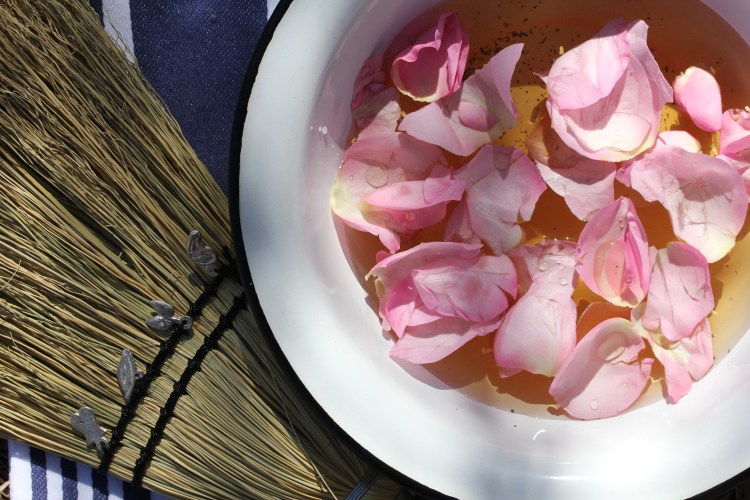
5)Sweep all floors. I use a special broom just for house blessings/clearings.

Some people might like to prepare themselves in a ceremonial way by taking a bath, wearing white clothes, lighting a candle, or doing an energy sweep/clearing of the body with a straw hand whisk.

Once the infusion is ready use it to mop all floors, Paying special attention to corners and areas under rugs/furniture. If you wish to do more of a ritual start a the doorway of your house, walk in and bless each room going clockwise. You can dip plants, a feather, fan or some other item into the water and flick it vigorously at the walls as you pass through. Finish by dumping an leftover water on the front porch or in your yard.

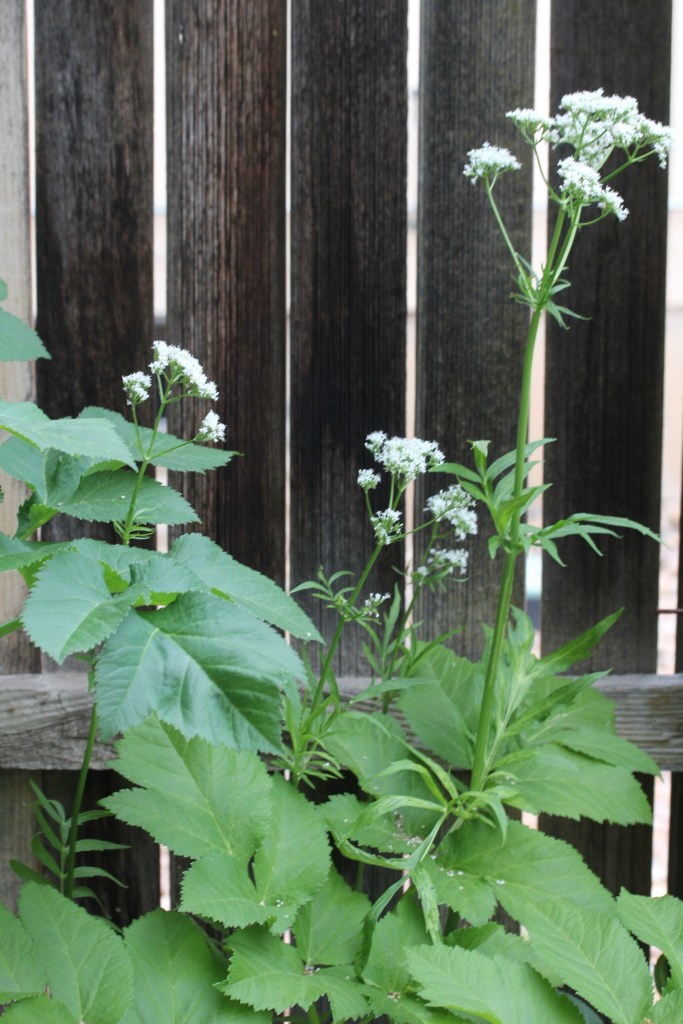
Angelica archangelica is a biennial/perennial plant in the parsley family. It very important to be sure of with identification for any plants in this family as it includes poison hemlock and hogweed, which are poisonous. Angelica grows well in most urban gardens. In the wild it prefers environments that are damp-swamps and marshes or well watered by rivers or streams. This plant grows 3-10 feet high. The stem is tall, thick, hollow, grooved, and tends to branch at the top. It is bright green with a blue/white matt like bloom. It’s few leaves grow from the stem as a sheath similar to celery. These can be quite large , triple divided and pinnate in shape. The pale green flowers grow as a large , spherical, compound umbel at the top of the plant . The “fruit” are green, oblong and similar to fennel but as they dry burst into yellow two winged seeds. The roots are red to brown. Like most members in its family, the whole plant has a very distinctive smell and taste. Angelica is sweet, spicey, and agreeable with a bitter aftertaste. All parts of this herb have been used as medicine.

Angelica has been used to address all manner of complaints related to the digestive and respiratory systems. It may provide relief for gas, ulcers, indigestion, colic, stomach cramps, vomiting, coughs, colds, asthma, bronchitis, It has a historical use in treating retained placenta, weak kidneys or spleen, headache, poor appetite, water retention, anemia, poor circulation in the hands or feet, painful periods or menstrual problems, urinary tract infections, the flu, and motion sickness.

Externally as a salve, lotion, or wash- Angelica has been used for rheumatism, muscle cramps, wounds, scabies, itchy skin, gout, arthritis, and electric shock.

Studies have shown this herb to be anti-fungal , anti-bacterial and anti-microbial. Useful as an anti-septic or antibiotic.

The stems are candied for desserts and the leaves pair well with seafood or soup.

Energetics: sweet , pungent, warm, dry

Element: fire

Spiritual/Energetic Uses: Inspiration, creativity, clarity, good fortune, protection (especially at moment of birth or death and other life passages), connection and guidance. Helping us to expand beyond our comfort zone and embrace new things.

Contraindications:large dose or therapeutic prolonged use can have a negative effect on blood pressure, respiratory rate and heart action. Do not take during pregnancy, if you are diabetic, with a high fever, have a bleeding disorder/hemorrhage. Use only the dry root.