MUGWORT and Mullein Leaf Oil

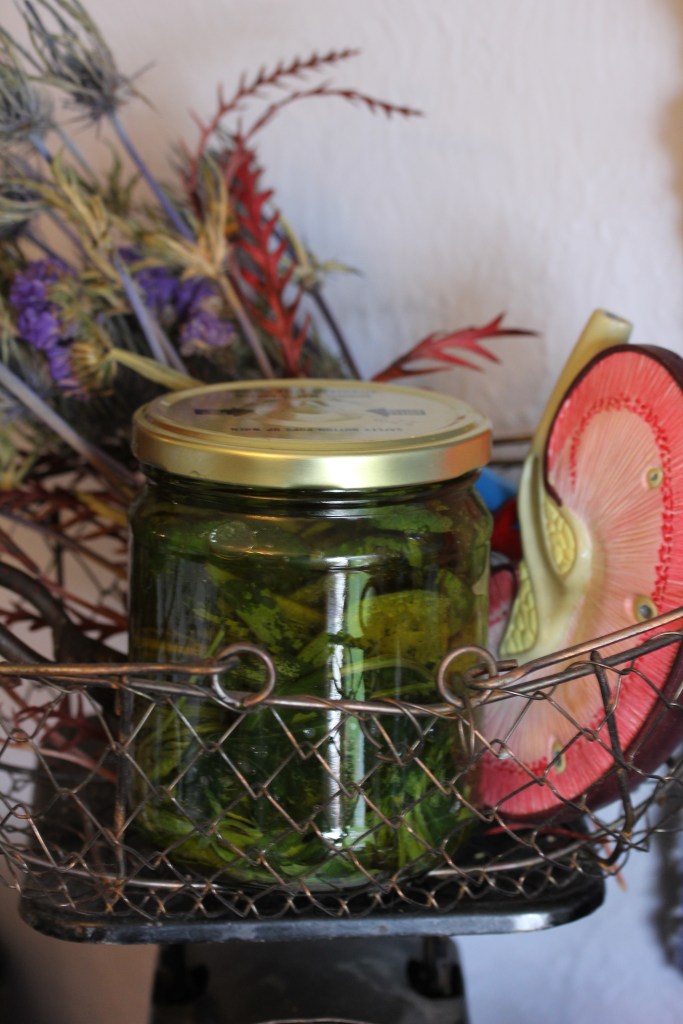
Common mugwort and mullein work well together as a base oil. Once infused other oils can be added to reduce symptoms from Bell’s Palsy, vertigo, Meniere’s, rheumatism, TMJ, or shingles. All these conditions relate to “kidney”, ears, or inflammation of the nerves in the face.

Maybe you are familiar with common mugwort as an ingredient in dream pillows, incense, or a smoking blend. It has a long history in many countries as both food and a healing plant. It is one of those plants that can be used in so many different and creative ways. Some claim it must have been in ancient recipe for the mythical flying ointment of witches or a psychic protection. Having made and used the oil I can assure you any properties are more medicinal than magical.
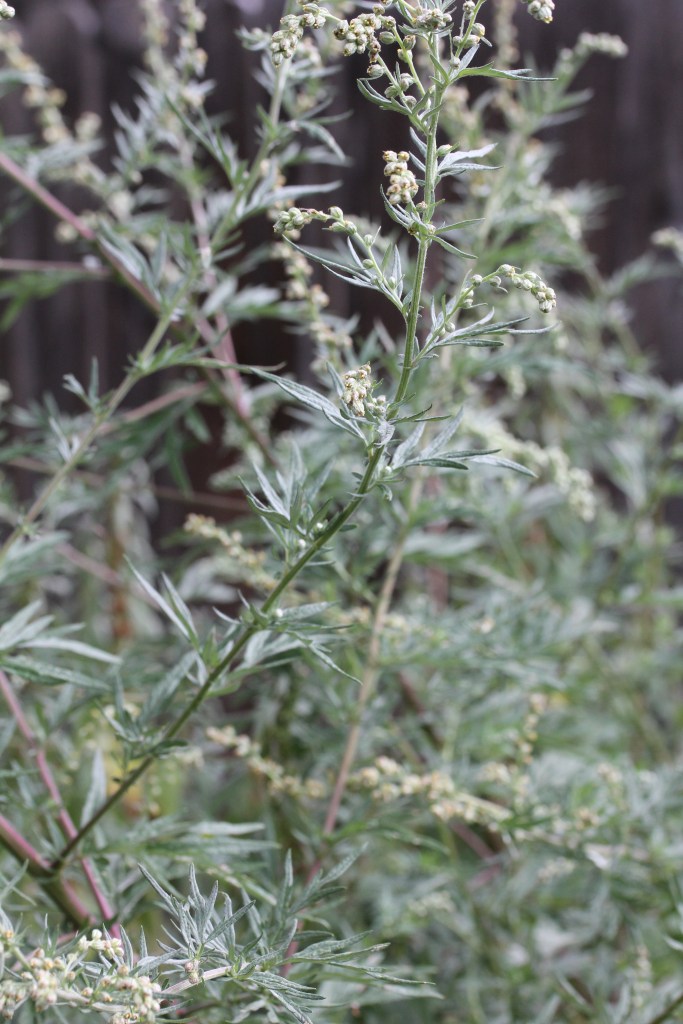
Artemisia vulgaris

Artemisia is a perennial that grows 1-5 feet tall. A mature plant will produce numerous downy, leggy, square, and grooved stems. These will be covered in a lush growth of alternate, pinnate, leaves. Each leaf will have 5-7 lobes that are a medium green on the front side and paler on the back. The leaflets are toothed , linear and spatulate. The very small flowers are white (often with a pale green, yellow, or pink shading) that appear on numerous panicled spikes. Some varieties might have a strong smell. Mugwort dies back in the fall to appear as a basal rosette of leaves in the spring. This plant prefers full sun, well drained soil, and infrequent watering. You will find it growing in gardens, wastelands, in fields and along the road but it is native to Asia.

Mugwort is known for treating issues related to menstruation, menopause and in childbirth. Healers have recommended it to stop bleeding, remove toxins, and reduce inflammation. Artemisia has been found to be anti-microbial both internally and externally. It stimulates the appetite and digestion. This herb can be used for respiratory illnesses, kidney/bladder and gall stones, sore throat, liver conditions, fever, flu, diarrhea, stomachache, bell’s palsy, pain, disturbed sleep and nervous complaints. The Japanese use it in dumplings and other food items. In Europe it was used to make beer. As moxa in Chinese medicine it is used to move cold, damp, and stagnation. I use it a lot in incense. As a liniment or oil it can be used externally for sore muscles, tired limbs, rheumatism, arthritis, injuries and gout. A poultice it is helpful for warts, poison ivy, rashes, bug bites, bruises and sores. As a steam for asthma and chest congestion. As an enema to remove parasites. If you have stuffy nasal passages, a nosebleed or headache you can use it as snuff. It can be used in many forms as an insect repellant.

Parts used: roots, leaves and aerial parts

Energetics :warm, dry, bitter, pungent

Element: both earth and water

Contraindications: Do not consume in large doses for an extended time period. Avoid during pregnancy. Some individuals may be develop an allergic reaction when touching it.
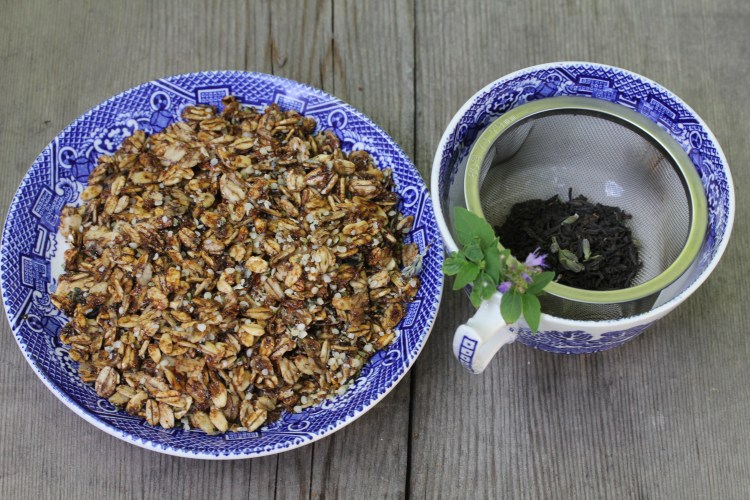
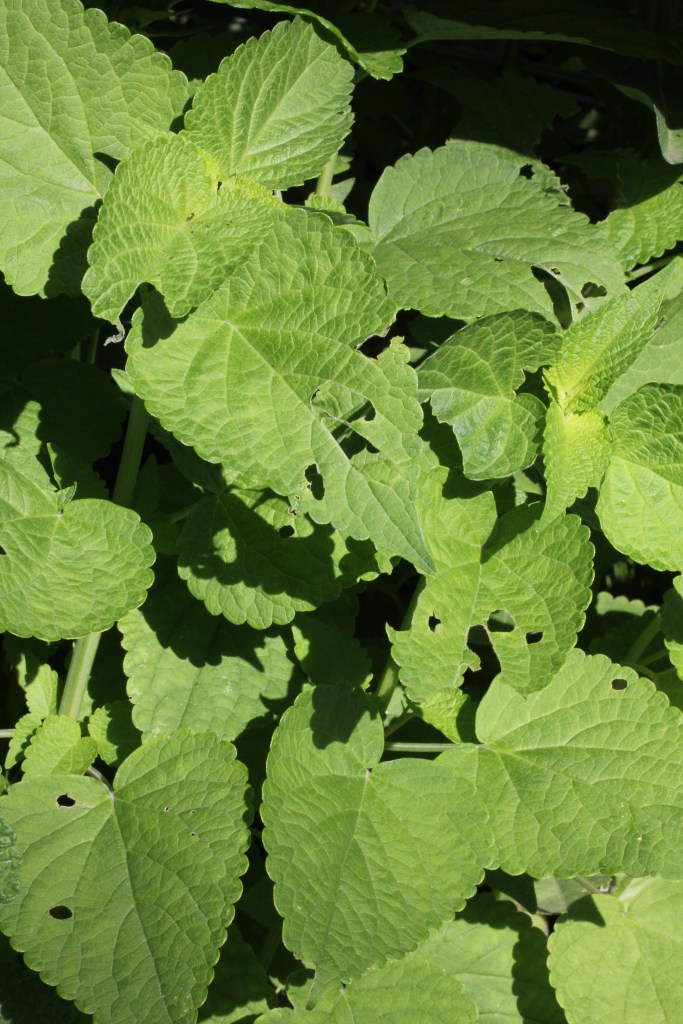
Lady Jane Grey Granola with Dried HYSSOP and Lavender Flowers.

Thanks to to our new hoop house set up my anise hyssop is already up and huge. I can’t wait to use the leaves in recipes as there is an over abundance. Always thinking ahead, I saved some of its precious dried flowers from last summer for later use. I finally found something worthy of their use. Earl Grey tea is a daily ritual for me. I don’t know what it is about bergamot that I find soothing and settling. It is common to find Lady Grey which has the added addition of lavender and other floral notes.

Lady Grey Granola

2 cups of rolled oats

1/4 cup of sugar

1/4 cup molasses

1/4 cup of walnut oil

1/2 tsp of vanilla extract

1 tsp of dried or fresh lavender flowers

1 tsp of hyssop flowers

1/2 tsp of Earl Grey Tea

2 TBSP of hemp seeds

Preheat your over to 350

Mix all of the above ingredients in a very large bowl until well combined.

Bake 5-10 minutes until browned. You do not want the granola to catch and burn so watch it carefully.

Break it up with a spoon as soon as you remove it from the oven. Let it cool and continue to break it up with your hands. Store in a container with a tight lid.

Agastache is in the mint family. It is one of the few cultivated medicinal herbs that is native to North America. This perennial grows up to three feet in height. It has brilliant green leaves that are oval/spade shaped with pointed tips. These are oppositely arranged on a square stem and have a fuzzy underside. Anise hyssop has very small purple/blue flowers densely arranged on a spike, typically at the end of each stalk. It prefers to grow in moist habitats with full sun. When rubbed with the fingers the plant has a pleasant anise/spicy scent. This subtle flavor makes it fun to use in all kinds of recipes from sorbet to lamb.

Agastache foeniculum

Anise hyssop has a warming stimulating action that clears heat. It supports the the lungs, digestive system and spleen. Historically it has been used for bloating, nausea, gas, indigestion, vomiting and diarrhea. It can be added in a respiratory formula for flu, fever, colds, asthma, bronchitis and sore throat. The aerial parts can be used in a poultice to be applied externally for migraine, heatstroke, sore, fungal infections, bruises, bug bites, and burns.

Parts used:Flowers and Leaves

Energetics:pungent, sweet, warm, dry

Element:air

Contraindications: None, can be used regularly as a “tonic”or in culinary dishes. Anise hyssop has the same medicinal uses as Hyssopus officinalis but different essential oils and constituents. Hyssopus is much stronger and should not be taken in large doses or in the long term as medicine.

LEMON BALM and Leek Soup

Lemon balm and leeks are the perfect spring pairing. Both are coming up in gardens right now. This is a lovely, smooth soup with subtle floral notes and a pretty color. Perfect for an elegant Sunday brunch. Warms well for a quick nutritious lunch on a busy day.

Lemon Balm and Leek Soup

2 cups of coarsely chopped fresh young leeks sauteed on medium heat for 15 minutes.

1 3/4 cup of whole cashews

1-2 chicken flavored bouillon cubes or 2 cups of stock/broth of your choice.

pinch of nutmeg

salt and pepper to taste

1 cup of fresh lemon balm leaves

2-4 cups of water

Add all of the above ingredients to a large stock pot. Bring to a boil and then simmer on low for 15 minutes. Blend in batches, adding water if necessary. You want a very smooth, silky liquid. You can thin with more broth or water to your taste. A thin soup is for a more light/formal occasion. A thick or hearty soup is nice for a colder day. Serve immediately. This soup needs a garnish for interest-lemon balm infused oil/pesto, chopped chives/herbs, croutons, etc.

Melissa officinalis

Lemon balm is a perennial found in the Mint family. Its many tall, auxiliary, four sided stems have very small two lipped flowers at their tips. A favorite of bumblebees these can be white, lavender or pink. The leaves are brilliant green, heart shaped/oval with a point. These are oppositely arranged with slightly serrated margins. Most members of the Mint family possess highly aromatic essential oils which repel pests. Mellissa has a unique smell of artificial lemon. This herb can grow as high as two feet tall. Easy to grow- it prefers moist, rich, well drained soil in shade or partial sun. Lemon balm grows well in pots and in most climates but can self seed and become an invasive plant. Remove volunteers/babies as they appear to prevent this.

Melissa is versatile and has a long history of use. It is cooling, calming, and cleansing. Its antispasmodic action makes it useful for treating menstrual cramps, general pain, headaches and infant colic. As a digestive it reduces indigestion and gas. High levels of the volatile oil cintronellal are helpful for depression, insomnia, restlessness, nightmares, teething, and anxiety. Lemon balm is a favorite tea with children due to its mild taste. Powerful antiviral and antibacterial properties make it popular to treat childhood illnesses, the flu, colds, and viruses in the herpes family. As an antihistamine it is useful for allergies and eczema.

Lemon balm can be applied externally on sunburn, wounds, burns, insect bites, and boils.

Medicinal Parts:leave and immature tops. Due to loss of volatile oils it is better to use it fresh or frozen rather than dried.

Energetics:sour, cool, dry

Element:water

Contraindications:Hypothyroidism. If you have a bee venom allergy do not use the essential oil in homemade bug repellant as bees love the smell.

Lemon balm appears in recipes to wrap fish. It can be a substitute for basil or parsley in pesto, salsa and tabouleh. Replace it for green in salad, soups, and sauces. Try it in a jelly, curd, or butter. Slip it into muffins and other baked goods.

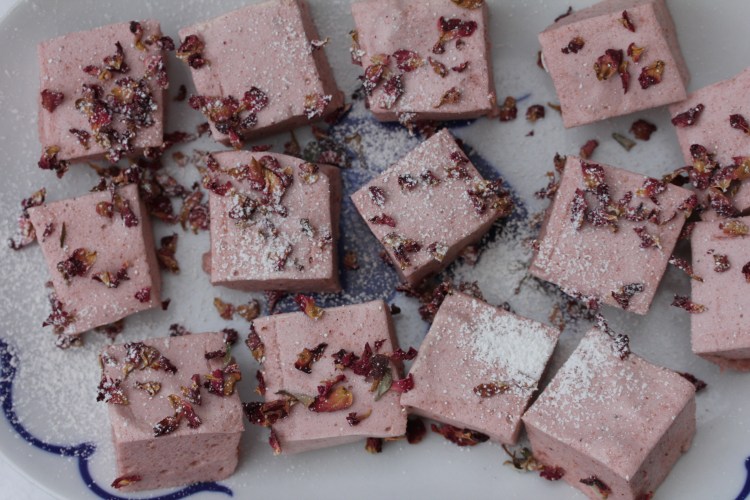
Homemade ROSE Flavored Marshmallows

If you have planned ahead and dried some rose petals, you can make this yummy treat anytime of year. The girls and I really loved trying out our own homemade marshmallows on a snowy spring day. Not everyone enjoys the floral flavor of rose. Feel free to experiment with other ingredients such as cocoa or matcha.

Homemade Marshmallows

You will need powdered…….

2 TBSP of dried marshmallow root

1 TBSP of dried rose hips

1 TBSP of roselle/hibiscus flowers (for the pink color).

Add these to one a large glass measuring cup of boiling hot water, whisk until smooth.

Add in 3 packets of unflavored gelatin power ( not quite 1/4 of a cup), whisk until it as smooth as you can get it.

Pour though a fine sieve. Reserve and remeasure your liquid. It should be about 3/4 of a cup. Set aside in a large bowl.

Grease a 8X8 square pan with butter, cut and place a large square of parchment paper into the pan. It should come up and overlap the sides. Generously grease the entirety of this as well. Set aside.

On the stove at medium high-bring to boil 1 cup of honey, a pinch of salt and 1/4 cup of rose water. Stir constantly and watch the color, it should not darken. You will be boiling the “syrup” for 8-10 minutes, until a candy thermometer read 240 degrees Fahrenheit. Remove from heat.

Add in 2tsp of vanilla to your bowl and start to beat your mixture on medium speed for 2 minutes.

Slowly add in your “syrup” and increase the speed to high. You will be whipping for 15-20 minutes to get stiff peaks or the consistency of marshmallow fluff.

Now use a large rubber spatula to remove all of the fluff and place it into you prepared pan. Tap lightly to even out. Set aside to harden 4-12 hours at room temperature. Do not refrigerate.

Flip your block out onto a cutting board and cut with a greased knife into large squares.

Dust with powdered sugar or dried rose petals.

Can store covered on the counter for 2 weeks.

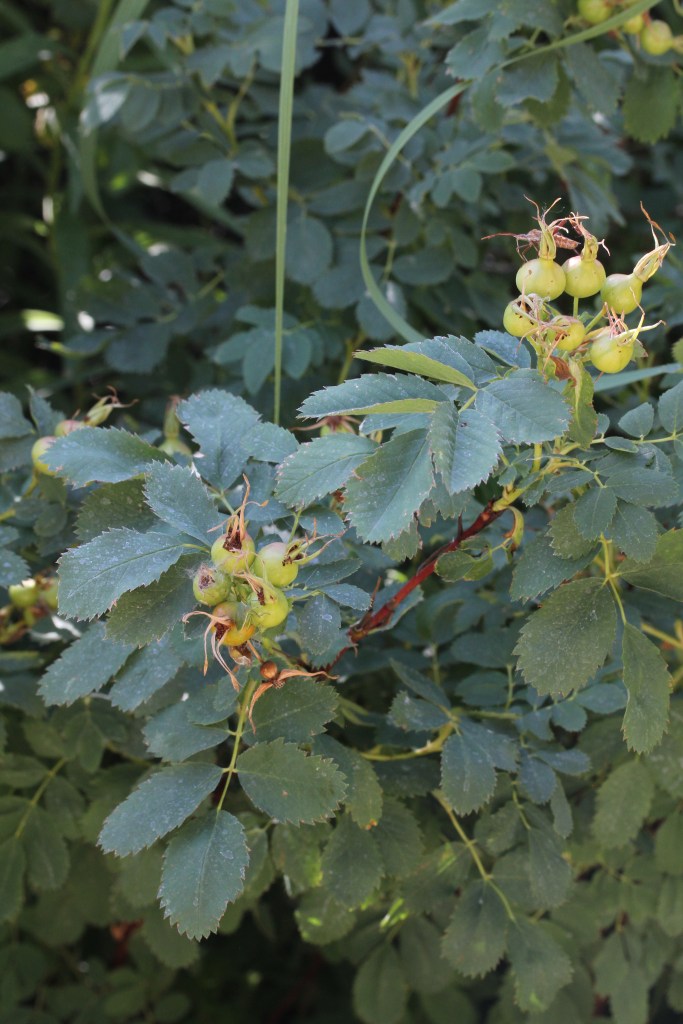
The best rose to use for medicine is Rosa Woodsii. Rosa gallica offficinalis or Rosa gallica versicolor-Rosa Mundi were choices for apothecaries going centuries back, known for their lovely scent. Rosa glanteria is well known for producing lots of edible hips. I have several of these growing in my garden plus and a few wild/volunteer mystery varieties that have yet to bloom. There are over 100 varieties/cultivars/wild species. Other roses to check out are Rosa Californica, Rosa rubiginosa, Rosa canina and Rosa rugosa.

All roses are obviously in the Rosa sub family as well as the Rosaceae family which also includes lady’s mantle, hawthorn, cherry, strawberry, apple, raspberry, almond, plum, just to name a few.

Roses are considered a perennial woody shrub. Their multiple stems are usually prickly with large thorns or fine “needles”. Canes often grow to be quite long/tall and can trail, climb, or stand erect. These have many leaves ( leaflets 3-7) along the stem that are serrated, alternate, and pinnate/palmate . Flowers come in all colors. Wild/medicinal varieties are usually in the red/pink family with a single layer of five petals. The plant produces a ripe, swollen, oval shaped red/orange fruit called a hip/hypanthium. This is full of hairy achenes/seeds. Rose are quite hardy and can be found in gardens, along roadsides/wastelands, in the mountains and even near the ocean shore (my favorite types as far as beauty). They do well with a small amount of benign neglect and in most climates.

Rosa spp.

Historically this herb has been used to purify the blood and clear heat/ mucous (damp) or stagnation. It may treat inflammation, dizziness, headache, sore throat, fatigue, anxiety, depression, constipation, diarrhea, colic, bleeding/hemorrhage, bronchitis, irritable coughs, venous congestion, clotting issues, weakness, hepatitis, flu, gingivitis, hemorrhoids, varicose veins, high blood pressure, high cholesterol, hot flashes, candida, arthritis, and vaginal discharge. Rose can be used in tonics to support the nervous system, uterus and heart/circulation. Externally rose can be used to treat bruising, fragile capillaries, dry skin, muscle soreness, sprains, and eye infection/irritation.

The hips are very high in vitamin C, anti-oxidants, and pectin. The seeds contain fatty acids. The petals are known for their highly scented essential oils. You can find rose being used in recipes for perfume, syrup, candy, dessert, or jelly.

Medicinal parts: flower petals and hips. Leaves for syrup. Root on occasion.

Energetics: Flower-bitter, sweet, cool, moist. Hips-sweet, sour, warm, dry.

Element:Flower-water. Hip-fire.

Contraindications:None but the fine hairs should be removed from the seeds and hips to avoid irritating the throat.

Do you have a favorite rose growing in your garden?

Violet infused aloe gel (ice cubes)

The juice or gel of aloe vera has several healing properties. Frozen and stored in the freezer these are quickly grabbed and available when you urgently need them. Fresh from the leaves or gel in tubes works well for external use. When consuming I prefer juice that is preservative free.

The gel or ice cubes can be used externally to soothe and reduce pain, itching, or redness. Use these violet infused cubes on burns, rashes, bug bites, hemorrhoids, sunburn, blisters, acne or “heat” related skin conditions. Aloe has been used internally to reduce inflammation ,clear heat, and heal tissues as it relates to ulcers, sore throat, heartburn, hot flashes, indigestion, and conditions related to the stomach and intestines.

Avoid using aloe internally during pregnancy and nursing. Large dosages can aggravate the digestive system.

Violets make the perfect addition to this recipe with their own similar “cooling” properties.

Other flowers that work well include chamomile, calendula and rose. 

Ingredients

1/2 cup of aloe gel or juice

1/2 cup of fresh picked spring violet flowers. The more you use the more intense will be the purple color.

Instructions

  • Place the violet flowers and aloe vera gel/juice into the contianer of a small food processor or blender. Blend them together thoroughly until the flowers become tiny bits. You mixture will be frothy.
  • After blending, strain the purple liquid through a fine mesh sieve. Use your fingers to press and squeeze it through (the juice works better for this). You can add extra water to help out if need be. Let your liquid settle for 10 minutes. Use a spoon to scoop out any foam.
  • Store the finished product in a glass jar in the refrigerator. It should stay fresh for 2 weeks. For longer storage, freeze in ice cube trays and store individual cubes in freezer bags for 3 to 6 months.
Viola odorata

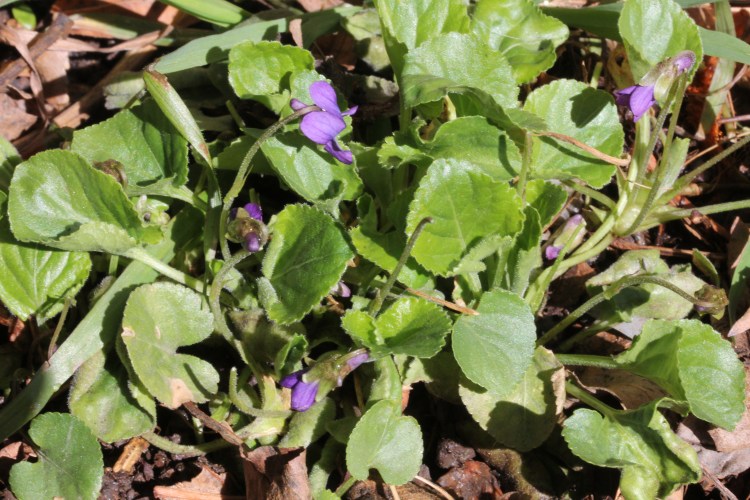
Garden violets can be found in lawns, woods, meadows, and roadsides that have light shade. This small (3-6 inches) perennial sends out runners/a creeping rootstock which takes hold and allows it to slowly spread. Vivid green heart shaped leaves are basal, petioled, and cordate. Nodding sterile purple flowers with 5 irregular petals appear on long peduncles in the early spring. The true seed producing flower are tiny and very hard to see. This plant prefers rich soil and a wet environment.

Family:Viola/Violet

Parts used:leaver, flowers, and roots

Violets are a lot more that French perfume and pastilles. As medicine they have a history of being used as an expectorant for colds, bronchitis, asthma and childhood illnesses. Clears heat, pain, infection, swelling and inflammation. Has been used to treat arthritis, rheumatism, cancer, tumors headaches, fever, and ulcers. Considered by some to be a blood purifier. High in mucilage which soothes irritations of the bladder, urinary tract, stomach, intestines, throat, and gums. This plant may help with constipation, insomnia, anxiety, eczema, cracked nipples, mastitis, acne, cradle cap, psoriasis, sore feet, skin growths/cysts, swollen glands/lymph nodes, varicose veins, conjunctivitis, hemorrhoids and bad breath. Violet can be used to ease heartbreak and grief.

Violet has become my go to for relieving flu like symptoms fast.

Violets make a lovely floral addition to syrups, sugars, salads, desserts, jellies, and other dishes. Infused into wine, vinegar, oil, glycerin and honey.

Energetics/Taste:Cool, moist, pungent, bitter, sweet.

Element:Water

Contraindications: The seeds and roots may cause vomiting. Health issues that are “cold” in nature