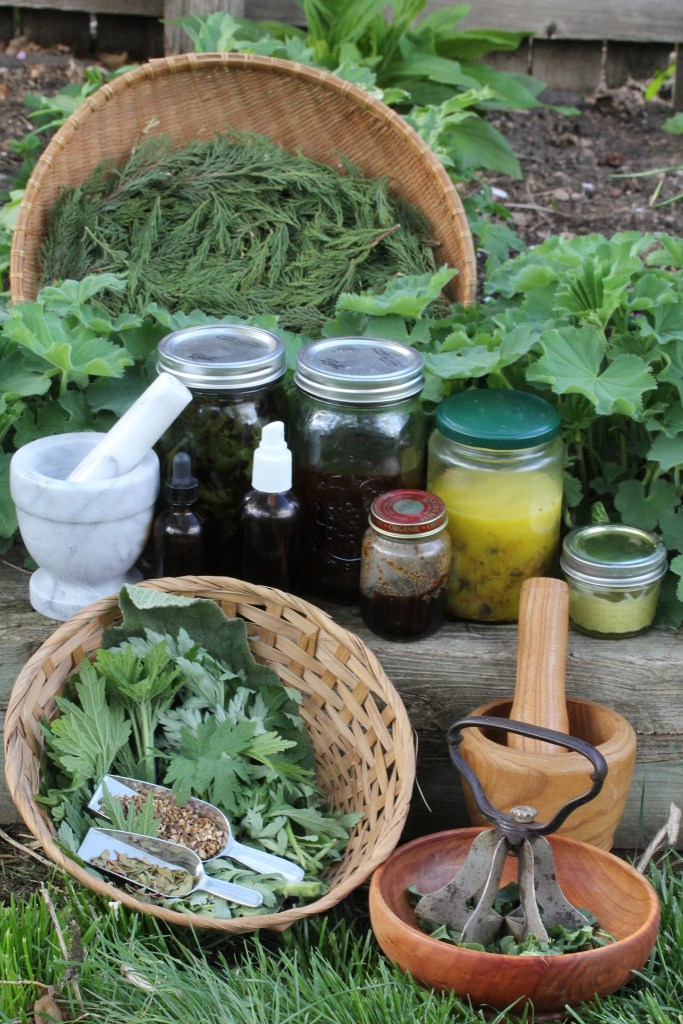
Using the 5 Elements with Herbal Medicine

You will notice near the bottom of my posts, where I feature a specific plant, the category Element. This refers to the 5 element system of space, air, fire, water, and earth. I consider Element to be the most important section in my personal Materia Medica. It is the lens through which I view and do everything. It is not some random note that I picked up from some book in my library.

When a human being develops in the womb the elements manifest one by one in a certain order to create our physical form. When a human dies the elements dissolve one by one in the reverse order marking the physical symptoms we see when caretaking the dying. The 5 elements demonstrate their presence in the external world as an empty sky, the wind, a campfire, the ocean and soil. The elements are present inside our bodies as specific organs, processes and health challenges. We can view them in the context of emotions, personality, and aesthetics. Many cultures use a five element system to structure their worldview. They often assign colors, directions, and seasons to a particular element. Some of the systems overlap and agree in some categories but also disagree in others. It is important to not overthink or get attached to what is “true” when this happens. Like so many things when it comes to traditional medicine, you just have to follow instinct as to what speaks as meaningful to you. The five elements can be a deep rabbit hole that never ends as a source of useful knowledge

I use the five elements via my Biodynamic calendar to decide when to plant seeds transplant herbs into my garden, weed, cut back or deadhead, harvest and process fresh or dried materials. I get very good germination rates and lush growth planting in this mindful way. During a client intake elements can be used to determine which systems are weak and need to be brought into balance. They can be used to choose the best herb for a client’s unique physical makeup. Some people do not respond to treatment or have a deep set, long term chronic illness the goes through cycles of excitement and regression. Approaching their healing process using the five elements may finally cause a noticeable and permanent shift in their well being. You can have more guidance when determining the best time to consume an herbal preparation or form to consume/use it in. The categories can be connected to other traditional diagnostic systems that involve taste, temperature, tissue state, karma, astrology and humors/constitution. They can be combined with non plant treatments related to exercise, meditation, body/energy work, and how someone creates their home, social or work environments.

I organize my pharmacy and herbal year (when I make salves etc.) based on the seasons and elements. An herbalist could also plan their studies or journeys with plant spirit medicine with a consideration of those too.

Here is a simple beginners chart.

Earth. Roots (storage).“Spleen”, stomach, bones, ligaments, tendons, skin, teeth, and hair. Mouth (taste and touch). Sweet. Warm. Damp. Late summer/early autumn. Jealousy and insecurity or ignorance and doubt. Weight gain, bloating. East. Dusk to midnight.

Water. Leaves (growth and transport). Kidney, bladder, blood, body fluids endocrine system and reproductive organs. Ears (hearing). Salty. Cold. Stagnant. Spring. Worry and insecurity or arrogance and judgement. Water retention and infertility. South. Noon to afternoon. Lunar. Blue bottles

Air. Flowers (blooming). Lungs, intestines, breath/wind. Nose (smell). Autumn. Bitter/astringent. Dry. Tight. Late Autumn. Respiratory issues, constipation, joint pain. Pride and arrogance or paranoia and suspicion, grief. North. Afternoon to dusk. Solar

Fire. Seeds and Fruits (ripening) Liver, gallbladder. Tongue (speech). Pungent/spicy. Hot. Oily. Inflamed. Summer. Anger and agitation or addiction and desire. Digestive and skin issues. West. Dawn to Noon.

Space. Life force energy(harvesting or planning)  Space. Heart, brain, pleural spaces. Eyes (sight). Sour. Neutral. Sedated. Winter. Indifference and distraction or intolerance and rigidity. Mental health and heart issues. Midnight to dawn.

If you wanted to consider the energetics of various preparations think along the lines of

Salves and Oils-earth (external), fire (oily and warming)

Teas-water (leaves, menstruum), fire (heated)

 Decoctions-water (menstrumm), fire (heated), earth (roots)

Compresses and Poultices-water, air (leaves), earth (roots), fire (heat), to cool skin issues

Vinegar or Oxymel- fire (acidic, fruit ,sometimes spicy)

Electuary- air (flowers), earth (roots), fire (seeds), sweet

Baths, sprays, washes and steams -water , fire, heating or cooling

Clay -earth

Hydrosols – fire (heat), water (steam)

Flower Essences -fire (solar) and air (flowers)

Liniments- water (cooling)

Incense-fire (burned), air (smell, dried)

Spices-warm and move stagnant energy, sweet or pungent

Seasons can calm or aggravate conditions

If you would like to learn more about how to use the 5 elements in your practice or studies. I suggest research into Chinese, Tibetan, or Ayurvedic Medicine. The basic knowledge that influenced those worldview was developed in Persia and the Middle each centuries ago. It then spread along the silk road, influencing other views of healthcare and cosmology.

Fish In a “Fur Coat” (LOVAGE)

There are certain plants in the garden that are harbingers of spring. Peas, asparagus, violets and what we would call pot herbs. These are leafy greens such dandelions, nettles, chicory, and chickweed that we typically would use as “medicine”. But they can be also be used as food when first appearing in early spring. A very important option when stored root vegetables, dried fruit, and canned goods have been exhausted over the winter. Fresh greens can be eaten in a salad or in potage soup to replenish vitamins, minerals, and clear “stagnation” from the liver, spleen, or lungs. Lovage is one of these herbs. It is a wonderful addition to stews, casseroles, seafood, cheese and egg dishes. Because it is in the same botanical family as celery or parsley it can be substituted for those ingredients. But has its own unique sweet, delicate and aromatic taste to contribute. Spring shoot or leaves are best if you want to avoid a bitter taste. The dried seeds harvested and dried in fall can be added to pastries, soup, bread, rice, and potatoes. It is best to use this seasoning sparingly.

If you have visited Russia or a country that was once a part of the USSR you might have come across Fish In a Fur Coat. It reminds me of a nicoise salad with a lot of mayonnaise. This is a more elegant and flavorful take on the traditional recipe as is uses freshly cooked white fish and roasted vegetables. This dish brings back a lot of memories from my travels. It is the perfect brunch offering for a spring holiday such as Easter, Passover or Nauryz. It is very colorful and attractive. It is something unusual to impress guests that is packed with flavor, protein and lots of vegetables.

Fish In A Fur Coat

This dish is assembled in layers in a springform pan. Between each layer is 3-4 TBSP of mayonnaise spread in a thin layer. You may need as much as 1.5 cups. I used a pan , you can increase the proportions to feed a larger group if of people. Use a large wooden spoon to firmly spread and press down each layer. It is a put together in the following order.

1)Butter the bottom and sides of your springform pan

2) Boil to 2 medium/large potatoes until they are just soft when poked with a fork. Remove, cool, peel and grate. Add them to the base along with a little salt, pepper, paprika, and dill weed) cooled and grated

3) After your mayonnaise ad 1/4 cup finely diced white or yellow onion. Then 1/4 cup of young (spring) lovage shoots/leaves finely chopped.

4) Bake several fillets of white fish (tilapia) about 1.5 cups once it is cooled and finely flaked with a fork. liquid smoke, pepper, salt, olive oil- 1.5 cups cooled, finely flaked and mixed with fork

5) Roast 2 medium carrots and 2 medium beets. Then cool and grate them.

6) Steam and chop 3/4 cup green beans, asparagus or peas.

7)Lastly top with 2 hard boiled eggs that are finely chopped.

8) Garish with finely diced lovage leaves

9) Let sit in a refrigerator for one hour. Keep cold until you serve.

9) Place your pan on a decorative plate and release the springform rim.

Latin Name: Ligusticum levisticum/officinale

Botanical Family: Apiaceae/Umbelliferae (parsley)

Parts Used: seed, root, leaves

Energetics: pungent, sweet, bitter, aromatic, warm, dry

Spiritual Emotional Uses: For when we feel stuck , unable to move forward, struggle to make a decision or create. Supports the ability to make plans or formulate a structure that fosters growth and positive change. Useful when there are patterns of procrastination, fear of risk, frustration, lethargy, judgement, self criticism, isolation, and withdrawal. Fosters connection, feeling certain, confidence, and experiencing excitement when it comes to life and new projects. Try it when you desire to turn thoughts into action.

Contraindications; pregnancy and kidney disease. If you see it possibly growing in the wild or in an urban wasteland, it would be best not to touch or harvest it. People have confused it with hemlock or hogweed which are both very toxic. Pay attention to stalk color, smell, and root shape when identifying.

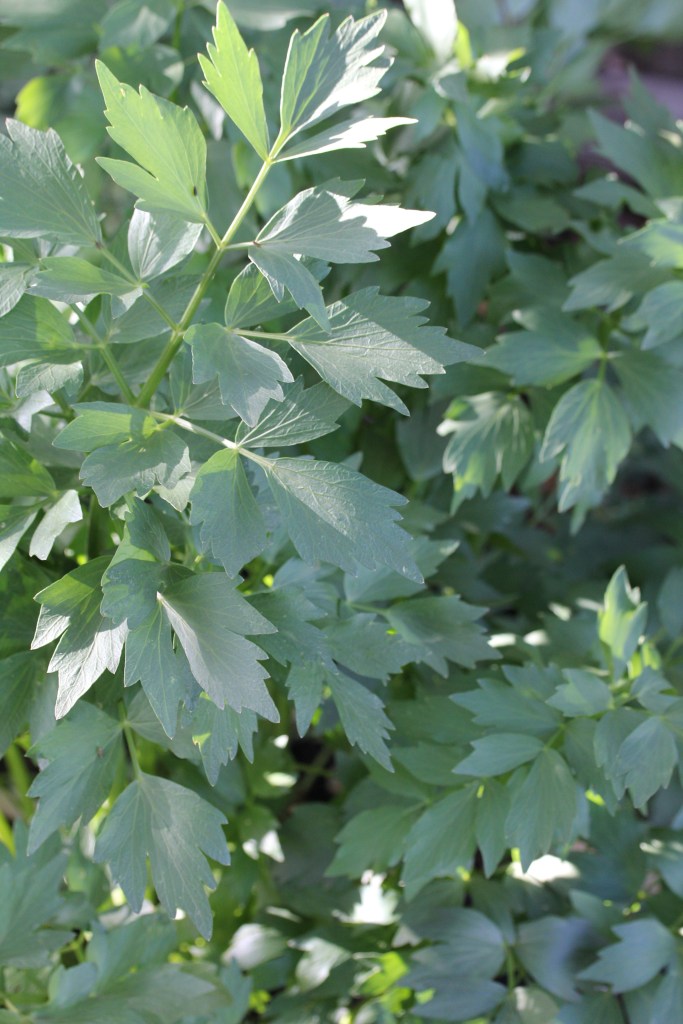
Lovage is a tall perennial that can grow 3-6 feet high. It is strongly aromatic like celery. Its foliage is a darker green compared to other plants in the “parsley” family. It has small yellow flowers on compound umbels. The short thick rootstock produces 1-4 large, round, hollow, stems with several branches at the top. Upper leaves are simple and sessile. Lower leaves are larger, have long petioles, opposite and are decompound/pinnate. Their leaflets are ovate and incised . Seeds take the form of a dried, brown ovary that splits into single seeded carpels.

Historically lovage is known as a digestive tonic for its warming and stimulating qualities. It helps with many stomach issues such as bloating, indigestion, colic, appetite loss, nausea, diarrhea, and gas. It has been used for fever, as a diuretic or to support the body to sweat. This plant is thought to loosen and remove mucous/damp from the lungs and other organs. The Chinese use it for painful and scanty menstruation, retained placenta, uterine insufficiency in labor, edema, arthritis, deposits ( urinary stones, liver sclerosis, arteriosclerosis, urinary tract infections, acne, eczema, psoriasis, mouth sores, growths/tumors, yeast infections, viruses, and coughs/congestion.

It is rare to find lovage growing in the wild. It has a lot in common with Osha, but it is unclear if you can substitute it for that rarer plant. Osha often goes by the name of Porter’s or wild lovage. Lovage is cultivated and grown in gardens. This herb is more common in Europe. Many of my herbals do not include it. You may not find it used much in the USA.

Super C Honey (ECHINACEA)

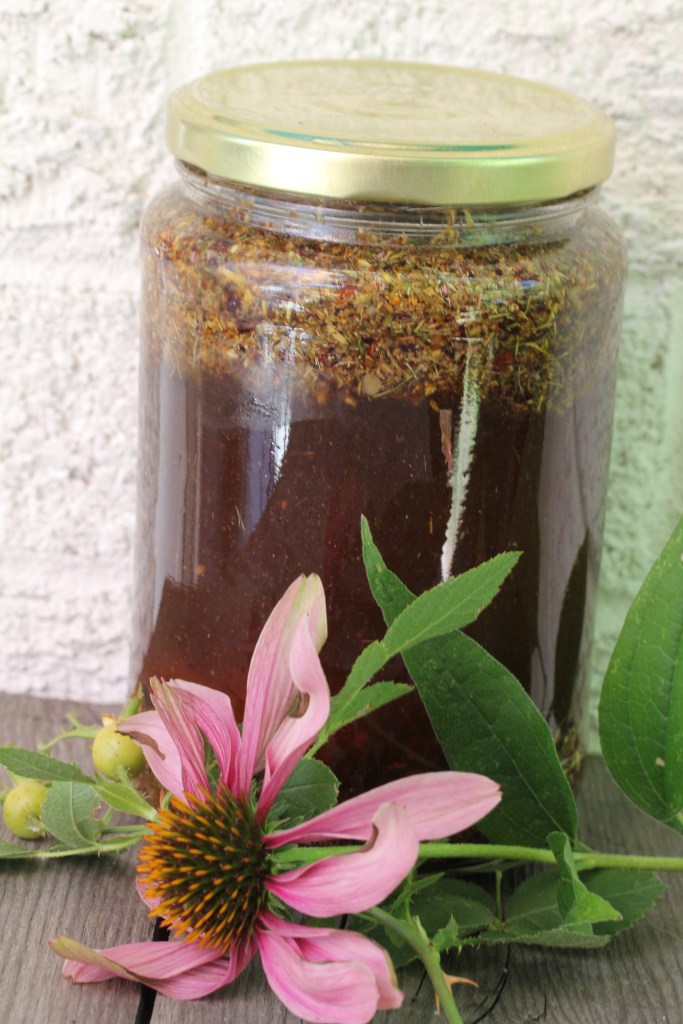
I have been making this electuary for years. It is handy to have around to treat viral and bacterial infections. I have an adverse reaction to vitamin C tablets and lots of citrus. This infused honey is easier for me to consume. Echinacea can be safely consumed by children and adults for acute conditions. It can be mixed into juice, nut butters, a popsicle formula, or tea.

Directions

Partially fill a large jar with high quality , organic honey.

Mix in 1-2 TBSP each of the following dried herbs, finely powdered-calendula, rosehips, star anise, dandelion root, licorice, orange peel, ginger, hibiscus, echinacea tops, and fennel

Stir and top off. There is no need to strain. I just mix in 1 tsp of the electuary into hot tea and drink. I don’t mind the herbal residue as it has a pleasant taste.

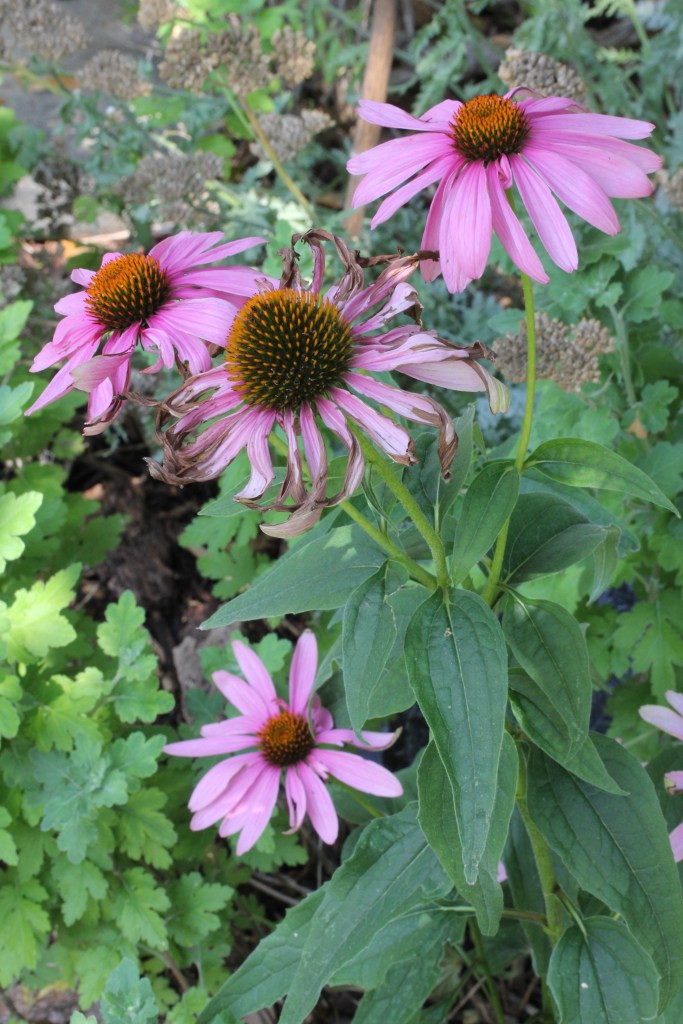
Echinacea is a perennial native to the United States. It grows 2-3 feet high with a single, hardy, bristly, redish stem. Leaves are dark green, rough/toothed on the margins, and hairy on the underside, spade shaped, opposite, on long petioles. Slightly aromatic (pitchy/resinous), creates a harmless, tingling sensation on tongue when tasted. The medicinal varieties have several, large, long, narrow pinkish/purple ray flowers that may droop. These surround a purple/brown/orange, conical/raised disk of tube flowers. Because some species are over harvested/endangered in the wild, it is best to grown your own or buy it cultivated

Echinacea has a history of removing infections and toxins from the body. It boosts white blood cell production and supports the immune system. It has been used to treat acute microbial inflammation, fever, colds, flu, sinus infections, bronchitis, ear infections, sore throat, tonsillitis, pneumonia blood poisoning, arthritis, yeast infections, herpes, cancer, cystic acne, tuberculosis, postpartum infection, mastitis, UTI’s childhood infections, and allergies. It can be used externally for boils, animal bites, insect stings, sepsis, poison ivy/oak, abscess, hives, cuts, cold sores, burns, and eczema. It relieves itchiness, repairs tissues and cleans out wounds. Can be ussed in a gargle for inflamed gums.

Latin Name: Echinacea angustifolia (photo above), Echinacea purperea

Botanical Family: Composite/Aster/Sunflower

Parts Used: roots, leaves, seed head, flowers

Energetics cool, pungent/bitter, dry

Element: air

Spiritual/Emotional Uses:-to support confidence, intuition, awareness, intelligence, organization, communication, consistency, moderation, harmony calmness and teamwork when dealing with others. Allows for balance and self control when managing resources. To restore strength, protection, integrity, and dignity.

Contraindications: avoid use immediately after surgery or if taking immunosuppressant drugs. Not the best choice for those with chronic viral diseases, or autoimmune conditions. Avoid if you have an aster allergy or experience nausea, dizziness, or throat irritation with use.

Deviled Eggs with Herbs (PARSLEY)

Maybe you are hosting a bookclub or birthday party. There is a potluck or social event coming up and you need an easy dish to bring. Deviled eggs were popular during the Roman empire and have been a common appetizer in the US since the 1900’s. There is a misconception that they are difficult to prepare. You certainly do not need to pipe the cooked yolks into the white shells. It does take some planning to boil and cool the eggs but then you can do the rest of the preparation in less that 15 minutes. The fun thing about deviled eggs is all the creative and “fusion” options that can be used as seasoning to the standard recipe to give it contemporary flavor . Curry powder, chutney, wasabi, umami, five spice powder, za’atar, or berbere. Don’t be afraid to experiment with all manner of ethnic food sauces, condiments, spice blends and ingredients. Every time I bring deviled eggs to an event there is excitement and they quickly disappear. They are a rare treat these days.

Deviled Eggs With Herbs

Hard boil 6 medium eggs. See tips below. While they are cooling….

Make 1 heaping tablespoon of fresh green herbs-tarragon, mint, fennel, dill, cilantro, oregano, marjoram, parsley, or basil are some options. Put this in a medium size bowl and add in….

5 TBSP of mayonnaise.

1 TBSP of milk

Once the eggs are at room temperature and peeled, cut them in half with a sharp knife or other tool. I like to wipe the blade with a wet paper towel between cuts to keep the eggs very clean from stray yolk. Scoop out the cooked yolks and add these to your bowl. Use a fork to mash them into the other ingredients until you have a smooth, even consistency. Use a spoon to heap a generous portion into each egg half. It really helps to have a special deviled egg plate/platter to keep your appetizer in place. It is a bonus if you can find one with a lid for easy transport and storage. You will need to refrigerate until ready to serve. The eggs will start to dry out if they are left out uncovered or stored for more than 12 hours.

Garnish with paprika or leftover herb mixture.

Excess herbs can be used in a green goddess type dressing or guacamole.

Tips: Do not use an egg cooker. Instead 1) fill a large stainless steel pan with water 2) Bring the water to a rolling boil 3) Turn off the heat 4)Let sit for 10-15 minutes 5) Make sure the eggs are fully covered with water the entire time and turn occasionally 6) Once cooked, remove the eggs, run under cold water 7) Crack the eggs and let cool for 15 minutes. 8) Roll the eggs on a hard surface and proceed to peel them very carefully. It is best to use older, store bought eggs. Fresher or home grown eggs tend to have thin shells and thick “skins”. These are just hard to peel and leave messy looking eggs to present.

We are used to viewing plants like thyme, oregano and basil as medicine. The herbalist should not underestimate the use of humble parsley as well.

Latin Name: Petroselinum sativum or crispum, latifolium

Botanical Family: Umbelliferae/Apiaceae (parsley/carrot)

Parts Used: leaves, seeds, 2nd year roots

Energetics: Root-sweet, bland, moist, neutral. Leaves-pungent/spicy

Element: air

Emotional/Spiritual Uses: To support being receptive, accepting, open minded and adaptive. Parsley allows one to embrace receiving and listening when it comes to communication and relationships. Yin in energy, it encourages connection, harmony, equanimity, unity, and creativity. Choose this herb when you desire to be more fluid and less solid/rigid with your emotion and worldviews.

Contraindications: inflamed or “weak” kidneys, medicinal use in pregnancy especially the root and seeds. Always be sure to positively identify any member of the parsley/carrot family as they can look very much alike and some species are very poisonous. Pay close attention to the root structure and color. As well as any color or spots on the stem when doing your ID.

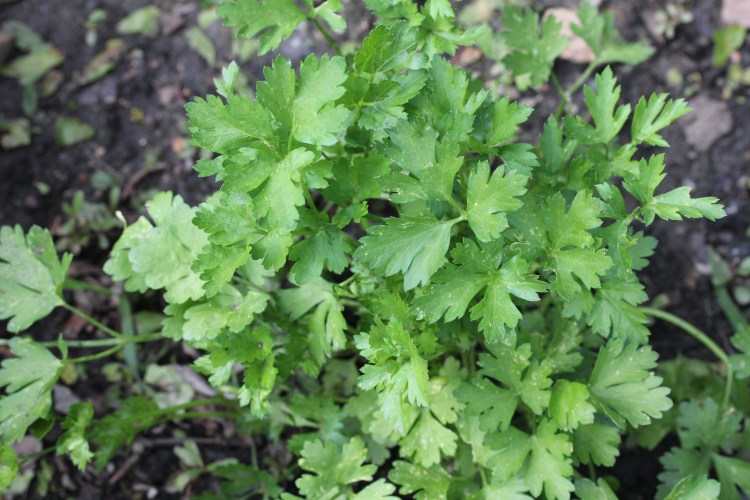
Parsley can be an annual, biennial or perennial depending on your ecosystem. It has a long, thin, singular, white, spindle shaped taproot. This produces an erect, grooved, glabrous/smooth, stem that becomes many angular branches. Leaves are ternate, pinnate, decompound, darker green, and somewhat shiny. These can be flat or curly. Flowers are white or greenish yellow, arranged on a hollow stalk, in a compound umbel. The round, numerous fruit dry and split into one, tiny, semi flat, ovate greyish brown seed. This plant has a distinctive smell due to the volatile oils common to all plants in the botanical family.

Historically this herb has been used to treat urinary tract infections, edema kidney/urinary/gall stones or gravel, gout/uric acid crystals, digestive issues (bloating and gas), menstrual problems/cramps, postpartum hemorrhage, prostate issues, low fever, viruses, rheumatism/arthritis, congested lungs, asthma, jaundice, conjunctivitis/eye inflammation, anemia, and bad breath It is known to support better function of the liver and spleen. Externally it has been used to treat mastitis, insect bites, swollen glands/lymph nodes, bags under the eyes, dry skin, nits/lice, bruises, sprains, cancer/tumors. Parsley makes a nice hair rinse.

Parsley root, gravel root, ginger root, dandelion root, and marshmallow root

SKULLCAP, Milky Oat Tops and Hops Tincture

These herbs make a lovely trio for life in modern times. This tincture is the first thing I reach for when someone is experiencing trauma, grief, stress, or insomnia. Each alone is a mild nervine or sedative. My daughter and I have both found this combination very useful for her first year in public high school. It can be taken frequently over an extended period of time without dependency or adverse side effects. A small dose goes a long way in providing support. Even so, I recommend the occasional break from any herbal formula that is used regularly.

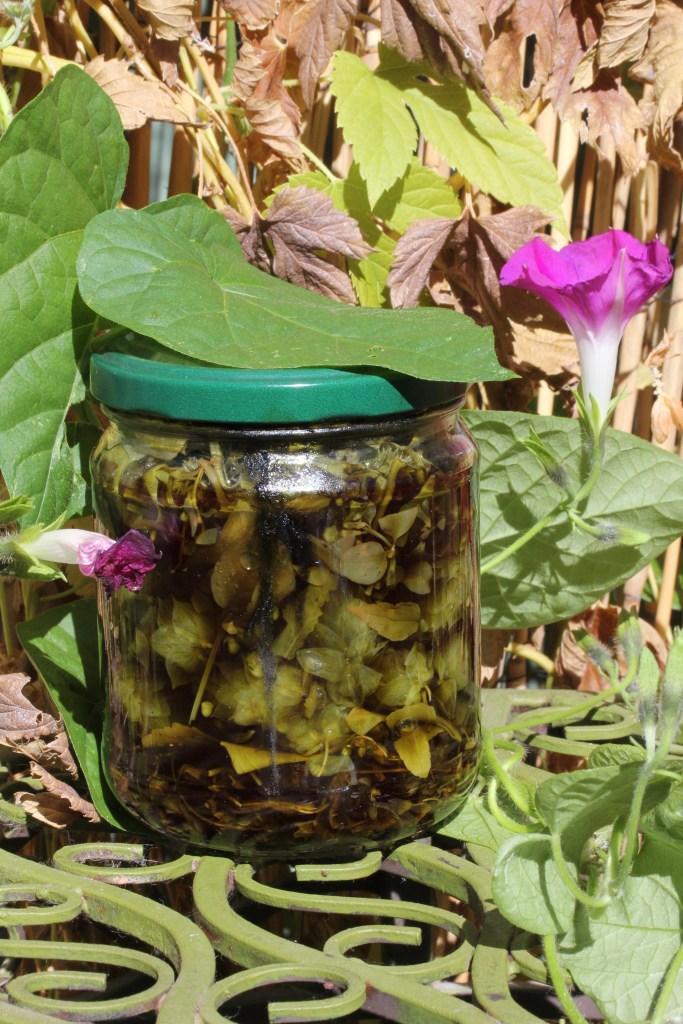
I am a folk herbalist so I usually gather equal parts of several fresh herbs from. my garden. Once in a jar, I top it off with Everclear/high proof vodka and let it sit for at least six weeks before straining.

Scutellaria is a 1-3 ft high perennial that prefers shady, damp places. It has fibrous yellow roots. The stems are erect , branching , slender , and square The leaves are opposite, ovate/lance shaped, toothed/serrated, 1-3 inches long, and vibrant green. These grow on short stalks. Flowers occur in pairs. They are small, two lipped, pale, blue/purple, have united sepals and petals (tube shaped).The corolla is hooded and the calyx cup shaped. These bloom just above the leaf axils on one sided racemes. The small seed pods have a “cap” shaped lid. I have found it easy to grow here in sunny, dry, Colorado. Once established it will take off like any plant in the mint family.

Historically this plant has been used for a weak heart/cardiac irritability, high blood pressure, high cholesterol, tension, muscle spasms, hysteria, PMS, menstrual cramps, depression, nervousness/anxiety, excitability, restlessness legs, Parkinson’s ,worry/fear/phobias/panic attacks, nerve palsy/paralysis, epilepsy/seizures, neuralgia, tinnitus, addiction/drug withdrawal, insomnia, aching eyeballs, nightmares, exhaustion, migraines, pain, rheumatism,, fever, insect/animal bites, parasite infection, and “spirit agitation”. This herb is very helpful for individuals who easily get overstimulated and are highly sensitive to their external environment. Skullcap strengthens, supports, and tones the nervous system, musculoskeletal system and brain. It is useful when there is digestive or stomach issues related to stress, drug withdrawal, or grief (nausea, colic, diarrhea).

Its volatile oils deteriorate rapidly when exposed to heat and light. Skullcap is best tinctured or stored in a cool, dark, and tightly sealed container. Make sure your skullcap comes from a reputable source as this herb is often replaced by others during harvesting or sale.

Latin Name: Scutellaria laterfolia/galericulata

Botanical Family: Mint/Lamiaceae/Labiatae

Parts Used: flowering tops and leaves

Energetics: cool, dry, bitter astringent

Spiritual/Emotional Uses: Skullcap supports receptivity, reflection, openness, compassion, understanding, stability, hope and intuition. A good choice when needing or requesting guidance during meditation and other practices. This plant calms the heart and mind so that our inner truths and wisdom can come forth. It regulates the energetic body when there are lots of sudden life changes or an increase in flow. It relaxes and strengthens the entire nervous system, channels, and chakras. It allows the individual to focus and ground when there is disassociation or scattering/soul loss after a traumatic event or death. Skullcap is useful when one feels impotent, paralyzed, hopeless, numb, or fearful that a situation will never get better. It replaces “shock/freezing” with joy, connection, safety and the desire to nurture self and others. Practitioners might consider it for clients who have become socially isolated due to self judgement, prejudices, outrage, aggression, resignation, cynicism, , self neglect, oversensitivity and low self esteem.

Element: water

Contraindications: Avoid large doses which may cause dizziness, confusion, or erratic pulse rate. Do not use during pregnancy.